Cosmetic-making tools — what tools and equipment are used when making natural cosmetics at home? Find out with us. Before you start creating your own products, it is good to know which basic cosmetic-making tools you need. This way you not only gain an overview of the equipment you still need to get, but you also find out what each cosmetic-making tool is used for and what else it can do.
About this article
An overview of the basic cosmetic-making tools — from containers, spoons and measures through scrapers, sieves, an apron, gloves and disinfectant to pH strips. You will also find out which tools and appliances will make your work easier — thermometers, blenders and scales — and which moulds and packaging are suited to soaps, bath bombs and finished products.

Main benefits
- An overview of your equipment
You gain an overview of the equipment you still need to get, and at the same time you find out what each cosmetic-making tool is used for and what else it can do.
- Start with what you already have at home
As a beginner you do not need a great many new tools — very often it is enough to look around your kitchen or workshop.
- Less contamination
Having enough scoops for each raw material separately, and cleaning and disinfecting surfaces thoroughly, will reduce the contamination of your products, so they will keep for longer.
- Safe work with hydroxide
Gloves will protect your hands when working with hydroxide; when making soap from hydroxide, do not forget protective goggles either.
- Accurate dosing
Scales that weigh to at least one decimal place, along with plastic pipettes, let you add raw materials with great accuracy even in small batches.
Materials and specifications at a glance
Equipment for cosmetic making
There is no need to worry that as a beginner you will need a great many new tools. Very often it is enough to look around your kitchen or workshop and you will find that you already have many cosmetic-making tools at home. Let us go through the individual categories:
Containers for cosmetics
Every product you make has to be blended from several raw materials, which is why bowls and containers are essential cosmetic-making tools. Glass bowls are ideal, as they are easy to clean and maintain. It is good if these cosmetic-making tools are heat-resistant, because you will often be heating raw materials in a water bath, or possibly in a microwave. If you want more professional equipment for cosmetic making, you can reach for laboratory glass beakers instead of bowls. Laboratory glass is easy to clean and resistant to heat and to hydroxides.
Making soaps from hydroxides calls for containers and cosmetic-making tools that are resistant to these chemicals. Besides glass, such materials include stainless steel and plastic. Other metal containers may corrode on contact with hydroxide. At the same time, metals easily oxidise various sensitive compounds used in making facial cosmetics, so in that case it is better to reach for glass, or possibly plastic.
Do not forget a larger pot for the water bath or for cooling your products.
Spoons and measures for cosmetic making
When scooping raw materials, it is always good to have several spoons used only for cosmetic making to hand. Spoons and measures for cosmetic making should be kept separate from your other cutlery. Always keep these cosmetic-making tools within reach; that way you will avoid contaminating your raw materials, because you will have enough scoops for each raw material separately.
Again, metal spoons can cause oxidation of some raw materials. More professional cosmetic-making tools include glass stirring rods. When scooping small amounts of raw materials, you will appreciate plastic or metal spatulas.
For dosing small volumes of liquid you will use plastic pipettes, which let you add precise amounts of liquid raw materials, especially when making cosmetics in smaller batches. Plastic pipettes are among the low-cost cosmetic-making tools, and in ordinary home production they can be used repeatedly after thorough cleaning and disinfection.
The cosmetic-making tools you will also appreciate if you make only small amounts of product include funnels. You can find them in very small sizes too, suitable for filling small dropper bottles and other vials.
Scrapers and sieves for cosmetic making
You almost certainly already have these cosmetic-making tools in your kitchen. Look in particular for silicone scrapers, which let you easily get your creams or soaps out of bowls and into jars and moulds. Sieves are useful not only for sifting herbs or loose raw materials when making bath bombs, but they also let you distribute powdered colourants evenly, such as micas, when making soap.
Apron and gloves for cosmetic making
When preparing homemade cosmetic products you almost always work with raw materials or colourants, so these cosmetic-making tools will come in handy. Gloves will also protect your hands when working with hydroxide; for that, ordinary disposable latex gloves are appropriate. Keep one pair of thicker gloves to hand as well, for handling the water bath and hot containers.
Eye and airway protection: When making soap from hydroxide, do not forget protective goggles. If you are going to handle powdered raw materials that easily become airborne, put on a mask, ideally a respirator. These cosmetic-making tools will help protect your airways.
Wipes and disinfectant for cosmetic making
Before preparing any product, all surfaces, containers, packaging and tools that will come into contact with raw materials must be thoroughly cleaned and disinfected. This reduces contamination of your products, so they will keep for longer. Handy cosmetic-making tools therefore also include paper towels and spray bottles for disinfectant.
As a disinfectant you can use 70% food-grade ethanol or 99% isopropyl alcohol, or special products intended for surface disinfection (ideally food-industry grade). After disinfecting, do not forget to rinse all your cosmetic-making tools in demineralised water, or follow the disinfectant manufacturer's instructions.
pH strips for cosmetic making
Before you start using a product, it is always a good idea to check its pH. At home this is easy to do with pH indicator strips. These cosmetic-making tools change colour according to the current pH of the product, and you read the pH value off the colour scale supplied with them.
For more advanced makers there is the option of getting a pH meter. This, however, is a more expensive cosmetic-making tool, one that also requires more complex handling and calibration.
Tools for cosmetic making

Certain appliances and devices are also indispensable in cosmetic making, as they make preparing some products easier. Find out which cosmetic-making tools will make working with soaps or making facial creams easier.
Thermometer for cosmetic making
Thermometers, whether classic or infrared, are handy cosmetic-making tools that let you follow how your products are coming along. You can reach for the classic probe thermometers used in the food industry. Do not forget to disinfect them before use, though, so that they do not contaminate your product. That is another reason why infrared non-contact thermometers have the advantage: they tell you the temperature of your product instantly, although their drawback is the higher price.
Blender for soap making
A stick blender is unquestionably one of the tools essential for soap making. Without blending the mixture of fats and hydroxide, it is almost impossible to reach trace without a very long spell of stirring by hand. Bear in mind that the blender should be made of plastic or stainless steel so that the hydroxide does not damage it. Set one blender aside for soaps and cosmetics only, and do not use it for cooking.
Mixer for cosmetic making
A hand whisk or a mixer with two beaters is one of those cosmetic-making tools that let you create fluffy whipped butters, or mix larger amounts of cream. If you make only small batches of emulsions or creams, reach for battery-powered milk frothers, which make forming an emulsion easier and quicker; for larger batches, reach for stick blenders.
Scales for cosmetic making
Since almost everything in cosmetics is measured in grams, scales are a must. Unless you are going to make very large batches, i.e. by the kilo, reach for small or even pocket scales that weigh to at least one decimal place. Thanks to one, or ideally two, decimal places (when weighing in grams), these cosmetic-making tools let you add raw materials with great accuracy even in small batches.
Moulds for soap making

Soap moulds are an inseparable part of soap making, whether you work with melt-and-pour bases or with hydroxides. Silicone moulds for soap making are cosmetic-making tools available in a range of shapes and sizes, so you can use them to create all sorts of designs. Thanks to the flexibility of silicone, finished, set products are easy to remove from them.
You can use silicone soap moulds not only for soaps, but also for preparing other types of cosmetics. These versatile cosmetic-making tools are useful, for example, if you make solid shampoos; silicone moulds also serve well for making solid conditioners or solid body balms.
Moulds for bath bombs
Because of their pliability and flexibility, silicone moulds for soap and cosmetic making are not particularly suitable for making bath bombs. So if bath fizzies appeal to you, slightly different cosmetic-making tools are used to prepare them: rigid plastic bath bomb moulds, which may also be made of metal. Most often these are moulds made of two parts, which you fill and press together to form a bath bomb.
Cosmetic packaging
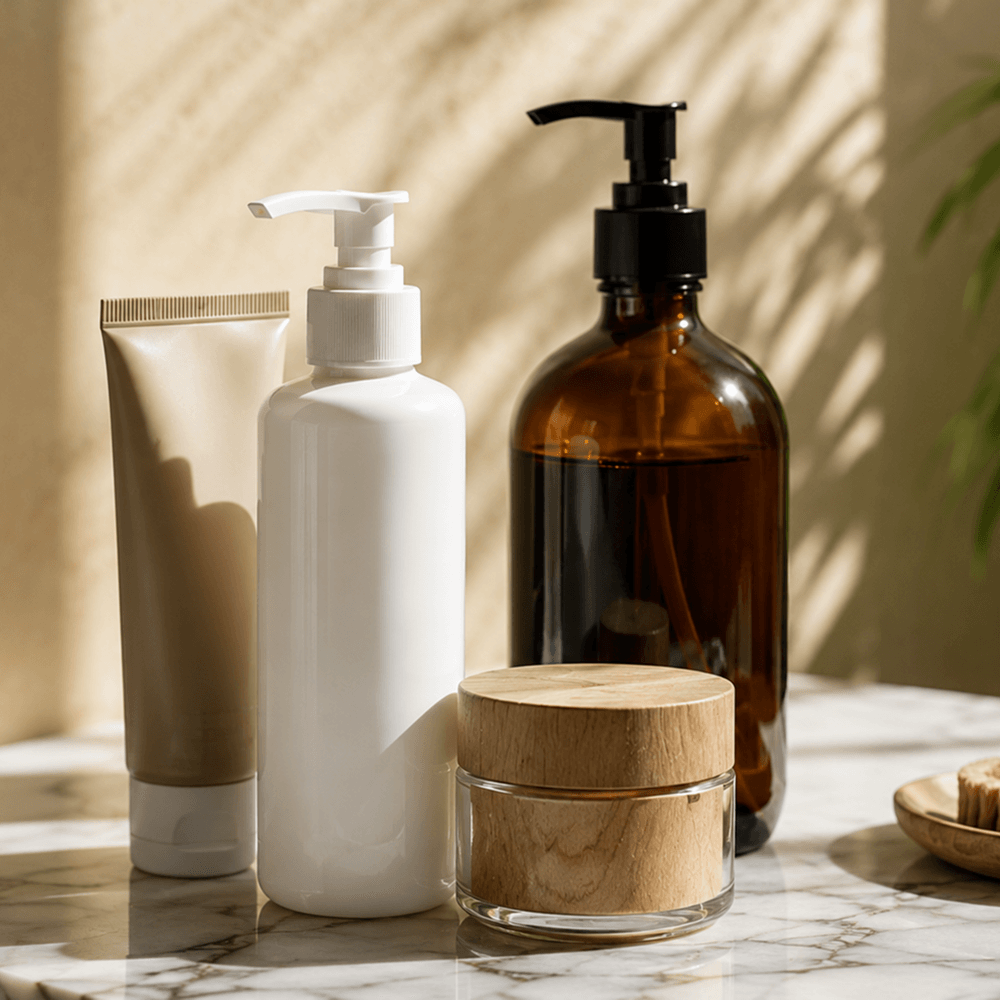
Your finished product has to be stored somewhere, and that is exactly what cosmetic packaging is for. You can choose from a wide range of plastic, metal and glass containers in various sizes. Again, remember that metal packaging for cosmetics can cause oxidation of some less stable components of the product (unless the metal is covered with a protective layer). Plastic packaging, in turn, can absorb some organic substances. The colour of these cosmetic-making tools plays a role too. Dark, opaque cosmetic packaging, for example in amber glass, protects raw materials from sunlight more effectively than transparent packaging.
Frequently asked questions about cosmetic-making tools
Practical questions about container materials, disinfection, scales, moulds and packaging.
Which containers are suitable for making soap from hydroxide?
Making soaps from hydroxides calls for containers and tools that are resistant to these chemicals — besides glass, such materials include stainless steel and plastic. Other metal containers may corrode on contact with hydroxide.
Why are metal containers and spoons not recommended?
Metals easily oxidise various sensitive compounds used in making facial cosmetics, so in that case it is better to reach for glass, or possibly plastic. The same applies when scooping — metal spoons can cause oxidation of some raw materials.
What should you use to disinfect cosmetic-making tools?
As a disinfectant you can use 70% food-grade ethanol or 99% isopropyl alcohol, or special products intended for surface disinfection (ideally food-industry grade). After disinfecting, rinse all your tools in demineralised water, or follow the disinfectant manufacturer's instructions.
Which scales should you choose for cosmetic making?
Unless you are going to make very large batches, i.e. by the kilo, reach for small or even pocket scales that weigh to at least one decimal place — with one, or ideally two, decimal places (when weighing in grams) you will be able to add raw materials with great accuracy even in small batches.
Why are silicone moulds unsuitable for bath bombs?
Because of their pliability and flexibility, silicone moulds are not particularly suitable for making bath bombs. Rigid plastic moulds are used to prepare them, and these may also be made of metal — most often they are moulds made of two parts, which you fill and press together to form a bath bomb.
Which packaging protects the finished product best?
Dark, opaque packaging, for example in amber glass, protects raw materials from sunlight more effectively than transparent packaging. Do bear in mind, though, that metal packaging can cause oxidation of some less stable components (unless the metal is covered with a protective layer), and that plastic packaging can absorb some organic substances.
Cosmetic-making tools and conclusion
Dear friends,
do you have any favourite tools you could not imagine your creative moments without?
Do not hesitate to write to us, so that other, less experienced alchemists can pick up something new and learn.
Let us help one another and build a creative community.
Until the next saponification, friends.
Measuring cups, pipettes, funnels, pH strips and silicone moulds are all in the Handymade tools and equipment range; to store your finished products, choose from our cosmetic packaging.