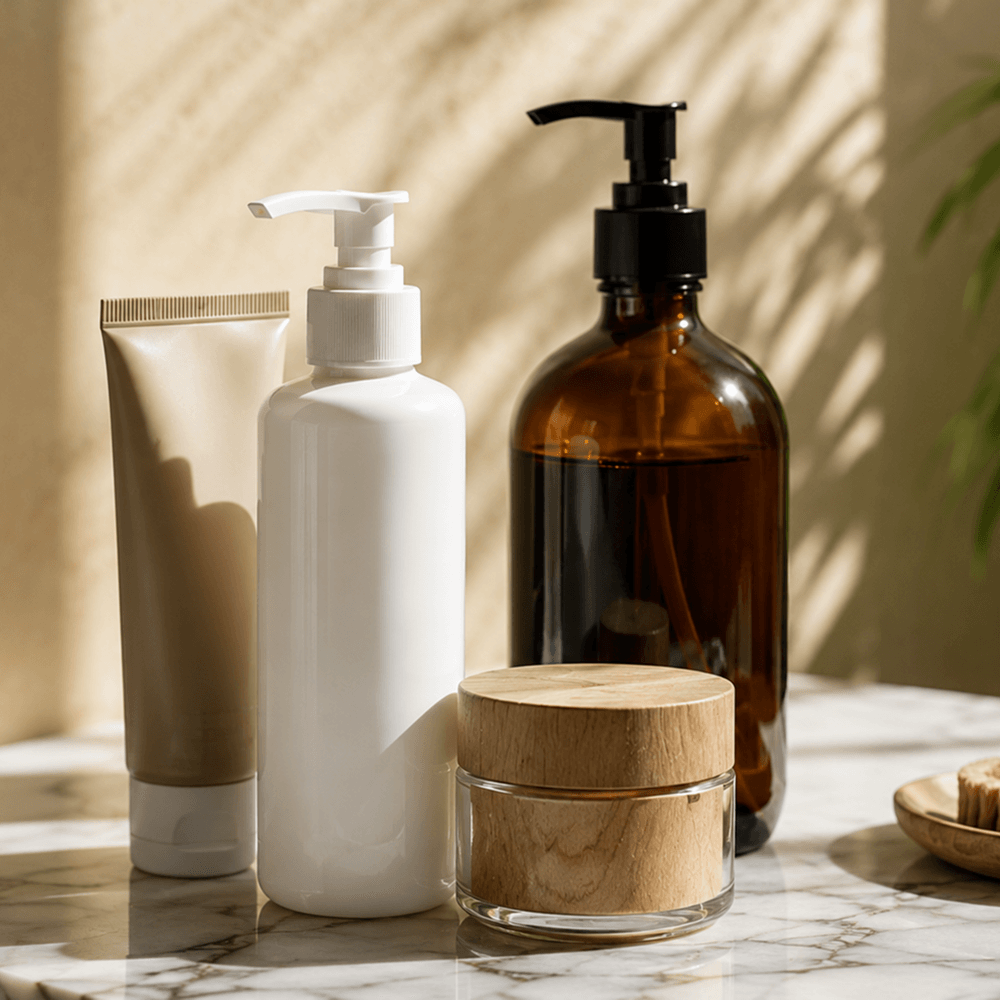
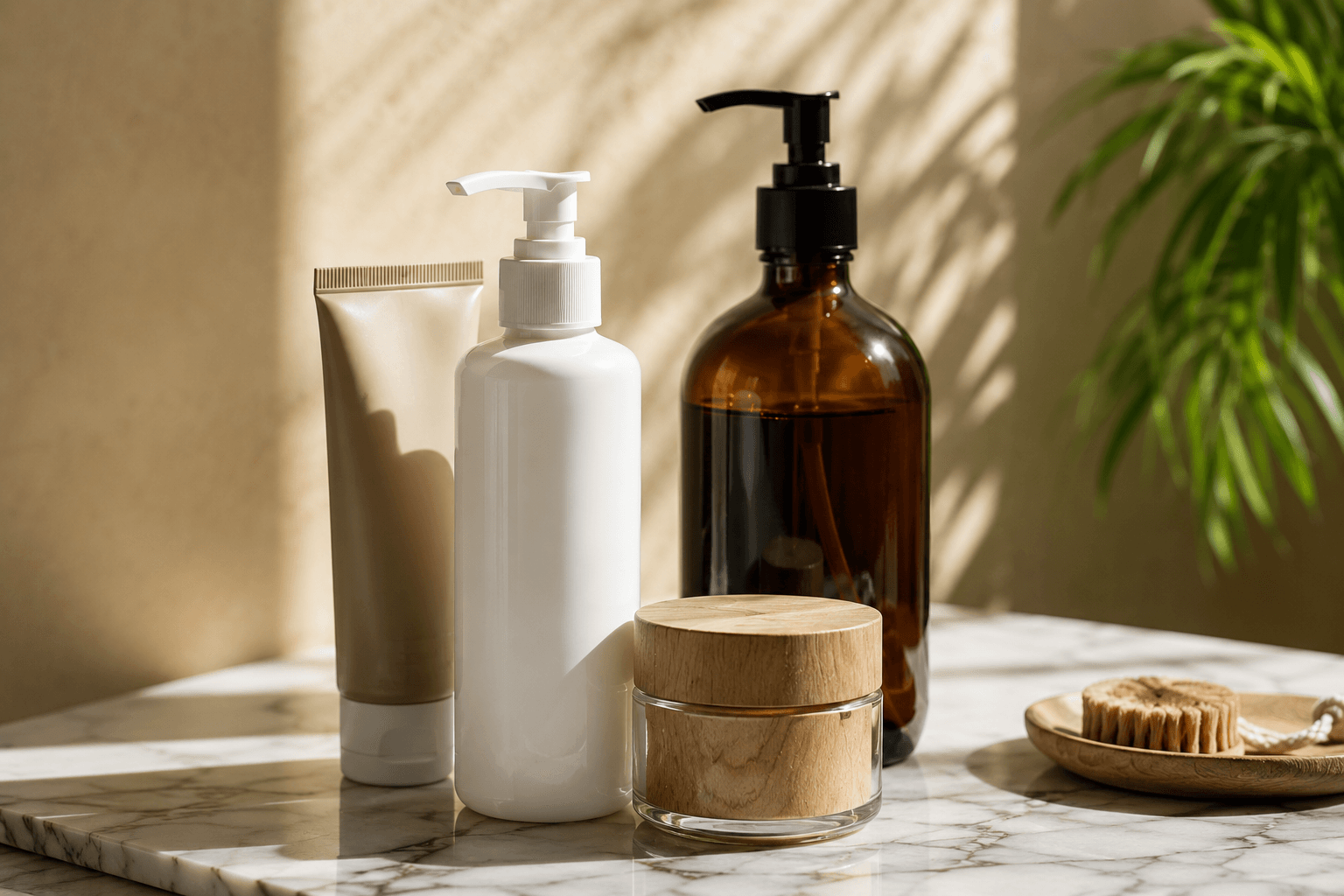
For cosmetics this is even more pronounced. The customer often does not buy only a cream, a serum or a shampoo. They also buy a feeling of cleanliness, efficacy, softness, luxury, naturalness or professionalism. The packaging is the first thing that creates this feeling.
But with cosmetics it is not enough that the packaging looks good. It also has to work. And this is exactly where many brands and customers get lost. Should you pack a cream into a jar or an airless bottle? Choose plastic or glass? When is PET suitable and when HDPE? Why does a thick product come out of some bottles with difficulty? Why can a beautiful bottle be a problem for labelling? And why does the closure sometimes decide whether the customer loves the product or stops using it?
“Packaging is not just design. It is a technical, practical and commercial decision.”
Packaging should sell, but first it has to work
Good packaging has to handle several things at once. It is not just a sticker on the product or an aesthetic accessory. It is a functional part of the product that decides whether the customer gets what they bought.
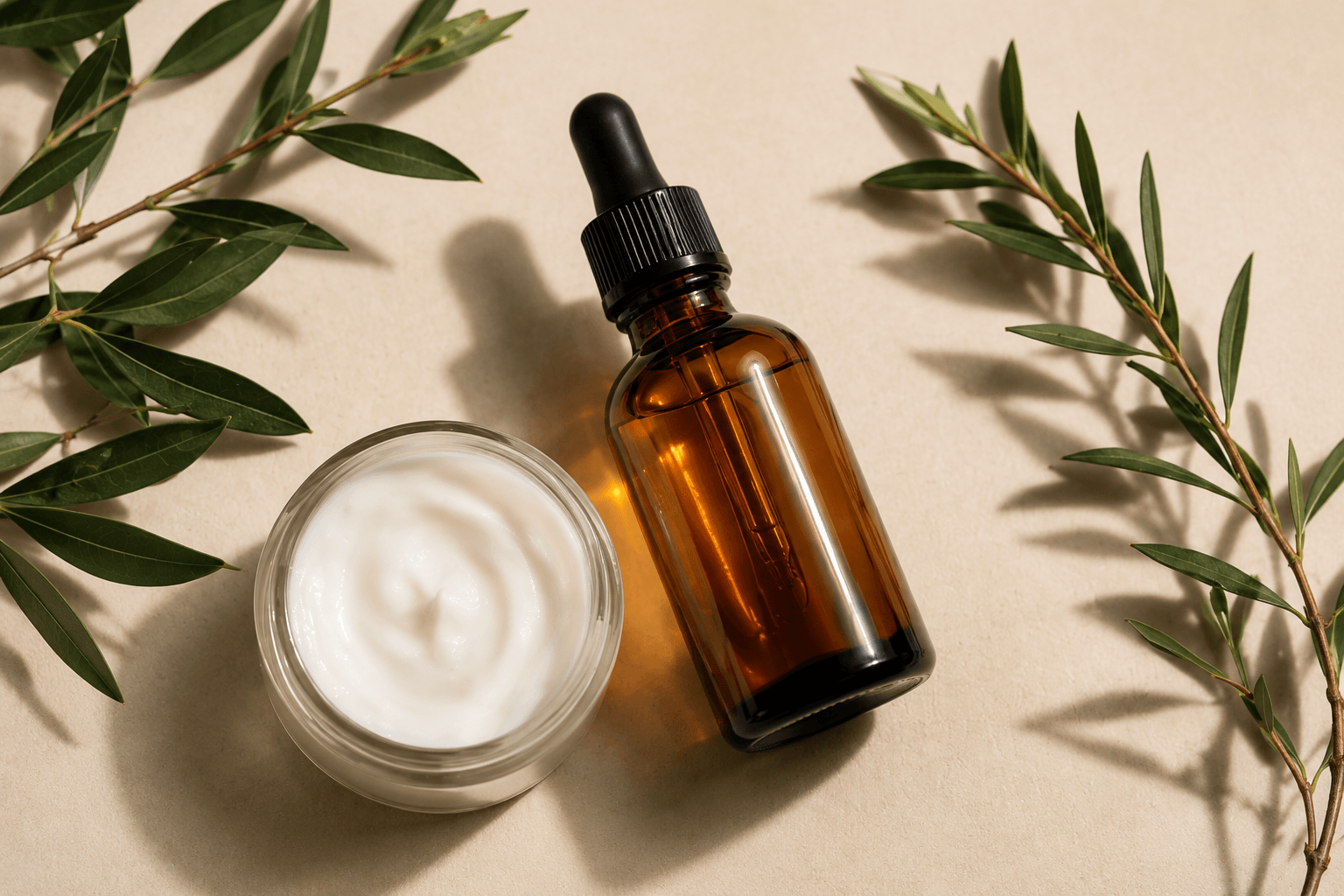
A good formula in bad packaging quickly loses points. The customer does not have to remember that the emulsion was excellently formulated. They will remember that the pump did not work, that the bottle was slippery, that the serum ran down the neck or that it was impossible to get the last third of the product out of the pack.
Why it is not enough to choose packaging by appearance
Packaging is not chosen by which one looks the nicest in the catalogue. It is chosen according to the product and its properties — viscosity, pH, oil content, alcohol content, surfactant content, fragrance or essential oils, light sensitivity, air sensitivity, way of use, hygiene in application, label size, transport and storage.
In practice this means that the same packaging is not suitable for everything. A few common examples where appearance and function diverge:
- A thick body cream in a hard PET bottle with a small opening can be impractical.
- A water-based serum in an open jar has a higher risk of contamination than a product in a pump or airless pack.
- An oil serum in a clear bottle may look nice, but with more sensitive oils you need to think about light.
- A shower gel in glass may feel premium, but in the shower it is heavy and breakable.
- An irregular bottle shape may attract attention, but the label is harder to apply to it.
So packaging is not a final decoration. It is a part of the product.
Packaging material: what HDPE, PET, glass and aluminium are
Each material has advantages and limits. There is no single best material for everything. The right choice depends on the formula, the way it is used, price, logistics, design and sustainability.
HDPE: durable and practical plastic
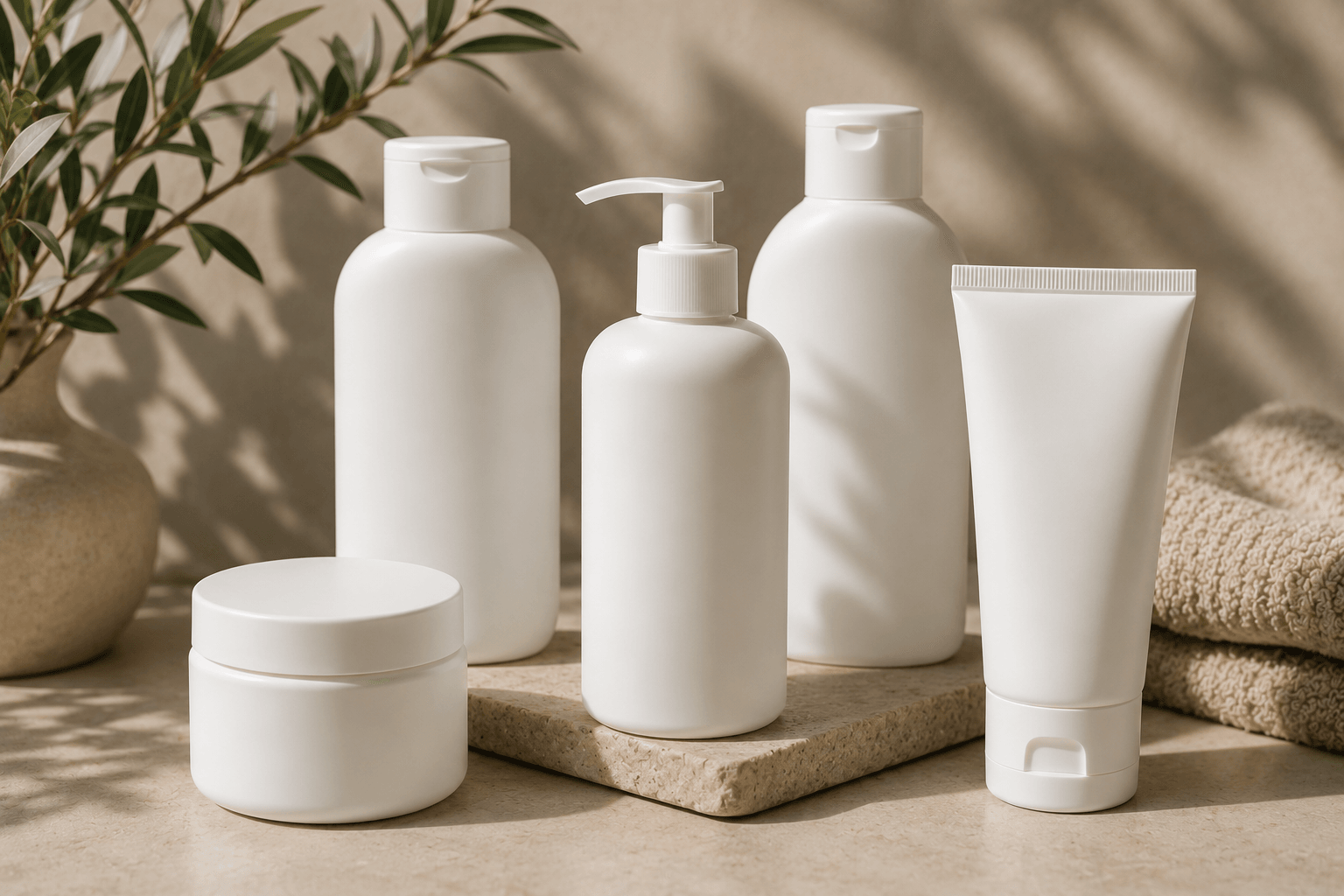
HDPE stands for High-Density Polyethylene. In cosmetics it is one of the very practical packaging materials, especially where durability, flexibility and functionality are important.
HDPE packs are often milky, matt or opaque. They may not look as premium as glass or clear PET, but from a practical point of view they are often a very good solution.
When HDPE makes sense
- Shampoos.
- Shower gels.
- Liquid soaps.
- Cleansing gels.
- Body products.
- Some more concentrated or more technical formulations.
- Products where squeezability of the bottle is important.
Advantages of HDPE
- Good practical resistance with many types of formulations.
- Low weight.
- Good drop resistance.
- Flexibility and squeezability.
- Suitable for the bathroom and the shower.
- Practical for larger packs.
- Often a good price / functionality ratio.
PET: clear, light and visually attractive
PET stands for Polyethylene Terephthalate. In cosmetics it is popular mainly because it can be clear, light, strong and visually clean.
If you want to showcase the colour of the product, a gel texture, a pearlescent effect or transparent contents, PET is often more suitable than HDPE.
When PET makes sense
- Toners.
- Micellar waters.
- Shampoos.
- Shower gels.
- Hair products.
- Clear or coloured gels.
- Products where the visual effect is important.
Advantages of PET
- Clear and aesthetic appearance.
- Low weight.
- Good strength.
- Suitable for product photos and retail.
- More practical than glass for larger volumes or in the bathroom.
- Looks smoother and more modern than HDPE.
Disadvantages of PET: not as flexible as HDPE, with thick products it can be harder to get the contents out, with clear PET there is weaker protection from light, not every formulation is automatically suitable for PET, and with fragrance, solvents or specific active ingredients you must monitor compatibility.
Practical point: PET is a good compromise between look and practicality. It works very well for many products, but with thicker formulations you need to think about the bottle shape, the flexibility of the material and the type of closure.
Glass: premium, stable, but not always the most practical
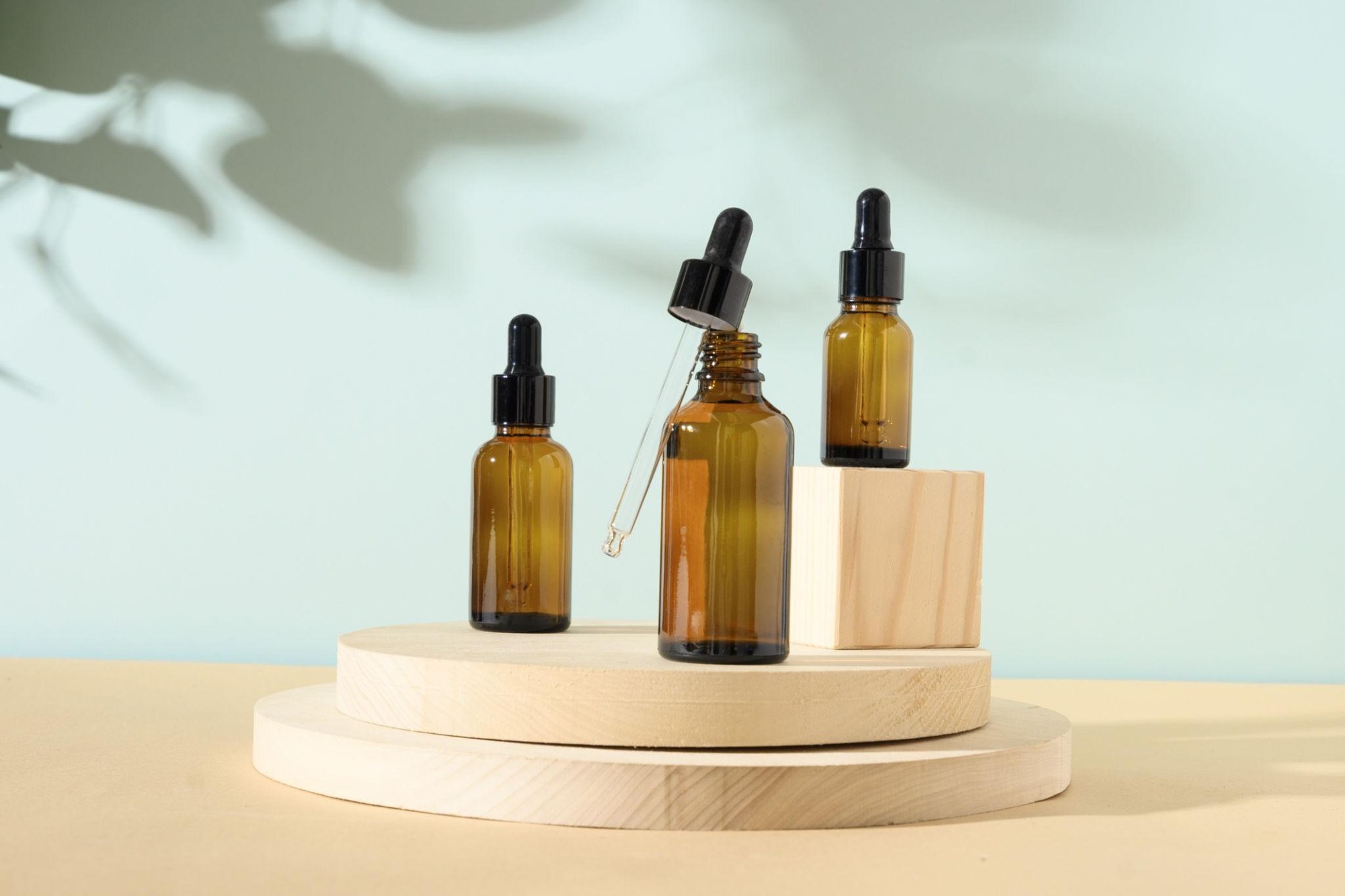
Glass has a strong place in cosmetics. It feels valuable, stable and premium. It is often used for serums, oils, perfumes or products where a higher visual standard is important.
Glass also provides a good barrier and in dark variants it helps protect the contents from light. This is important especially with more sensitive oils, aromatic products or active ingredients.
When glass makes sense
- Facial oils.
- Oil serums.
- Perfume oils.
- Essential oils.
- Active serums in smaller volumes.
- Products with a premium character.
- Products more sensitive to light, if dark glass is used.
Advantages of glass
- Premium appearance.
- Good barrier.
- High material stability.
- Possibility of dark glass for light protection.
- High perceived product value.
- Suitable for smaller and more concentrated products.
Disadvantages of glass: higher weight, risk of breakage, poorer practicality in the shower, higher transport load, less practical when travelling, and it is not automatically more ecological just because it is glass.
Aluminium: light, opaque and practical when used correctly
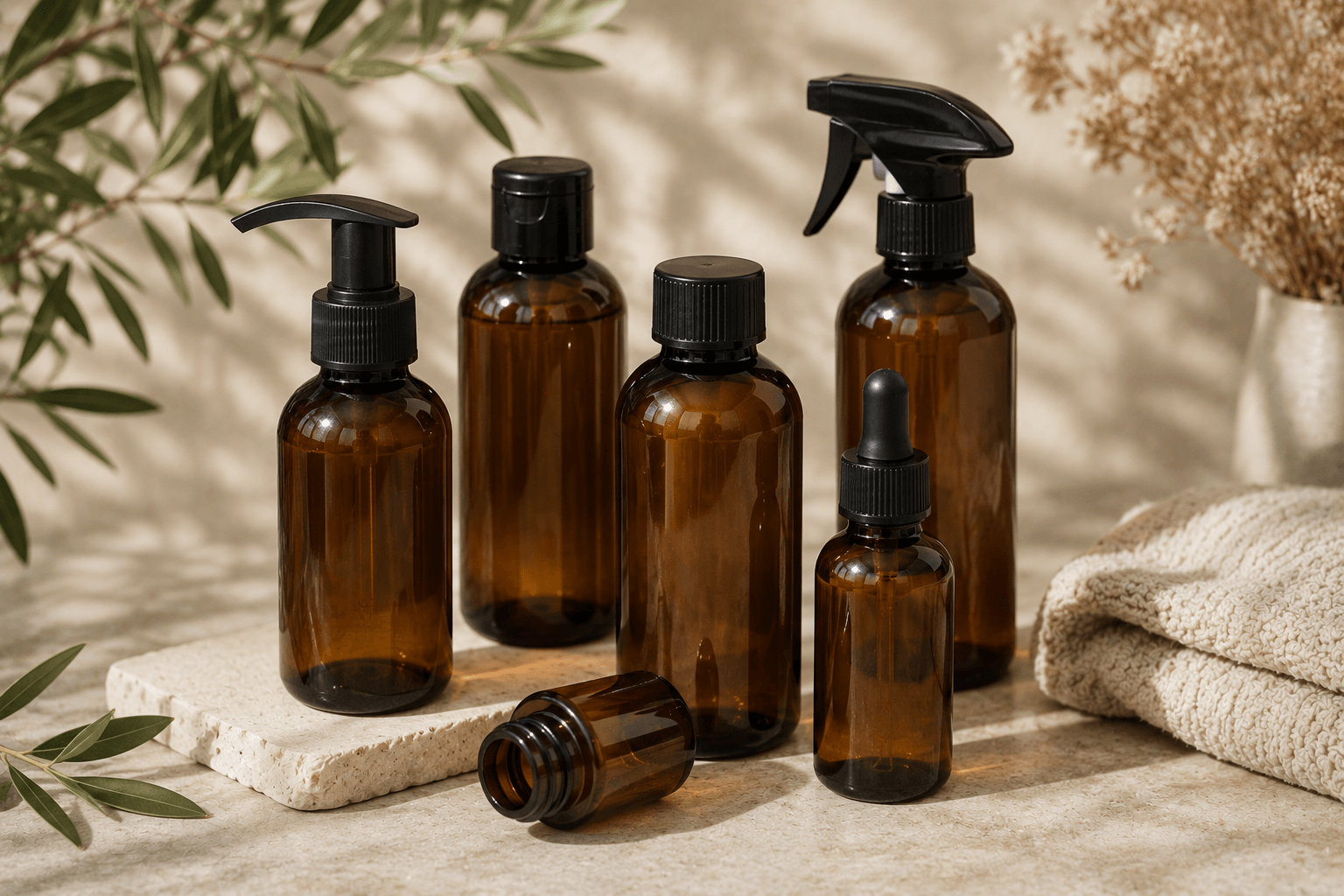
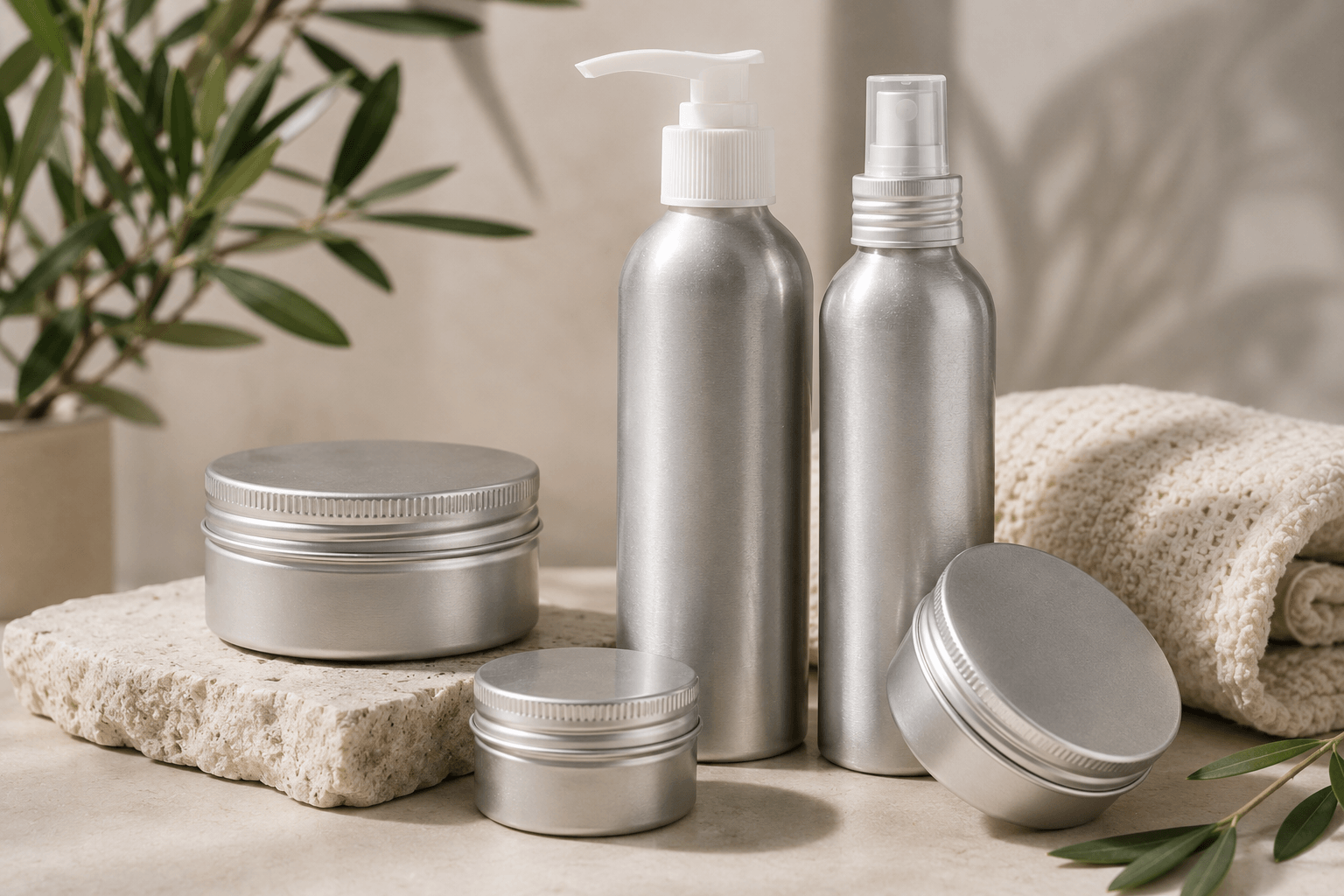
Aluminium is used in cosmetics mainly for jars, tubes and some specific packaging solutions. It is light, opaque and protects the contents well from light.
However, it is not universal. With water-based or more reactive formulations, the internal coating and compatibility must be addressed.
When aluminium makes sense
- Balms.
- Butters.
- Solid products.
- Ointments.
- Certain anhydrous formulations.
- Selected jars and tubes.
- Products where light protection is important.
Advantages of aluminium
- Low weight.
- Light protection.
- Suitable for firmer and anhydrous products.
- Practical for balms and ointments.
- Minimalist appearance.
- Jars can be reused by customers.
Disadvantages of aluminium: not suitable for all water-based or more reactive formulations, for some products an internal protective layer is required, it can dent, jars are less hygienic when scooped with fingers, and compatibility with the formula must be checked.
Quick comparison of materials
The four most common materials in cosmetic packaging side by side. None of them is the best at everything. Each has its place if you assign it according to the type of product, not by aesthetic impression.
| Material | Best use | Strength | Weakness | Watch out for |
|---|---|---|---|---|
| HDPE | Shampoos, shower gels, liquid soaps, cleansing products, body products. | Durability, flexibility, practicality, low weight. | Less premium look, lower transparency. | Compatibility with the specific formulation and a suitable label adhesive. |
| PET | Toners, micellar waters, clear gels, hair products, shower gels. | Clarity, aesthetics, low weight, strength. | Worse squeezability, weaker light protection with a clear pack. | Thick products, fragrance, solvents and compatibility. |
| Glass | Oils, serums, perfume products, active products in smaller volumes. | Premium appearance, good barrier, possibility of dark glass. | Weight, breakability, poorer practicality in the shower. | Transport, safety in use and the real ecological balance. |
| Aluminium | Balms, ointments, solid products, jars, some tubes. | Low weight, light protection, practical appearance. | Need for compatibility and a possible internal coating. | Water-based or more reactive formulations. |
Compatibility: the most boring word that can save a product
Compatibility means that the packaging and the product work together. The packaging material must not degrade the formula and the formula must not damage the packaging.
Problems can be caused especially by:
- high fragrance content,
- essential oils,
- alcohol,
- low or high pH,
- surfactants,
- oil blends,
- colourants,
- solvents,
- actives sensitive to light or oxygen,
- very high or very low product viscosity.
Note: unsuitable packaging can change the appearance of the product, soften, discolour, let fragrance permeate, deform, crack or worsen product stability. That is why with a new product you do not choose the packaging only from a catalogue photo. The formula has to be tested in the final or a very similar pack, watching what happens over time, at different temperatures, during transport and in normal use.
Plastic or glass? Let’s not reduce it to good and bad
With packaging a simple shortcut is often used: glass is ecological, plastic is bad. In reality it is more complicated. Plastic is not automatically a bad choice. Glass is not automatically an ecological win.
HDPE can be much more practical than glass for a shower gel. PET can be more reasonable than glass for a larger pack of toner or shampoo. Glass can be excellent for an oil serum in a smaller volume. Aluminium can make sense for a balm.
Sustainability is not a material label. It is a sum of decisions:
- Whether the packaging protects the product.
- Whether it is not unnecessarily heavy.
- Whether it can be transported reasonably.
- Whether the customer uses the product up.
- Whether the pack can be sorted for recycling.
- Whether it contains multiple materials that cannot be separated.
- Whether it does not spoil the product before it is used up.
“The worst packaging is not plastic or glass. The worst packaging is the one that is not suitable for the specific product.”
Bottle shape: ergonomics, stability and label
The shape of the pack is not only aesthetics. It affects how the product is held, dosed, stored, labelled and used.
The practical rule is simple: we do not choose the bottle shape only by what looks good in a photo. We choose it by whether it can be held, stood up, squeezed, labelled and used.
Closure: the detail that decides how it is used
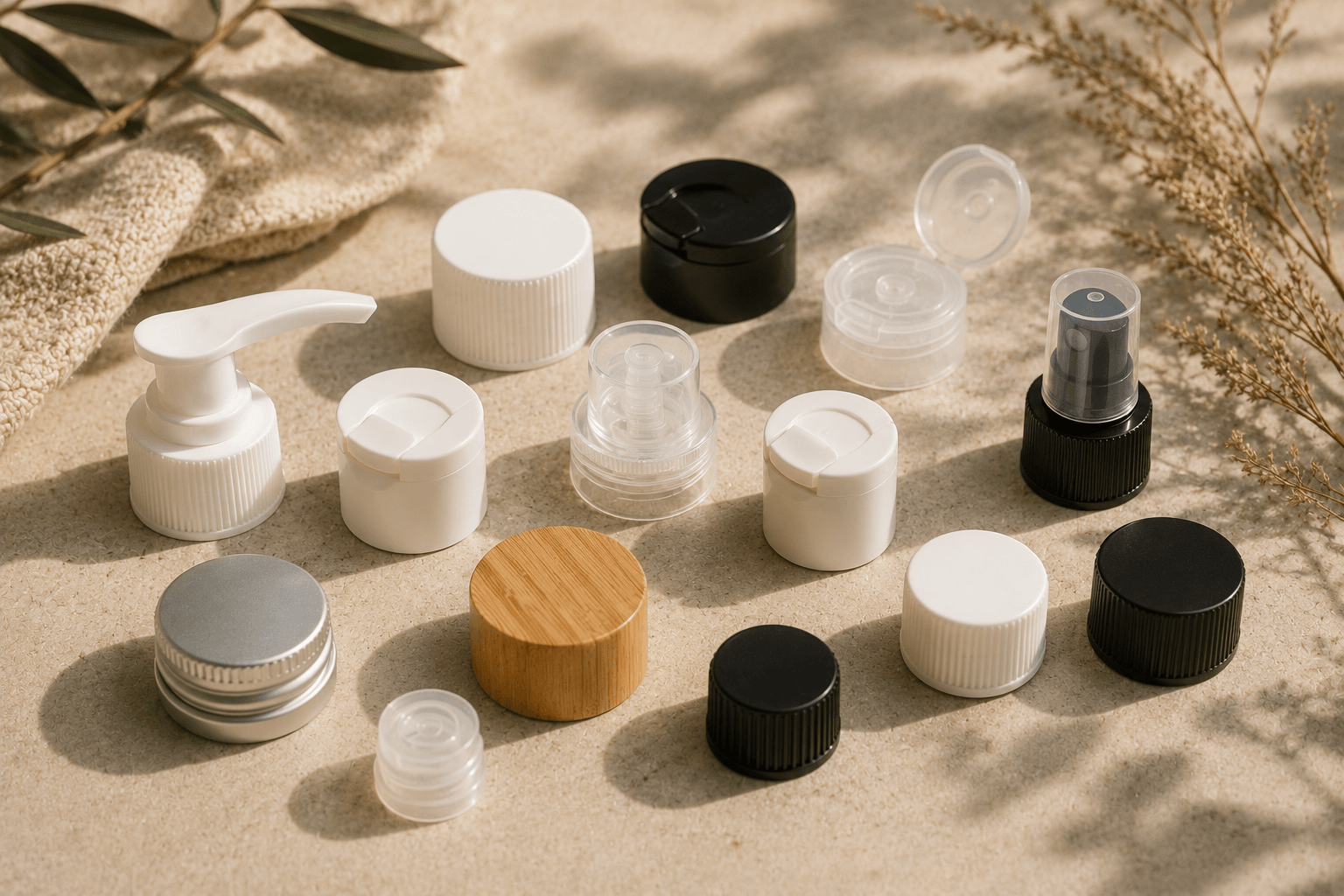
The closure is the point where the product meets the customer’s hand. If it does not work, the customer notices immediately.
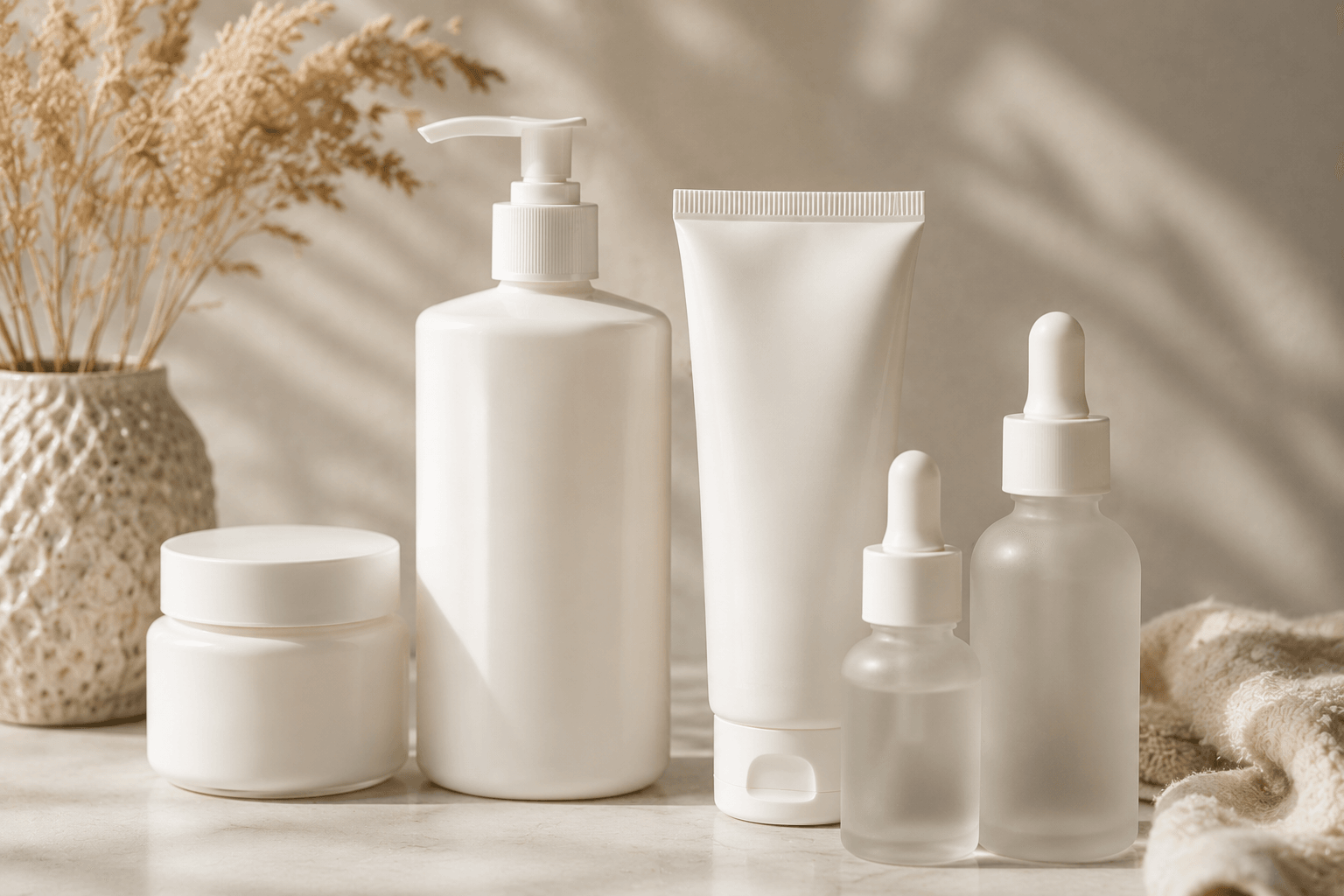
Packaging by product type: a practical choice
When we combine material, bottle shape and closure, a pack is created that either fits the product or does not. Here is a quick map for the most common types of cosmetics.
Facial oils and oil serums
Suitable packs: dark glass, glass with a pipette, dropper, roll-on or compatible plastic according to the composition.
Important: protection from light, compatibility with oils and fragrance, precise dosing.
Water-based serums and active gels
Suitable packs: airless, pump, suitable plastic or glass depending on the formulation.
Important: hygiene, protection from contamination, pH, stability of active ingredients.
Facial toners and hydrolats
Suitable packs: PET, glass, sprayer or flip top depending on how it is applied.
Important: type of sprayer, preservation, protection from contamination.
Shampoos and shower gels
Suitable packs: PET or HDPE.
Important: safety in the shower, squeezability, closure, viscosity.
Body milks and creams
Suitable packs: pump, airless, tube, jar depending on viscosity.
Important: dosing, hygiene, the ability to get the product out without a fight.
Scrubs and masks
Suitable packs: jar or wide neck.
Important: particles, density, scooping, contact with water in the bathroom.
Balms and butters
Suitable packs: aluminium jars, glass or plastic jars, sticks.
Important: firmness, way of scooping, protection from heat.
Cleansing products and more technical formulations
Suitable packs: mainly HDPE.
Important: chemical resistance, safe handling, a secure closure.
European changes: packaging will have to make more sense
Packaging in Europe is gradually coming under greater pressure. It is not enough for it to be attractive and to sell. It will become increasingly important whether it is designed so that it can be recycled, sorted, labelled and used without unnecessary waste.
PPWR — key dates: The European Union has adopted a new regulation on packaging and packaging waste (PPWR, Packaging and Packaging Waste Regulation, Regulation (EU) 2025/40). The regulation entered into force on 11 February 2025 and will generally apply from 12 August 2026.
The aim of the new rules is to reduce the amount of packaging waste, support the circular economy and improve the recyclability of packaging. The European Commission states that the goal is for all packaging on the EU market to be recyclable in an economically viable way by 2030.
For cosmetics this means in practice that more attention will be paid to:
- recyclability of the packaging,
- minimising unnecessary packaging material,
- limiting needlessly complicated combinations of materials,
- clearer labelling of packaging,
- easier sorting,
- recycled content in selected plastic packaging,
- packaging design that takes the whole life cycle into account.
This does not mean that all cosmetic packaging will be the same or boring. It means that design will have to respect the reality of recycling, sorting and material responsibility more.
What mono-material means
Mono-material means that the packaging or its main parts are made as far as possible from one type of material. The aim is to simplify sorting and recycling.
In cosmetics this matters, because packaging is often not just one bottle. It can contain:
- the bottle,
- the closure,
- the pump,
- a spring,
- a gasket,
- the label,
- decoration,
- a metallised layer,
- several kinds of plastic.
The more different materials the packaging contains, the more complicated its sorting and recycling can be.
Simpler solution
A PET bottle, a compatible plastic closure and a label that does not complicate sorting.
More complex solution
A glass bottle, a plastic pump, a metal spring, a decorative label and a plastic film.
A more complex solution is not automatically bad. Sometimes it has a good reason, for example protecting a more sensitive formulation or better hygiene in use. But it should have a reason. Not just look more expensive.
How to talk about packaging fairly
With packaging it is easy to slip into general claims. But these are less and less sufficient. It is better to be specific.
Weak claims
Better claims
What to remember when choosing packaging
Before choosing packaging it pays to ask a few practical questions. They are boring, but they save a lot of bad decisions.
“The best packaging is not the prettiest one. The best packaging is the one that fits the formula, the way it is used and the customer.”
Conclusion: packaging is more than design
Packaging sells, but good packaging does more than make a good first impression. It protects the formula, helps with dosing, reduces the risk of contamination, carries the label and copes with the bathroom, transport and real use. Material, bottle shape, closure and the way it is labelled are not small details. They are decisions that influence both the quality of the product and the customer’s experience.
So the question is not only: “Does this packaging look good?” A better question is: “Does this packaging make sense for this specific product?” If it does, the design can sell. If it does not, the packaging will sooner or later become a problem.
Coming next: the label
An important part of the packaging is the label. It carries the mandatory information, the composition, warnings, symbols, claims and everything the customer needs to know before using the product. That is why we will cover it separately in the next articles.
An article for manufacturers about what a cosmetic label must contain, and how to work with Ingredients, allergens, PAO, the batch, the nominal content, certifications and claims.
An article for customers about how to find your way around the composition, claims, fragrance, allergens, certifications and marketing statements, without unnecessary scaremongering and without naivety.
Frequently asked questions
What is the difference between PET and HDPE for shampoos and shower gels?
PET is clear and strong, it shows the colour and texture of the product well, but it is less squeezable. HDPE is more matt and more flexible, it squeezes better and survives a drop. With the same shampoo, PET gives a more premium look and HDPE more practical use in the shower.
Why are oil serums packed in dark glass?
Many plant oils and active ingredients are sensitive to light. Dark glass (amber, blue, violet) filters part of the light spectrum and helps slow down oxidation. For oil serums in smaller volumes this is a common and proven standard.
Is glass packaging automatically more ecological than plastic?
No. Glass is heavier, which increases the transport load and emissions. Plastic is lighter, but more demanding to sort and recycle. The ecological balance of a pack depends on the whole life cycle — from production, transport and use through to sorting. The most ecological pack is the one that fits the product and that the customer uses up.
When is an airless pack worth it?
An airless pack makes sense for active creams and serums that are sensitive to air, oxidation or contamination by fingers. The price is a higher purchase cost and often more complex recycling, which is why it is not used for ordinary products without special requirements.
Why does a cosmetic pump sometimes stop working?
Most often because of poor compatibility between the pump and the product: too thick a consistency, particles, crystallising ingredients or an unsuitable type of valve. With a new product the pump is therefore tested with the real formula, not just chosen from a catalogue.
What changes will the PPWR regulation bring for cosmetic packaging?
The PPWR (EU 2025/40) will apply from 12 August 2026. For cosmetics it will mean more emphasis on recyclability, mono-material packaging, minimising packaging waste and clearer labelling. The EU’s goal is for all packaging to be recyclable in an economically viable way by 2030.