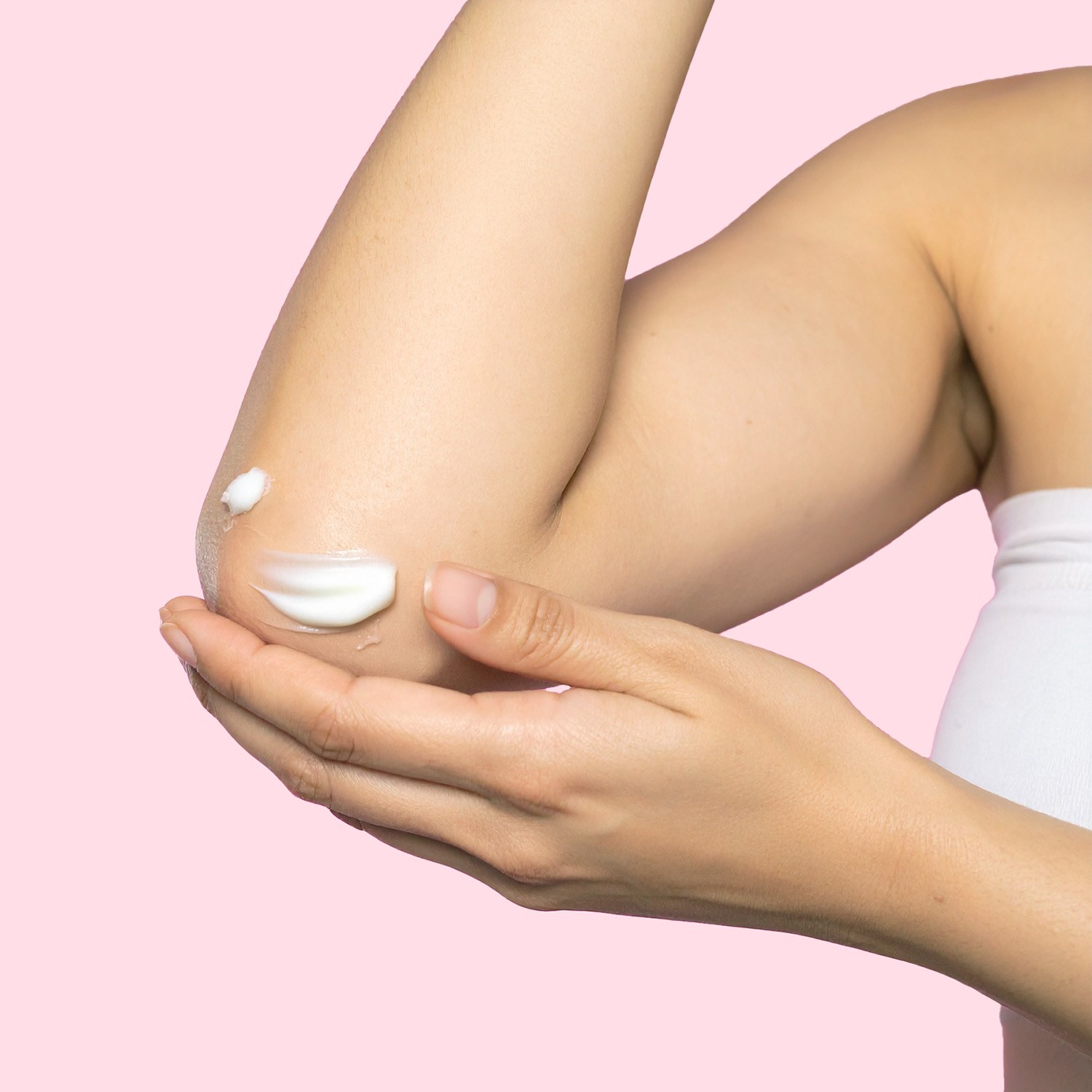
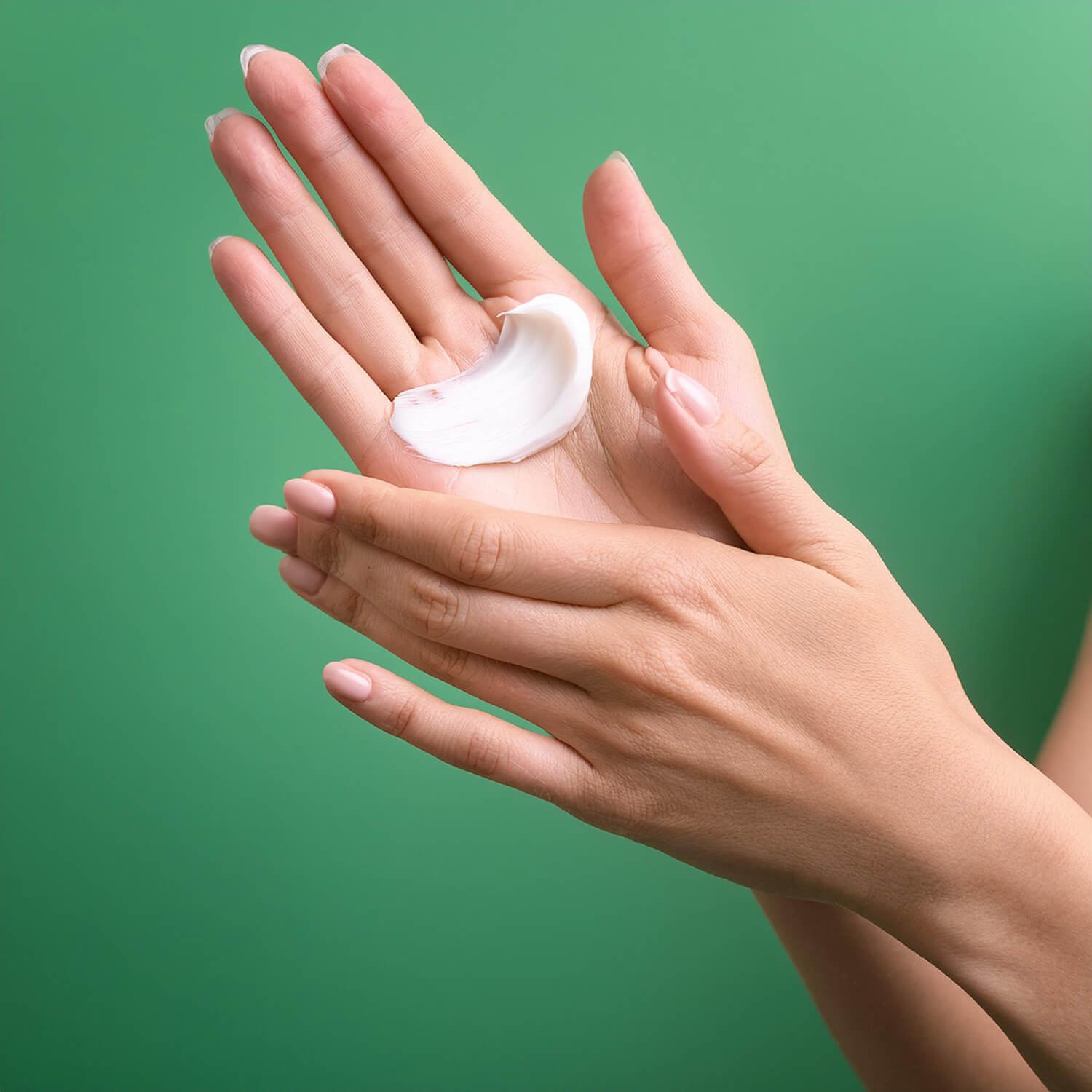
You will appreciate a balm for dry skin especially during the colder days — the natural Vegeline petroleum jelly makes it a real miracle. If you want to prepare a rich, softening balm, we bring you a recipe that combines vegetable oils and butters providing the skin with intensive hydration and protection against water loss. You will definitely fall in love with this balm if you have dry skin on your elbows, soles, hands or knees.
About this recipe
The instructions for making the balm for dry skin were prepared by Ivana Jačalová. The base for making the balm is formed by Vegeline – vegetable petroleum jelly. This raw material gives the balm a rich consistency and at the same time helps to create a protective film on the skin, which prevents further dehydration. To reduce the feeling of greasiness, other raw materials such as starch or alkyl benzoate were used, which make applying the product to the skin more pleasant.
Key benefits
- Rich consistency
The vegetable petroleum jelly Vegeline gives the balm a rich consistency; cocoa butter and rice starch add to the richness of the product as well.
- Protective film
It creates a film on the skin that prevents further water loss and helps the other components penetrate the skin better.
- Less greasy feel
Rice starch and alkyl benzoate reduce the feeling of greasiness and make the product more pleasant to apply.
- No preservative
Water is not part of the recipe, so the product does not require a preservative.
- For the driest spots
It suits dry skin on elbows, soles, hands or knees — including after frequent hand washing and disinfection.
Product properties
Key raw materials in the recipe
Below you will find information on the properties of the individual raw materials in the recipe. You will also find out more about their possible substitutions and about the ways you can tailor the balm exactly to your needs.
Vegeline 70
To create the rich consistency of the balm for dry skin, the vegetable petroleum jelly Vegeline was used. That, however, is not its only role. Thanks to its content of vegetable fats it can excellently hydrate very dry skin, by creating a protective film on it that prevents further water loss from the skin and, conversely, helps the other components penetrate better into the skin. This petroleum jelly is purely of vegetable origin, without paraffins or other substances derived from petroleum.
You will appreciate Vegeline especially if you often have to wash or disinfect your hands and therefore have dry, cracked skin. If you would like a less rich balm that spreads a little more easily, reduce the proportion of Vegeline in the recipe and replace it with selected oils or butters.
Cocoa butter
A great butter for hydrating the skin is cocoa butter. This butter melts at body temperature and thus makes creams and balms easier to apply. In addition, if you choose an unrefined version of this butter, you can also look forward to the pleasant chocolate scent that accompanies cocoa butter.
Cocoa butter also contributes to the richness of the balm, so reducing its content in the recipe will make the product more liquid and easier to apply. You can replace this butter with other vegetable butters, although every substitution will result in a certain change in the consistency of the product.
MCT caprylis – neutral oil
The advantage of the neutral oil MCT caprylis is the fact that this oil is extremely stable and undergoes minimal oxidation. Thanks to this, you can enjoy your products for longer. In addition, this oil is colourless and odourless, so the other components of the product can stand out.
Of course, MCT caprylis can be replaced with another vegetable oil of your choice. You can also choose a combination of several oils, or increase their share in the recipe if you want a balm that is creamier and easier to apply to the skin.
Rice starch
The main component reducing the greasiness of the final balm for dry skin is rice starch. This type of starch is extremely gentle on the skin, which is why it is often used in baby powders and dry shampoos. Rice starch can be replaced with any other starch — try corn starch, for example.
If the product seems insufficiently nourishing and emollient to you, reduce the dose of starch in the recipe. Conversely, you can increase the starch content in the recipe at the expense of Vegeline. Bear in mind, however, that rice starch contributes to the richness of the product.
Alkyl benzoate
Alkyl benzoate is an oil-based raw material that excellently complements the other components of the product; this substance is used to replace part of the vegetable oils, since it is well absorbed by the skin and leaves behind no greasy feeling. If you do not have alkyl benzoate to hand, you can replace it with vegetable oils; those that absorb well into the skin work especially well, such as almond or apricot oil.
Tocopheryl acetate
To maintain the freshness of the oils and fats used in the balm recipe for longer, tocopheryl acetate was used. This is a form of vitamin E, a fat-soluble vitamin with antioxidant properties. Its ability to quench free radicals, and thus to fight oxidation, will be appreciated not only by our skin, but also by the other raw materials in the product. Thanks to vitamin E, the final stage of oxidation, when oils and fats change their colour and take on an unpleasant smell, is delayed.
Tocopheryl acetate is sensitive to heat, so add it only once the mixture has cooled. A possible substitute is tocopherol, 96 % vitamin E.
Essential oil
The balm for dry skin owes its fresh scent to the use of field mint essential oil. Essential oils are a great way to perfume products naturally. You can replace the mint essential oil with another type of these oils, but it is good to observe the recommended dosage (see the IFRA document with the product).
Another option is to leave out any perfuming, or to choose fragrance oils, which are a synthetic substitute for essential oils. These oils offer an even wider palette of scents, so you can reach for various fruity fragrances as well.
Formulation (100 g)
The content of the raw materials is given in percentages by weight, so it corresponds to a batch of 100 g of finished balm. The raw materials are divided into two phases: phase A is melted in a water bath, phase B is stirred into the cooled and whipped mixture.
| Phase / raw material | Content |
|---|---|
| Phase A | |
| Vegeline 70 | 50,00 % |
| Cocoa butter | 12,00 % |
| Neutral oil MCT caprylis | 9,00 % |
| Phase B | |
| Rice starch | 25,80 % |
| Alkyl benzoate | 2,00 % |
| Tocopheryl acetate | 1,00 % |
| Field mint essential oil | 0,20 % |
| Equipment | |
| Glass jar | — |
Method
- Disinfection
Thoroughly disinfect all the tools, containers and packaging you are going to use, for example with ethanol.
- Weighing out the fat phase Phase A
Weigh the Vegeline, cocoa butter and neutral oil MCT caprylis into a heat-resistant container.
- Melting in a water bath Phase A
Place the mixture in a water bath and wait until all the raw materials have melted and combined. Mix thoroughly and move the container to the fridge/freezer.
- Whipping and adding the starch Phase B1–2 min
Once the mixture has solidified, start whipping it with a hand mixer (the kind used for whipping egg whites); after 1–2 minutes continue by adding the starch in small portions.
- The remaining phase B raw materials Phase B
Once the starch has been incorporated into the mixture, add the alkyl benzoate, tocopheryl acetate and essential oil. Mix well with the mixer again.
- Filling the jar
Fill the finished mixture into the disinfected jar.
Tips and tricks
Would you like to make preparing your balm for dry skin easier? You are in the right place!
For heating the raw materials in a water bath, choose a container that is wide enough and is also suitable for mixing – one with a rounded bottom, such as a metal or heat-resistant plastic bowl.
The cooling time will vary with the amount of product you are making. However, do not leave the mixture in the fridge or freezer overnight – the balm will already be too firm to whip. It is enough that there is no longer any liquid mixture at the bottom of the container.
You can also speed up the cooling by leaving an empty metal bowl to chill in the freezer in advance. Then, once you have taken the still hot mixture off the water bath, start pouring it in small portions down the sides of the chilled bowl. The mixture will set almost immediately. Later, though, you will need a spatula to get the mixture off the sides and back to the mixer beaters.
When adding the starch to the mixture, it is important to work gradually. It is a good idea to turn off the mixer, stir part of the starch into the mixture with a teaspoon, mix with the mixer, and repeat this several times until all the starch has been added. If you sprinkle in the starch while the mixer is running, the mixer may whirl the starch up and scatter it around.
It is a good idea to store the finished product away from direct sunlight and sources of heat. Dark glass jars are ideal, since the mixture is not liquid and would be difficult to dose from another container. The advantage is that as long as the oils and butters in the product have not oxidised and no water has got into it (from wet hands, for example), you can carry on using it. Since water is not part of the recipe, the product does not require a preservative.
Warning
As mentioned, you can experiment with homemade recipes to achieve the properties you want. However, the final result can be influenced by many factors, such as humidity, temperature, the quality of the raw materials or the way they are stored.
Before you use any raw material to make a cosmetic product, familiarise yourself with its properties, the recommended dosage, the storage conditions and safe handling. Any raw material may have the potential to trigger an allergic reaction in sensitive individuals, so before using the product we recommend finding out whether you are allergic to any of the raw materials or to the product as a whole, for example with a skin test.
If you have very sensitive or very acne-prone skin, or other skin and health problems, we recommend that you consult a medical professional before applying a new product to your skin, whether it is a homemade cosmetic product, a pure raw material or a commercially available product.
Frequently asked questions about the recipe
Practical questions about the balm for dry skin — preservation, consistency, substitutions of raw materials and storage.
Why does the balm contain no preservative?
The recipe contains no water, so the product does not require a preservative. As long as the oils and butters in the product have not oxidised and no water gets into it (from wet hands, for example), you can carry on using it.
How do I get a less rich balm?
Reduce the proportion of Vegeline in the recipe and replace it with selected oils or butters. You will also get a more liquid product that is easier to apply by reducing the cocoa butter content, or by increasing the share of oils.
What can I replace rice starch with?
Rice starch can be replaced with any other starch — try corn starch, for example. Bear in mind, however, that rice starch contributes to the richness of the product.
Why can I not whip my mixture?
It has probably set too hard. Do not leave the mixture in the fridge or freezer overnight — the balm will already be too firm to whip. It is enough that there is no longer any liquid mixture at the bottom of the container.
How do I add the starch without it dusting everywhere?
Turn off the mixer, stir part of the starch into the mixture with a teaspoon, mix with the mixer and repeat this several times. If you sprinkle in the starch while the mixer is running, the mixer may whirl the starch up and scatter it around.
How should I store the finished balm?
Store it away from direct sunlight and sources of heat. Dark glass jars are ideal — the mixture is not liquid and would be difficult to dose from another container.
What can I use instead of alkyl benzoate?
You can replace it with vegetable oils; those that absorb well into the skin work especially well, such as almond or apricot oil.
Conclusion
Our thanks go to the wonderful Ivana Jačalová for this excellent contribution with instructions for making a balm for dry skin. Have you made it with us?
If you have comments, experiences or questions that came up while reading or following our tutorial on the blog, write to us at [email protected] and we will gladly reply.
Until we meet again in a new article or tutorial, have a lovely and creative day.
You will find the butters, vegetable oils, starches and essential oils from this recipe in the Handymade range of raw materials.