


Closures DIN18
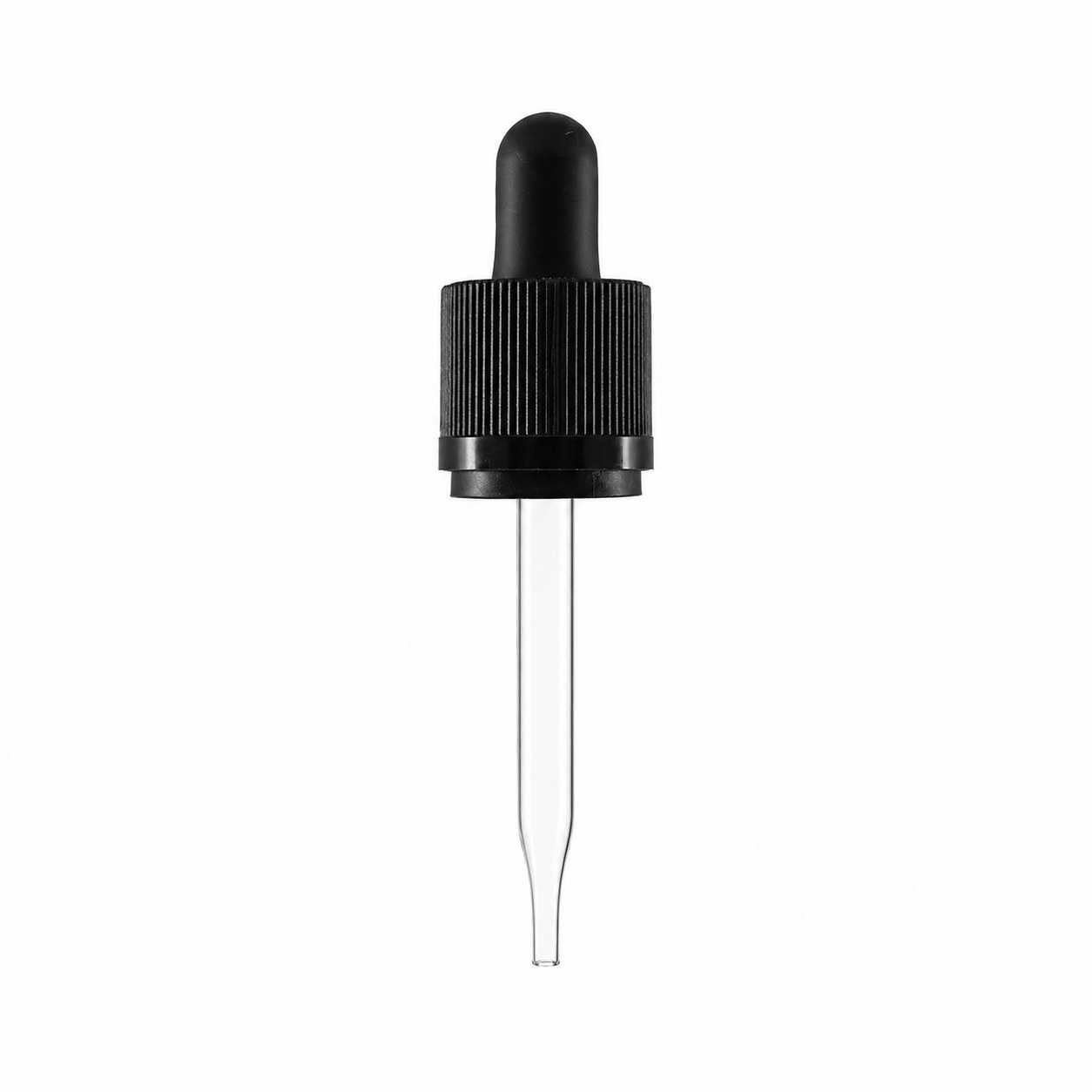
Black dropper with safety lock, 71 mm
Black pipette with safety lock, 71 mm is a glass dropper with a black plastic cap and silicone bulb for bottles with an 18/415 neck finish. full description
Lowest price in the last 30 days: €0.55
Total for 1 pcs: €0.55
Product description
Black pipette with safety lock, 71 mm is a glass dropper with a black plastic cap and silicone bulb for bottles with an 18/415 neck finish. It is suitable wherever the contents are dispensed drop by drop and need to be protected against accidental opening: facial serums, oil elixirs, tinctures, concentrated actives, or essential oil blends. The safety cap complements both dark and clear bottles with the same neck finish and gives the finished product the look customers recognise from professional cosmetics.
The dropper is suitable for use with cosmetic products and meets the applicable legislative requirements for packaging materials.
What the dropper is suitable for
- Precise dispensing – the glass tube with bulb draws up and releases small amounts of content drop by drop. Practical for serums, oil concentrates, and products where only a few drops are applied.
- Safety lock against accidental opening – the cap does not open by simple turning; it requires pressing and turning simultaneously. This makes accidental loosening in a bag or bathroom more difficult.
- Glass in contact with the contents – the part submerged in the product is made of glass. Glass does not react with oils, alcohol-based extracts, or aqueous solutions and does not absorb odours.
- Black cap – the dark plastic does not allow light through the top of the packaging and pairs well with brown, blue, and black bottles. Any staining of the cap by oils is not visible.
- Easy replacement – the dropper can be replaced at any time with another closure of the same neck type, for example when changing a product or after the bulb wears out.
Choosing the right length and neck finish
A dropper is selected based on two parameters: the neck finish type and the tube length. The 18/415 finish identifies the neck type commonly used on glass bottles for serums and oils. The bottle must have the same specification; otherwise the cap will not seat properly and will not seal.
The tube length determines how far down the bottle the dropper reaches. A correctly chosen dropper ends just above the bottom so that the last of the contents can be drawn up, but does not touch the bottom so that the glass is not damaged when the cap is screwed on. For Handymade bottles, the appropriate dropper length is listed in the bottle's parameters; for bottles from other sources we recommend measuring the height.
If you are unsure whether a dropper fits, compare the tube length with the height of the bottle from the neck to the bottom. The tube should be a few millimetres shorter. A tube that is too long cannot be screwed down fully; one that is too short leaves an unusable residue at the bottom.
Closures with the same neck finish and ready-made bottle and dropper combinations are available in the Handymade range. When assembling your own combination, we recommend verifying the seal, dispensing behaviour, and compatibility of the packaging with your specific formulation.
Working with the dropper in production
Before first use, the dropper should be washed and disinfected: rinse the glass tube and bulb with clean water, wipe or rinse with isopropyl alcohol or ethanol, and allow to dry completely. No water from washing should remain in the bottle with the finished product, especially in anhydrous oil-based products where it could cause cloudiness or promote microbial growth.
The bottle is filled to the nominal volume, not to the brim. The difference between the nominal and total volume is a reserve for the dropper tube, which displaces some of the contents upward when screwed in. If the bottle is filled to the neck, the product will overflow when the dropper is fitted.
The safety cap is opened by pressing and turning. It is good practice to include this information for the customer on the label or in the instructions. Standard droppers open by turning alone, and an inexperienced user may think the cap is stuck.
The number of drops per millilitre depends on the viscosity and surface tension of the contents: light oils and alcohol-based tinctures produce smaller drops than thick serums. If you state dosage in drops on the label, we recommend measuring it directly with your own formulation.
Good to know
The glass tube is fragile. It can break if the bottle is dropped or if the cap is overtightened, so the dropper should be tightened by hand only and without applying pressure to the tube.
The silicone bulb is compatible with most cosmetic raw materials. For products with a high proportion of essential oils or organic solvents, it is advisable to monitor the bulb's behaviour over time. Contents should not be left in the bulb for extended periods; after dispensing, squeeze the bulb to return the contents to the bottle.
If you ship products to customers, verify the seal of the bottle and dropper combination with the actual formulation and secure the packaging against tipping during transport.
The dropper can be reused if it is thoroughly cleaned and disinfected after the bottle is emptied. When switching products, it is advisable to replace at least the bulb or the entire dropper to prevent traces of fragrance or colour from transferring to the new contents. When recycling, the glass tube, plastic cap, and silicone bulb should be disassembled and sorted by material.
Frequently asked questions
Parameters
Product documentation
- PDSProduct Data Sheet
- PDF ↓
Verified by customers.
No reviews yet.
Only customers with a delivered order can write reviews.