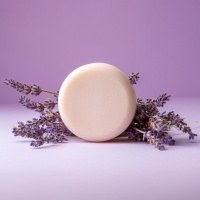
A solid lavender conditioner with preservative is another recipe where we will explain why it is good to use a natural preservative — in this case for a solid hair conditioner. If you have long hair and you are a lover of conditioners thanks to which you do not know the suffering of hair that cannot be detangled, then read on. Most of you probably know conditioner in liquid form, but the solid version will pleasantly surprise you.
About this recipe
The recipe makes one larger solid stick of hair conditioner, which is not water-based — its base is BTMS together with cetyl alcohol and cocoa butter. Its scent comes from lavender essential oil and it is protected against contamination by the natural preservative Cosgard.
We give the raw materials in two tables — in grams and as percentages — so you can easily recalculate the batch. Making it is simple: the raw materials are melted in a water bath, mixed, poured into a silicone mould and left to cool. Even complete beginners will manage it.
Main benefits
We have already mentioned the benefits of this choice with solid shampoos — the same applies to a solid conditioner.
- Almost zero waste
You are almost zero-waste — the conditioner does not need any plastic packaging.
- Excellent for travelling
The conditioner will not leak during any handling (probably everyone knows how your luggage is handled, especially at airports).
- Economical dosing
You use only as much as you need, whereas with a liquid product most of us tend to use more than necessary — you are therefore more economical and the conditioner will last you longer.
- Protected by a preservative
A natural preservative protects the product against the microorganisms that thrive in a solid conditioner on contact with water and a humid environment.
- Simple to use
You rub the stick over your hair and then try to comb your hair through — gradually you will find the right amount for your hair.
Product properties
What role does the preservative play in a solid conditioner?
The solid conditioner, as you can see in the recipe below, is not water-based. It is precisely the contact with water and a humid environment that creates conditions for the formation of microorganisms. In this case, you could prevent contamination only by thoroughly drying your product after each use, and even that will not guarantee you 100% protection.
Many people do not add a preservative to their products and store them in the refrigerator in order to prolong the product’s shelf life. But even in the refrigerator, you should store your products for as long as, for example, cream or mayonnaise, a maximum of 10 days. After this time, bacteria and mould start to develop even in a cold environment.
Key raw materials in the recipe
Below we will go through the raw materials that the solid conditioner is made of, and the stage of the process at which you will need them.
Varisoft BTMS-25
BTMS forms the base of the recipe — at 73,5% it is the most strongly represented raw material (70 g in the stick). You weigh it out in the very first step together with cetyl alcohol and cocoa butter and melt it in a hot water bath.
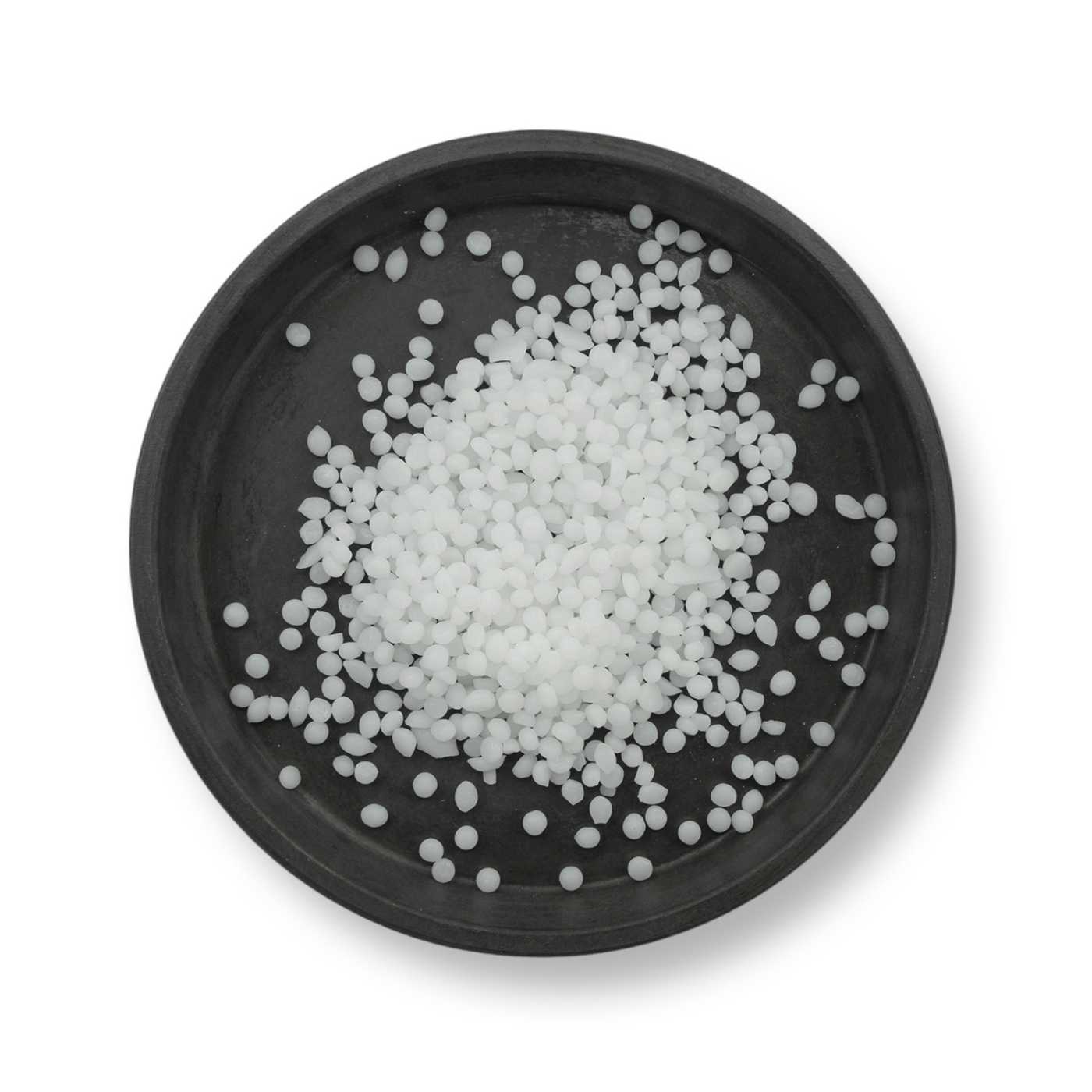
Cetyl alcohol
Cetyl alcohol accounts for 10,5% (10 g) of the formulation. It is one of the raw materials that are melted in the water bath in the first phase, and together with BTMS and cocoa butter it gives the stick its solid form.
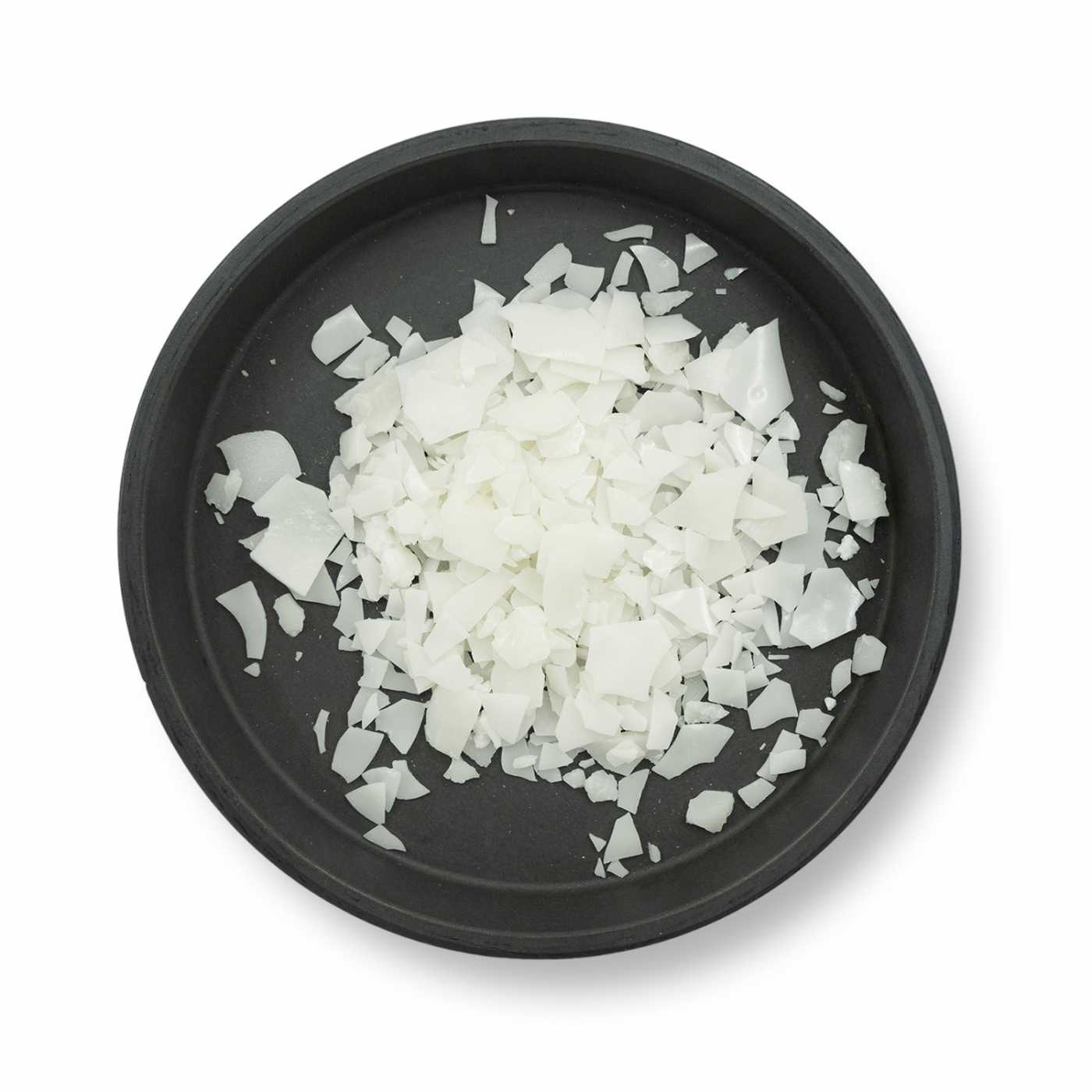
Cocoa butter
Cocoa butter accounts for 5,2% (5 g) of the recipe and is melted in the water bath together with BTMS and cetyl alcohol in the very first step.
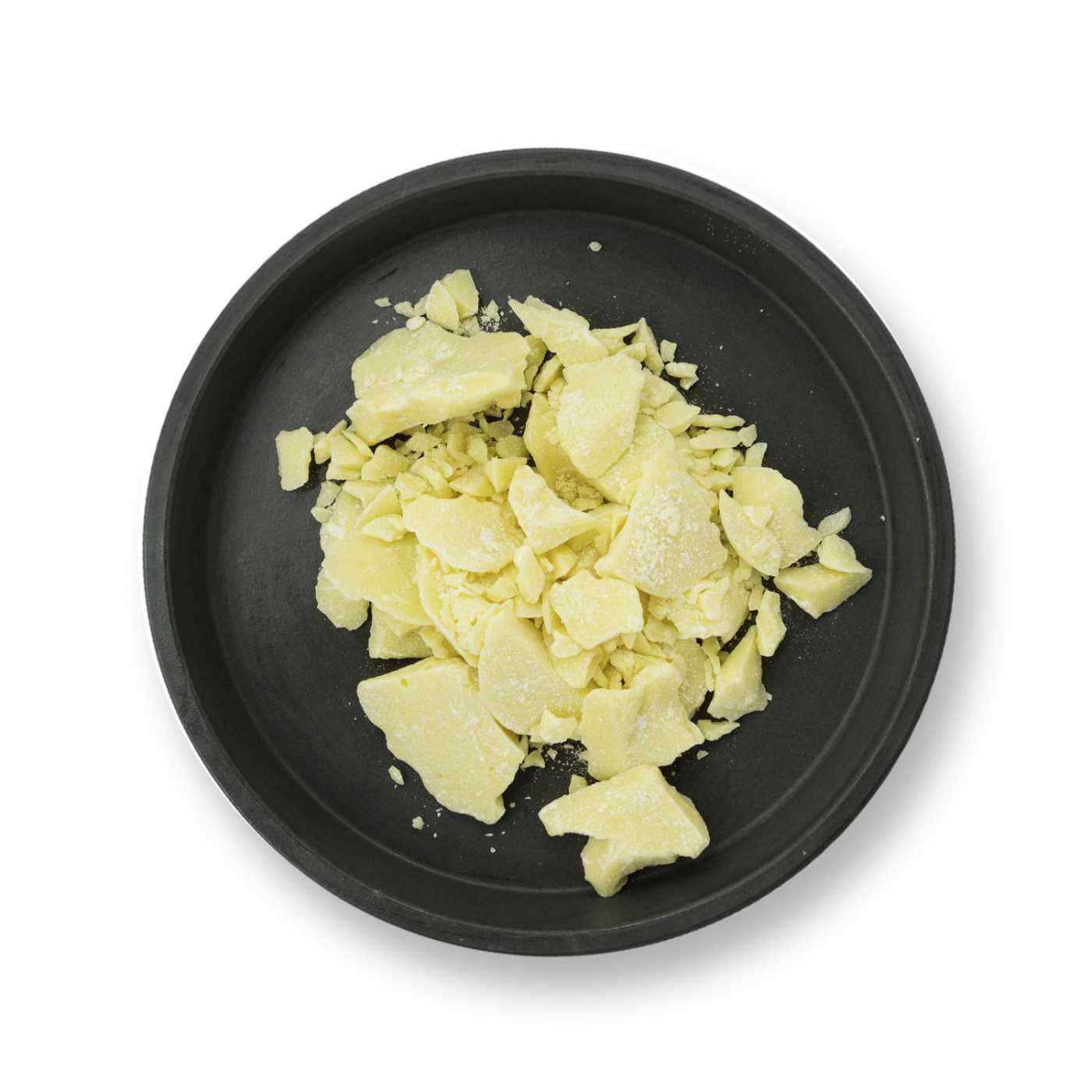
Cosgard
Cosgard is a natural preservative, to which a whole section above is devoted — in the recipe you will find it at 1% (1 g). It is added among the remaining ingredients only once the melted mixture has been removed from the heat source. You can find further options in the category preservatives.
Other raw materials
D-panthenol accounts for 2% (2 g) of the recipe and is one of the remaining ingredients that you weigh out and add to the mixture only after it has been removed from the heat source.
Lavender essential oil gives the conditioner its scent and makes up 2% of the formulation (2 g). It is likewise added once the mixture has been taken off the heat; you can find further scents among the essential oils.
Vitamin E rounds off the formulation with 0,5% (0,5 g) and you will find it, along with others, in the category vitamins and antioxidants.
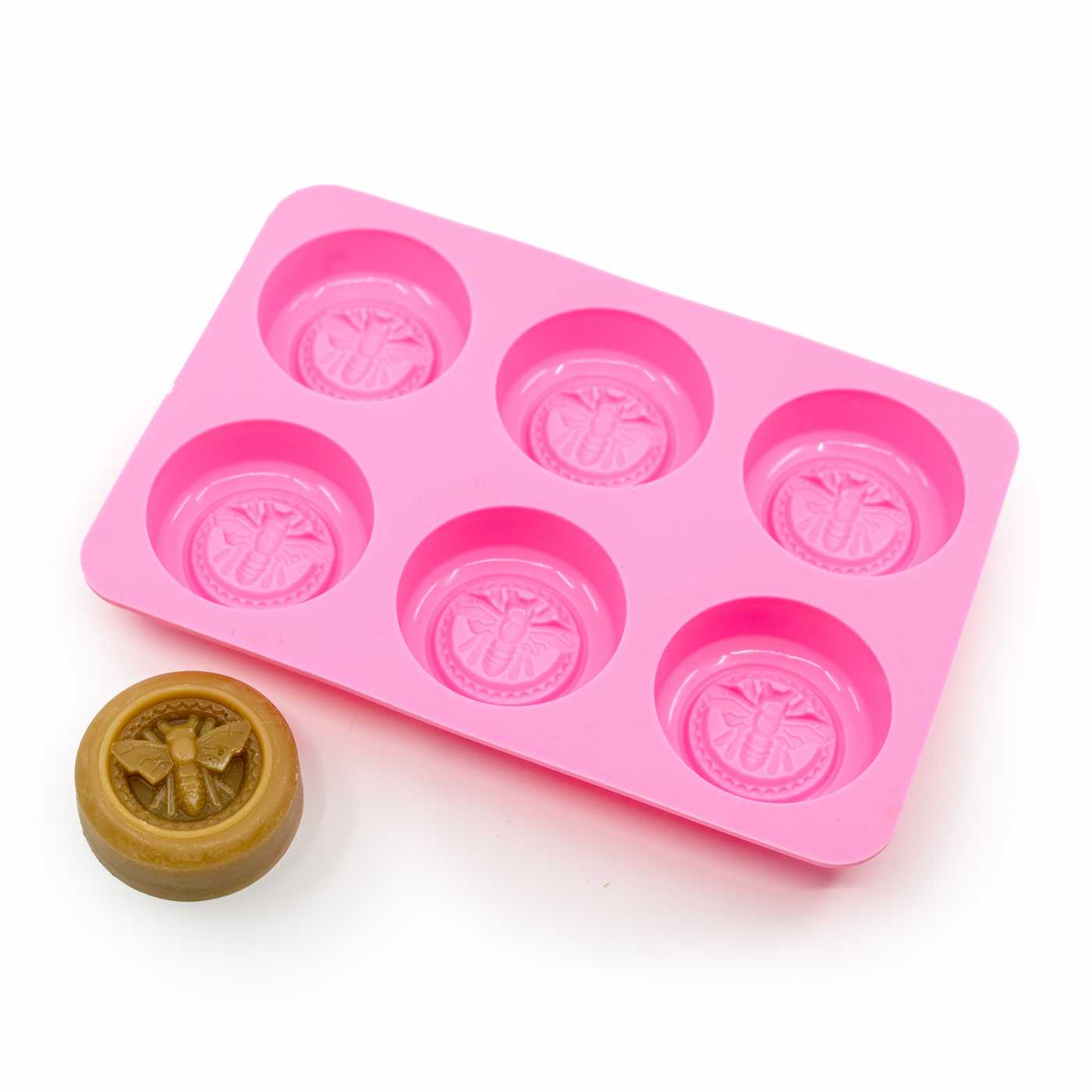
A silicone mould is the tool into which you pour the finished mixture immediately after mixing and leave it to cool.
Formulation (100 g)
To prepare one larger solid stick we will need the raw materials listed below. In the table you will find the content in grams, as given by the original recipe, as well as the percentages, which let you recalculate the batch to any size.
Shop the ingredients for this recipe
Untick what you already have- Varisoft BTMS-25, 100 guses 73.5 gin stock€5.45
- Cetyl Alcohol, 50 guses 10.5 gin stock€1.79
- Cocoa Butter, Deodorised, 100 guses 5.2 gsold outWatch availability€6.99
 D-Panthenol 75% W, 100 mlrecipe uses 2,00 gin stock€6.59
 Lavender Essential Oil, Herbal, 10 mlrecipe uses 2,00 gin stock€3.69
- Cosgard, Preservative, 10 mlrecipe uses 1,00 gin stock€1.98
 Vitamin E, Tocopheryl Acetate, 10 mlrecipe uses 0,50 gin stock€2.09
 Silicone Soap Mold, Beessold outWatch availability€10.49
| Phase / raw material | Content in (g) | Content in (%) |
|---|---|---|
| Phase A — melting in a water bath | ||
| BTMS | 70 g | 73,5% |
| Cetyl alcohol | 10 g | 10,5% |
| Cocoa butter | 5 g | 5,2% |
| Phase B — remaining ingredients after removing from the heat | ||
| D-panthenol | 2 g | 2% |
| Lavender essential oil | 2 g | 2% |
| Cosgard | 1 g | 1% |
| Vitamin E | 0,5 g | 0,5% |
| Tools | ||
| Silicone mould | — | — |
Method
- Melting Phase A
Weigh out the BTMS, cetyl alcohol, cocoa butter and coconut oil and melt them in a hot water bath. Mix the raw materials thoroughly.
- Remaining ingredients Phase B
Weigh out the remaining ingredients in the recipe, remove the melted mixture from the heat source and add them to this mixture, mixing thoroughly.
- Pouring into the mould
Immediately after mixing, pour into the prepared silicone mould.
- Cooling
Leave to cool.
- Removing from the mould
After cooling, remove from the moulds and you can use it immediately.
How to use
Very simple! Rub your hair with the stick and then try to comb your hair. Gradually you will find the right amount that is needed for your hair.

Frequently asked questions about the recipe
Practical questions about the solid lavender conditioner — preservation, storage, use and batch size.
Why add a preservative when the conditioner is not water-based?
It is precisely the contact with water and a humid environment during use that creates conditions for the formation of microorganisms. You could prevent contamination only by thoroughly drying the product after each use — and even that will not guarantee you 100% protection.
Is it enough to keep a product without a preservative in the refrigerator?
No. Even in the refrigerator, you should store your products for as long as, for example, cream or mayonnaise, a maximum of 10 days. After this time, bacteria and mould start to develop even in a cold environment.
How is a solid conditioner used?
Very simply — rub your hair with the stick and then try to comb your hair. Gradually you will find the right amount that is needed for your hair.
Why is the solid version better for travelling?
A solid conditioner will not leak during any handling — and probably everyone knows how luggage is handled, especially at airports. On top of that it does not need any plastic packaging, so you are almost zero-waste.
How much product will the recipe give me?
The quantities given are enough for one larger solid stick. Thanks to the percentages of the raw materials you can easily recalculate the batch to a larger or smaller amount.
You will find all the ingredients for making the solid conditioner — BTMS, cetyl alcohol, cocoa butter, D-panthenol, lavender essential oil and preservatives — in our range.