


Closures DIN18
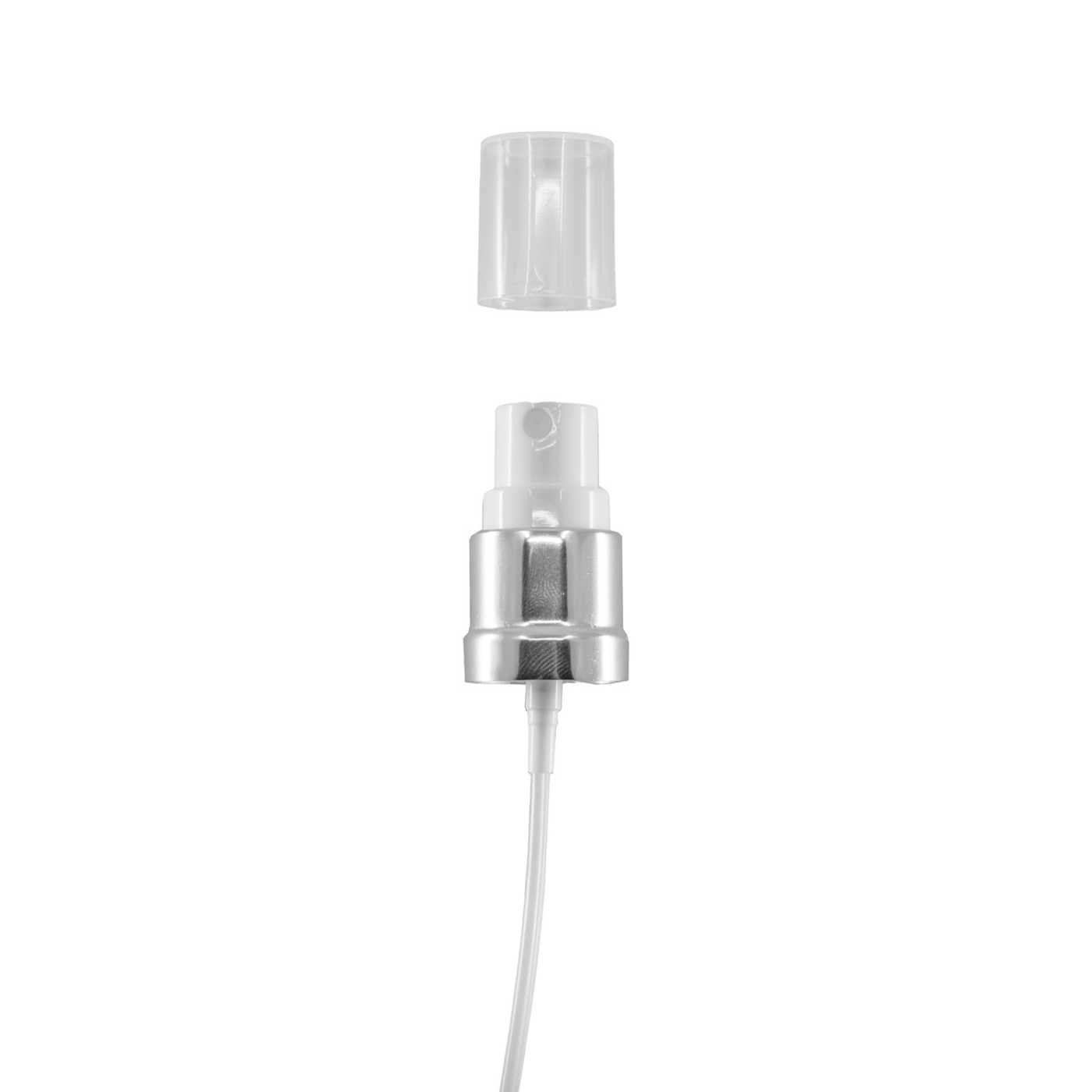
Plastic fine mist sprayer, 18/415, white-silver, glossy, 100 mm
A plastic spray pump with an 18/415 thread turns a bottle into a sprayer: a single press disperses thin liquid formulas into fine droplets and applies them evenly to skin, hair or into the air. full description
Lowest price in the last 30 days: €0.85
Total for 1 pcs: €0.85
Product description
A plastic spray pump with an 18/415 thread turns a bottle into a sprayer: a single press disperses thin liquid formulas into fine droplets and applies them evenly to skin, hair or into the air. Suitable for thin, water-based and alcohol-based formulas, from tonics and hydrolats to perfumes and room fragrances.
The contents are dispensed without opening the bottle, so fingers never touch the formula and no contaminants get in. With water-based products that have minimal preservation, this helps keep them in good condition throughout use. The pump is suitable for contact with cosmetic products; the compliance statement is listed in the product parameters.
Which formulas is it suitable for
The mechanism is designed for thin liquids with a viscosity close to water. It works well with:
- Water-based formulas – tonics, hydrolats, facial mists and lotions intended to be applied in a thin layer without a cotton pad.
- Alcohol-based and hydroalcoholic blends – perfumes, body sprays, pillow and room fragrances, where fine atomisation helps the scent develop.
- Thin hair care formulas – leave-in detangling sprays or hair tonics, provided they are sufficiently fluid.
Thick oils, gels, emulsions and formulas containing undissolved particles (clays, glitters, plant material) will not atomise. They either stream out of the nozzle or clog it. A pump dispenser or dropper is better suited for such contents.
Dosage and working with the dip tube
One press dispenses approximately 0.14 ml, meaning about seven presses per millilitre of formula. The small dose allows the formula to be applied gradually. This is useful for perfumes as well as facial mists, where a thin layer is all that is needed.
The dip tube should reach the bottom of the bottle; its length is listed in the product parameters. For a shorter bottle, trim it with scissors so that it ends just above the bottom.
It is advisable to cut the tube at an angle. A straight-cut end can suction against the bottom and prevent the pump from drawing up the formula; an angled cut keeps the inlet open right down to the last millilitres.
After fitting the pump onto a filled bottle, press it several times. The first few strokes will be empty while the tube and chamber fill with formula.
Good to know
Choosing a bottle. This pump fits an 18/415 neck finish. Bottles with the same neck type and ready-made bottle-and-pump combinations are available from Handymade. The white-silver gloss finish is colour-neutral and pairs well with both clear and tinted bottles. For custom combinations, we recommend testing seal integrity, dosage and the behaviour of the packaging with your specific formula.
Filling the bottle. The bottle should be filled to its nominal volume — that is, the volume it is rated for under normal filling conditions — not to the brim. The total brimful volume is the physical capacity up to the neck. The difference between the two provides headspace for the pump mechanism with its dip tube and for expansion of the contents with temperature changes. Overfilling will cause the bottle to overflow when the pump is fitted.
Preparation before first use. Flush the pump with warm water, then with ethanol or isopropyl alcohol (IPA) to disinfect the chamber and nozzle as well. Allow it to dry thoroughly before use.
The pump should not be boiled or hot-air sterilised. High temperatures can deform the plastic parts and cause the mechanism to lose its seal.
Material sensitivity. The pump combines plastic (PP) and aluminium. It is compatible with standard water-based and alcohol-based cosmetic formulas. Undiluted essential oils and aggressive solvents may affect the plastic parts over time; testing with your specific blend is recommended.
Reuse and recycling. After thorough cleaning, the pump can be reused — ideally for the same type of formula. Because it combines multiple materials, it is harder to recycle than single-material packaging, which makes reuse the more practical option.
Frequently asked questions
Parameters
Product documentation
- PDSProduct Data Sheet
- PDF ↓
Verified by customers.
No reviews yet.
Only customers with a delivered order can write reviews.