


GLASS JARS
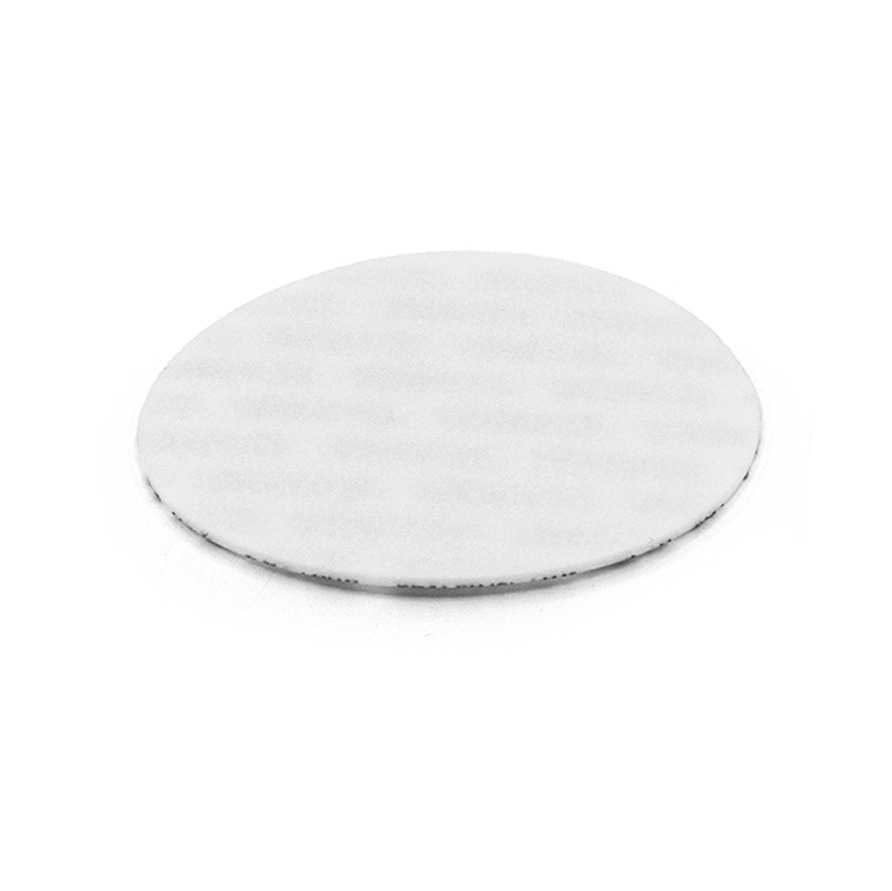
Pressure-sensitive sealing liners for jars, 66.5 mm
Sealing inserts for jars are self-adhesive liners that are placed under the lid of a jar or pot and, when the cap is screwed on for the first time, are pressed against the neck of the container. full description
Lowest price in the last 30 days: €0.14
Total for 1 pcs: €0.14
Product description
Sealing inserts for jars are self-adhesive liners that are placed under the lid of a jar or pot and, when the cap is screwed on for the first time, are pressed against the neck of the container. When opening, the customer immediately sees that no one has opened the product yet, and the contents are protected during transport and storage against spillage, drying out, and contamination. The 66.5 mm insert is designed for jars and pots with a matching neck size.
These are pressure-sensitive liners, not induction seals. No equipment or heat is required — the adhesive layer is activated by pressing the cap down. The liners are made of polyethylene and are suitable for cosmetic and technical products.
How a sealing liner works
The liner has one adhesive side and one smooth side. The adhesive side faces the jar neck, the smooth side faces the cap. After filling the jar, the liner is placed into the cap or set on the neck, the cap is screwed on firmly, and its pressure presses the adhesive layer against the rim of the neck. The adhesive bonds to the neck and the liner stays in place even after the cap is unscrewed.
When opening for the first time, the customer peels the liner off the neck. This creates a first-opening seal: as long as the liner is intact, the product has not been opened. It is a one-time seal — once peeled off, it cannot be re-adhered, and the jar is then closed by the cap alone.
Key benefits
- Evidence of unopened product – the customer sees that the contents are original. For cosmetics sales this is a trust element; for creams and balms it also provides hygienic protection.
- Contents protection during transport – the liner keeps the contents inside even when the package is shaken or the cap is slightly turned, so cream or a dry product cannot reach the thread.
- Slowing down drying out – the sealed neck limits air access to the contents until first opening. After that, only the cap performs this function.
- Simple application with no equipment – no induction machine or heat source needed. The liners can be used even for small batches and manual filling.
- Zero visual impact – the liner is thin and invisible once the jar is closed. It does not change the appearance of the jar or its label.
Which containers and products it is suitable for
The decisive factor when choosing is the neck type of the container, as stated in its parameters; ready-made jar + cap combinations are available in the Handymade range. For a custom combination, we recommend verifying that the liner sits flush around the entire neck circumference and that the cap presses it down evenly.
Best results are achieved with products that do not pour:
- creams, masks and balms – the liner protects the contents from drying out and contamination until first opening,
- body butters and solid deodorants in jars – prevents the product from reaching the thread during transport,
- bath salts, sugar scrubs, dry masks and powders – contents cannot spill inside the package,
- candles in tins, waxes and pastes – the liner serves as an unopened-product seal.
Pressure-sensitive liners are not a suitable primary seal for thin and liquid contents (tonics, oils, liquid soaps). The adhesive bond is planar, and liquid that seeps under the liner can release it. For liquids, bottles with closures that seal in a different way are used.
How to work with the liner
- The jar neck must be clean and dry. Residues of cream, oil, or water on the neck rim will prevent the adhesive from bonding. Wipe the rim after filling.
- Fill the jar so that the contents do not protrude above the neck. If the liner touches the cream, it will adhere to the product instead of the neck.
- Screw the cap on firmly. It is precisely the pressure of the cap that creates the bond — a loosely tightened cap is not sufficient.
- The adhesive needs time to bond to the neck. Do not open or turn sealed jars immediately after closing; leave them to stand for several hours.
Before the first batch, run a test on one jar: fill it, close it, leave it to stand until the next day, then unscrew the cap. If the liner remains adhered to the neck and can be peeled off in one piece, the combination of container, cap, and liner works for you.
Good to know
- The liner is single-use. Once peeled off, it cannot be reused or transferred to another jar.
- The liner does not replace a proper cap. Repeated-use tightness is provided by the cap; the liner protects the contents only until first opening.
- For caps with their own internal seal, verify that the liner does not sit double at the sealing point and that the cap can be fully tightened.
- Fatty and oily contents that come into contact with the neck rim can reduce adhesive bonding, making neck cleanliness even more important in such cases.
- The liner is intended for cosmetic and technical products. Suitability for food contact is not declared.
- This is a polyethylene product; once peeled off, it belongs in plastic waste.
The liner will only adhere to a flat and smooth neck rim. Jars with a pronounced relief, flange, or uneven neck will not hold the seal. In that case, choose a different method of securing the contents.
Frequently asked questions
Parameters
Verified by customers.
No reviews yet.
Only customers with a delivered order can write reviews.