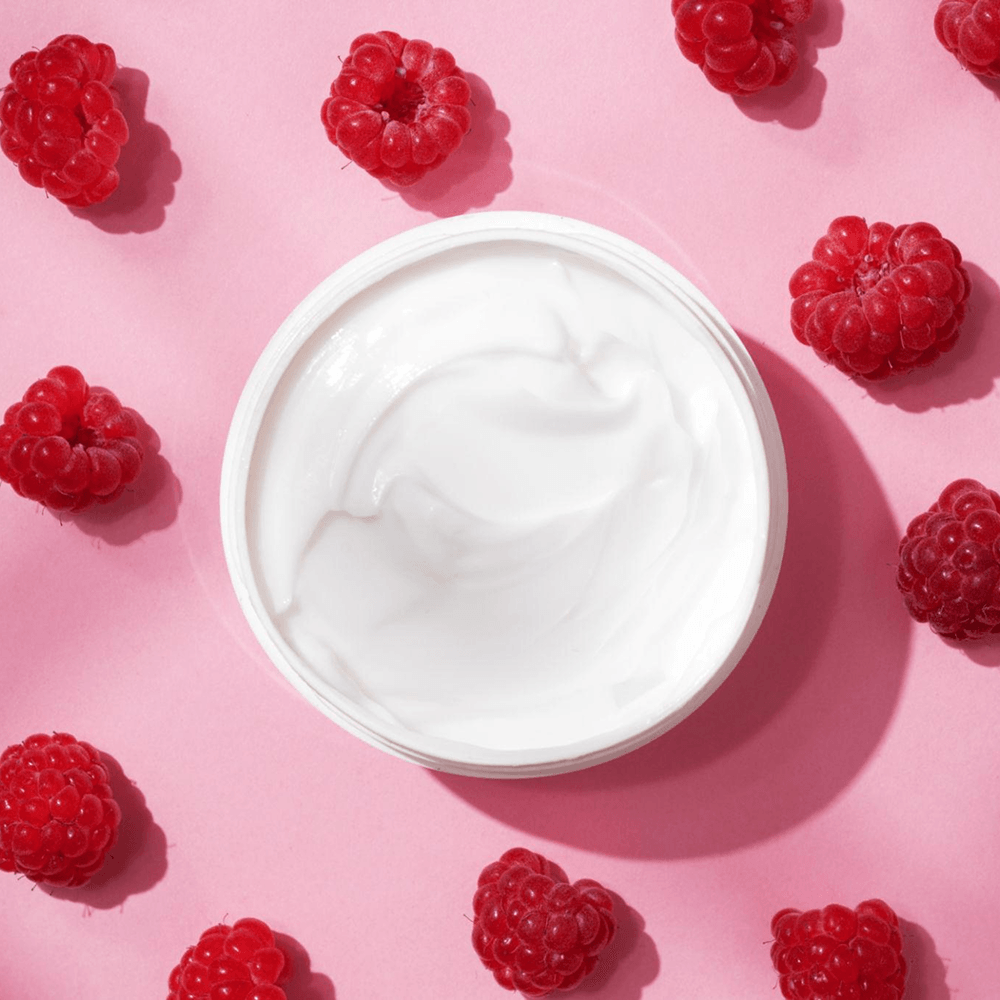
Facial gel with hyaluronic acid has a light texture, fast absorption and moisturising effects. Make it with us.
If you are interested in a non-traditional form of facial gel that is not created using vegetable gums, try our hyaluronic acid gel. The moisturising formula of the facial gel, without an unnecessarily high oil content, allows it to be absorbed quickly into the skin, which the gel thus provides with the hydration it needs.
Sunflower lecithin was used to create the emulsion, and it is a little more difficult to work with in recipes containing water, so this tutorial is particularly suitable for the more experienced.
Why make the gel yourself
- Light texture
A formula without an unnecessarily high oil content absorbs quickly and does not leave a greasy film on the skin.
- Effective hydration
Hyaluronic acid is a top ingredient for moisturising and hydrating the skin — the gel gives the skin the hydration it needs.
- Cold emulsion
Sensitive raw materials are not exposed to elevated temperatures and the vegetable oils are not heated unnecessarily.
- Silky feel
Lecithin leaves a silky-soft finish on the skin without any greasy feeling.
Formulation
As mentioned, the light facial gel with hyaluronic acid contains water, but also a small amount of oils to nourish the skin. The tutorial also includes cane squalane, which is a great substitute for oils, as it is quickly absorbed by the skin and does not form a greasy film on it.
| Ingredient | Content in % |
|---|---|
| Phase A + B | |
| Demineralised water | 81.89 |
| Phase A | |
| Hyaluronic acid HMW | 1.00 |
| Glycerine | 10.00 |
| Phase B | |
| Sunflower lecithin | 3.00 |
| Phase C | |
| Cane squalane | 1.00 |
| Jojoba oil | 2.00 |
| Essential oil, lemongrass | 0.10 |
| Phase D | |
| Euxyl PE 9010, preservative | 1.00 |
| Equipment | |
| Plastic jar, milky | — |
Method
In short: the whole gel is made cold. The method runs from disinfecting your equipment (step 1) through a thick slurry of hyaluronic acid with glycerine (step 2), hydrating the lecithin in water (step 3) and the oil phase (step 4) to the water-based gel (step 5), combining the two mixtures (step 6) and the preservative (step 7); finally the gel matures overnight (step 8).
- Disinfect your equipment
Disinfect all the tools, containers and packaging that you are going to use or that will otherwise come into contact with the raw materials, for example with ethanol.
- Prepare a thick slurry
Weigh the demineralised water into one container. In a second container, prepare a mixture of hyaluronic acid and glycerine and mix it well until a thick slurry forms. Leave it to stand while you prepare the rest of the ingredients.
Phase APhase B - Hydrate the lecithin
Weigh the sunflower lecithin into a third container and add about a tenth of the volume of the demineralised water you weighed out earlier. Mix it well, ideally with a milk frother or a stick blender (for larger volumes) — sunflower lecithin needs some time to hydrate (at least 30 minutes), otherwise it will not dissolve completely.
Stir thoroughly every 30 minutes until the lecithin has completely dissolved.
Phase B - Stir the oil phase into the lecithin
Weigh the phase C ingredients (jojoba oil, essential oil and cane squalane) into another container. Stirring constantly, add these raw materials (phase C) to the solution of thoroughly mixed sunflower lecithin.
Phase C - Create the water-based gel
Add the remaining water in small batches, stirring constantly, to the mixture of glycerine and hyaluronic acid, until a thick gel forms, which may contain lumps (more in the tips and tricks section).
Phase A - Combine the gel with the emulsion
Stirring constantly, add the gel to the mixture of lecithin and oils. Mix very thoroughly so that all the ingredients combine.
- Add the preservative
Then add the preservative and mix the whole thing thoroughly again.
Phase D - Let the gel mature
It is a good idea to leave the mixture to stand overnight in a container covered with cling film, so that the hyaluronic acid has enough time to hydrate thoroughly.
overnight
Lumps of lecithin: before you combine the oil raw materials and the water-based hyaluronic acid gel, the sunflower lecithin has to be mixed thoroughly into the water. During the first mixing you will certainly find that lumps of unmixed lecithin remain in the water. It helps to reduce the amount of these lumps if you use a milk frother or a stick blender for mixing (for larger volumes) — if you use a glass rod or a spoon, most of the lecithin tends to stick to the spoon.
Once the lecithin has hydrated (usually it is enough to let the mixture stand for 30 minutes, or a little longer) and you have then stirred it vigorously, you should no longer see any pieces of unmixed lecithin in the mixture. At this point it is time to add the remaining ingredients.
Tips and tricks
Using sunflower lecithin when making emulsions can be challenging at times, as it is not exactly the easiest emulsifier to work with. That is also why the method of creating the emulsion cold was used for the facial gel with hyaluronic acid; it makes the work a little easier and at the same time the sensitive raw materials are not exposed to elevated temperatures. Find out more about other tips and tricks for making facial gel with hyaluronic acid.
Storage: avoid places with large fluctuations in temperature (small enclosed bathrooms, a car during the summer and so on). Direct, intense sunlight can equally cause the emulsion to break down. It is a good idea to stir the mixture before each use, as lecithin gives less stable emulsions.
Important: if the emulsion keeps breaking down (the water separates from the oils), or the mixture has changed colour or smell, stop using the product — the gel has probably already spoiled.
Because lecithin contains a source of phosphorus for micro-organisms (the growth of micro-organisms in cosmetics is normally also limited by a lack of nutrients, phosphorus among them), even after using a preservative such a product will last a few weeks at most, so it is advisable to make smaller batches so that you always have fresh gel to hand.
Raw materials and their significance
Below you will find a description of the individual raw materials used to make the facial gel with hyaluronic acid — in the same order as in the formulation. You will also learn more about their function in the product, their possible substitutes and changes in dosage.
Demineralised water
Since we are creating a classic water-based gel, the recipe cannot do without demineralised water. This water is free of minerals that could undermine the stability of the product, which is particularly important when you are creating emulsions, as in this case, because a change in conditions can sometimes cause emulsions to break down. This is another reason why it is important to use demineralised water when making cosmetic products.
A possible substitute for demineralised water is floral hydrosols. These substances are also produced by steam distillation, but different plants were used in the distillation. Floral hydrosols therefore contain various plant components, which give them their characteristic properties and a delicate floral scent. In this case you can replace part or all of the demineralised water with floral hydrosols.
Caution: if the hydrosols have a very different pH from water, this may affect the stability of the emulsion.
Hyaluronic acid HMW
High molecular weight hyaluronic acid (HMW) is great for creating thick, water-based gels that not only apply well, but also give the skin effective hydration. Once you try a product containing hyaluronic acid, you will understand why this raw material is a top ingredient for moisturising and hydrating the skin.
HMW hyaluronic acid can also be replaced with an alternative with a lower molecular weight, LMW, which penetrates deeper into the skin thanks to its smaller particles.
On the other hand, LMW hyaluronic acid does not have the ability to form gels as thick and firm as HMW hyaluronic acid. So if you are after a more pronounced gel-like consistency but also want the effects of LMW hyaluronic acid in your product, combine the two types of hyaluronic acid.
Glycerine
One of the most common humectants for the skin is glycerine. This colourless, syrupy substance dissolves well in water and allows powdered raw materials to hydrate more quickly — in this case the hyaluronic acid. Glycerine is not essential in the recipe, but its presence reduces the formation of lumps, and any lumps of hyaluronic acid that do form disappear more quickly.
You can also play around with the proportion of glycerine in the recipe if you want a more pronounced moisturising effect from the facial gel on the skin.
Sunflower lecithin
The emulsifier in the recipe for the facial gel with hyaluronic acid is sunflower lecithin. This substance is sometimes obtained as a by-product of oil refining and is made up of compounds that allow polar and non-polar substances, i.e. water and oils, to be combined.
Sunflower lecithin is a thick, dark brown substance with a consistency similar to honey, which is a little more difficult to mix into water. A substitute for sunflower lecithin can be soya lecithin, which has similar properties.
Tip: because of the dark colour of sunflower lecithin, the finished product is beige. If you do not like this colour, you can try to mask this tint with, for example, mica powders. Add these powders to the mixture of glycerine and hyaluronic acid and mix well so that a thick slurry forms. This way you ensure a more even dispersion of the mica powder in the product.
As mentioned, sunflower lecithin contains a phosphate group containing phosphorus, which makes the bond with water possible. On the other hand, it is a source of this essential element for micro-organisms, and so water-based products containing sunflower lecithin have a slightly shorter shelf life. When stored and preserved properly, they will last a few weeks at most, so it is better to make smaller batches.
On the plus side, sunflower lecithin allows emulsions to be created cold, so the vegetable oils do not have to be exposed to heat unnecessarily, and on the skin the lecithin creates a silky-soft feel that you are sure to appreciate.
Cane squalane
Cane squalane is an oily liquid sought after in the cosmetics industry, because it absorbs into the skin even faster than ordinary oils and nourishes it effectively without any greasy feeling. Cane squalane can therefore be used to replace the oils in a recipe.
In addition, cane squalane is very stable and gives the skin elasticity — it helps to replenish the loss of this substance in the skin, as the production of squalane declines with age. Squalane is also very well suited as part of primer bases under make-up.
Jojoba oil
An oil was also used in the recipe for more effective hydration, which combination and even dry skin will appreciate. In this case we reached for jojoba oil, which is well absorbed by the skin, leaves no greasy film and is a versatile oil for many cosmetic products.
However, jojoba oil is not the only oil you can use. Feel free to reach for another vegetable oil that you like. Alternatively, use this oil to replace the cane squalane as well, if you do not have it to hand. You can likewise increase the proportion of oil in the recipe, ideally by 1–2 %, otherwise the proportion of sunflower lecithin would also have to change.
If you leave the oils and the cane squalane out of the recipe, the need to use an emulsifier (sunflower lecithin) disappears and you get just a pure hyaluronic acid gel.
Essential oil — lemongrass
A delicate citrus scent is given to your products by lemongrass essential oil. The advantage of this oil is the fact that lemongrass is not a citrus, even though it has a citrus scent. Because of this it is not classed among the photosensitive oils, which could cause an allergic reaction on skin exposed to the sun. That is also why you can enjoy products with a citrus scent during the summer too.
Of course, lemongrass essential oil can be replaced with another essential oil. It is a good idea, though, to choose an essential oil that is not photosensitive, as this is a leave-on product. Or you can reach for fragrance oils, which offer you a wide palette of scents, including fruity ones.
Since sunflower lecithin has its own distinctive smell, which not everyone may find pleasant, it is a good idea to choose at least a small amount of fragrance or essential oil to mask the odour of the sunflower lecithin.
Preservative
The preservative chosen to preserve the product was Euxyl PE 9010, which is effective at both acidic and alkaline pH and is therefore a good choice, especially for beginners. A preservative is essential in this facial gel above all because the product contains both water and sunflower lecithin, so do not underestimate the use of a preservative.
Of course, you can also reach for other broad-spectrum preservatives, but check whether they will also be effective at the pH of your product. If you are going to adjust the pH of the product, try it on smaller batches first, because a large change in pH can cause the emulsion to break down.
Warning
As mentioned, you can experiment with homemade recipes to achieve the desired properties. However, the final result can be influenced by many factors, such as humidity, temperature, the quality of the raw materials or their storage.
Before you use any raw material to make a cosmetic product, familiarise yourself with its properties, recommended dosage, storage conditions and safe handling. Each raw material can have the potential to trigger an allergic reaction in sensitive individuals, therefore before using the product we recommend finding out whether you suffer from an allergy to any of the raw materials or to the product as a whole, e.g. by means of a skin test.
If you have very sensitive or very acne-prone skin, or you have other skin or health problems, we recommend that you consult a medical professional before applying a new product to the skin, whether it is a homemade cosmetic product, a pure raw material or a commercially available product.
Conclusion
Facial gel with hyaluronic acid is a great helper especially during the hot summer. It provides hydration without putting unnecessary strain on the skin. Do you already have it at home too?
If not, make it by following our blog tutorial. If you have any improvements, experiences or questions about making natural cosmetics, be sure to write to us at [email protected].
We thank Ivana Jačalová for the excellent post she prepared for us. We look forward to all your messages.
Until then — happy soaping, friends.
Hyaluronic acid, sunflower lecithin and all the other raw materials from the formulation can be found in our e-shop.