


LIP BALM CONTAINERS
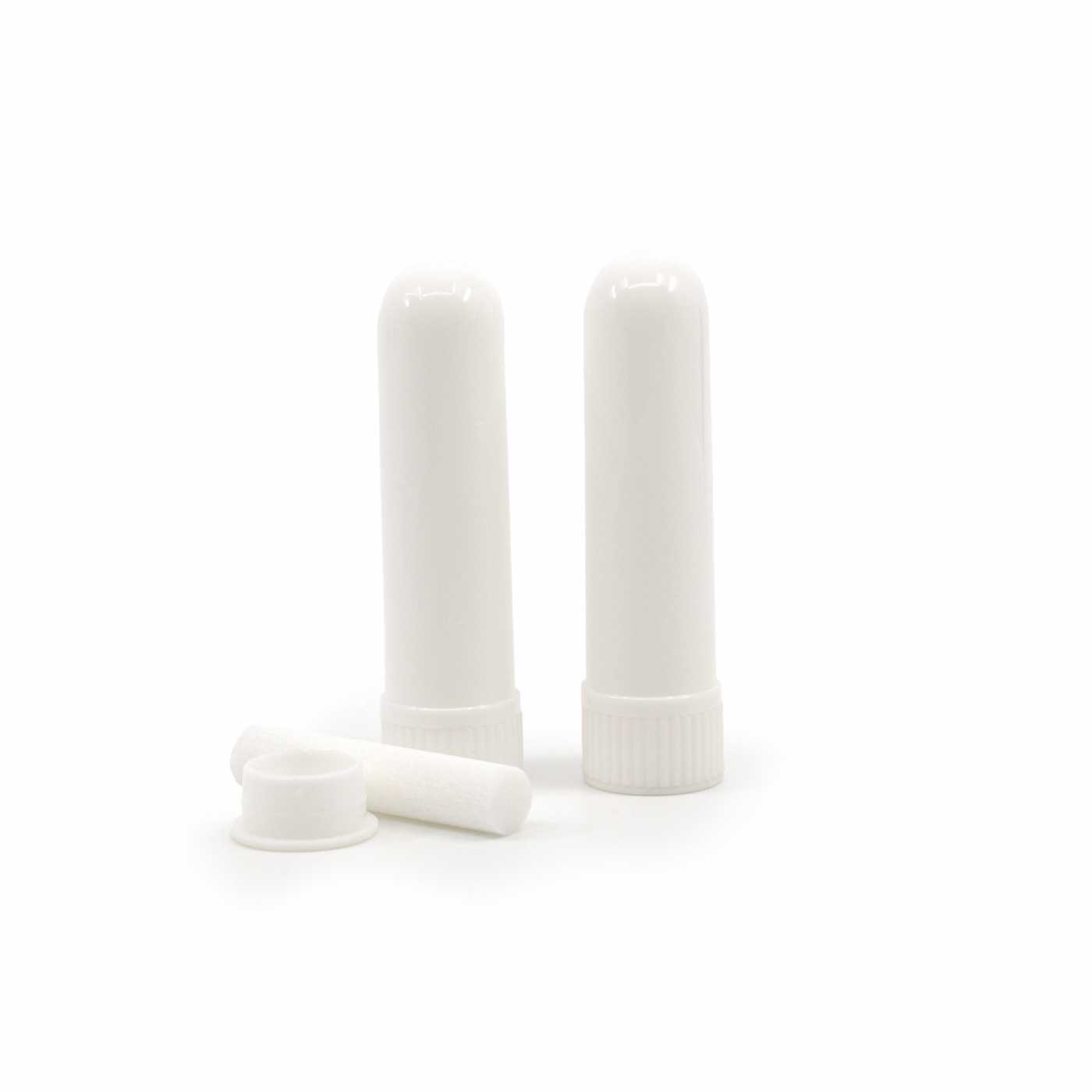
Nasal inhaler stick, white
Nasal inhaler stick, white A nasal inhaler stick is a small plastic container for a custom aromatic blend that is inhaled directly from the stick. full description
Lowest price in the last 30 days: €1.53
Total for 1 pcs: €1.53
Product description
Nasal inhaler stick, white
A nasal inhaler stick is a small plastic container for a custom aromatic blend that is inhaled directly from the stick. Essential oils are dripped onto the absorbent wick inside, and the finished personal inhaler can be carried in a pocket, a bag, or kept on a desk. It is one of the simplest aromatherapy products you can make at home: no water, no emulsifier, no heating, and no preservation.
The white version looks neutral and takes labels well. It suits personal use, gifts, and small batches of scent blends for customers or workshop participants alike.
What the stick is made of and how it is filled
The stick consists of an outer case with a cap, an inner tube with an absorbent wick, and a bottom plug that seals the inside. The scent is not stored as a liquid in a container but in the saturated wick, from which it gradually releases into the inhaled air.
Filling is straightforward and requires no special equipment:
- Preparing the blend – essential oils are first mixed in a small glass container at the desired ratio, or dripped directly onto the wick.
- Saturating the wick – the wick is placed on a clean surface and drops are added until it is evenly saturated without overflowing. It is recommended to work with gloves or tweezers to keep hand residue off the wick and prevent concentrated oils from contacting the skin.
- Assembly – the saturated wick is placed into the inner tube, the plug is pressed in, and the stick is inserted into the outer case with the cap.
The amount of oil is guided by the wick's absorption capacity, not a recipe. Start with fewer drops and add more until the wick is saturated. An overfilled wick lets oil run onto the walls of the case and the scent fades faster than when it stays in the wick.
Suitable for products such as
- Refreshing blends – mint, eucalyptus, or rosemary for a quick pick-me-up during the day, on the go, or during long hours at the computer.
- Calming blends – lavender, bergamot, or chamomile to carry in a bag for moments when you need to pause.
- Citrus and energising blends – orange, grapefruit, or lemongrass for a morning boost, or as a discreet alternative to a diffuser in shared spaces where the scent should not spread to the surroundings.
- Scent samples – a practical way to let a customer try an essential oil blend without opening a full bottle.
- Gifts and workshops – low material cost, quick to make, and a result everyone takes home.
The stick is not intended for creams, balms, or water-based solutions. The blend must be volatile so it can release from the wick into the air. Hydrosols are predominantly water and will barely carry any scent from the wick.
Good to know
- Oil on the wick, not on the walls – concentrated essential oils, especially citrus ones, can degrade plastic with prolonged direct contact. When filled correctly, the oil stays in the wick and the case is only exposed to vapour.
- Cap open only when in use – the scent evaporates from an open stick. The shorter the time it is left open, the longer the blend will last.
- Reuse – once the scent fades, the wick can be re-dripped or replaced with a clean one. When changing the blend, it is advisable to replace the wick as well, since the previous scent remains in it.
- Labelling – the smooth white surface can be fitted with a small label showing the blend name or composition.
- Recycling – the stick is made of plastic and, once the wick has been removed, belongs in plastic waste.
The empty stick itself is not subject to CLP regulation. The essential oil blend used to fill it may, however, require classification. If finished sticks are sold or given away outside the home, the labelling must be assessed based on what is inside.
Frequently asked questions
Verified by customers.
No reviews yet.
Only customers with a delivered order can write reviews.