


PLASTIC BOTTLES
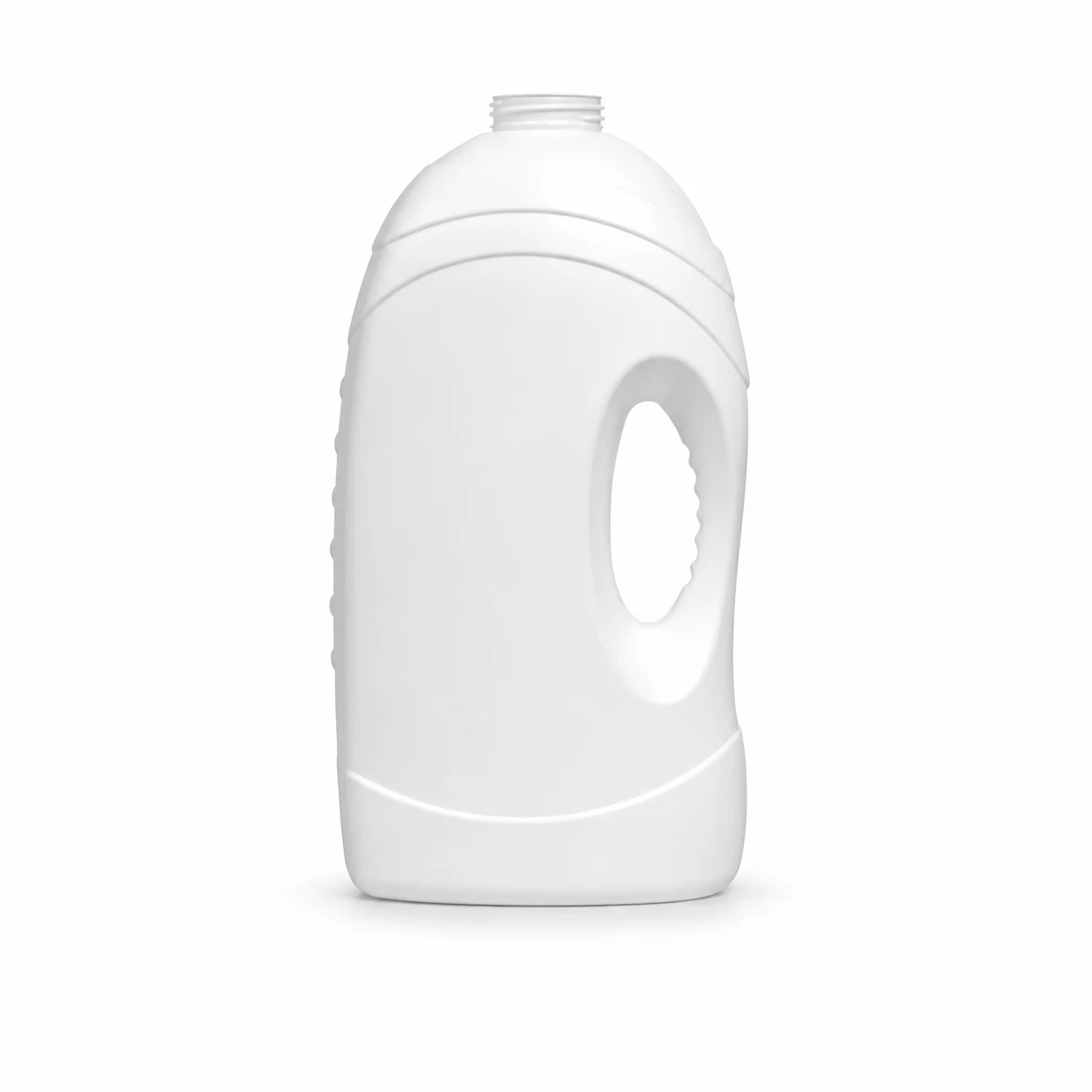
Plastic bottle for fabric softener, white, 5.5 L
A white plastic fabric softener bottle with a nominal volume of 5.5 l is designed for filling liquid household preparations in larger quantities. full description
Lowest price in the last 30 days: €2.99
Total for 1 pcs: €2.99
Product description
A white plastic fabric softener bottle with a nominal volume of 5.5 l is designed for filling liquid household preparations in larger quantities. It is most commonly used for fabric softener, but is also suitable for liquid laundry gels, dishwashing detergents, all-purpose cleaners, liquid soap for dispensers, or larger packaging of shampoo. The plastic is lightweight and shatterproof, making the full bottle easy to handle even at this volume, with no risk of breakage from drops or during transport.
The white container wall reduces light exposure to the contents, which is beneficial for preparations with dyes or fragrance components that lose intensity in light. The container is intended for cosmetic and drugstore preparations. Information on suitability for direct food contact is not available, so we do not recommend using this bottle for food.
Why choose this container
- Large volume – one bottle replaces several smaller packages; ideal for family-size fabric softener or as an economy pack for customers who buy in bulk.
- Shatterproof material – plastic withstands everyday impacts; a drop from a worktop or transport in a parcel poses no risk the way glass would.
- Low weight – an empty container weighs a fraction of a glass jar, reducing shipping costs and making handling easier.
- Light protection – the white opaque wall limits light exposure to the contents and helps preserve both the colour and scent of the preparation.
- Suitable for refilling – the bottle works as a reservoir from which smaller dispensing bottles are topped up as needed.
Nominal and total volume
For every container we distinguish two figures. The nominal volume is the quantity the bottle is designed to be filled to under normal conditions, and this is the value you state on the label. The total brim-full volume is the physical volume of the bottle up to the neck. The difference between the two provides a buffer for the closure, an air gap, and the expansion of the contents when temperature changes.
The bottle is filled to the nominal volume, not to the brim. Filling right up to the neck causes the contents to be pushed onto the thread when closing, and in warmer storage conditions the pressure may deform the container.
Filling and handling
Before the first fill, we recommend rinsing the bottle with clean water, sanitising it with isopropyl alcohol or ethanol, and leaving it to dry completely upside down. Residual water would dilute the preparation and could promote microbial growth, particularly in products with a lower preservative content.
At a volume of 5.5 l, it is worth filling through a funnel or from a container with a pouring spout to keep the contents off the outside of the neck and leave the thread clean. A clean thread is essential for a tight seal.
Closures with the same neck type and ready-made bottle-and-closure combinations are available in the Handymade range. When assembling your own combination, we recommend verifying the seal, dispensing behaviour, and compatibility of the container with the specific formulation.
If you use the bottle as a reservoir for topping up smaller dispensing bottles, always pour into a clean and dry dispensing bottle. Repeatedly topping up an unwashed container reduces the microbiological stability of the entire package.
Good to know
- Reuse – after thorough washing and drying, the bottle can be used again; ideally for the same type of preparation to avoid mixing residues of ingredients and fragrances.
- Essential oils and solvents – prolonged contact with concentrated essential oils, fragrance compounds, or solvents may cause the plastic to soften, deform, or absorb the scent. With such contents, we recommend testing with a single bottle and monitoring it for several weeks.
- Temperature – filling with hot contents is not suitable for plastic; allow the preparation to cool to room temperature before filling.
- Labelling – self-adhesive labels adhere well to the white container even without a white background, and print on them remains legible.
- Recycling – an empty, rinsed plastic container belongs in the sorted plastic waste collection.
Frequently asked questions
Verified by customers.
No reviews yet.
Only customers with a delivered order can write reviews.