


PLASTIC BOTTLES
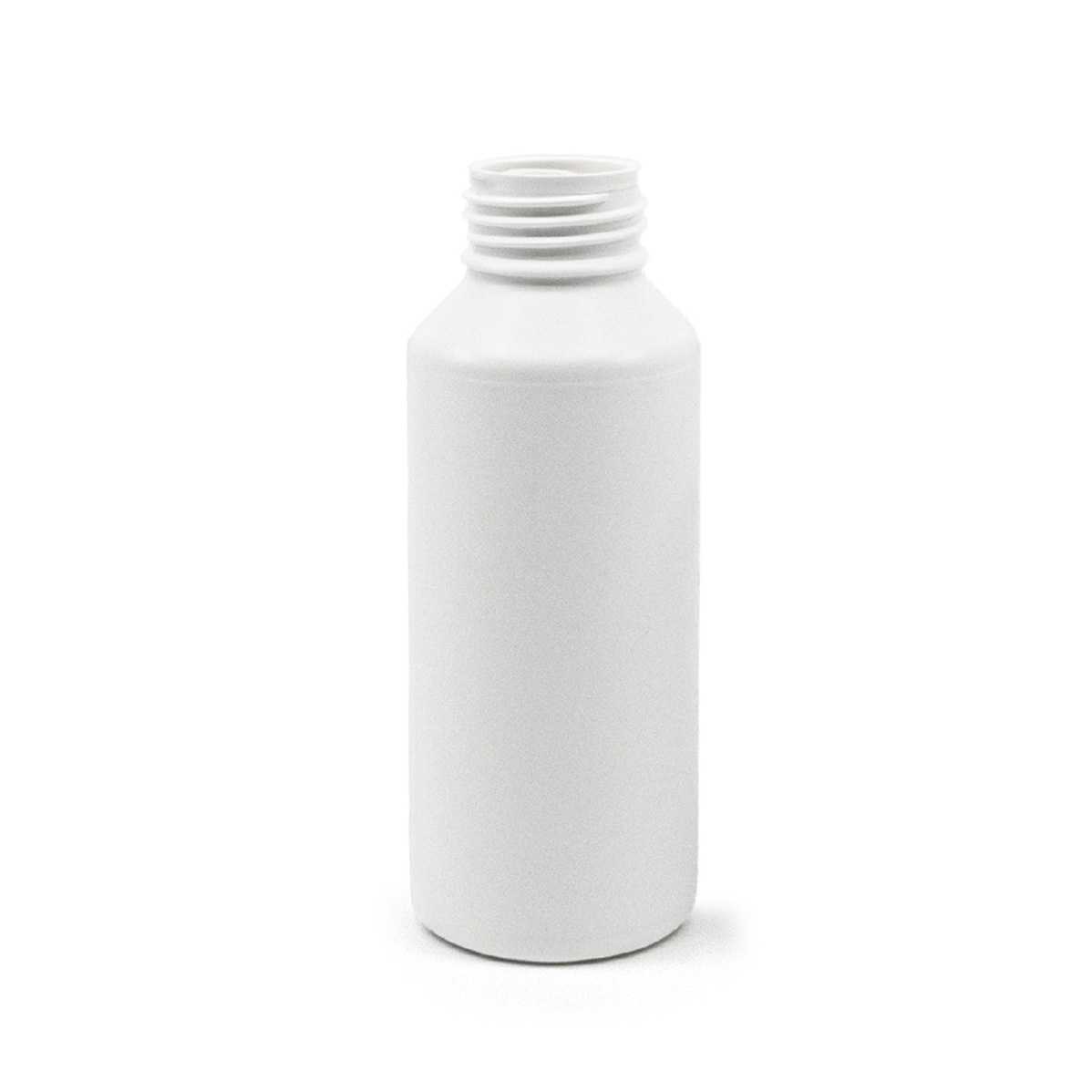
Plastic bottle HDPE 28/410, white, 100 ml
Pack size100 ml500 ml
HDPE bottle 28/410, white, 100 ml HDPE bottle 28/410 is a lightweight and unbreakable container for liquid and semi-liquid cosmetics dispensed by squeezing or with a pump. full description
Lowest price in the last 30 days: €0.70
Total for 1 pcs: €0.70
Product description
HDPE bottle 28/410, white, 100 ml
HDPE bottle 28/410 is a lightweight and unbreakable container for liquid and semi-liquid cosmetics dispensed by squeezing or with a pump. With a nominal volume of 100 ml, it is suitable for shower gels and shampoos in sample or travel size, body lotions, conditioners, liquid soaps, facial cleansing gels, and massage or body oils. The white opaque material protects the contents from light, which is appreciated in formulations with vegetable oils, essential oils, or sensitive active ingredients. The bottle of European origin is suitable for frequent use in the bathroom, on trips, and for sampling.
Key benefits
- Light protection – white opaque HDPE transmits significantly less light than clear plastic or clear glass, making it suitable for contents whose stability is reduced by light (vegetable oils, vitamins, natural pigments).
- Squeezable body – the bottle wall is flexible, the contents can be easily dispensed through a suitable closure, and the bottle returns to its original shape after squeezing.
- Unbreakable and lightweight – plastic does not crack on impact; suitable for the shower, travel, the gym, and postal shipping.
- Chemical resistance of HDPE – the material commonly withstands aqueous solutions, surfactant systems, emulsions, alcoholic tonics, and vegetable oils.
- Standard 28/410 neck – a widely used neck type for which a dispensing closure can be selected according to the consistency of the contents.
Use and filling
The bottle is filled through the neck with a standard funnel, a dosing bottle with a nozzle, or a filling pump. With thicker gel and cream consistencies, it helps to fill slowly and let the mass settle so that air bubbles are not trapped in it. Thicker products (body lotion, conditioner) are most conveniently dispensed from the bottle by squeezing; thinner products (tonic, oil, liquid soap) are better controlled with a pump or dispensing closure.
Nominal volume is the volume for which the bottle is intended under normal filling conditions. Total volume to the brim is the physical volume up to the neck and is higher. The difference constitutes the reserve for the closure and its internal parts (pump tube, disc top insert), for expansion of the contents with temperature changes, and for the air cushion that returns inside when the bottle is squeezed. The bottle should therefore be filled up to the nominal volume, not to the brim – an overfilled bottle will overflow once the closure is fitted, or the contents will discharge uncontrollably at the first squeeze.
Allow warm emulsions and gels to cool to room temperature before filling. HDPE is a thermoplastic – hot contents can deform the wall, and as it cools the bottle may collapse inward.
Closures with the same neck type and ready-made bottle + closure combinations are available in the Handymade range. With a custom combination, we recommend verifying the seal, dispensing behaviour, and packaging performance with the specific formulation, especially with oils and products containing a higher proportion of essential oils.
Good to know
- Suitability for cosmetics – the packaging material is suitable for use with cosmetic products and meets the relevant legislative requirements; the declaration of conformity is provided with the product.
- Preparation before first filling – we recommend rinsing the bottle, disinfecting it with isopropyl alcohol or ethanol and leaving it to dry completely with the neck facing down. Residual water in the finished product unnecessarily burdens the preservative system.
- Essential oils and solvents – HDPE tolerates standard cosmetic dosing levels of essential oils. With concentrated fragrance compositions, pure essential oils, or products with a high proportion of solvents (such as d-limonene), it is advisable to verify packaging behaviour with a long-term test – softening of the wall, absorption of fragrance into the plastic, or loss of contents through the wall may occur.
- Labelling – the cylindrical body with a smooth wall is suitable for self-adhesive labels as well as direct printing; label dimensions can be found in the product parameters. For shower products, water-resistant labels are recommended.
- Recycling – HDPE is among the commonly recycled plastics; it is sufficient to empty the bottle before disposal and separate it from the closure if it is made of a different material.
The opaque material does not allow visual inspection of the remaining contents or any change in colour or separation of the emulsion. When testing the stability of a new formulation, it is therefore advisable to keep one sample in a transparent container as well.
Frequently asked questions
Parameters
- Product color
- White
- Country of origin
- European Union
- Nominal capacity
- 100
- Diameter
- 43 mm
- Thread type
- 28/410
- Height
- 111,3 mm
Product documentation
Verified by customers.
No reviews yet.
Only customers with a delivered order can write reviews.