


GLASS JARS
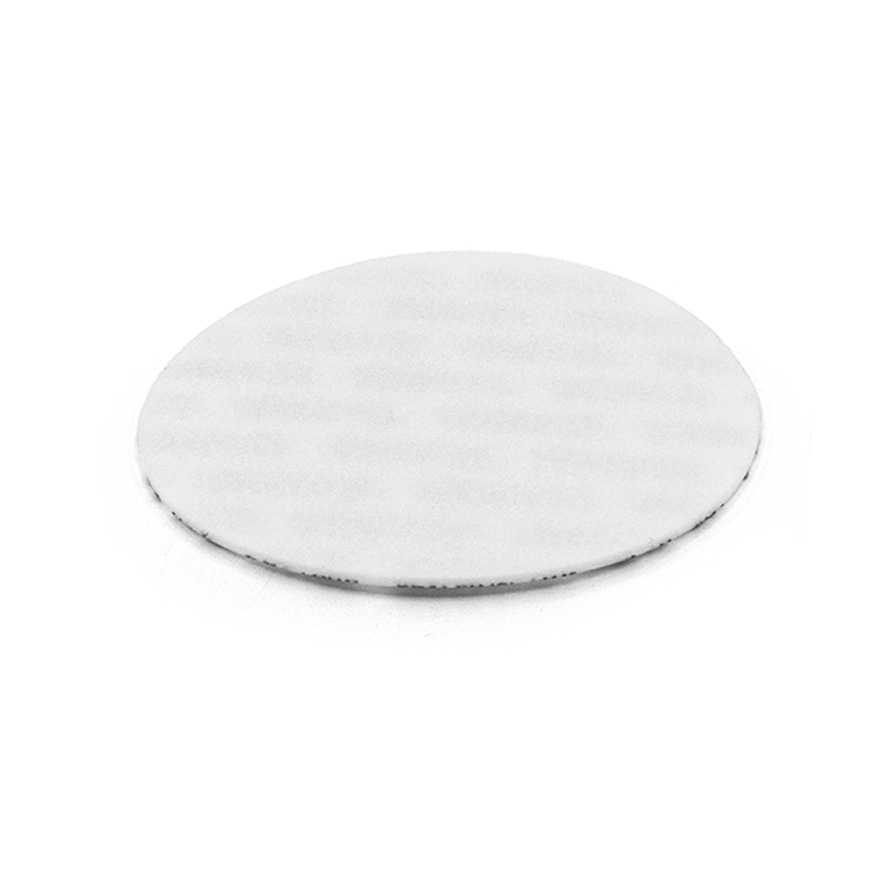
Pressure Sensitive Seals Cap Liners, 33 mm
Sealing inserts for jars are self-adhesive foam polyethylene seals that are placed inside the jar lid and adhere to the neck of the container when the cap is tightened. full description
Lowest price in the last 30 days: €0.07
Total for 1 pcs: €0.07
Product description
Sealing inserts for jars are self-adhesive foam polyethylene seals that are placed inside the jar lid and adhere to the neck of the container when the cap is tightened. They serve as tamper-evident protection and an additional barrier for the contents. The customer can see at a glance that the jar has never been opened, and the product is better protected during transport from drying out and contamination. The inserts are designed for lids with a corresponding inner diameter and are best suited for smaller jars containing creams, balms, masks, or loose products.
How the sealing insert works
The insert has a pressure-sensitive adhesive layer on one side. It does not require heat, an induction device, or any other special equipment. It is placed adhesive side down into the cap, the cap is tightened onto the filled jar, and the pressure of the closure presses the insert onto the rim of the neck. The adhesive bonds to the edge of the container and when the cap is first unscrewed, the insert remains adhered to the jar. The customer peels it off and continues using the jar in the usual way.
Unlike induction seals, which are aluminium foils welded by heat, this is a mechanically simpler solution also suitable for small batches and manual filling. The bond strength is lower than with induction welding, so the insert primarily serves as a tamper-evidence check and additional protection for the contents, not as a fully hermetic closure.
Key benefits
- Visible tamper evidence – an intact insert on the jar neck gives the customer confidence that the product has not been opened or tested in store or during transport.
- Content protection – the insert limits contact between the contents and the air beneath the cap, helps slow down drying of creams and balms, and reduces the risk of contamination before first opening.
- No special equipment needed – just a cap and a hand. Suitable for home production, small workshops, and smaller batches where induction welding is not cost-effective.
- Cosmetic-grade material – polyethylene foam is a common material for seals in cosmetic packaging and is suitable for direct contact with cosmetic products.
- Discreet appearance – the white insert beneath the cap does not interfere with the packaging design, and no visible residue remains on the smooth neck after peeling off.
How to use
1. Fill the jar to the nominal volume so that the neck rim remains clean and dry. Residues of cream or oil on the rim significantly reduce the adhesion of the adhesive. 2. Place the insert into the cap with the adhesive side facing outward, toward the jar neck. The adhesive side is the one that gently sticks to your finger when touched. 3. Tighten the cap firmly. It is the pressure of the closure that activates the adhesive; a loosely placed cap will not form a bond. 4. Keep the cap tightened before first unscrewing. The adhesive needs time to fully bond with the surface of the neck. The longer the jar remains closed under the pressure of the cap, the stronger the bond.
Before filling an entire batch, perform a test on one jar: fill it, close it, leave it closed, and after unscrewing check whether the insert remained adhered to the neck. The result depends on the material and smoothness of the rim of the specific container.
Suitable for products such as
The inserts work best with products that are dispensed with a finger or spatula and where the customer appreciates the assurance of unopened packaging:
- creams and balms for face, lips, or hands in small jars, where the insert also helps slow down drying,
- solid products such as massage bars, solid perfumes, and waxes, where visible tamper evidence is more important than airtightness,
- loose products – mineral powders, powder masks, and salt scrubs, where the insert prevents spillage under the cap during transport,
- samples and testers sent to customers to make it clear that they have not been used.
For thin liquid contents, oils, and products with a high solvent content, a self-adhesive seal is not a reliable protection against leakage. In those cases, packaging with a different type of closure or induction sealing is more appropriate.
What is good to know
Pressure-sensitive adhesive reliably bonds only to a flat and smooth neck rim. Glass and smooth plastic necks typically work well. On necks with threading extending to the edge, thick casting seams, or irregularities, the insert may only partially adhere.
The insert is intended for single use. Once peeled off, it cannot be reattached and the cap is used without it thereafter. If the customer needs a permanent seal in the cap even after opening, combine the self-adhesive insert with a cap that has its own fixed sealing insert.
The inserts are sticky inside the packaging, so handle them with clean, dry hands or tweezers and do not touch the adhesive side with your fingers. Skin oils reduce adhesion. The insert should sit loosely inside the cap and should not crumple or bend.
The insert does not guarantee a hermetic seal and does not replace a correctly chosen closure. For products that must be sealed against leakage or air ingress, treat the insert as a supplement, not as the sole protection.
After peeling off, the insert belongs in plastic waste according to the sorting rules at the place of use. Caps and jars with a matching neck size can be found in the Handymade range. When using your own combination, we recommend verifying that the insert fits in the cap and bonds to the neck when tightened.
Frequently asked questions
Parameters
Product documentation
- PDSProduct Data Sheet
- PDF ↓
Verified by customers.
No reviews yet.
Only customers with a delivered order can write reviews.