


GLASS JARS
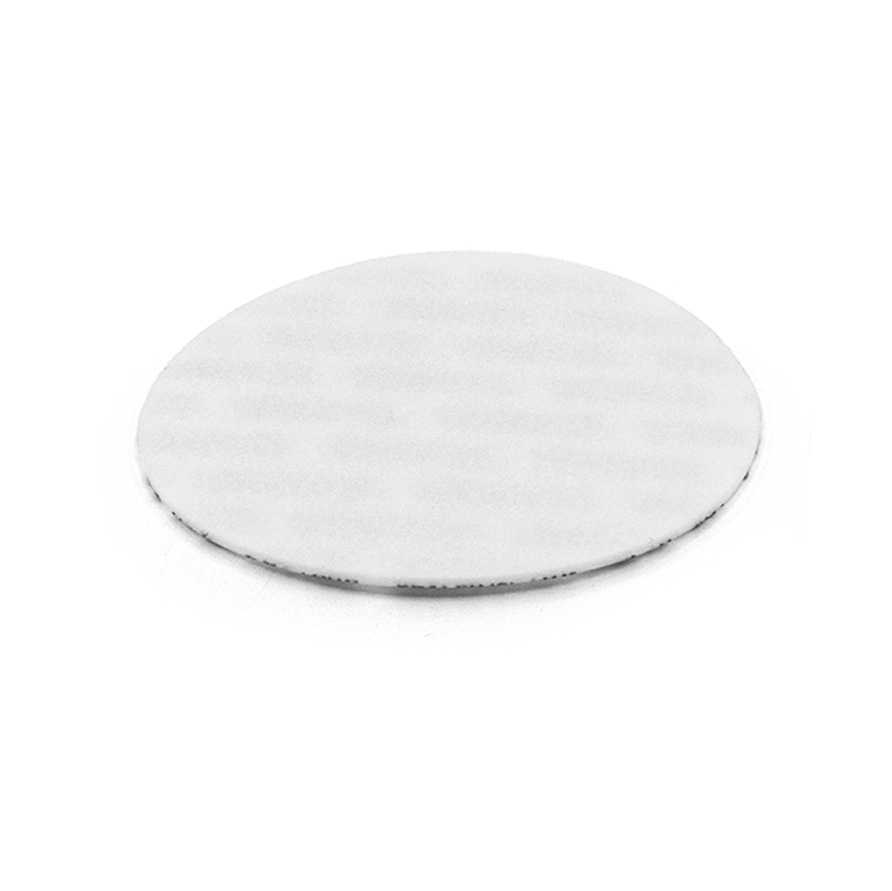
Pressure Sensitive Seals Cap Liners, 35 mm
Product description Pressure-sensitive sealing liners for jars give the jar a seal without a machine : they seal the contents, and when opening, the customer can see that no one has opened the packaging before them. full description
Lowest price in the last 30 days: €0.07
Total for 1 pcs: €0.07
Product description
Product description
Pressure-sensitive sealing liners for jars give the jar a seal without a machine: they seal the contents, and when opening, the customer can see that no one has opened the packaging before them. The liner is placed into the lid and adheres to the jar neck on first screwing on. It is the simplest way to give homemade and small-batch products tamper protection without an induction device.
The liner with a diameter of 35 mm is intended for lids and necks of the same dimension. The neck diameter of a specific jar is listed in its parameters, and the correct liner size is chosen accordingly. The liner is made of polyethylene in cosmetic quality, suitable for contact with cosmetic preparations.
How a pressure-sensitive liner works
One side of the disc has an adhesive layer activated by pressure. The liner is placed into the lid with the adhesive side facing the neck, the lid is screwed on and tightened. The pressure of the lid presses the liner against the edge of the neck, and the adhesive layer adheres to it. On first unscrewing, the liner stays on the jar, not in the lid, and the customer peels it off. The liner is single-use; once peeled off, it no longer serves as a seal.
It requires no heat or device, just screwing on by hand. The price for this simplicity is weaker sealing: the liner holds on the neck by adhesive, not by a weld, so it is not a hermetic closure.
What it is suitable for
- Loose and powdered products – bath salts, powders, loose masks, powdered cleaning preparations, herbal blends. Here the liner works best, because the contents do not strain the adhesive layer and the liner prevents spilling during transport.
- Solid and semi-solid products – balms, ointments, cream deodorants, solid scrubs. Here the liner mainly serves as a seal and protects the edge of the neck from contamination.
- Creams and thick emulsions – as proof that the packaging is intact. For products with a higher water or oil content, the liner only limits leakage when turned over, it does not stop it completely.
For thin liquids and oils, a pressure-sensitive liner is not a reliable protection against leakage. For such contents, an induction liner or a lid with its own seal is more suitable.
Use in practice
The jar neck must be clean and dry before fitting. Residues of cream, oil or dust on the edge of the neck are the most common reason why the liner does not adhere. When filling, therefore, wipe the neck before closing.
The liner is placed into the lid with the adhesive side facing the neck, the lid is screwed on and firmly tightened. Adhesion increases further after pressing, so after closing, let the jars stand for a while and do not open them immediately. For a larger batch, prepare the liners in the lids in advance, so the filling itself is not delayed.
Before filling the whole batch, close one jar with your formulation, let it stand for a few hours, then turn it over and check whether the liner holds on the neck and whether the contents leak. The behaviour of the liner depends on the jar material, the shape of the neck edge and the product itself.
Good to know
- Neck edge – the quality of adhesion depends on the smoothness and width of the neck edge. A narrow or uneven edge provides the adhesive layer with a smaller area.
- Lid with a flat interior – the liner must lie flat in the lid so that the lid presses it around the entire circumference. In lids with their own seal or with a raised inner profile, the adhesion may be uneven.
- Not a moisture barrier – the liner limits the access of air, but does not perform the same role as an induction closure. Products sensitive to moisture or oxidation should not rely on it.
- After opening – any adhesive residue on the neck usually peels off together with the liner. If it remains, it can be wiped off.
A pressure-sensitive liner does not replace the seal of the lid. When shipping products with a higher proportion of liquid phase, count on additional protection, for example a lid with a seal or an induction liner.
Difference compared to an induction liner
An induction liner is welded to the neck by heat in an induction device. This creates a firm, practically hermetic closure suitable even for liquids and oils, but it requires a device and correct settings for each type of packaging. A pressure-sensitive liner holds by adhesive, is applied by screwing on by hand and is suitable mainly for loose, solid and thick products. For small batches and home production it is more accessible, while for liquid products and longer transport an induction liner is safer.
Frequently asked questions
Parameters
Product documentation
- PDSProduct Data Sheet
- PDF ↓
Verified by customers.
No reviews yet.
Only customers with a delivered order can write reviews.