


GLASS JARS
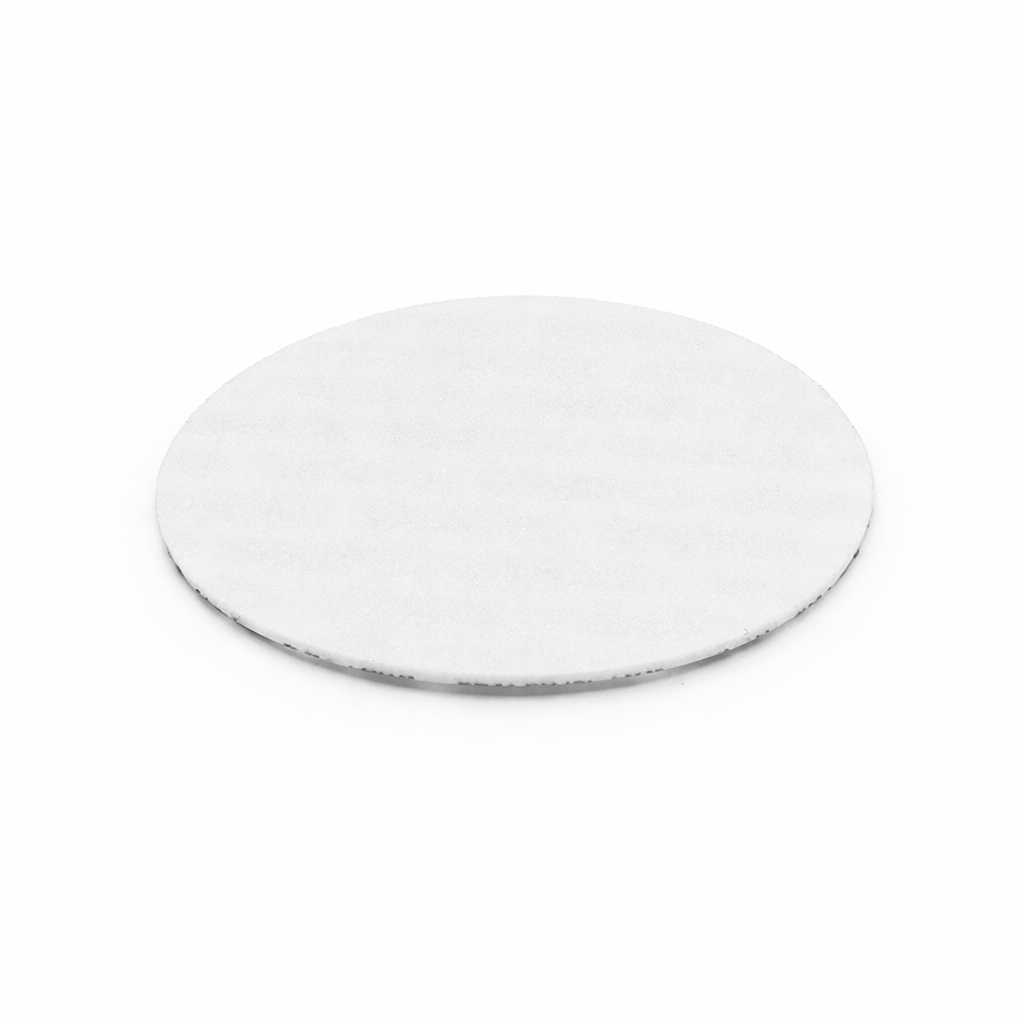
Pressure Sensitive Seals Cap Liners 50 mm
Pressure-sensitive sealing liners for jars seal the jar with a first-opening tamper seal without any equipment. The self-adhesive liner is placed inside the cap and bonds to the jar neck when the cap is tightened. full description
Lowest price in the last 30 days: €0.10
Total for 1 pcs: €0.10
Product description
Pressure-sensitive sealing liners for jars seal the jar with a first-opening tamper seal without any equipment. The self-adhesive liner is placed inside the cap and bonds to the jar neck when the cap is tightened. The contents are thus protected against drying out and leakage during transport, and the customer can see at a glance that the product has never been opened. Liners with a diameter of 50 mm fit caps of jars with the same neck diameter. They are suitable for creams, butters, balms, scrubs, pastes or loose mixtures packed in jars for sale or gifting.
How the sealing liner works
The liner is a thin disc made of polyethylene (PE) with an adhesive layer on one side. Unlike induction foil, it requires no machine or heat. It is placed inside the cap with the adhesive side facing the neck, the jar is filled and the cap is tightened. The pressure when tightening presses the adhesive layer onto the rim of the neck and the liner bonds to it. Upon first opening it remains adhered to the jar; the customer peels it off and the cap continues to be used without it.
Key benefits
- Protection against drying out and leakage – the seal on the neck restricts air access to the contents and prevents leakage when the jar is tipped over or during postal shipping.
- First-opening tamper seal – an intact liner gives the customer assurance that the jar has not been opened.
- No equipment needed – no induction or heat sealing machine is required. Sealing is done simply by tightening the cap, which suits small batches as well as individual production.
- Easy processing – liners are inserted into caps before filling, so sealing does not slow down the filling process.
Use in product packaging
The liners are intended for cosmetic products, especially for jars with thicker contents: face and body creams, shea butter or cocoa butter, solid balms, sugar and salt scrubs, toothpastes and powders, mask and powder blends. For more liquid contents the seal helps prevent seeping through, but for truly thin liquids a jar is not a suitable container regardless of the sealing liner.
Before sealing, make sure the rim of the neck is completely clean and dry. Residues of cream, oil or alcohol on the neck significantly reduce adhesion, as the liner adheres to the rim of the jar, not to the cap.
Tighten the cap evenly, not at an angle, and leave the sealed jar undisturbed until the liner bonds firmly to the neck. Sealing liners are not intended for repeated use; once peeled from the neck they will not adhere again.
Good to know
- Check the size – the liner diameter must match the inner diameter of the cap and the neck diameter of the jar. A liner that is too large will buckle inside the cap; one that is too small will not cover the entire rim of the neck and the seal will not hold.
- Smooth neck rim – the liner seals well on a flat and smooth rim. For a jar with an uneven rim, we recommend a test closure.
- Compatibility with contents – polyethylene is resistant to common cosmetic ingredients. With a high proportion of essential oils or solvents, verify the behaviour of the adhesive layer in a test package.
- Clean handling – the liners are thin and light, so work with them on a clean dry surface and do not touch the adhesive side.
- Recycling – the liner is made of polyethylene; after peeling it belongs in sorted plastics.
Caps and jars with a matching neck diameter are available from Handymade. For your own combination, we recommend verifying the seal and adhesion directly with your specific formulation.
The sealing liner does not replace proper product preservation. It protects the contents from drying out and leakage and indicates first opening; microbiological stability is ensured by the formulation.
Pressure-sensitive sealing liner and induction foil
Both serve the same purpose but differ in the sealing method. Induction foil has an aluminium layer that is heat-welded to the neck using an induction device. It provides a very strong bond but requires a machine and a jar with a neck suitable for induction. A pressure-sensitive liner adheres by tightening the cap, making it accessible to small producers without investment in equipment. Its bond is less strong and not completely hermetic, but it is sufficient for cosmetic creams, butters and scrubs. A standard foam liner without adhesive, which remains in the cap, seals only by compression and does not provide a first-opening tamper seal.
Frequently asked questions
Parameters
Product documentation
- PDSProduct Data Sheet
- PDF ↓
Verified by customers.
No reviews yet.
Only customers with a delivered order can write reviews.