Five new CO₂ extracts have been added to the range, several of them in organic quality. These are concentrated plant extracts for cosmetics, balms, oil serums, soaps and aromatic formulations — everywhere the plant component is meant to bring more than just a nice name in the INCI list. Let’s take a look at what CO₂ extraction is, what the difference between a total and a selective extract is, and where each of the new products has its place in a formulation.
In short
Five new CO₂ extracts, several of them in organic quality.
Oil-soluble total extracts, selective aromatic extracts and a vanilla extract with 26% vanillin.
A concentrated plant extract without solvent residues — fragrance, colour, naturally occurring active substances and a more pronounced sensorial character.
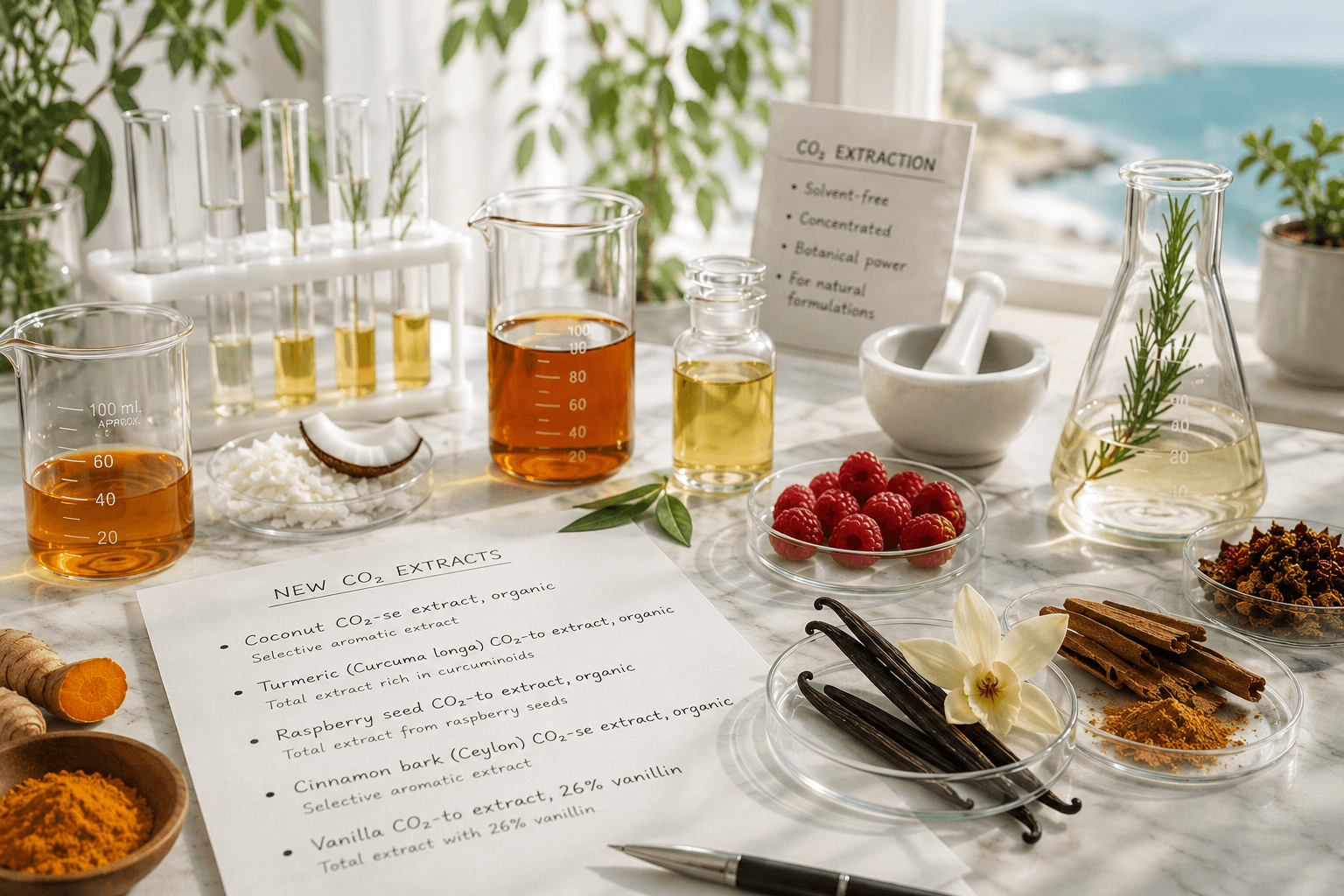
CO₂ extracts for formulations with a more pronounced botanical profile
Our range has been expanded with five new CO₂ extracts, several of them in organic quality. Among them you will find oil-soluble total extracts, selective aromatic extracts and a new vanilla extract with a high vanillin content.
They are intended for formulations in which the plant component is meant to bring more than just a nice name in the INCI list. Depending on the type of extract, they can give the formulation fragrance, colour, naturally present active substances, a more nourishing oil profile or a more pronounced sensorial character.
You can use them in cosmetics, balms, oil serums, soaps and aromatic products – everywhere you want to work with a concentrated plant extract without solvent residues and at the same time give the formulation a clearer functional and sensorial direction. You will find all the new products in the category CO₂ extracts.
What CO₂ extraction is
CO₂ extraction uses carbon dioxide as the extraction medium. After the process is finished, the CO₂ evaporates from the extract, so there are no residues of common organic solvents left in the final raw material.
The result is concentrated plant extracts that can capture aromatic, lipophilic and other valuable plant components depending on the type of extraction. The difference between a total and a selective extract is therefore crucial for what you expect from the raw material in the formulation.
CO₂-to — total extract
It captures a broader spectrum of the plant’s oil-soluble components. It can contain, for example, plant waxes, fatty acids, colorants, antioxidants and aromatic components. It is suitable where the extract should also bring an oil profile and active lipophilic substances, not only fragrance.
CO₂-se — selective extract
It is focused mainly on volatile aromatic and oil-soluble substances. In character it is often close to an essential oil, but it can come across as gentler, rounder and more stable. Suitable wherever fragrance and sensorial impression are in the foreground.
After extraction, the CO₂ simply evaporates. Thus no residues of common organic solvents remain in the final raw material — only the concentrated profile of the plant itself.
New extracts in the range
The five new products cover various needs — from a delicate coconut fragrance through antioxidant-oriented turmeric and nourishing raspberry oil to spicy Ceylon cinnamon and the most intense vanilla in our assortment. For each extract you will find where it belongs in the formulation and what to watch out for.
Coconut CO₂-se extract organic
Selective aromatic extract with a typical coconut fragrance. A good choice where coconut should come across as soft, warm and natural, not heavy and synthetic.
Typical use: body oils, balms, massage blends, soaps, perfuming compositions.
Turmeric (Curcuma longa) CO₂-to extract organic
Total extract with a natural content of curcuminoids. Interesting for formulations with an antioxidant-oriented botanical profile and for products for dull or tired skin.
Typical use: oil serums, balms, masks.
Practical note: turmeric stains intensely, so we recommend starting with a low dosage and always testing the final shade of the product.
CO₂-to raspberry seed extract organic
Suitable as part of the oil phase in facial serums, creams, balms and more nourishing formulations. In a formulation it supports a botanical, regenerating and anti-age character — suitable where the oil phase should be more sophisticated and more active.
Typical use: facial serums, creams, balms, nourishing formulations.
CO₂-se Ceylon cinnamon bark extract organic
Selective aromatic extract with a warm, spicy and intense character. It is used in very low concentrations.
Typical use: aromatic blends, balms, massage products, soaps, warming formulations.
Beware of allergens: for finished products, monitor the labelling of allergens, especially cinnamal, if its content exceeds legislative limits.
Vanilla CO₂-to extract, 26% vanillin
The most intense vanilla extract in our range — it contains up to 26% vanillin. It has a deep, darker and concentrated vanilla character. Suitable where vanilla in the final product should be clearly recognisable, warm and pronounced.
Typical use: balms, body butters, creams, oil perfuming blends, more luxurious formulations.
How to work with CO₂ extracts
CO₂ extracts are concentrated raw materials, so it is worth starting low with them and adjusting the dosage according to the type of formulation, the required intensity and the recommendation given for the specific product.
When formulating, keep these practical points in mind above all:
- Add oil-soluble extracts to the oil phase or to a suitable oil base.
- Dose aromatic extracts carefully, because they are pronounced even in small amounts.
- First test colouring extracts, especially turmeric and vanilla, in a small batch.
- For extracts with aromatic allergens, check the labelling of the finished product.
- Store them well closed, in a cool place and away from direct light.
- You will always find the exact recommended dosage in the product detail of the specific extract.
Practical tip: with concentrated raw materials it is more sensible to add them in small steps and to assess fragrance, colour and sensorial impression as you go. It is easier to add a little more than to have to rescue a batch that is too intense or too coloured.
Who they are suitable for
The new CO₂ extracts will be appreciated by everyone who wants to bring more botanical character into their formulations, a more natural aromatic component or a more concentrated profile of active lipophilic substances.
They are suitable for balms, oil serums, creams, soaps, massage products and aromatically oriented formulations, where every component should have a clear purpose and a visible benefit.
Frequently asked questions about CO₂ extracts
Practical questions about the new extracts — the difference between the types, solvent residues, dosage, colouring and storage.
What is the difference between a CO₂-to and a CO₂-se extract?
CO₂-to (total) captures a broader spectrum of oil-soluble components — plant waxes, fatty acids, colorants, antioxidants and aromatic substances. CO₂-se (selective) is focused mainly on volatile aromatic and oil-soluble substances; in character it is close to an essential oil, but it often acts more gently and more stably.
Why do CO₂ extracts not contain solvent residues?
The extraction medium is carbon dioxide. After the process is finished, the CO₂ evaporates from the extract, so there are no residues of common organic solvents left in the final raw material — the concentrated profile of the plant remains.
How should CO₂ extracts be dosed in a formulation?
These are concentrated raw materials, so it is worth starting low and adjusting the dosage according to the type of formulation and the required intensity. Add oil-soluble extracts to the oil phase and dose aromatic ones carefully. You will always find the exact recommended dosage in the detail of the specific product.
Why can turmeric and vanilla colour the product?
Total extracts can contain the natural colorants of the plant. Turmeric colours particularly intensely, and the vanilla extract also has a more pronounced shade. Therefore, first test colouring extracts in a small batch and monitor the final shade of the finished product.
What to keep in mind with cinnamon extract and allergens?
The selective extract from Ceylon cinnamon bark is used in very low concentrations. For finished products it is necessary to monitor the labelling of allergens, especially cinnamal, if its content exceeds legislative limits.
How should CO₂ extracts be stored?
Store them well closed, in a cool place and away from direct light. In this way you protect their aromatic and functional profile throughout their shelf life.
The new products are already available on the website
The new CO₂ extracts are already available on the website, together with basic information on their use and the recommended dosage for each product.
Choose according to what you want to support in the formulation – fragrance, colour, oil profile, antioxidant character or a more pronounced botanical detail.
Five new extracts for balms, oil serums, creams, soaps and aromatic formulations. Choose the one that will give your formulation exactly the direction you need.