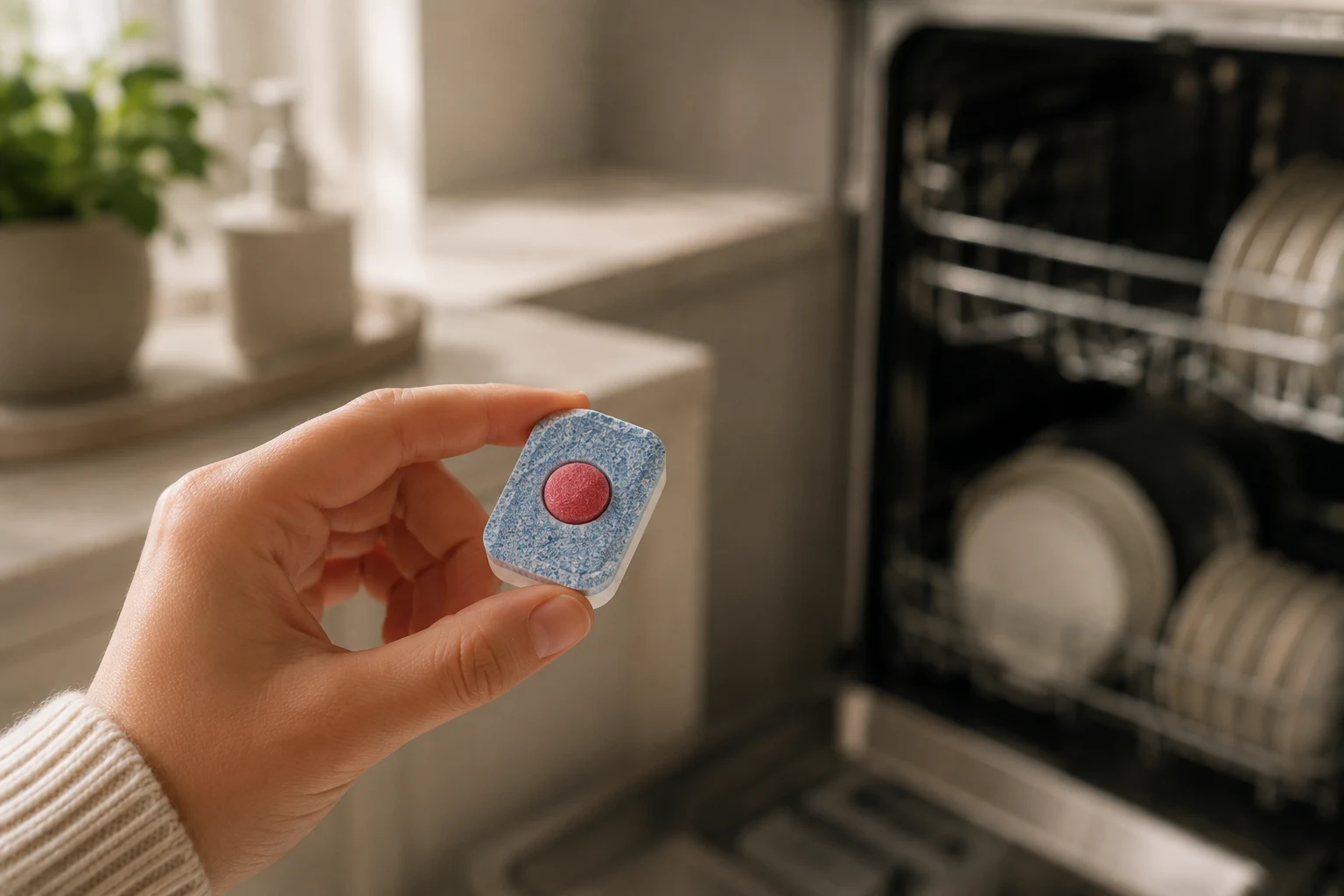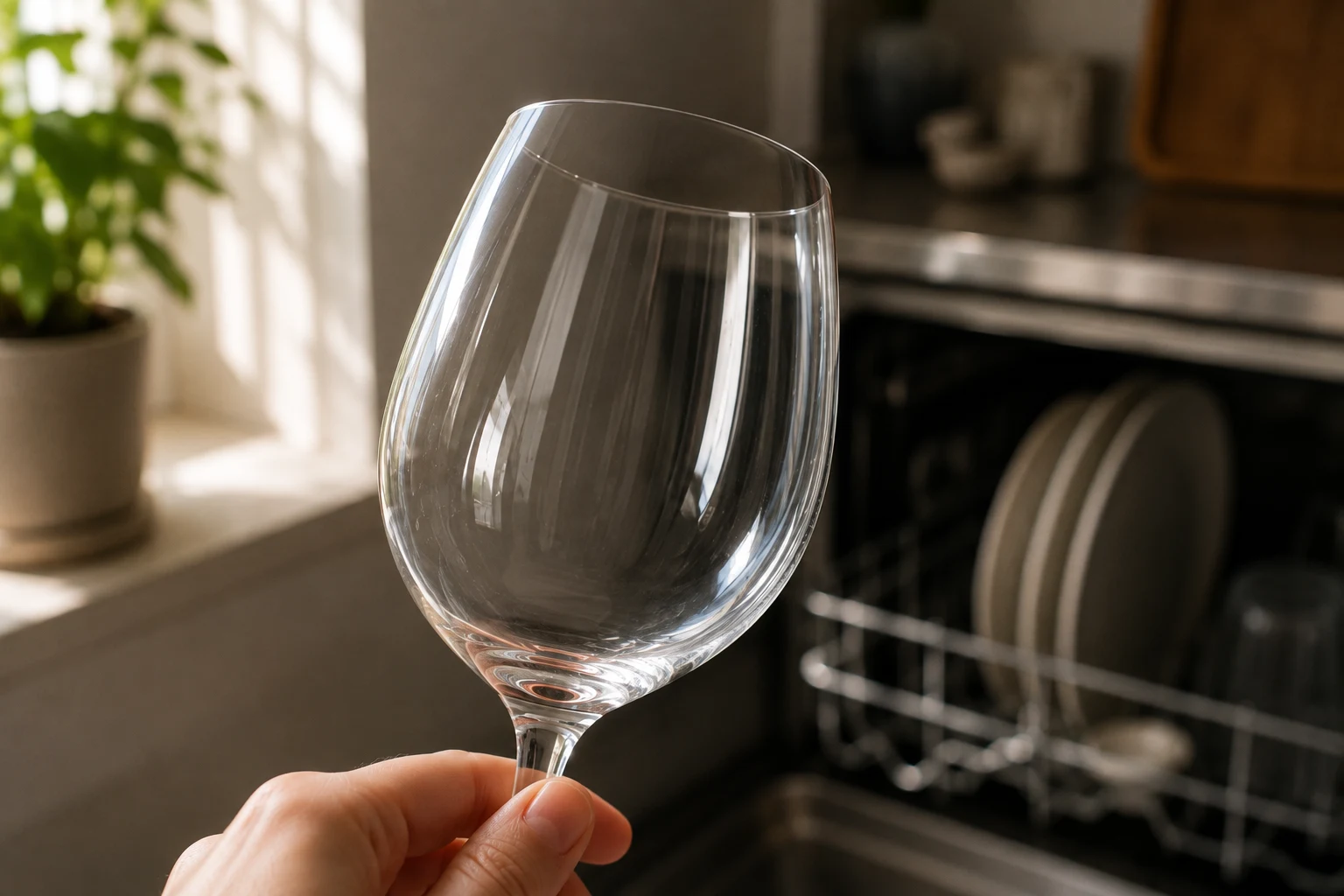
You take the glasses out of the dishwasher, hold them up to the light and see streaks. You add more tablets, try a different programme, and the result is the same. Most of the time, the problem is not the amount of detergent but the fact that a single tablet is trying to do three different jobs at once.
Three bottles instead of one box of tablets. At first glance it looks like a step backwards, but in reality it is a return to how the dishwasher was designed. Each job in it has its own tool, and when you separate them, you get cleaner dishes, a longer life for the machine and control over what goes into the water.
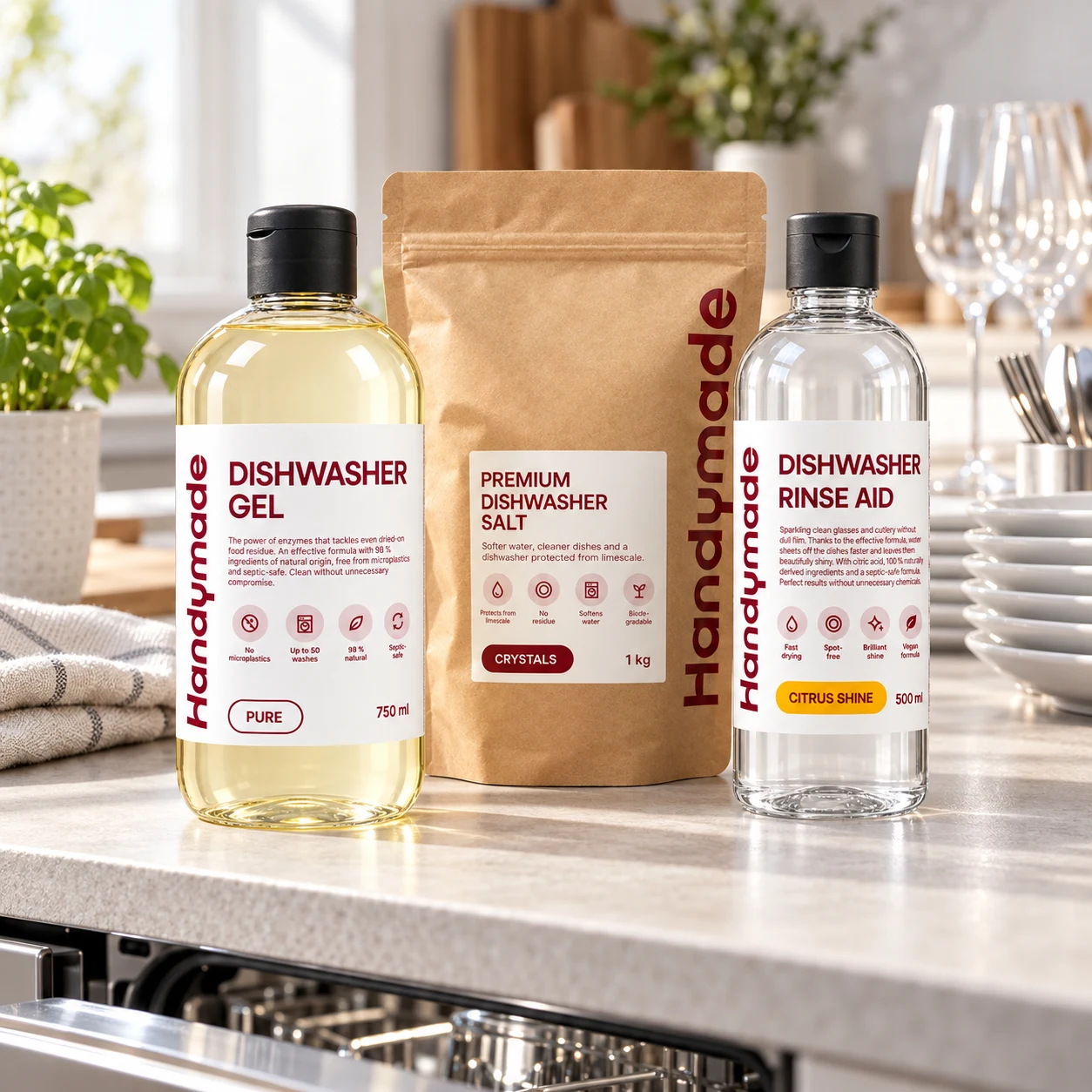
Introducing our dishwasher system: gel, salt and rinse aid. Three products, three jobs, one result.
Why one tablet is not enough
During every cycle, a dishwasher handles three distinct jobs: washing the dishes, protecting itself from limescale and making sure the dishes dry without spots. All-in-one tablets merge them into a single dose released at a single moment, and that is exactly where they reach their limit.
Salt shows this best.
Important: The salt in tablets does not regenerate the water softener; it only works during the wash itself. The built-in softener, which is meant to protect the machine in the long term, is left unattended.
When you split the jobs between three products, each one works exactly where it should, and exactly when it should.
Gel cleans: enzymes for food residue, surfactants for grease
The gel is the workhorse of the whole system. Its enzymes break down proteins and starches – dried-on egg, pasta or sauces – and a sugar-based surfactant made from plant raw materials carries away grease. It works even at low temperatures, so an eco programme is no compromise.
You dose it according to the actual load: less for a half-empty dishwasher and soft water, more for a full one and heavily soiled dishes. We have broken down the full composition ingredient by ingredient in our article on what dishwasher gel contains, including what you will not find in it: phosphates, chlorine or added fragrance.
Related article: What dishwasher gel contains — The gel’s composition, ingredient by ingredient.
Salt protects the most expensive part: the dishwasher itself
Salt is the most underrated member of the trio. Yet it protects the most expensive thing in the whole system, your machine. It regenerates the built-in water softener, which captures calcium and magnesium before they can settle as limescale on the dishes, the heating element and in the pipework.
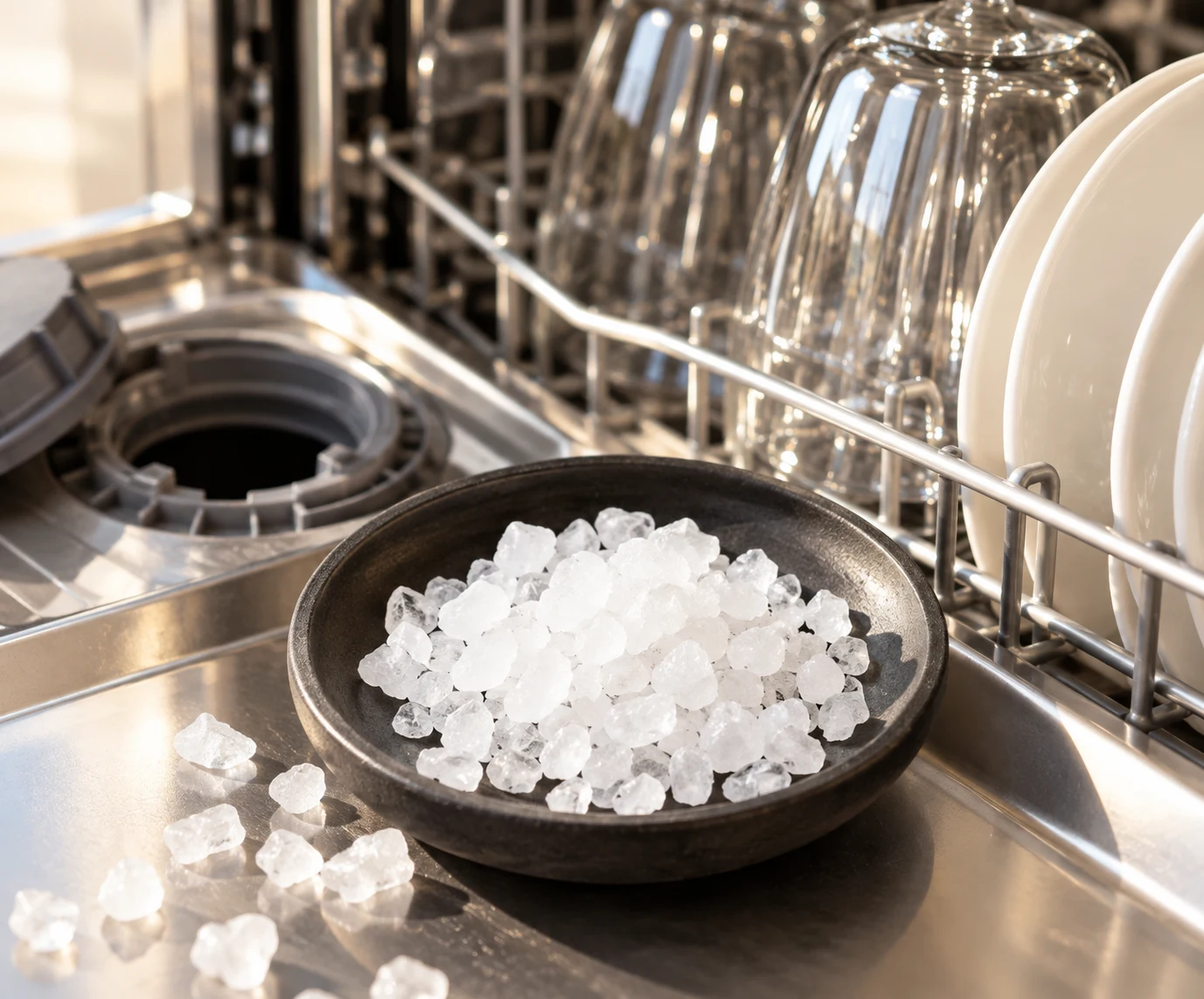
Real protection for your dishwasher therefore comes only from salt in the reservoir, set according to the hardness of your water. We explain how to do this in our article on dishwasher care.
Related article: How to look after your dishwasher — Setting the softener according to water hardness and other maintenance.
Rinse aid takes care of dry dishes and clear glasses
Rinse aid comes into play during the final rinse. It lowers the surface tension of water, so water runs off the dishes in a continuous film instead of droplets that would leave spots and streaks as they dry. The dishes come out drier, the glasses clear, and you can open the door sooner.
In our rinse aid, this job is done by citric acid against mineral marks and sophorolipids, biosurfactants produced by fermentation from natural raw materials. You know fermented ingredients from our cosmetics; now they are at work in your dishwasher too. Vegetable ethanol also ensures fast drying.
The rinse aid comes in two versions. Pure is fragrance-free. Citrus Shine is scented with orange and lemon essential oils, which you notice mainly when you open the door, because the dose of rinse aid in the rinse is small.
Formulations designed as a whole
Our three products are not a marketing bundle; they are formulations designed with each other in mind. The gel relies on the salt and softener to deal with water hardness, so it does not need to be unnecessarily aggressive. The gel works in an alkaline environment, the rinse aid in an acidic one: citric acid in the final rinse helps prevent minerals from remaining on glass as white marks. And the same rule applies to all three: a complete list of ingredients with an explanation of why each one is there.
Good to know: They will also work alongside other brands’ products – we will not tell you otherwise. But you will get the best result when each job is done by a product designed with the other two in mind.
How to set up the system the first time
- Start with salt
Fill the reservoir at the bottom of the dishwasher and set the softener according to your water hardness, which you can find on your water supplier’s website.
- Then top up the rinse aid
in the compartment in the door.
- Dose the gel
into the detergent dispenser with every wash.
You do the first two steps once every few weeks. The third is the only everyday routine.
Three jobs, three honest tools
A dishwasher was never built for a single tablet that solves everything. It is built for three jobs, and for each one we have prepared a tool with a formulation we show you in full. Each product has its own page with the complete composition. The first step is simple: reach for the dishwasher set and adjust the system to your water.
Frequently asked questions
Do I really need gel, salt and rinse aid at the same time?
Yes, if you want clean dishes, sparkling glasses and a dishwasher free of limescale. Each product does a different job: the gel cleans, the salt protects the softener and the machine, and the rinse aid ensures dry dishes without streaks. One job cannot be replaced by a bigger dose of another, which is why the products in the system complement rather than replace each other.
Can I combine your gel with another salt or rinse aid?
You can; the products also work on their own alongside other brands. However, you will get the best result with a matched system whose formulations complement each other: the gel relies on the salt to deal with water hardness, and the rinse aid finishes the rinse in an acidic environment. With every bottle, you also know exactly what it contains.
What are the sophorolipids in the rinse aid?
Sophorolipids are biosurfactants produced by fermentation from natural raw materials, much like the fermented ingredients in cosmetics. In rinse aid, they lower the surface tension of water, so water runs off the dishes in a continuous film and the dishes dry faster and without spots. The manufacturer describes them as readily biodegradable.
What is the difference between Pure and Citrus Shine rinse aid?
Functionally, none: both contain the same rinsing and drying ingredients. Citrus Shine also contains orange and lemon essential oils for a fresh fragrance, while Pure is fragrance-free. Essential oils naturally contain fragrance allergens such as limonene, which is why you will find them listed on the label. If you do not want any fragrance, choose Pure.
Why do I need dishwasher salt if I use tablets with salt?
The salt in all-in-one tablets only works during the wash and does not regenerate the built-in water softener. Real protection for your dishwasher against limescale comes only from salt in the reservoir at the bottom of the machine, set according to the hardness of your water. This protects the heating element, the pipework and the dishes.
How often should I top up the salt and rinse aid?
It depends on consumption and water hardness, usually once every few weeks. Most dishwashers have indicator lights that tell you when a top-up is needed, so you do not have to keep track of anything. You dose the gel with every wash according to how full the dishwasher is and how heavily soiled the dishes are.
You will find the gel, salt and rinse aid, each with its complete composition, in our online shop.