
Bottles only
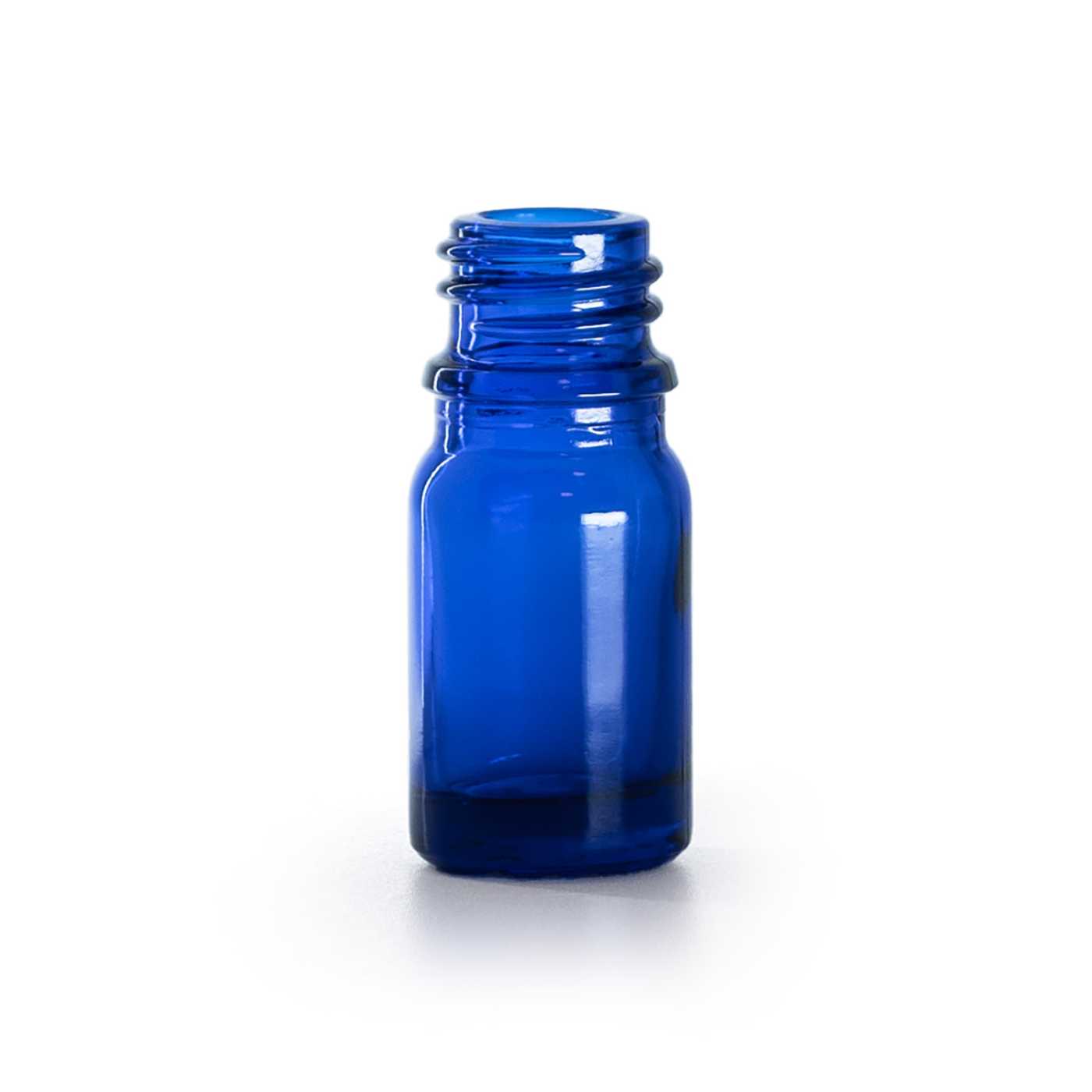
Blue Glass Bottle, 5 ml, 255 pieces
The blue glass medicine bottle with a nominal volume of 5 ml is packaging for small portions of liquid products that benefit from protection against light: essential oils, perfume compositions, concentrated facial… full description
Lowest price in the last 30 days: €76.99
Save €14.81 with this set
Product description
The blue glass medicine bottle with a nominal volume of 5 ml is packaging for small portions of liquid products that benefit from protection against light: essential oils, perfume compositions, concentrated facial serums, herbal tinctures or customer samples. It is supplied on a tray of 255 bottles, which makes it easier to fill a larger number of bottles at once. The 18/415 neck finish is one of the common sizes, so a dropper, sprayer or cap from the Handymade range can be chosen to fit it.
What the medicine bottle is suitable for
The small volume makes this bottle suitable packaging for ingredients and finished products that are dispensed by the drop or used up quickly:
- Essential oils and fragrance blends – glass does not react with them and does not absorb the odour; after washing, it can be used for another oil.
- Oil-based and anhydrous serums – concentrated blends with active ingredients, where the customer applies only a few drops.
- Tinctures and alcohol extracts – alcohol does not damage glass.
- Samples and travel packs – one medicine bottle is enough to try a product without the customer paying for the full volume.
- Perfumes in oil and alcohol bases – add a sprayer or dropper and you have a finished miniature perfume.
A 5 ml medicine bottle is not suitable for creams and thick emulsions. The narrow neck and small volume make both filling and dispensing difficult, and jars are intended for these products.
Blue glass and protection of the contents
Coloured glass absorbs part of the light that would otherwise pass through to the contents. With essential oils, plant extracts and active ingredients sensitive to oxidation, the blue shade therefore slows down changes in odour and colour. The packaging does not provide complete darkness, so even blue bottles should be stored away from direct sunlight and heat sources. Compared with clear glass, the contents are less visible. This should be considered for display samples, as the customer will only see the colour of the product when applying it.
Glass keeps its shape and does not absorb oils or fragrance compounds. However, it can break if dropped. With small medicine bottles this is less of a problem than with larger bottles, but when posting samples, suitable padding should be chosen.
Nominal volume and filling
Nominal volume is the quantity the packaging is designed for under normal filling. The total volume of the bottle up to the rim of the neck is slightly larger. This difference provides a reserve for the closure, the tube of the dropper or sprayer, and the expansion of the contents with changes in temperature. The medicine bottle is therefore filled up to the nominal volume. If it were filled to the brim, part of the contents would be pushed out once the dropper is fitted, and in warm conditions the packaging could leak through the thread.
When filling to 5 ml, a small syringe or a graduated pipette works well. With 255 bottles on a tray, this speeds up the work and each medicine bottle receives the same dose.
Closures and the 18/415 neck finish
The 18/415 thread designation indicates the diameter of the neck and the type of thread. Closures with the same neck type, as well as ready-made combinations of a medicine bottle with a dropper, sprayer or cap, can be found in the Handymade range. For your own combination, we recommend checking the seal with your actual formulation, the correct dispensing, and the length of the dropper or sprayer tube. A short tube does not reach the bottom, and the last drops remain unused.
Good to know
Before the first filling, the medicine bottles are washed, disinfected with isopropyl alcohol or ethanol and left to dry completely with the neck facing down. Residual moisture can cause cloudiness in an oil-based product and, in anhydrous products without a preservative, also microbial spoilage.
Glass withstands temperature differences during normal filling, but a sudden change from cold to hot can cause it to crack. Allow hot mixtures to cool before filling, at least to a temperature at which the bottle can be held in the hand.
The packaging is intended for use with cosmetic products and meets the relevant legislative requirements. The declaration of conformity is available with the product.
Empty medicine bottles on the tray are open, so store them in a dry and clean environment until filling to keep dust out. Blow them out or rinse them shortly before filling.
Once emptied, the bottle can be washed and refilled. When switching from an essential oil to another product, bear in mind that the odour washes out of a plastic closure or the rubber bulb of a dropper less readily than from glass. It is therefore better to replace the closure. The glass goes in glass recycling; remove the closure before disposal.
Frequently asked questions
Verified by customers.
No reviews yet.
Only customers with a delivered order can write reviews.