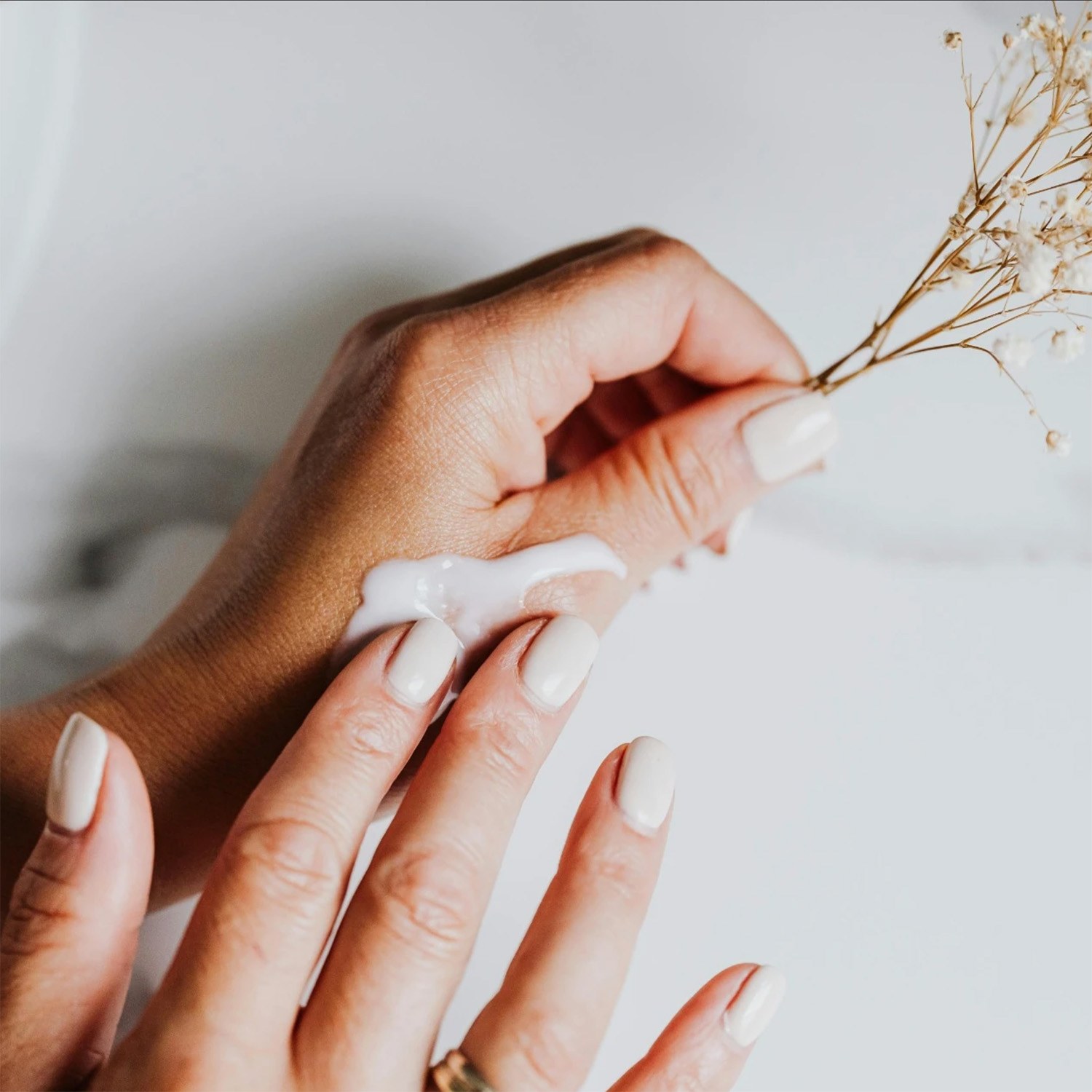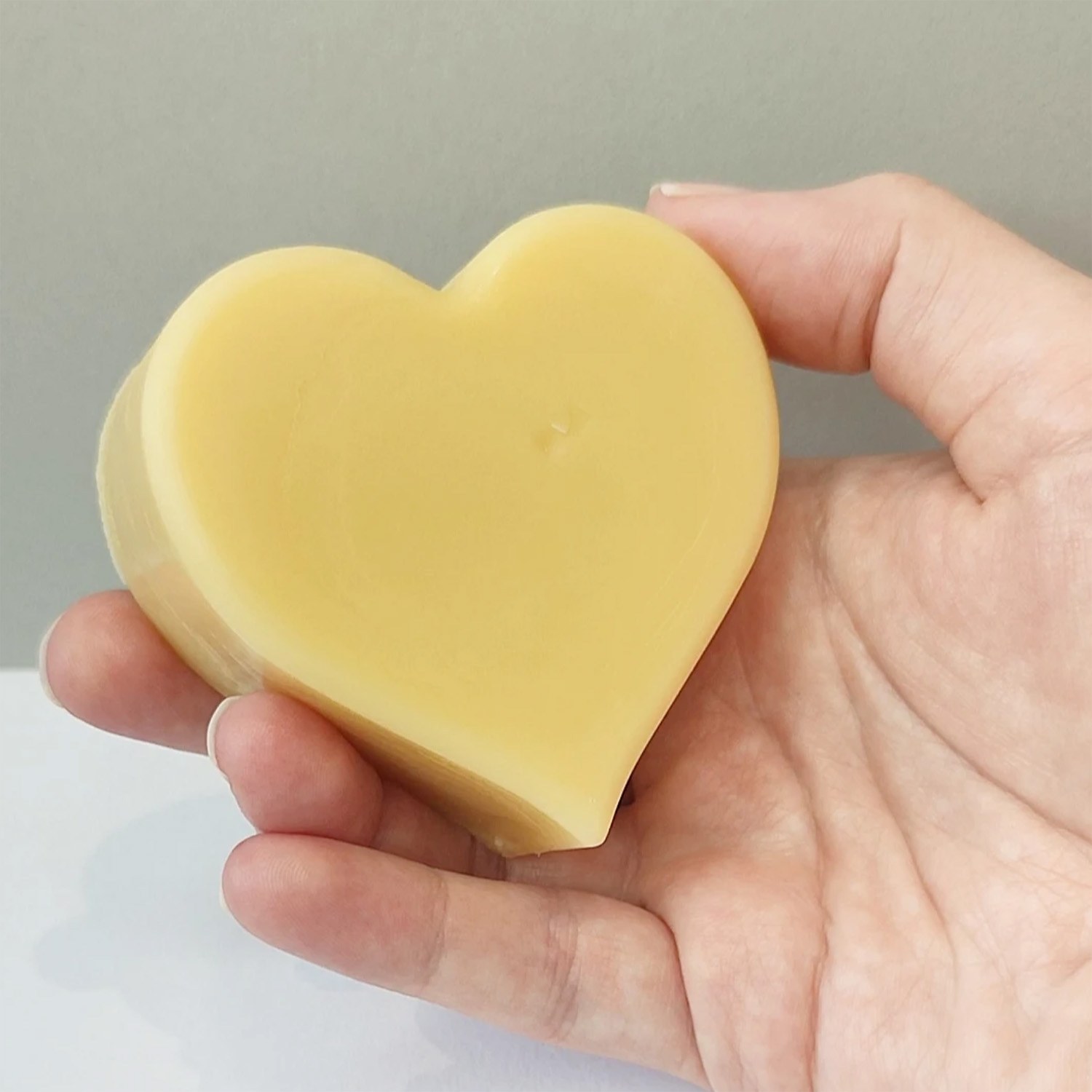
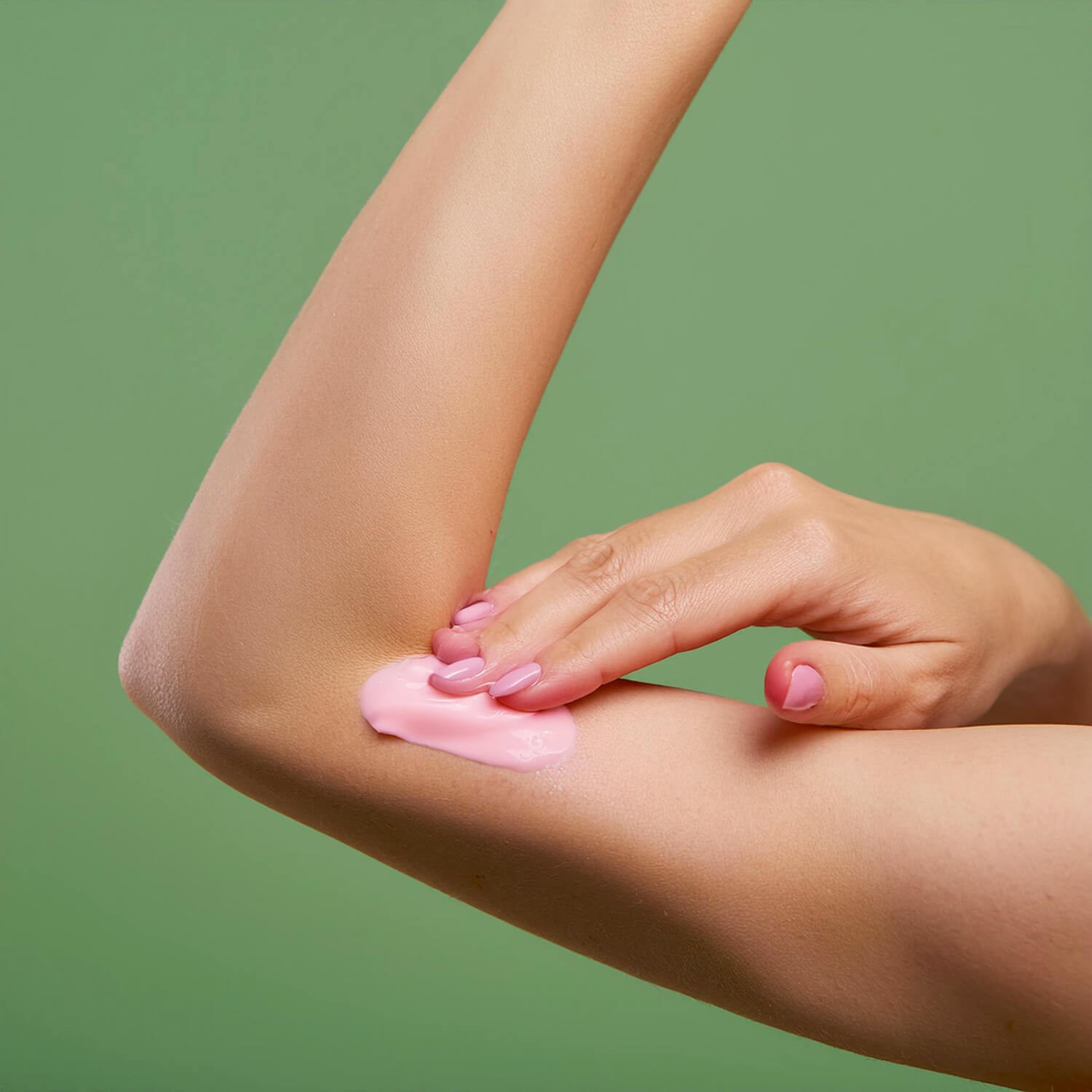
Body yoghurt is a light hydrating emulsion made for skin care in summer. Make it with us.
Have you already heard of body yoghurts? These are light gel-based emulsions.
Why you will love body yoghurt
- Hydration and nourishment
Light gel-based emulsions not only nourish the skin, but also give it the hydration it needs.
- Refreshment in summer
You will like body yoghurts especially during summer, since they contain a minimum of oils and beautifully refresh the skin.
- A minimum of oils
The formula is built on a light gel, and oily raw materials make up only a small proportion of it.
- Easy to make
Making them is no more complicated than making a regular body cream.
Body yoghurt — raw materials and formula
Body yoghurt is based on a similar foundation as body cream, that is, a mixture of water and oils, which is combined with the help of an emulsifier. In addition, gelling agents, most often plant gums, are added to body yoghurts to ensure the characteristic light and gel-like consistency of the final product.
| Ingredient | Content in % |
|---|---|
| Phase A – water phase | |
| Demineralised water | 77.66 |
| Phase B – gelling mixture | |
| Xanthan gum | 0.80 |
| Mica sunset dazzler | 0.04 |
| Glycerin | 5.00 |
| Phase C – oil phase | |
| Calendula macerate in oil | 7.00 |
| Cottonseed oil | 3.00 |
| Cetearyl alcohol | 1.00 |
| Beautyderm K10 | 4.00 |
| Phase D – heat-sensitive raw materials | |
| Euxyl PE 9010, preservative | 1.00 |
| Tocopheryl acetate | 0.50 |
| Equipment | |
| Glass jar, aluminium lid | — |
Body yoghurt — the method
-
Disinfect your equipment
Disinfect all tools, vessels and containers that will come into contact with the product or the raw materials, for example with ethanol.
-
Mix the phase B raw materials
Into a heat-resistant vessel, weigh out the raw materials from phase B, that is, xanthan gum, glycerin and mica powder. Mix well until a thick paste without lumps is formed.
Phase B -
Form the gel
Into the paste made from the phase B raw materials, add water in small amounts while stirring continuously, until a gel is formed, then cover the vessel with aluminium foil.
Phase A -
Weigh out the oil phase
Into a second heat-resistant vessel, weigh out the raw materials from phase C, cover the vessel with aluminium foil.
Phase C -
Heat in a water bath
Place the vessel with the gel and the raw materials from phase C into a water bath and heat until phase C has melted and both mixtures have reached approximately the same temperature.
-
Combine the two phases
Then, while stirring with an immersion blender or milk frother, pour the gel in smaller portions into the vessel with the raw materials from phase C. Stir intensively so that both phases combine.
-
Finish it off cold
Continue stirring also during cooling. After reaching room temperature, add the preservative and tocopheryl acetate, and again mix well.
Phase D -
Leave to stand and fill
If possible, leave the mixture in a vessel covered with cling film to stand overnight, so that any remaining xanthan gum hydrates. Then mix again and fill it into the container.
Tips and tricks for making it
In the following lines you will find a few pieces of advice on how to solve problems while making this refreshing body yoghurt — from working with xanthan gum to adding heat-sensitive raw materials.
When using plant gums such as xanthan gum, it is good to hydrate these substances first by dispersing them in glycerin (step 2). In this way, the amount of lumps formed by xanthan gum after adding water (step 3) is reduced, and at the same time the time needed for hydration and elimination of these lumps is shortened.
It is also good to incorporate powder colourants such as mica powders into this glycerin mixture. If you were to add them into the finished yoghurt, lumps of undispersed colourant may form.
Tip: if it seems to you that your gel has too many lumps, do not despair — the lumps will naturally disappear after approximately 24 hours, when the xanthan gum spontaneously hydrates.
Mix the product well and leave it to stand once it is finished (step 8), in order to obtain the final yoghurt-like consistency.
Pour the gel into the phase with the oily raw materials (phase C, weighed out in step 4) while it is still in the water bath (steps 5–6), so that the emulsifier and cetearyl alcohol do not have time to solidify (since only a small amount of these raw materials is used and after being removed from the water bath they start to solidify immediately). After adding the gel, mix well, take the vessel out of the water bath, ideally while stirring continuously, and continue adding the rest of the gel.
Careful: add tocopheryl acetate and the preservative only after cooling (step 7), since these are heat-sensitive raw materials that would be degraded by heat.
At the same time, sharp temperature fluctuations do not suit the body yoghurt as a whole either, so try not to leave the product in direct sunlight or in overheated rooms, as separation of the emulsion may occur.
The raw materials and what they do
Below you will find basic information about the raw materials used in our body yoghurt. You will also learn more about how to replace these raw materials, whether it is possible to omit them, or you will learn about other ways to customise the product.
Demineralised water
The basis of most cosmetic products is water. In production, demineralised water is always used — ordinary tap water contains minerals that may disrupt the stability of the product. If you want to replace demineralised water, reach for floral hydrolates, which will also pleasantly scent your product. Of course, you can replace only part of the demineralised water with hydrolates, or combine several hydrolates.
Xanthan gum
To obtain the gel-like yoghurt consistency of the body yoghurt, it is indispensable to use a gelling agent. In our case, xanthan gum was used because it is easily available and easy to work with, and so even beginners can try using it. Another advantage of xanthan gum is its good stability.
By changing the proportion, i.e. the amount of xanthan gum in the formula, you will also change the final viscosity of the product. If you want a firmer and thicker consistency of the body yoghurt, increase the proportion of xanthan gum by 0.05 to 0.1 %; when using xanthan gum above 1 %, the product could already be too thick to sticky.
On the contrary, you will achieve dilution of the product by reducing the amount of xanthan gum; try reducing it by 0.1 % until you obtain the desired consistency.
Xanthan gum is thus a key component of the body yoghurt. You can replace it with other plant gums and thickeners, but count on a change in viscosity and consistency, which will be significant when using carrageenan, for example (carrageenan at 1 % already forms a firm jelly, therefore use a smaller amount or try another plant gum).
Mica powder
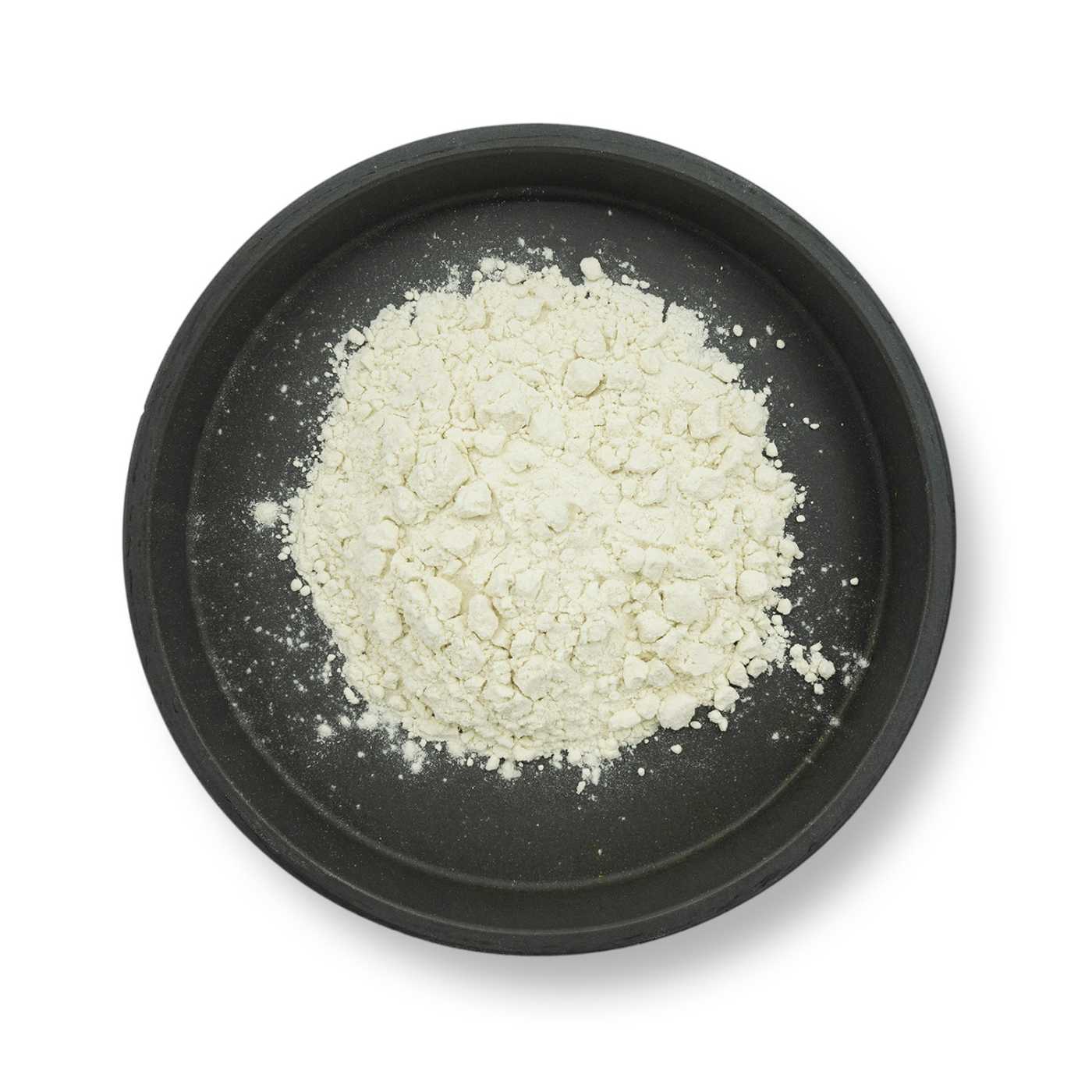
Our body yoghurt acquired its delicate pink colour thanks to the use of mica powder in that shade. When choosing mica powders, you have a wide palette of colours available, so do not hesitate and choose the one you like the most. You can also influence the intensity of the colour by the amount of mica powder used. Alternatively, you can omit the mica powder completely, and the body yoghurt will then be white.
An alternative to mica powder can also be glitters, if you want a shimmering body yoghurt. Mix mica powder or glitters well with glycerin and xanthan gum, so that the powder is evenly dispersed in the product and no lumps are formed.
Glycerin
Plant-derived glycerin fulfils several functions in the body yoghurt recipe. Above all, it is an effective humectant for the skin — glycerin leaves a soft feeling on the skin, helps hydrate it and retain water in it. On the other hand, it hydrates other raw materials as well, such as plant gums, and facilitates the dispersion of these substances in the product.
If possible, do not omit glycerin from the product, as it will make it easier for you to work with powdered raw materials. On the other hand, you can play with the proportion of this substance in the formula.
Calendula macerate
The representative of the oily raw materials is calendula macerate in sunflower oil. Thanks to the maceration of calendula in oil, you can enjoy the benefits of this plant long after it has finished flowering and transfer valuable plant substances into cosmetic products.
Of course, you can replace the plant macerate in oil with another oil macerate, or choose a plant oil. Likewise, you can increase the proportion of macerate in the formula if the product seems not nourishing enough for your skin. If you want a less greasy product, reduce the proportion of calendula macerate in the formula.
Cottonseed oil
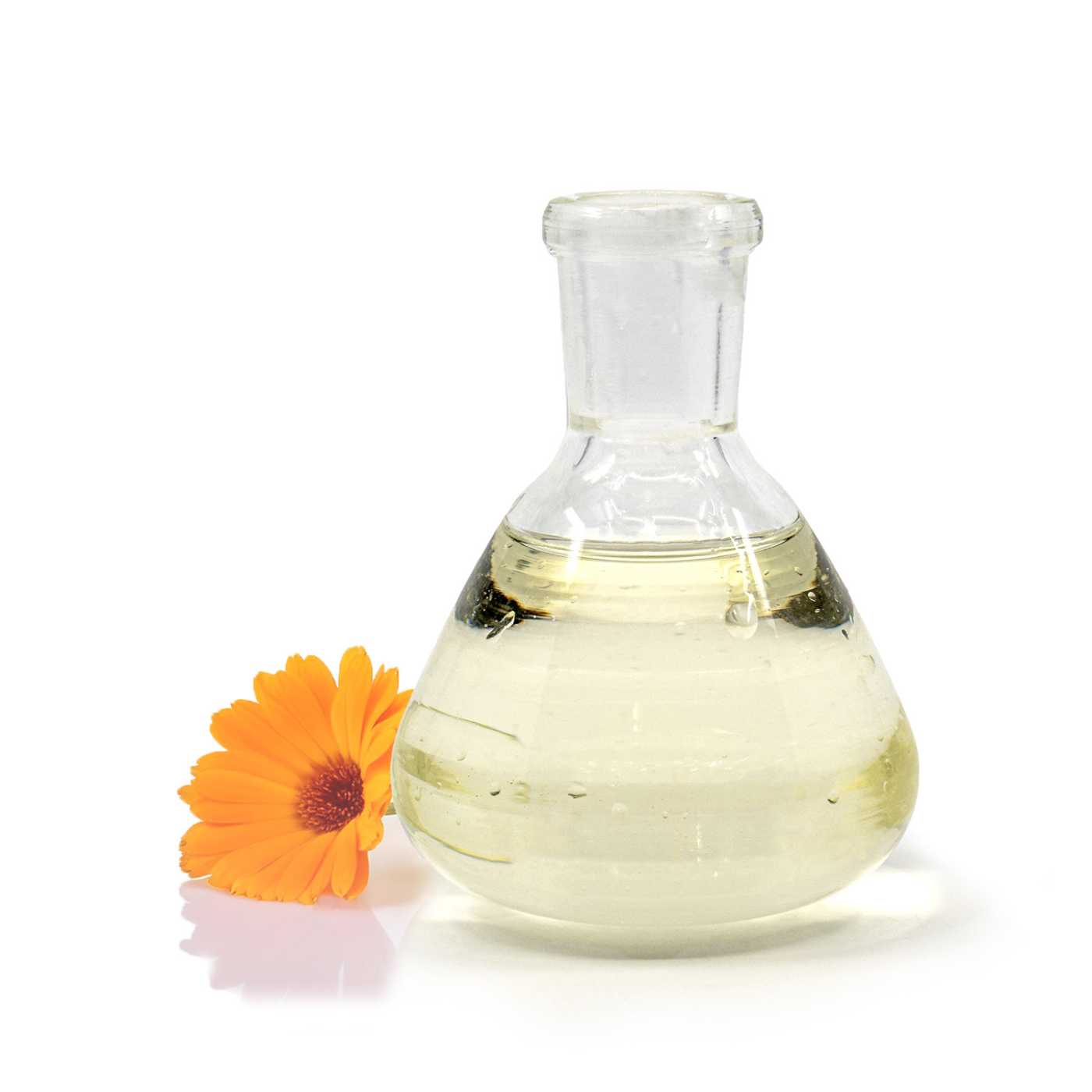
You will appreciate cottonseed oil in the body yoghurt recipe if you have dry, cracked or stressed skin. However, this caring oil is also suitable for other skin types. Do you have a different favourite plant oil? Do not hesitate, replace cottonseed oil with it in the body yoghurt recipe.
Alternatively, increase the proportion of oil in the formula if you feel that your skin would appreciate more oily raw materials.
Again, it applies that the amount of cottonseed oil in the recipe can also be reduced if you do not like oils in products too much. However, do not omit the oil completely, as this can endanger the stability of the emulsion.
Cetearyl alcohol
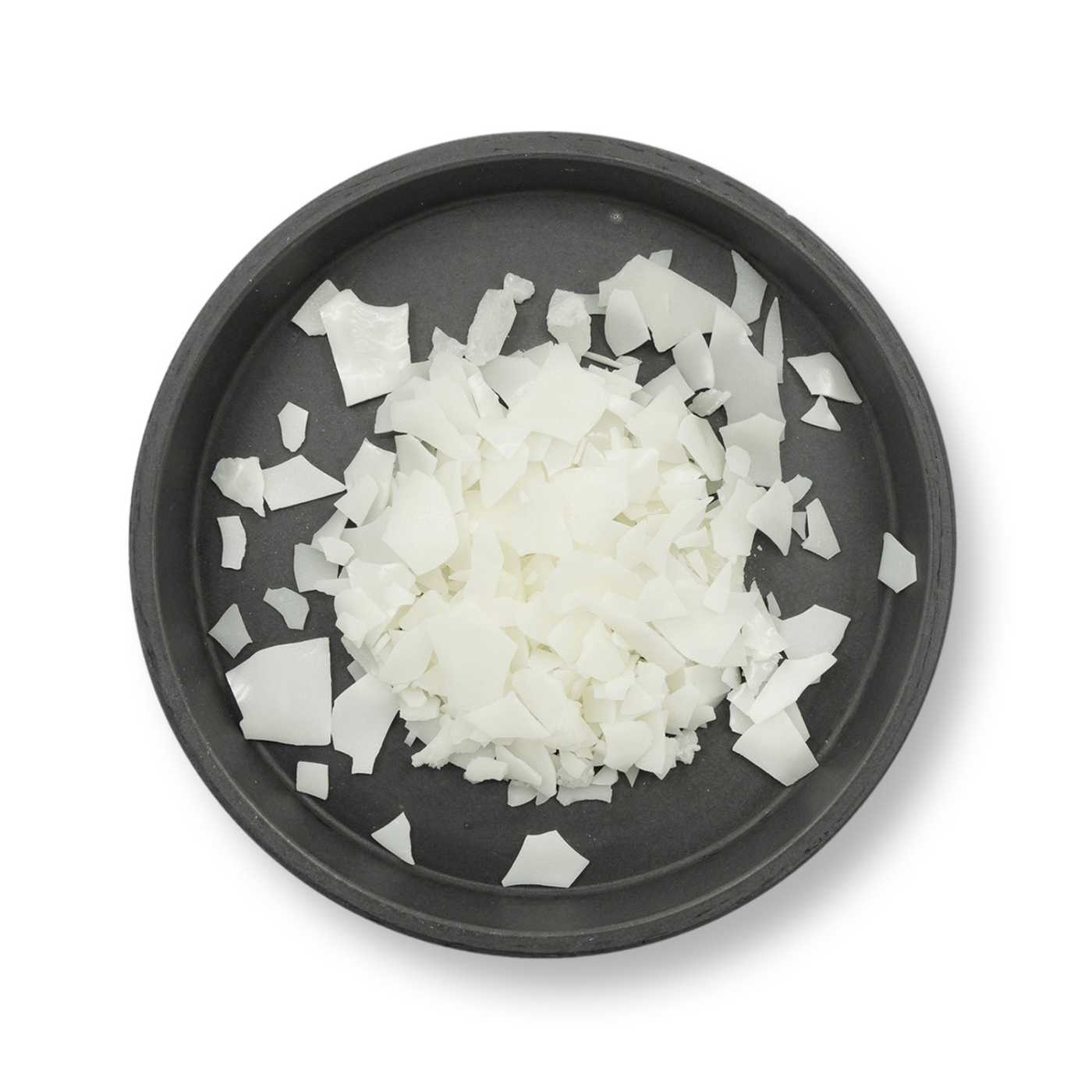
Cetearyl alcohol is also classified among the wax-like alcohols. In contrast to the best-known alcohol, ethanol, cetearyl alcohol is a solid substance sold in the form of white granules similar to wax. In products it also has properties similar to wax – it melts only at elevated temperature, thickens products and gives them a firmer consistency. Unlike true waxes, it does not leave an unpleasant waxy film on the skin.
Cetearyl alcohol also serves as a co-emulsifier, and thus improves the stability of the emulsion. For this reason as well, do not omit it from the formula. You can replace it, for example, with cetyl alcohol, which has similar properties. By increasing the amount of cetearyl alcohol in the formula you will obtain a thicker body yoghurt; by decreasing its content, on the contrary, the product will become more fluid.
Beautyderm K10
The main emulsifier in the body yoghurt recipe is Beautyderm K10. This emulsifier exhibits similar properties to Olivem 1000, therefore it can also be replaced by that substance, but count on a small change in viscosity when substituting these emulsifiers.
The emulsifier is indispensable for body yoghurt, since we are trying to combine water-based and oily raw materials and create an emulsion. It is thanks to the emulsifier that you can successfully create an emulsion. If you increase the proportion of oil in the formula by more than 1–2 percentage points, it is good to slightly increase the amount of emulsifier as well. Likewise, with the emulsifier you can partially influence the consistency: a larger amount of emulsifier causes thickening of the product.
Preservative
Since body yoghurt contains water and water-based raw materials, it cannot do without a preservative. In this case Euxyl PE 9010 was chosen, because this preservative is effective over a wide pH range and is therefore suitable for beginners as well. Euxyl can be replaced with another broad-spectrum preservative, but pay attention to the pH at which the preservative is effective. Some preservatives, such as Cosgard, are effective only in acidic pH, and so it is also necessary to adjust the pH of the whole product by adding a solution of lactic acid or citric acid.
Adding a preservative is definitely not something to leave out, because otherwise your product will quickly spoil and may possibly cause problems on your skin due to extensive microbial contamination in the product.
Tocopheryl acetate
The stabiliser for the oils is tocopheryl acetate. What does such a stabiliser do? Above all, tocopheryl acetate ensures that the oils do not oxidise so quickly, thanks to which you will enjoy your product for longer. Tocopheryl acetate thus has antioxidant properties and is also called vitamin E. This substance effectively nourishes the skin and is well soluble in oils.
Adding tocopheryl acetate can be omitted, in that case, however, the oils in the product may oxidise more quickly. On the other hand, tocopheryl acetate does not replace the preservative, since vitamin E has no effect on the stability of water-based raw materials and water. You can replace it also with tocopherol 96 %.
Warning
As mentioned, with home-made recipes you can experiment to achieve the desired properties. However, the final result can be influenced by many factors, such as humidity, temperature, the quality of the raw materials or their storage.
Important: before you use any raw material for making a cosmetic product, familiarise yourself with its properties, recommended dosage, storage conditions and safe handling. Every raw material may have the potential to trigger an allergic reaction in sensitive individuals, therefore before using the product we recommend finding out whether you are allergic to any of the raw materials or to the product as a whole, for example by a patch test.
If you have very sensitive or very acne-prone skin, or if you have other skin and health problems, we recommend that you consult a medical professional before applying a new product to the skin, whether it is a home-made cosmetic product, a pure raw material or a commercially available product.
Conclusion
You will appreciate body yoghurt as a great hydrating product especially in summer. Have you tried making it?
If you have made it and you have any questions regarding the procedure or the raw materials, or you would like to add an interesting tip to improve the recipe, feel free to write to us at [email protected].
We thank Ivana Jačalová for this excellent recipe for making body yoghurt.
Until we meet again, stay creative.
Until soaping again, friends.
You will find all the raw materials from the formula in our online shop.