


GLASS JARS
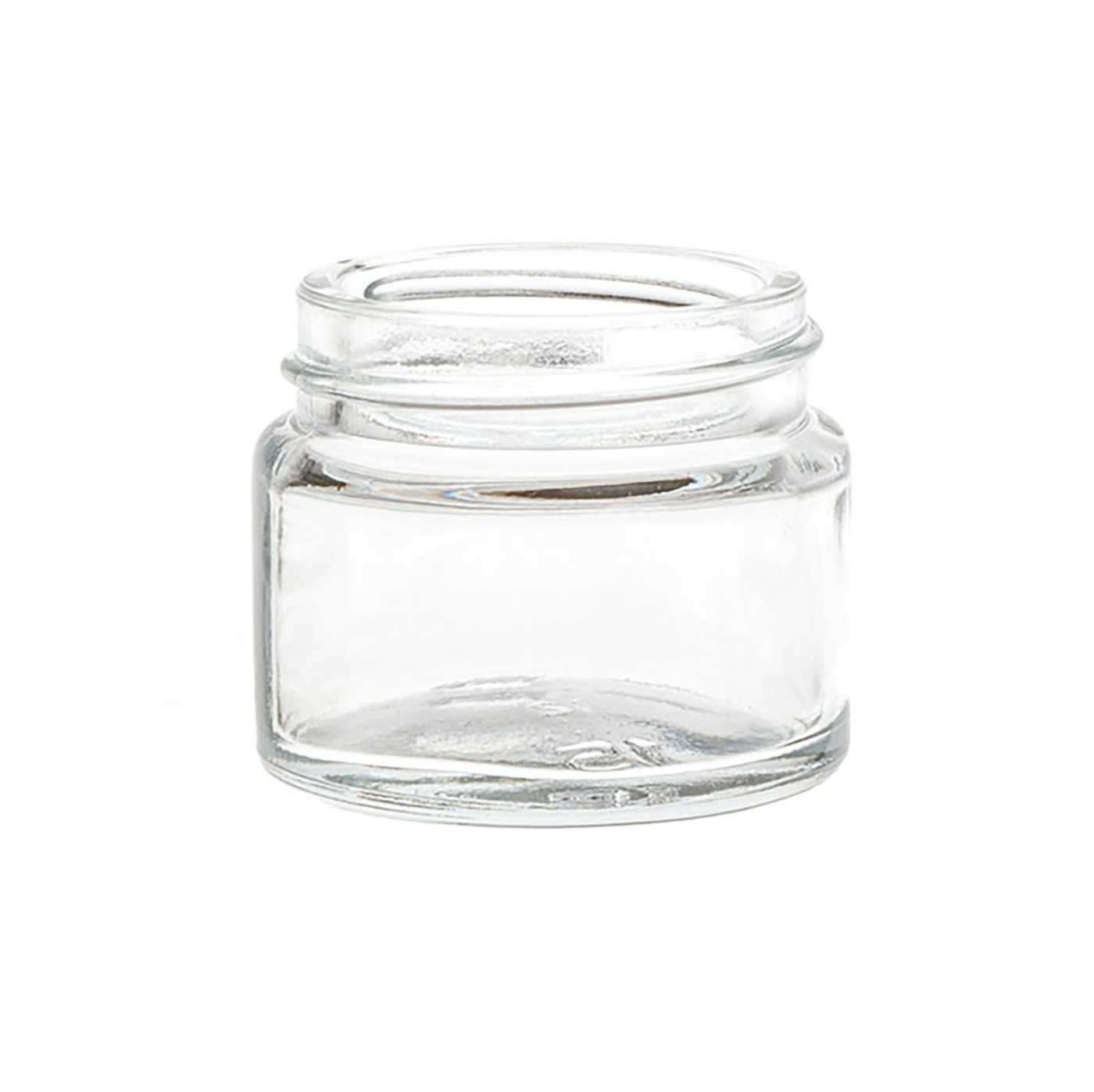
Clear glass jar, 30 ml 48 mm
Glass jar 30 ml is a small container for thick and semi-solid cosmetic products applied with a finger or spatula – balms, ointments, thick creams, or solid perfumes. full description
Lowest price in the last 30 days: €0.89
Total for 1 pcs: €0.89
Product description
Glass jar 30 ml is a small container for thick and semi-solid cosmetic products applied with a finger or spatula – balms, ointments, thick creams, or solid perfumes. The wide-mouth threaded opening of 48 mm makes both filling and scooping easy, and the clear glass keeps the contents visible, making it suitable where colour or texture is part of the product presentation. Glass is chemically inert, so it handles formulations with a higher proportion of essential oils or botanical extracts that can degrade certain plastics over time.
The packaging is suitable for use with cosmetic products. The declaration of conformity and related documents are listed with the product.
Key benefits
- Wide mouth – the contents can be easily filled and scooped out, which is not possible with thick textures in a narrow bottle.
- Clear glass – the contents are visible, making the jar suitable for coloured balms, scrubs, or products with a visible texture.
- Non-reactive material – glass does not absorb fragrances or colorants and does not react with essential oils, alcohol-based components, or most active ingredients.
- Reusable – after thorough washing and disinfection the jar can be used again without any loss of glass properties.
- Small volume – the contents are used up before they begin to age once opened, making it suitable for concentrated products with lower dosage.
Filling and volume
The jar distinguishes between nominal volume and total brim-full volume. Both values are listed in the specifications. Nominal volume is the quantity the container is designed for during normal filling. Total brim-full volume is the physical capacity up to the neck. The difference between them is the allowance for the lid and its sealing insert, as well as for expansion of the contents with temperature change. The jar should therefore be filled to the nominal volume, not to the brim. An overfilled jar closes poorly, the contents get into the thread, and the lid no longer seals.
Balms and ointments that are poured while heated should be allowed to cool slightly before filling, or the jar should be pre-warmed. Hot mass poured into cold glass can cause cracking, and as it cools it also contracts, so the level will drop below the expected mark.
Suitable products
The jar is suitable primarily for products dispensed by scooping:
- Balms and ointments – anhydrous solid and semi-solid products based on butters, waxes, and oils, which are scooped and spread.
- Thick creams and eye creams – emulsions with higher viscosity that cannot be dispensed from a bottle and are scooped with a spatula.
- Solid perfumes and fragrance balms – the scent is neither lost in glass nor transferred to the packaging material.
- Scrubs and masks in small packaging – samples or travel-size versions of larger products.
- Samples and test batches – for formula development or when sending samples to customers.
For aqueous products with low viscosity (tonics, serums) the jar is not practical. The contents are easily contaminated when scooped and tend to run, so a bottle with a dropper or pump is more suitable.
Good to know
Clear glass does not protect the contents from light. Products with light-sensitive ingredients should preferably be filled into amber or blue glass, or the jar should be stored in a box away from direct light.
Open packaging and preservation. Scooping with a finger introduces microorganisms into the product. Aqueous and emulsion products in the jar therefore require reliable preservation. The risk is lower with anhydrous balms, but a clean spatula is still recommended.
Preparation and cleaning. Before first use, wash the jar, rinse it, and disinfect with isopropanol or ethanol, then leave it to dry completely. Residual moisture in an anhydrous product promotes microbial growth. For repeated use, warm water with washing-up liquid will remove residues from fatty products, followed by the same disinfection and drying. With a lid containing a sealing insert, check that it still seals after repeated use.
Labelling. Glass accepts self-adhesive labels well; the usable label area is based on the dimensions in the specifications. When filling with a heated mass, apply labels only after cooling, otherwise the adhesive may release.
Closure. Lids with the same neck type and ready-made jar-and-lid combinations are available in the Handymade range. With a custom combination, we recommend verifying the seal and behaviour of the packaging with the specific formulation, especially for oil-based products that can seep through a poorly sealed thread.
Recycling. Once emptied and rinsed, glass goes into glass collection; the lid is sorted separately according to its own material.
Glass does not tolerate sudden temperature changes or impacts on a hard surface. When sterilising, do not transfer the jar directly from hot to cold water, and when transporting larger quantities of filled jars, allow for protective packaging.
Frequently asked questions
Parameters
- Product color
- Transparent
- Country of origin
- China
- Nominal capacity
- 30
- Brimful capacity
- 41,5 ml
- Diameter
- 52 mm
- Thread diameter
- 46,3 mm
- Height
- 36,2 m mm
- Product material
- Glass
Product documentation
- PDSProduct Data Sheet
- PDF ↓
Verified by customers.
No reviews yet.
Only customers with a delivered order can write reviews.