


ROLL-ONS
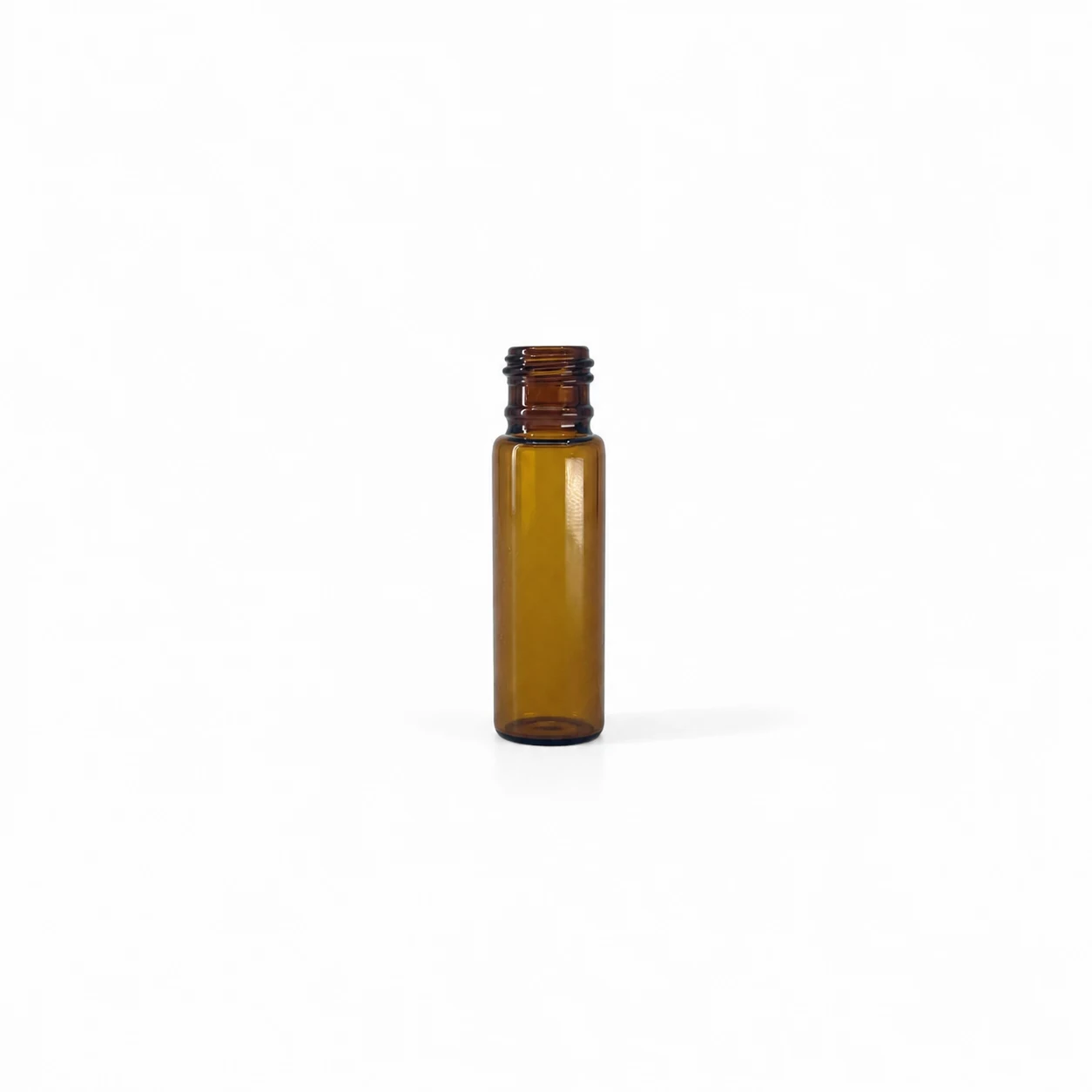
Glass bottle, brown, 5 ml
Glass bottle, amber, 5 ml A small amber glass bottle with a narrow neck protects a few millilitres of sensitive contents from light. full description
Lowest price in the last 30 days: €0.62
Total for 1 pcs: €0.62
Product description
Glass bottle, amber, 5 ml
A small amber glass bottle with a narrow neck protects a few millilitres of sensitive contents from light. It is best suited for essential oil blends, fragrance oils, oil serums, roll-on preparations, tinctures and concentrated active ingredients where you work with small amounts at a time. Dark glass reduces light exposure to the contents and helps protect components sensitive to oxidation, which is a significant advantage for essential oils and unsaturated plant oils.
A 5 ml capacity is practical for samples, test batches, travel packaging or preparations applied to a specific point and used in small doses. The narrow neck is designed for a roll-on applicator or dropper, so the contents can be dispensed precisely without pouring.
Why choose amber glass
- Light protection – amber glass transmits significantly less light than clear glass, slowing the degradation of light-sensitive components such as essential oils, vitamins or plant extracts.
- Chemical resistance – glass does not react with essential oils, alcohol or solvents that can cause softening, cloudiness or migration of substances into the contents in some plastics.
- Odour impermeability – glass does not absorb fragrances and does not retain them after washing, so the bottle can be reused for a different fragrance.
- Small volume – with concentrated preparations dosed by the drop, little air remains above the liquid and the contents are used up before they start to lose quality.
What the bottle is suitable for
The most common use is for anhydrous oil- and alcohol-based preparations: essential oil blends diluted in a carrier oil, fragrance oils, roll-on preparations for temples or wrists, oil serums for the face or eye area, nourishing oils for nails and cuticles, tinctures and concentrates. It also works well as packaging for samples for customers or for testing a new formula before producing a larger batch.
For aqueous preparations such as tonics or hydrosols, the 5 ml size is used only occasionally. If you do fill them into it, bear in mind that the aqueous phase requires preservation just as in a larger container, and the narrow neck makes filling without a funnel or syringe more difficult.
Nominal and total volume
The nominal volume is the amount the bottle is intended to hold under normal filling conditions. The total capacity to the rim of the neck is always slightly larger. The difference provides headspace for the closure, roll-on insert or dropper, which protrude into the interior when fitted, and also allows for expansion of the contents with changes in temperature. The bottle should therefore be filled to the nominal volume, not to the brim.
When filling oils and alcohol-based preparations, leave an air gap below the neck. An overfilled bottle will overflow when the roll-on insert or dropper is fitted, and the contents may press against the closure and leak when the temperature changes.
Choosing a closure
Closures with the same neck type as listed in the specifications, and ready-made bottle + closure combinations, are available in the Handymade range. With your own combination, we recommend checking the seal, the dispensing method and the behaviour of the packaging with your specific formula, particularly with alcohol and essential oil components that easily penetrate an imperfect seal.
Useful to know
Preparation before first filling. Before use, wash the bottle, disinfect it with isopropyl alcohol or ethanol and allow to dry completely. Residual moisture causes cloudiness in oil or alcohol-based preparations and in anhydrous products may be a source of microbial contamination.
Filling. The narrow neck requires a small funnel or a needleless syringe. Fill more viscous oils slowly to prevent an air bubble forming in the neck that stops the contents from flowing through.
Reuse. Glass can be used again after thorough washing and disinfection. When changing the contents from a fragrance oil to a different type of preparation, wash the bottle with warm soapy water and then rinse with alcohol to remove any residual grease.
Glass and heat. A sudden change in temperature, such as pouring hot contents into a cold bottle, can damage the glass. Allow the contents to cool to at least room temperature before filling.
Labelling. Given the small circumference of the bottle, narrow labels or a neck tag work best. Label dimensions can be found in the specifications.
Recycling. Once emptied and with the closure removed, the glass belongs in the sorted glass waste collection.
The packaging is suitable for use with cosmetic products and complies with the applicable legislative requirements. A declaration of conformity is available with the product.
If you are preparing samples for customers, fill the bottles shortly before handing them over and mark them with the filling date. With small volumes, even limited air exposure will affect the fragrance more quickly than in larger packaging.
Frequently asked questions
Parameters
- Diameter
- 16 mm
- Thread diameter
- 12,9 mm
- Height
- 55,2 mm
- Product material
- Glass
Product documentation
Verified by customers.
No reviews yet.
Only customers with a delivered order can write reviews.