


ROLL-ONS
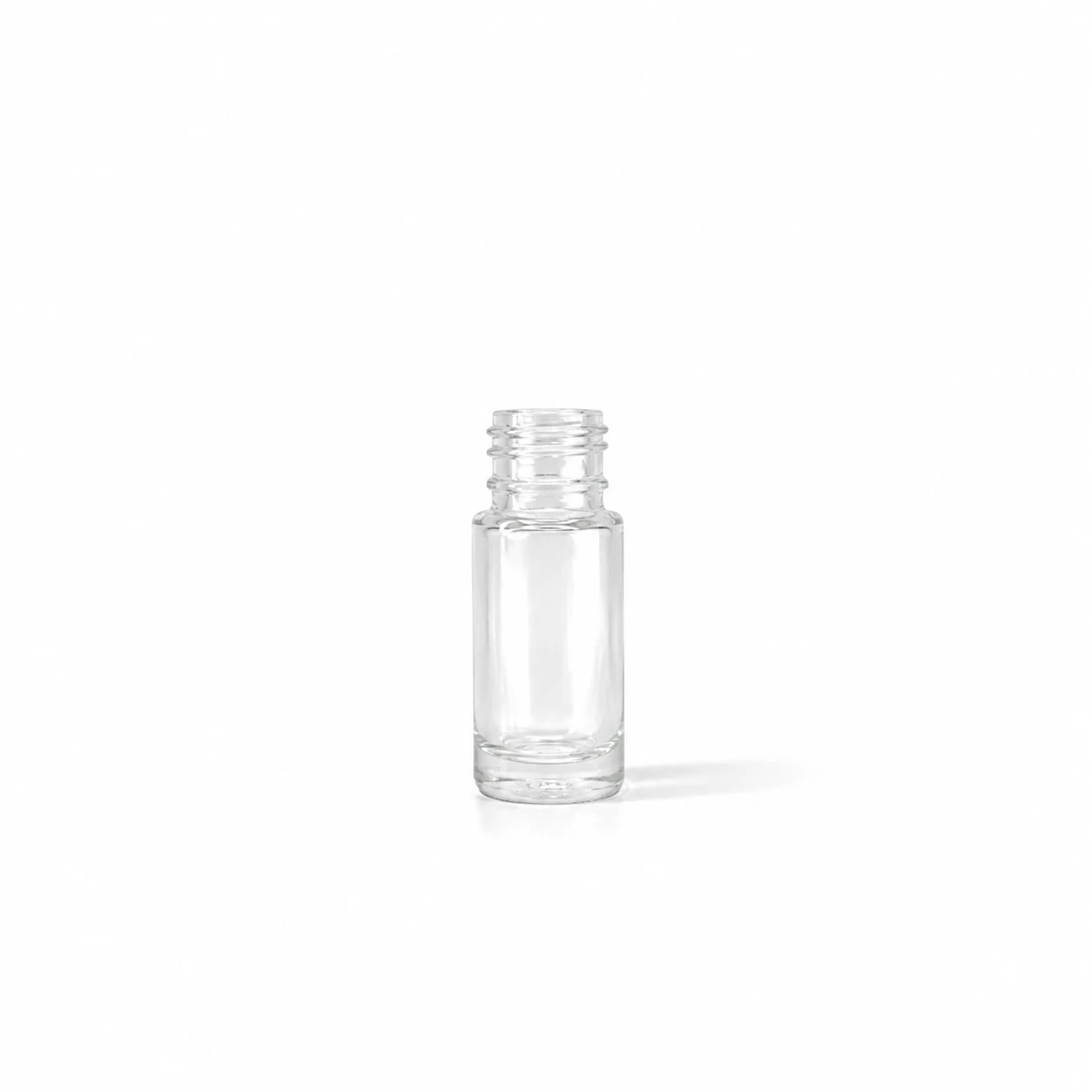
Glass bottle, clear, 5 ml
A glass bottle 5 ml made of clear glass for storing and dispensing small amounts of cosmetic preparations. full description
Lowest price in the last 30 days: €0.92
Total for 1 pcs: €0.92
Product description
A glass bottle 5 ml made of clear glass for storing and dispensing small amounts of cosmetic preparations. Particularly suitable for perfume oils, blends of essential oils in carrier oil, oil serums, tinctures, and for samples or testers where you work with just a few millilitres of content. Clear glass reveals the contents and their colour, making it easy to identify what is in the bottle and how much remains.
Glass is chemically inert, does not react with the contents, and does not absorb fragrance. This means the bottle can safely be filled with concentrated essential oils, alcohol-based extracts, or aromatic blends that might damage plastic. The packaging is suitable for contact with cosmetic products and complies with applicable regulatory requirements.
Key benefits
- Small volume for precise dosing – 5 ml is a practical size for highly concentrated products used drop by drop or in a thin layer, and for samples that let the customer try a formulation before purchasing a larger pack.
- Clear glass – the contents are always visible, making it easy to check the quantity, colour, and any signs of cloudiness or sediment.
- Inert material – glass does not absorb fragrances or oils, does not alter their scent, and can be thoroughly cleaned and reused.
- Standard neck type – the thread size is listed in the specifications, so the bottle is compatible with a range of closures from the Handymade range.
Suitable uses for this bottle
In home and small-batch production, small clear glass bottles are most commonly used for oil perfumes and skin fragrance blends, point-application oil serums, essential oil blends for inhalation or massage, and drop-dispensed products that are used slowly. They work equally well as a cream or serum sample included with an order, as travel packaging, or as a container for a small amount of raw material set aside for testing.
Water-based products (tonics, hydrolats) can be filled into this bottle, but at 5 ml it makes more sense as a sample. For everyday use, larger bottles with a spray top are more practical.
Nominal and total volume
Nominal volume is the amount the container is designed to hold under normal filling conditions. The total volume to the rim is the physical capacity up to the neck and is slightly larger. The difference accounts for the space taken up by the closure, dropper, or applicator once fitted, and for expansion of the contents with changes in temperature. Fill the bottle to the nominal volume, not to the brim, otherwise the contents will be forced out when closing and the closure may not seat properly.
For oil-based and alcohol-based products, leave a little more headspace below the neck than the closure alone requires. These contents expand more noticeably with heat than water does, and in an overheated car or in direct sunlight they may be forced past the closure.
Closures and combinations
Closures with the same neck type as this bottle are available in the Handymade range, along with ready-made bottle-and-closure combinations. When assembling your own combination, test dispensing comfort and container behaviour with your specific formulation.
What to be aware of
- Light – clear glass does not protect contents from light. Essential oils, unsaturated vegetable oils, and certain active ingredients degrade faster when exposed to light, so a clear bottle suits products that are used quickly or stored in a box or in the dark. For long-term storage of light-sensitive contents, amber or blue glass is a better choice.
- Preparation before first use – wash the bottle, disinfect it, and allow it to dry completely before filling. Residual moisture in an oil-based product can cause cloudiness or microbial spoilage.
- Reuse – the glass bottle can be washed and used again. However, a closure with a seal gradually loses its sealing properties over time and may carry over fragrance when the contents are changed, so it is best to replace it when refilling.
- Fragility and heat – small glass bottles break when dropped on a hard surface. Do not fill with hot contents and avoid sudden temperature changes.
- Labelling – the small cylinder has room only for a narrow label. With oil-based products, bear in mind that paper labels absorb oil readily, so choose a more resistant material.
- Recycling – the bottle is made of clear glass; once empty and with the closure removed, it goes into the glass recycling stream.
Before filling a larger batch, test the sealing of your chosen bottle-and-closure combination with your specific product. Thin oils and alcohol-based blends pass through a leaking closure far more readily than a cream or gel, and this may only become apparent during transport.
Frequently asked questions
Parameters
- Product color
- Transparent
- Country of origin
- European Union
- Nominal capacity
- 5
- Diameter
- 20 mm
- Thread diameter
- 16 mm
- Height
- 50.2 mm
- Product material
- Glass
Product documentation
Verified by customers.
No reviews yet.
Only customers with a delivered order can write reviews.