


Bottles only
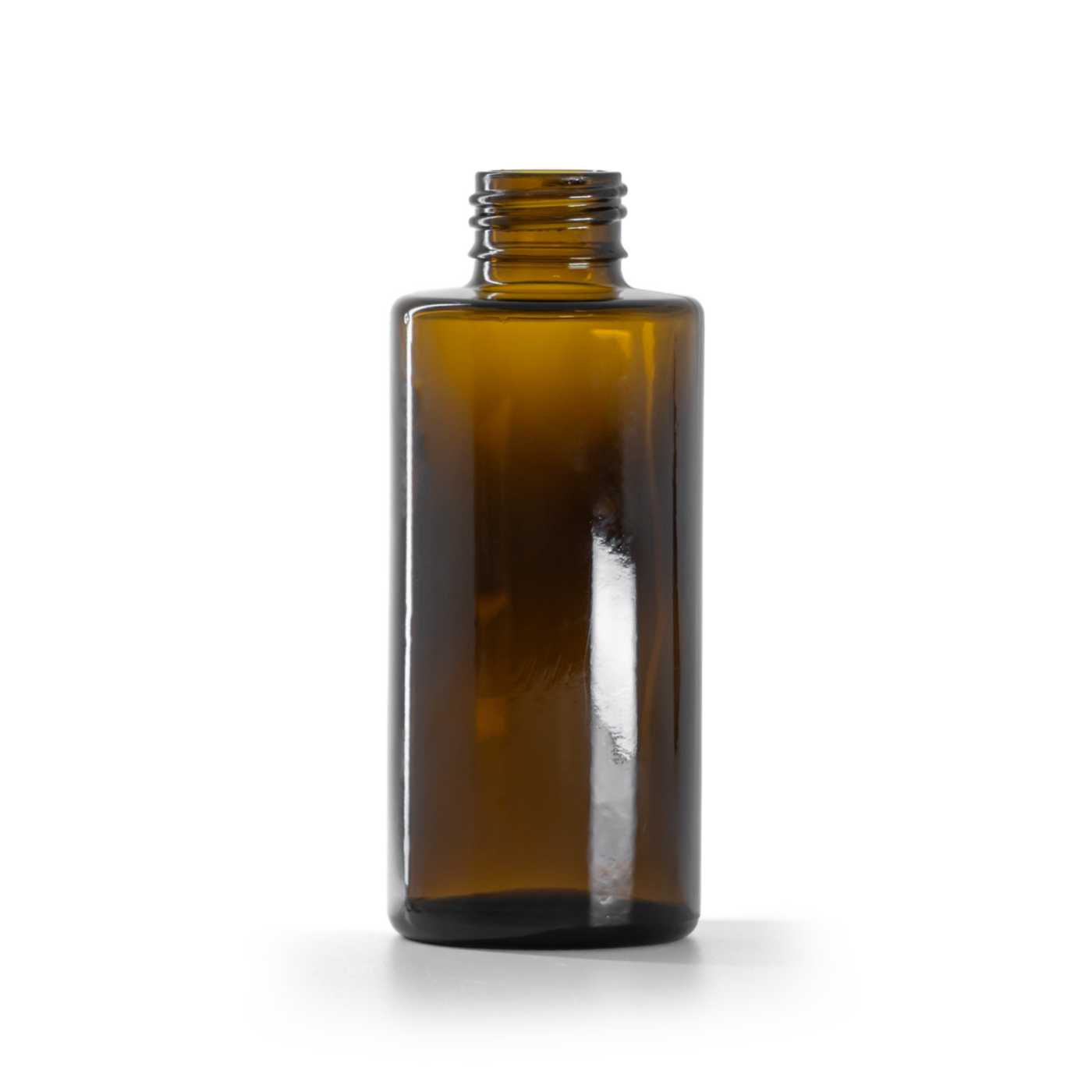
Glass bottle, straight neck, 24 mm, 100 ml
Glass bottle, flat top, 24 mm, 100 ml Brown glass bottle with a capacity of 100 ml and a 24/410 screw neck, designed for filling your own cosmetic and food products that are sensitive to light. full description
Lowest price in the last 30 days: €0.65
Total for 1 pcs: €0.65
Add 71 more pcs and the price drops to €0.60/pc.
Product description
Glass bottle, flat top, 24 mm, 100 ml
Brown glass bottle with a capacity of 100 ml and a 24/410 screw neck, designed for filling your own cosmetic and food products that are sensitive to light. Particularly suitable for vegetable and cosmetic oils, facial serums, tinctures, hydrolats, tonics and blends with essential oils.
The flat top and smooth cylindrical sides provide a good surface for a label, and the bottle stands securely even on a narrow shelf. The packaging is approved for direct contact with foodstuffs as well as cosmetic products, making it equally suitable for homemade herbal oils, syrups or infusions as for cosmetics.
Why choose brown glass
- Light protection – brown glass blocks a large portion of UV radiation and visible light, slowing the oxidation of oils and fading of coloured infusions. For oils rich in unsaturated fatty acids or vitamin serums, this is a practical advantage over clear glass.
- Chemical stability – glass does not leach plasticisers or other substances into the contents and is unaffected by essential oils, alcohol or mildly acidic solutions. With plastic packaging, this compatibility always needs to be verified.
- Hygiene and reusability – the smooth, non-porous surface can be thoroughly cleaned and disinfected. The bottle can handle multiple filling cycles without retaining the odour of previous contents.
- Standard 24/410 neck – a common thread size to which a dispensing method can be chosen to suit the nature of the contents.
Nominal and total volume
When filling, it is useful to distinguish two figures. The nominal volume is the quantity the bottle is designed for in normal use, and this is the figure stated on the label. The total brim-full volume is the physical capacity up to the neck and is slightly larger. The difference between them is headspace for the closure, dropper or pump, which occupy part of the space when fitted, and also room for the contents to expand with changes in temperature.
Fill the bottle to the nominal volume, not to the brim. When filled to the neck, a dropper or pump will push some of the contents out, and oil remaining in the thread impairs the seal and soils the outside of the bottle.
Choosing a closure
The bottle is supplied without a closure. Any closure with the same neck type as stated in the specifications is suitable, and ready-made bottle and closure combinations are available in the Handymade range. For oils and serums, a dropper or pump is the usual choice; for hydrolats and tonics, a spray; for tinctures and syrups, a simple cap. With a custom combination, we recommend checking the seal, dispensing performance and behaviour of the closure with your specific formulation, particularly with thicker oils and contents with a higher proportion of essential oils.
Preparation before first filling
New bottles arrive from the factory clean but not sterile, and dust may enter during transport. Before first use, wash the bottle with warm soapy water, rinse thoroughly, rinse with isopropyl alcohol or ethanol and leave to dry completely, neck down. Residual water in an oil-based or anhydrous product is the most common cause of cloudiness and premature spoilage. The same procedure applies when refilling. After oily contents, first remove the greasy film with hot soapy water, then disinfect.
Useful to know
- Glass and heat – the bottle tolerates filling with warmer contents, but does not withstand sudden temperature changes. Do not pour a hot mixture into a cold bottle, and do not place a filled bottle on a freezing surface, as cracking may occur.
- Alcohol and aqueous contents – glass is fully suitable for tinctures, hydrolats and water-based tonics without restriction. For aqueous products, remember to use appropriate preservation; the packaging itself does not protect against microbial spoilage.
- Labelling – straight sides make it easy to apply a label without creases. The usable label area can be calculated from the diameter and height given in the specifications.
- Fragility – glass is heavier and more fragile than plastic; allow for protective packaging in shipments and travel sets.
- Recycling – this is coloured packaging glass, which belongs in glass collection and can be recycled repeatedly without loss of quality.
Thanks to approval for direct contact with both food and cosmetics, you can use the same bottle for facial oil and homemade herbal syrup without concerns about material suitability.
Frequently asked questions
Parameters
- Product color
- Amber
- Country of origin
- European Union
- Nominal capacity
- 100
- Brimful capacity
- 107 ml
- Diameter
- 45,2 mm
- Thread type
- 24/410
- Height
- 110,4 mm
- Product material
- Glass
Product documentation
Verified by customers.
No reviews yet.
Only customers with a delivered order can write reviews.