


Bottles only
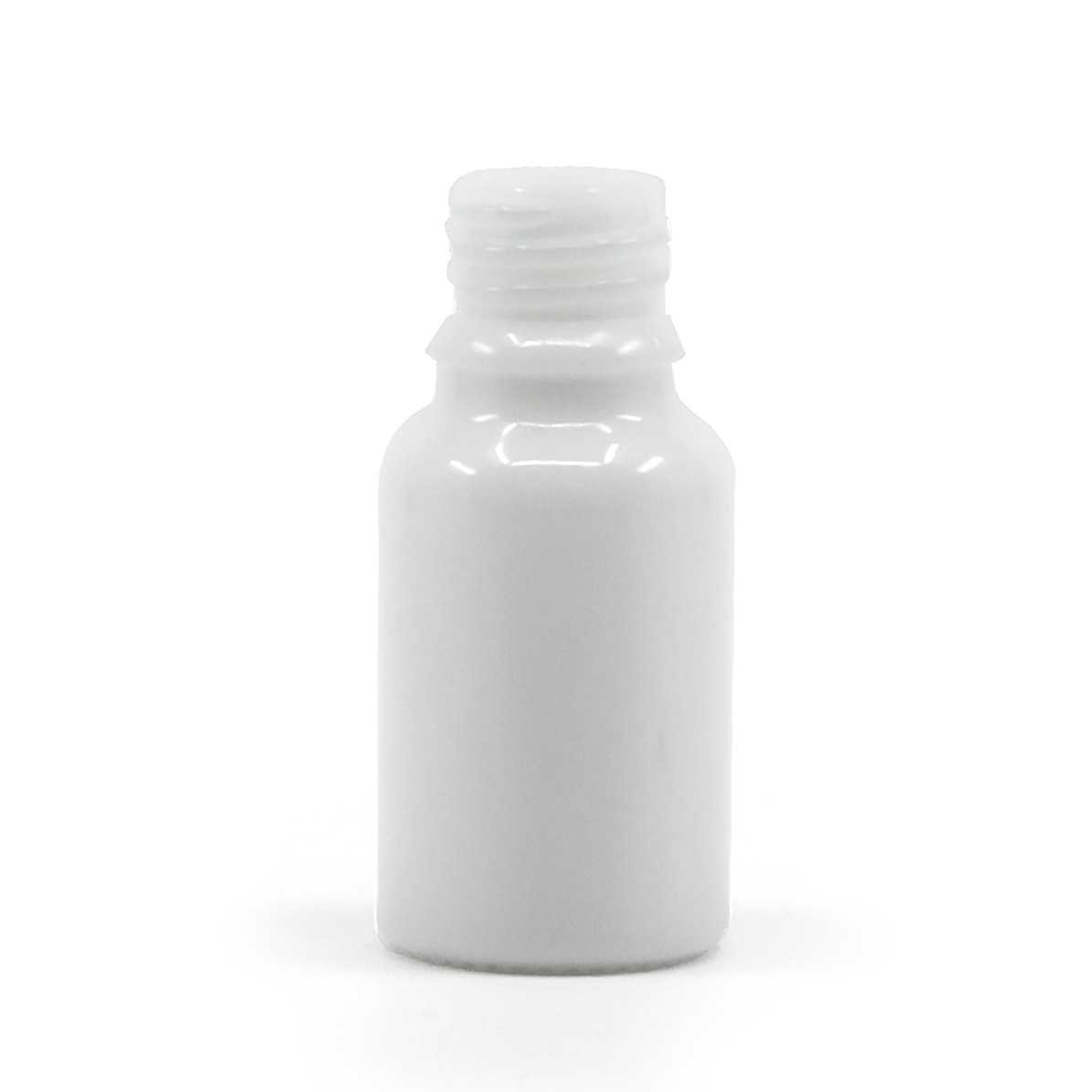
Glass bottle, vial, white, 10 ml
Pack size10 ml15 ml30 ml100 ml
The glass bottle white vial 10 ml is a small bottle for samples, serums, facial oils and concentrates that need protection from light. full description
Lowest price in the last 30 days: €0.96
Total for 1 pcs: €0.96
Product description
The glass bottle white vial 10 ml is a small bottle for samples, serums, facial oils and concentrates that need protection from light. The opaque white glass covers the contents, shielding them from light better than clear glass. It also looks clean and neutral – suitable for minimalist labels and for products where you don't want the customer to see the colour or any potential sedimentation. The small volume is practical for small batches, formula testing, travel sizes and gift samples.
Vial is the name for this packaging shape – a cylindrical bottle with straight walls and a short neck. Glass is chemically resistant and does not react with essential oils, alcohol-based tinctures or oil blends. It is therefore suitable for contents that might cause plastic to soften, cloud over or absorb odour. The packaging is suitable for use with cosmetic products and meets the relevant regulatory requirements; the declaration can be found in the product parameters.
What the bottle is suitable for
- Facial serums and oils – the small volume matches the actual usage of a concentrated product dosed by the drop.
- Essential oil blends and fragrance concentrates – glass does not absorb scent, and the opaque packaging slows light-induced scent changes.
- Tinctures and alcohol-based extracts – alcohol does not harm glass, which is not always the case with certain plastics.
- Samples and test batches – when developing a formula, it pays to fill small volumes and label each version.
- Travel and gift packaging – the bottle fits in a small cosmetic pouch and looks neat even without additional outer packaging.
Thick creams and butters are not suitable for the vial – they are difficult to dispense through the narrow neck and hard to retrieve from the bottom. A jar is a better choice for creamy textures.
Nominal and total volume
For every container we distinguish between nominal volume and total volume to the brim. The nominal volume is the quantity the bottle is intended for under normal filling conditions. The total volume is the physical capacity up to the neck and is always slightly larger. The difference serves as a reserve for the dropper or spray pump, which displaces content when inserted, and for thermal expansion of the contents. The bottle should be filled to the nominal volume, not to the brim – otherwise the contents will be pushed out when the closure is applied and the packaging will not seal.
With oil serums fitted with a dropper, leave a larger reserve than seems necessary. The glass tube of the dropper takes up a noticeable portion of the volume in a small bottle, and excess oil will reach the thread after closing, where it will then stick.
Closures
The bottle has a standard threaded neck; the thread type is specified in the parameters. Closures with the matching thread type – caps, droppers and spray pumps – as well as ready-made bottle and closure combinations are available in the Handymade range. With custom combinations, we recommend verifying leak-tightness and dosing with the specific formulation, especially for alcohol-based and oil-based contents that affect the sealing insert of the closure.
Preparation and filling
Before filling for the first time, wash and sanitise the bottle with isopropyl alcohol or ethanol and leave it to dry completely upside down. Residual moisture in an oil-based or anhydrous product promotes microbial growth and compromises stability. When filling a small volume, a syringe or narrow funnel helps – pouring from a larger container without an aid is imprecise.
Glass can be reused after thorough washing. The exception is bottles that previously held fragrance compositions and strong essential oils, whose scent lingers in the sealing insert of the closure. In that case, replace the closure – the glass itself does not retain scent.
Glass cannot withstand sudden temperature changes. Do not pour a hot oil phase into a cold bottle, and do not place a filled container in the freezer – cracking may occur.
Useful to know
- Light protection – white opaque glass reduces the contents' exposure to light, but does not replace proper storage. Products sensitive to oxidation should still be kept away from heat and direct sunlight.
- Label – a narrow wrap-around label adheres well to the cylindrical wall; bottle dimensions can be found in the parameters. A transparent label with dark print also stands out clearly on white glass.
- Package weight – glass is heavier than plastic. With a larger number of samples in a shipment, this has an impact on postage.
- Recycling – the bottle goes in the glass bin; just remove the closure before disposal, as it is sorted according to its own material.
Frequently asked questions
Parameters
Product documentation
- PDSProduct Data Sheet
- PDF ↓
Verified by customers.
No reviews yet.
Only customers with a delivered order can write reviews.