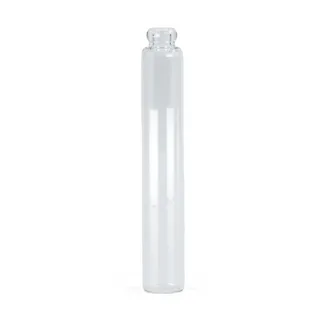
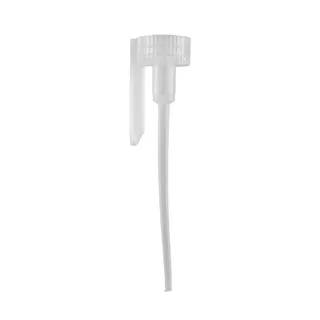
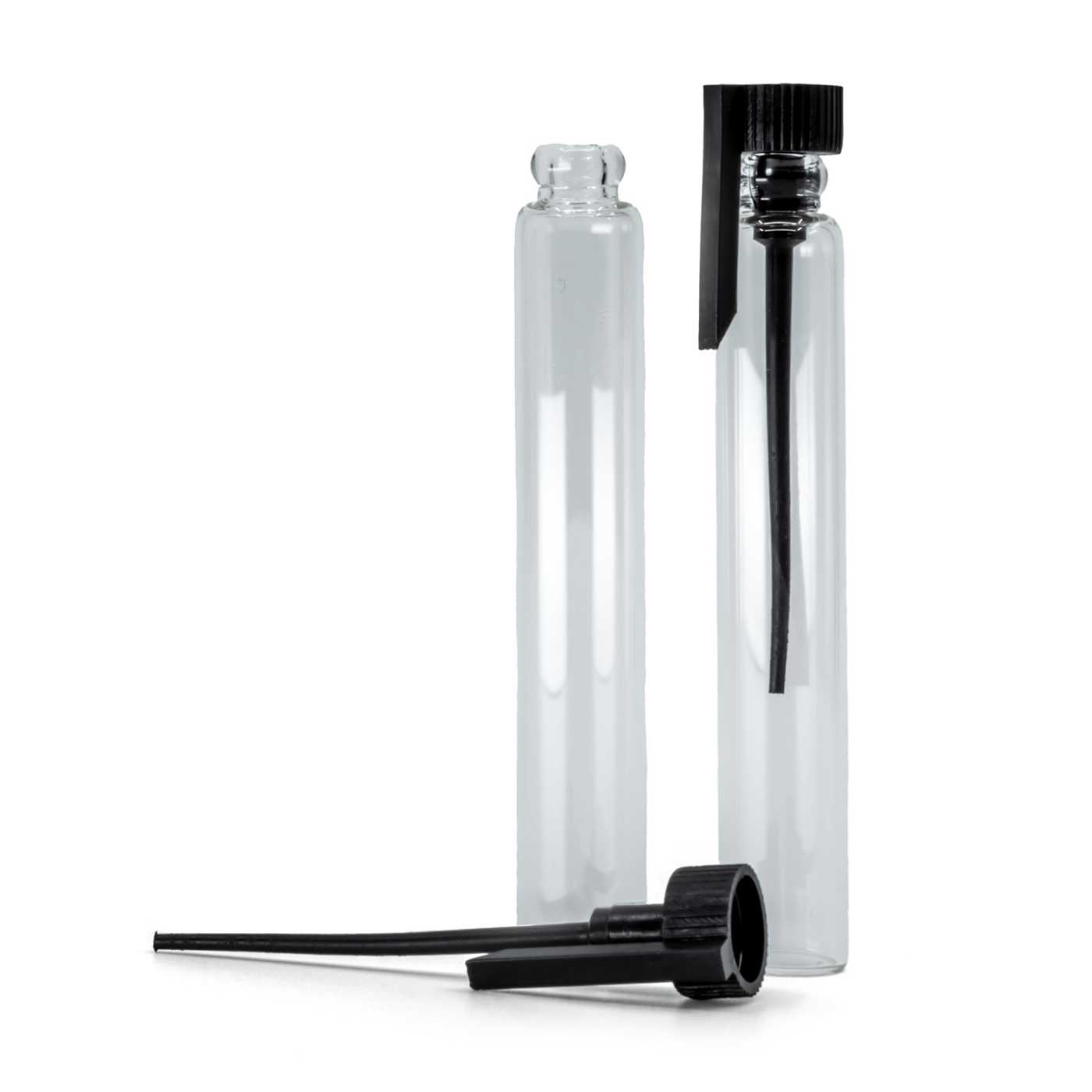
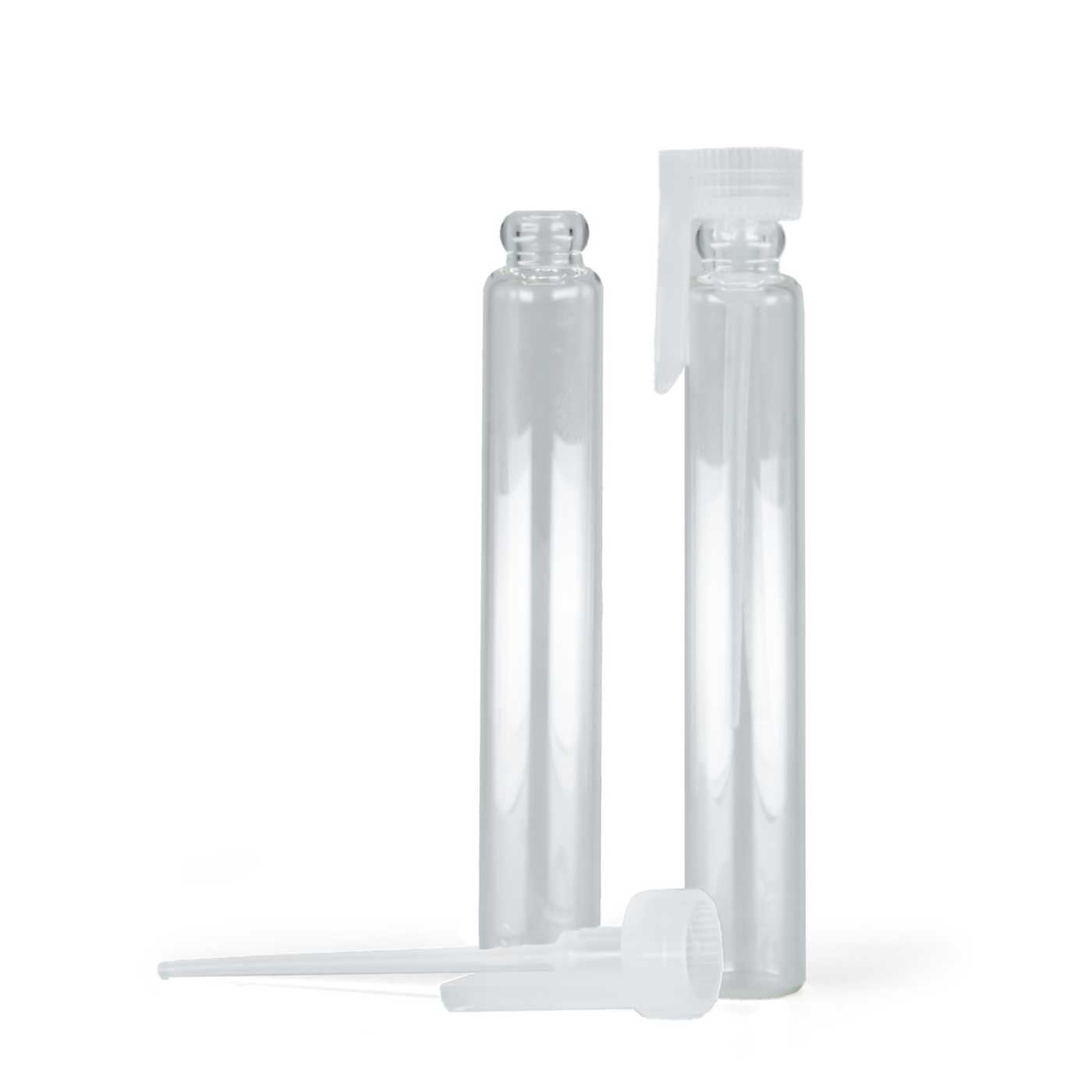
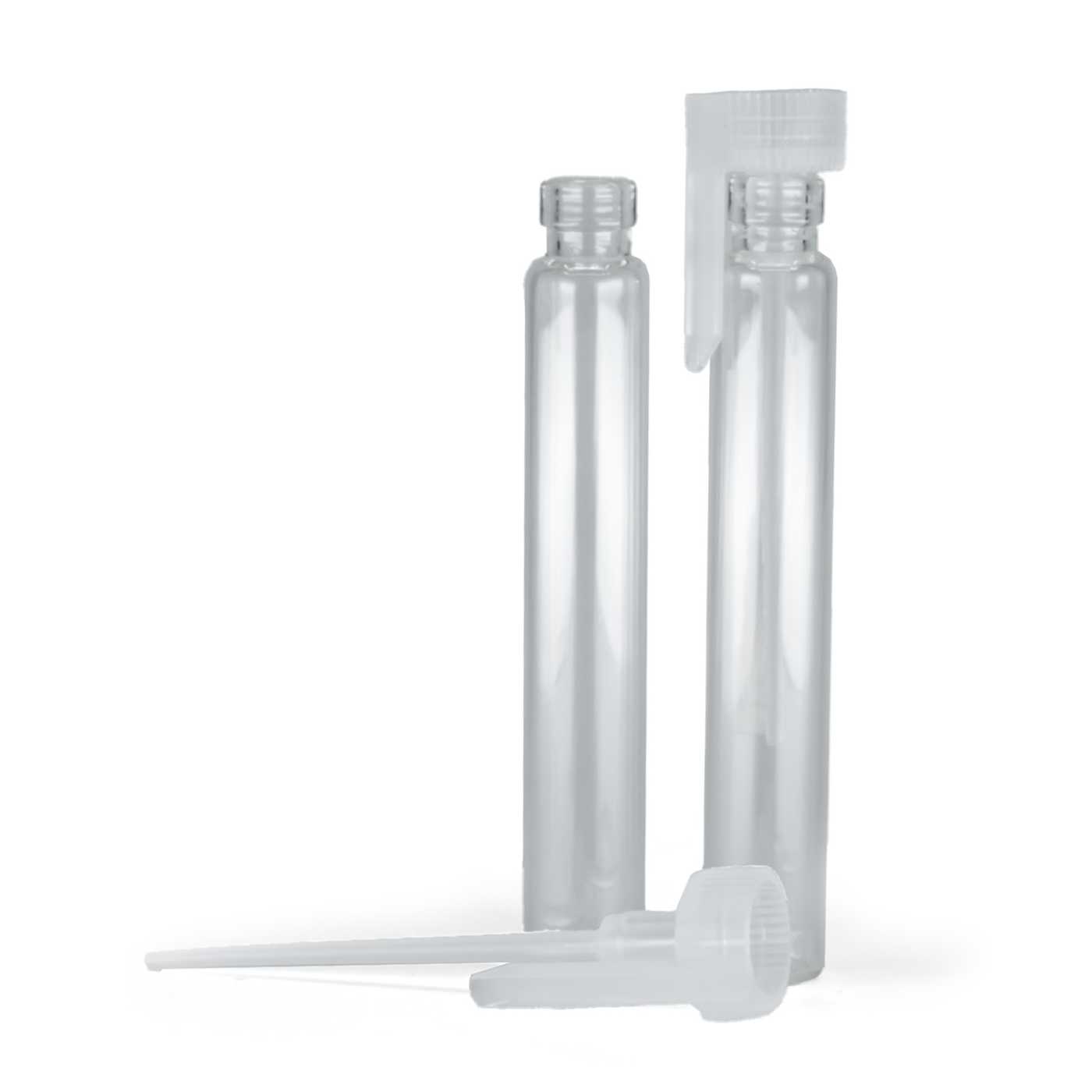
Glass cosmetic tester with transparent cap, 3 ml is a small sample bottle for handing out or selling a trial amount of cosmetics. It is particularly suitable for perfume compositions, facial oils, serums and fragrance blends, where the customer wants to try the scent or texture before buying a full-size product. The set consists of a glass bottle with a nominal volume of 3 ml and a transparent plastic cap that seals it. It is supplied as a ready-to-use combination that only needs to be filled and labelled.
Transparent glass allows the contents to be seen, which is an advantage for a tester: the customer can immediately identify the colour of an oil, a clear serum or a tinted perfume water. Glass is also an inert material that does not react with alcohol- or oil-based contents and does not transfer its own scent to them.
What the tester is suitable for
- Samples with orders – a small amount of a new product included with a shipment is a simple way to let the customer try another scent or oil.
- Fragrance testers at a shop or market – when selling perfumes, perfume oils and essential oil blends, it serves as a trial sample that the customer can apply to their skin.
- Paid mini samples – customers who want to check compatibility before buying a more expensive serum or oil will appreciate the option to purchase a trial volume.
- Personal formula testing – when refining a scent or oil blend, individual variants can be poured into testers, labelled and compared.
Content in the tester should be liquid or thin: perfumes, perfume and facial oils, serums, tonics. Thick creams and butters are difficult to dispense from a narrow neck; small jars are more suitable for those.
Nominal and total volume
Nominal volume is the amount the bottle is designed for under normal filling conditions. Total volume to the brim is the physical volume up to the neck and is slightly larger. The difference provides a margin for the cap and for the expansion of the contents with temperature changes. The tester should therefore be filled to the nominal volume, not to the brim; otherwise the contents leak or get caught in the neck when the cap is put on. Exact values are in the product specifications.
When filling small bottles, a small funnel or dropper works well. The contents can be dosed more precisely and the neck stays clean, so the cap seals properly and the label does not stick to a greasy rim.
What's good to know
- Preparation before first filling – rinse the bottles, disinfect with isopropyl alcohol or ethanol and leave to dry completely. Residual water would cause cloudiness in an oil or perfume.
- Transparent glass does not protect against light – the tester is intended for short-term use, not long-term storage. Samples sensitive to light are best filled just before handing out and kept in the dark.
- Plastic cap and strong solvents – with concentrated essential oils, pure perfume compositions or contents with a high alcohol content, we recommend checking whether the cap softens or fails to seal with prolonged contact. With standard oils and serums, this is not an issue.
- Labelling – a smaller label with the name, batch and composition suits a narrow bottle. For a cosmetic sample, the same labelling rules apply as for a standard product.
- Suitability for cosmetics – both the bottle and the cap are declared as suitable for contact with cosmetic products; the declaration of conformity is available with the product. The set is intended for cosmetics and is not intended for food use.
- Recycling – after use, the glass bottle goes into glass waste and the plastic cap into plastic waste; separate them before disposal.
Glass handles sudden temperature changes poorly. Do not fill the tester with hot contents and do not place it directly from cold into warm water, as the bottle may crack.
Frequently asked questions
Is the 3 ml glass cosmetic tester suitable for alcohol-based perfumes?
Yes, glass does not react with alcohol-based contents and does not transfer its own scent to them, so the tester is suitable for perfume samples. With concentrated compositions containing a high proportion of alcohol, we recommend checking the behaviour of the plastic cap during longer storage. For short-term samples and testers used in a shop, the set can be used without concern.
How much content actually fits in the 3 ml tester?
The tester is filled to the nominal volume of 3 ml, not to the brim. The physical volume of the bottle is slightly larger, but the difference serves as a margin for the cap and for the expansion of the contents with temperature changes. The exact value of the total volume is in the product specifications.
Can the glass tester be used for oils and serums, or only for fragrances?
Yes, the tester is suitable for facial oils, serums, tonics and perfume oils – in other words, for anything that is liquid enough to be dispensed from a narrow neck. It is not suitable for thick creams, butters or balms. For those, we recommend small jars from which the contents can be easily scooped.
Does a transparent glass tester protect the contents from light?
No, transparent glass does not protect the contents from light. The tester is intended for short-term use, such as a sample included with an order or a tester in a shop. For light-sensitive contents, such as essential oils or oils with a high proportion of unsaturated fatty acids, we recommend filling just before handing out and keeping in a closed box or in the dark.
How to prepare glass testers before filling cosmetics?
Before first filling, rinse the bottles, disinfect with isopropyl alcohol or ethanol and leave to dry completely. Residual water would cause cloudiness in an oil or perfume and shorten the shelf life of the sample. It is recommended to fill using a dropper or small funnel so that the neck stays clean and the cap seals properly.
Can the glass tester be refilled after use?
Yes, the glass bottle can be refilled after thorough washing and disinfection. When changing the type of contents, especially when switching from a perfume to an oil or serum, we recommend replacing the plastic cap, which may retain the original scent. For labelling and hygiene of a refilled sample, the same rules apply as for a new product.