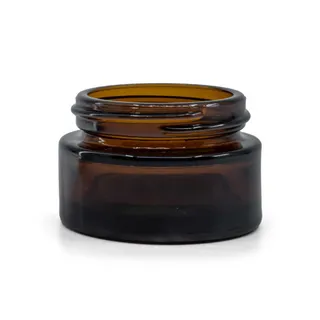
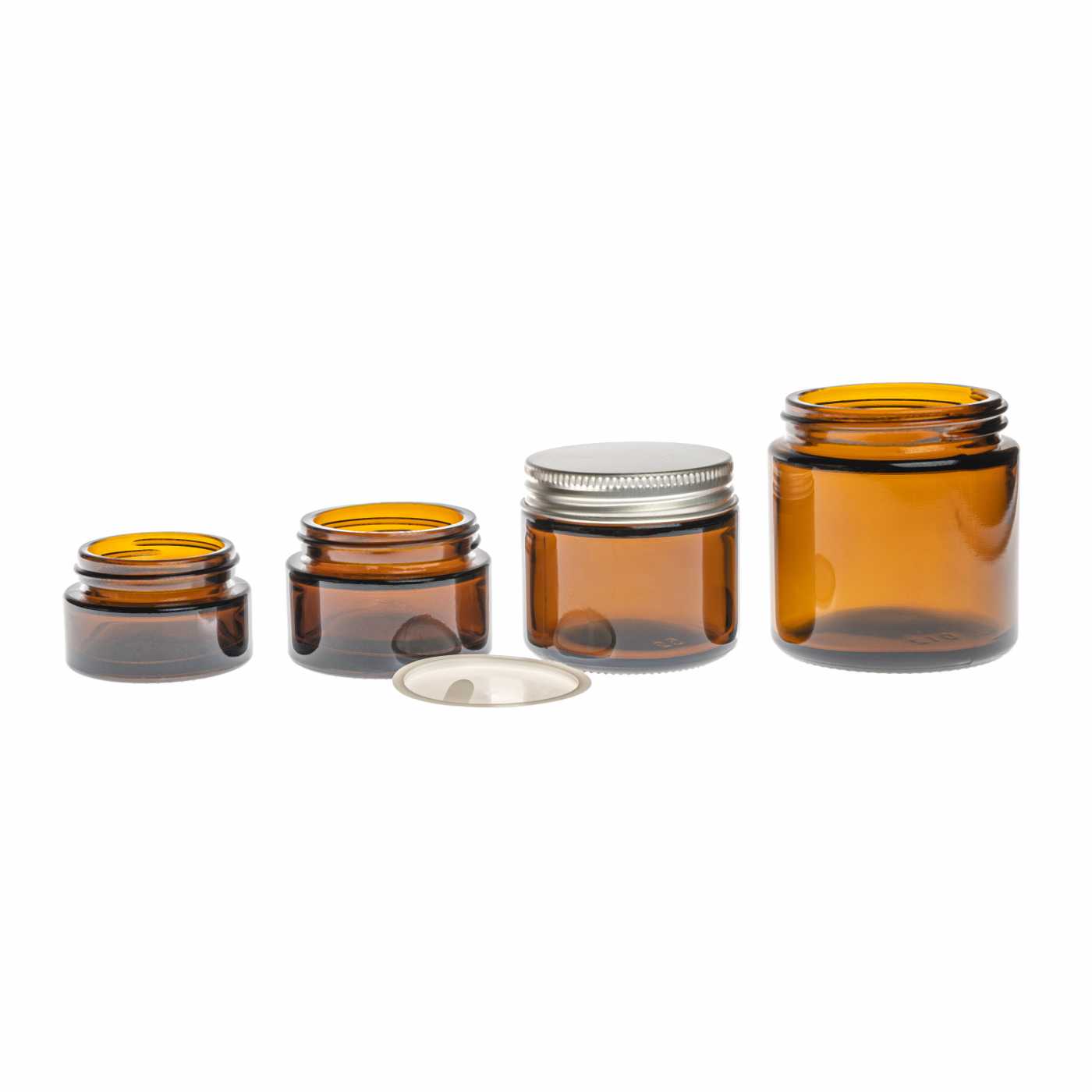
Amber Glass Jar, Silver Aluminium Lid & Gasket, 15 ml
Pre-order€0.93

GLASS JARS
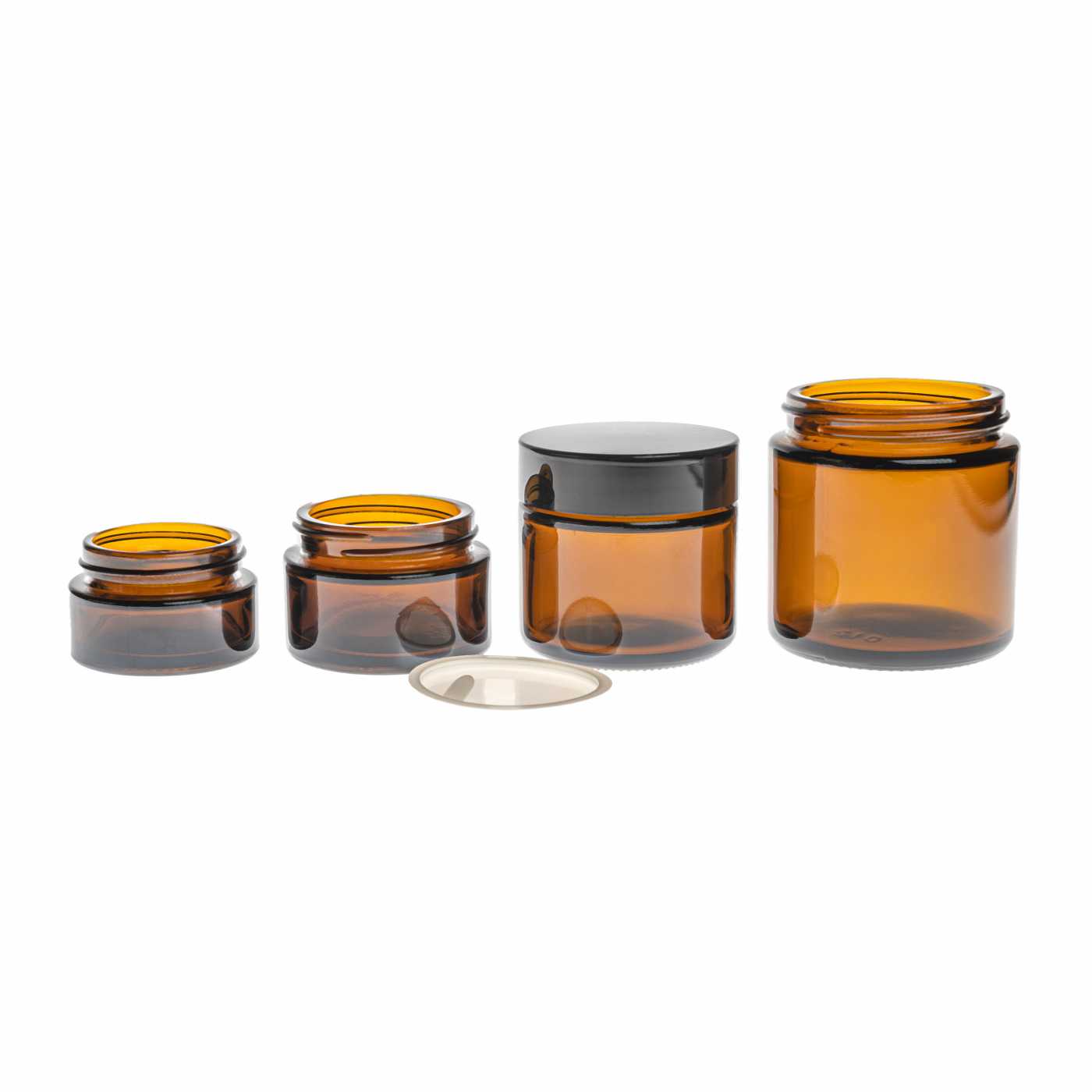
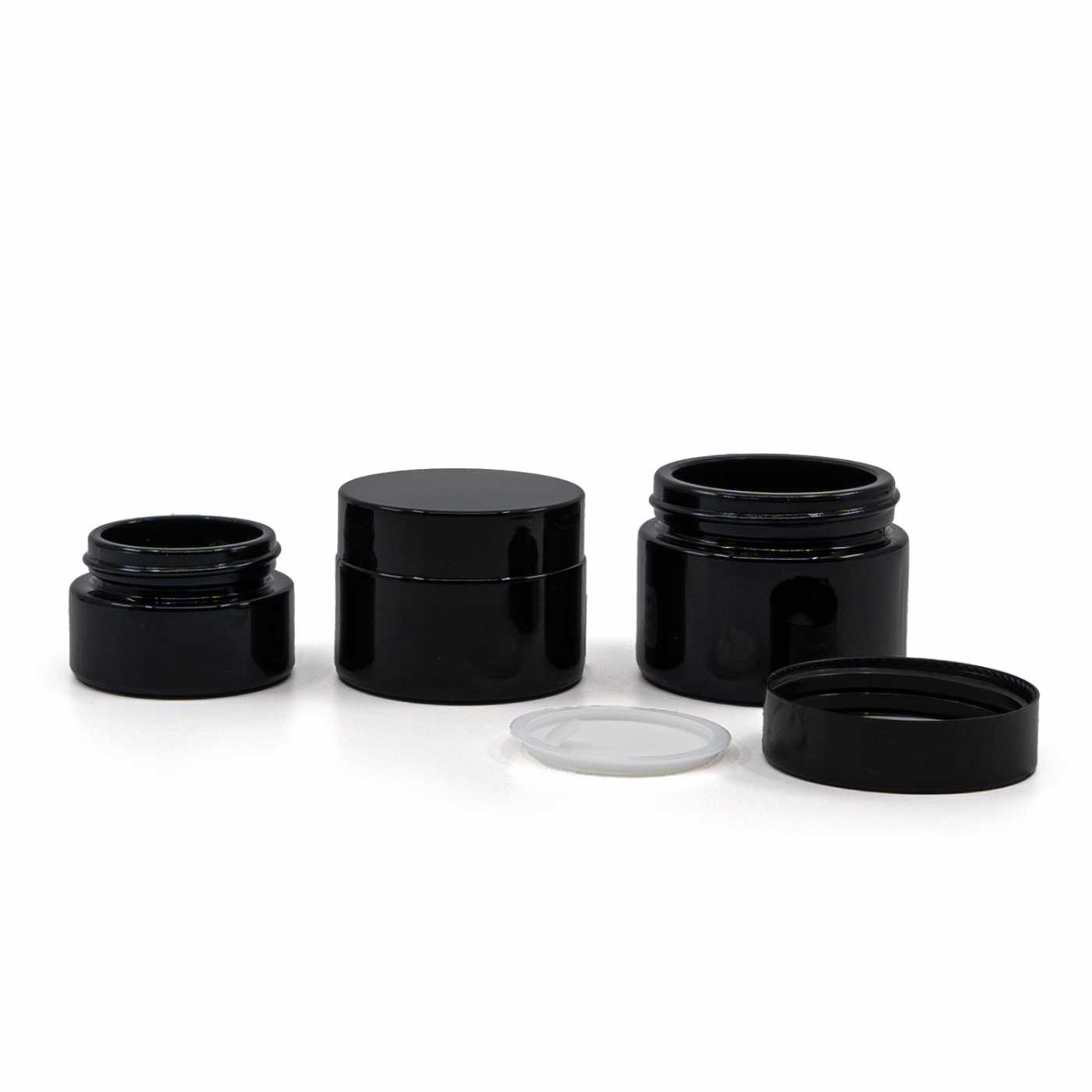
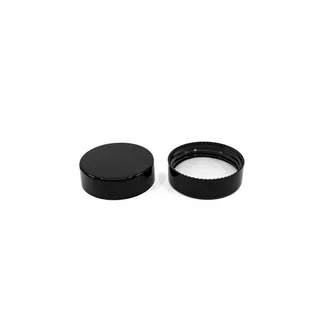
A dark brown glass jar 15 ml with a black plastic lid and inner insert is a complete ready-to-use packaging for cosmetics in small quantities. full description
Lowest price in the last 30 days: €1.04
A dark brown glass jar 15 ml with a black plastic lid and inner insert is a complete ready-to-use packaging for cosmetics in small quantities. It is suitable for eye creams, balms, solid perfumes, ointments or samples of larger products. Brown glass reduces light exposure, making it particularly suitable for formulations with vegetable oils, butters, essential oils and active ingredients that lose stability in light.
The complete set is declared as suitable for contact with cosmetics; the declaration of conformity can be found on the product page. It is not approved for food contact and is therefore intended exclusively for cosmetic and technical use.
The jar is filled to the nominal volume, not to the rim. The nominal volume is the quantity for which the container is designed under normal filling conditions. The total volume to the rim is the physical volume up to the neck. The difference between them provides clearance for the inner insert and lid, as well as space for the contents to expand with temperature changes. The exact values of both volumes are listed in the product parameters.
For balms and butters that are poured hot, the melted mass is poured into the jar and left to set completely at room temperature. Only then should the insert and lid be fitted. If the contents are sealed while still warm, moisture will condense under the lid and water droplets will form on the surface of the balm. Thick cream or ointment is best dispensed into the narrow neck with a spatula or from a piping bag to avoid smears on the walls.
Slightly warm the glass before pouring hot material, or pour in a thin stream. A sudden temperature difference between cold glass and molten wax causes cracks in the balm and, in extreme cases, in the glass itself.
Before first use, we recommend washing the jar, insert and lid, disinfecting with isopropyl alcohol or ethanol and leaving to dry completely. This also applies to repeated use. Residues of old contents and moisture are the most common cause of spoilage of a new filling. The lid is tightened by hand without force. The thread on the glass retains its seal only as long as it is not overtightened.
The jar is not suitable for water-based and liquid products such as tonics or serums with low viscosity. It lacks a dispensing mechanism and the contents would quickly become contaminated when scooped with a finger. For such formulations, we recommend a bottle with a dropper or pump.
The jar is opened with every use and the contents are scooped with a finger. A formulation containing water must therefore be reliably preserved and its pH must correspond to the preservative used. Anhydrous balms do not require a preservative, but it is recommended to add an antioxidant, such as tocopherol, to prevent the oils from oxidising.
The lid and insert are made of polypropylene. PP is resistant to most cosmetic oils and butters. However, with a higher proportion of essential oils, limonene or solvents in the formulation, it is worth checking that the insert does not deform after a few weeks and that the seal holds. Glass does not react with the contents, so the protection of the contents depends primarily on the quality of the closure.
For a low jar, a round label on the lid and a narrow band around the body work well.
Glass is not suitable for the freezer or for direct heating. Sudden cooling of a full jar or heating a sealed container can cause cracking. Temper the contents outside the container.
Closures with the same neck type and other ready-made container and closure combinations are available in the Handymade range. For a custom combination, we recommend verifying the seal and the behaviour of the container with the specific formulation. Glass goes in glass recycling, the lid and insert in plastics; disassemble the set before recycling.
Only customers with a delivered order can write reviews.