


GLASS JARS
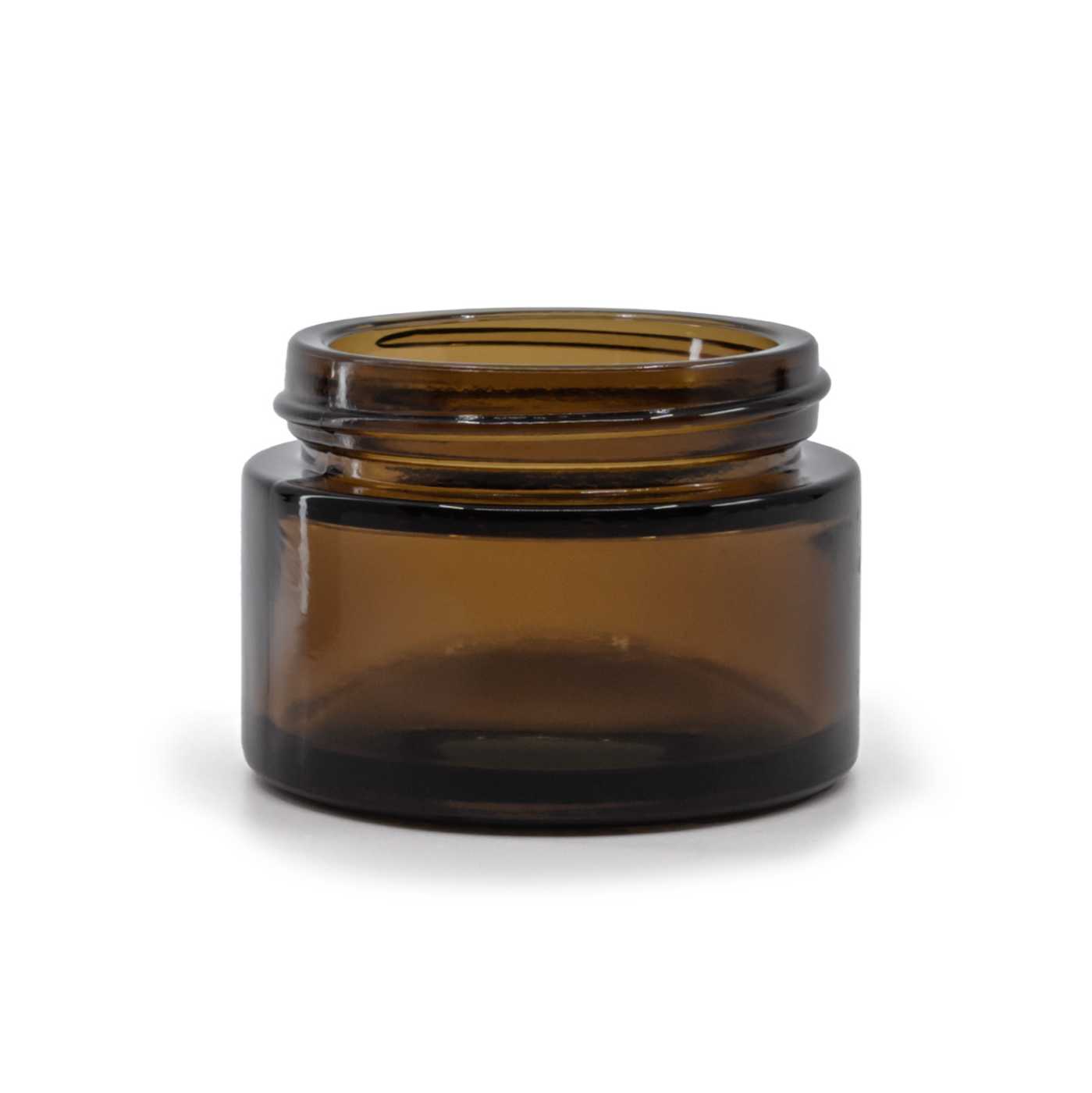
Glass jar, dark brown, 30 ml
Glass jar, dark brown, 30 ml Glass jar made of dark brown glass, designed for thick and semi-solid preparations – creams with plant oils, balms, ointments, body and face butters, pomades and concentrated masks. full description
Lowest price in the last 30 days: €0.59
Total for 1 pcs: €0.59
Product description
Glass jar, dark brown, 30 ml
Glass jar made of dark brown glass, designed for thick and semi-solid preparations – creams with plant oils, balms, ointments, body and face butters, pomades and concentrated masks. Brown glass reduces light transmission, making it particularly suitable for contents that lose quality faster when exposed to light. The small volume is practical for samples, travel packaging and eye creams, or for preparations used in small amounts.
The jar is suitable for use with cosmetic products and meets the applicable regulatory requirements. A declaration of conformity is available with the product. Food contact suitability for this packaging is not declared.
Why dark glass and this format
- Protection of contents from light – brown glass transmits significantly less light than clear glass. This slows the oxidation of unsaturated oils, fading of colorants and loss of fragrance in preparations containing essential oils.
- Chemical stability of glass – glass does not react with oils, butters, essential oils or alcoholic components. It is therefore also suitable for formulations that would soften or stain certain plastics.
- Wide mouth – contents are filled with a spatula or spoon without a funnel and are just as easily scooped out, even when the preparation has solidified.
- Reusable – glass can be washed, disinfected and refilled without absorbing the odour of the previous contents.
Filling and volume
The jar has two volumes: nominal and total to the brim. The nominal volume is the amount the container is designed for under normal filling conditions. The total volume is the physical capacity up to the neck. The difference provides clearance for a closure with a possible sealing insert and for expansion of the contents with temperature changes. The jar should therefore be filled to the nominal volume, not to the brim. Exact values for both volumes are listed in the specifications.
For balms and ointments poured while hot, leave the level slightly below the thread line. Once the contents solidify, they will not touch the closure and the lid will not stick when opened.
Glass handles sudden temperature changes poorly. Do not pour a hot oil or wax phase into a cold jar straight from the refrigerator. Allow the container to warm to room temperature, or briefly pre-warm it before filling, or let the mixture cool down slightly first.
Closures
Lids with the same thread type and ready-made jar-and-lid combinations are available in the Handymade range. When combining components yourself, we recommend verifying the seal and the container's behaviour with the specific formulation, especially for preparations with a higher proportion of essential oils or a thinner consistency.
Good to know
- Preparation before first use – wash the jar with warm water and dish soap, rinse, disinfect with isopropyl alcohol or ethanol and leave to dry completely upside down. Residual moisture in anhydrous balms can trigger microbial growth.
- Aqueous and emulsion preparations – a wide-mouth jar is opened and scooped with fingers, so creams and emulsions stored in it require reliable preservation.
- Labelling – the straight circumference of the jar is suitable for a wraparound label, the lid for a round label. Label dimensions are listed in the specifications.
- Technical use – beyond cosmetics, it is also suitable for storing samples, pigments, waxes or small quantities of raw materials in laboratory or workshop conditions.
- Recycling – coloured glass belongs in glass collection. Before disposal, simply empty the container; the closure is sorted separately according to its material.
If you are filling a series of jars while hot, prepare them all washed and dry in a row beforehand and pour all at once. The mixture in the pot cools in the meantime, and the last jars would otherwise have a different surface texture than the first.
Frequently asked questions
Parameters
Product documentation
- PDSProduct Data Sheet
- PDF ↓
Verified by customers.
No reviews yet.
Only customers with a delivered order can write reviews.