


Bottles only
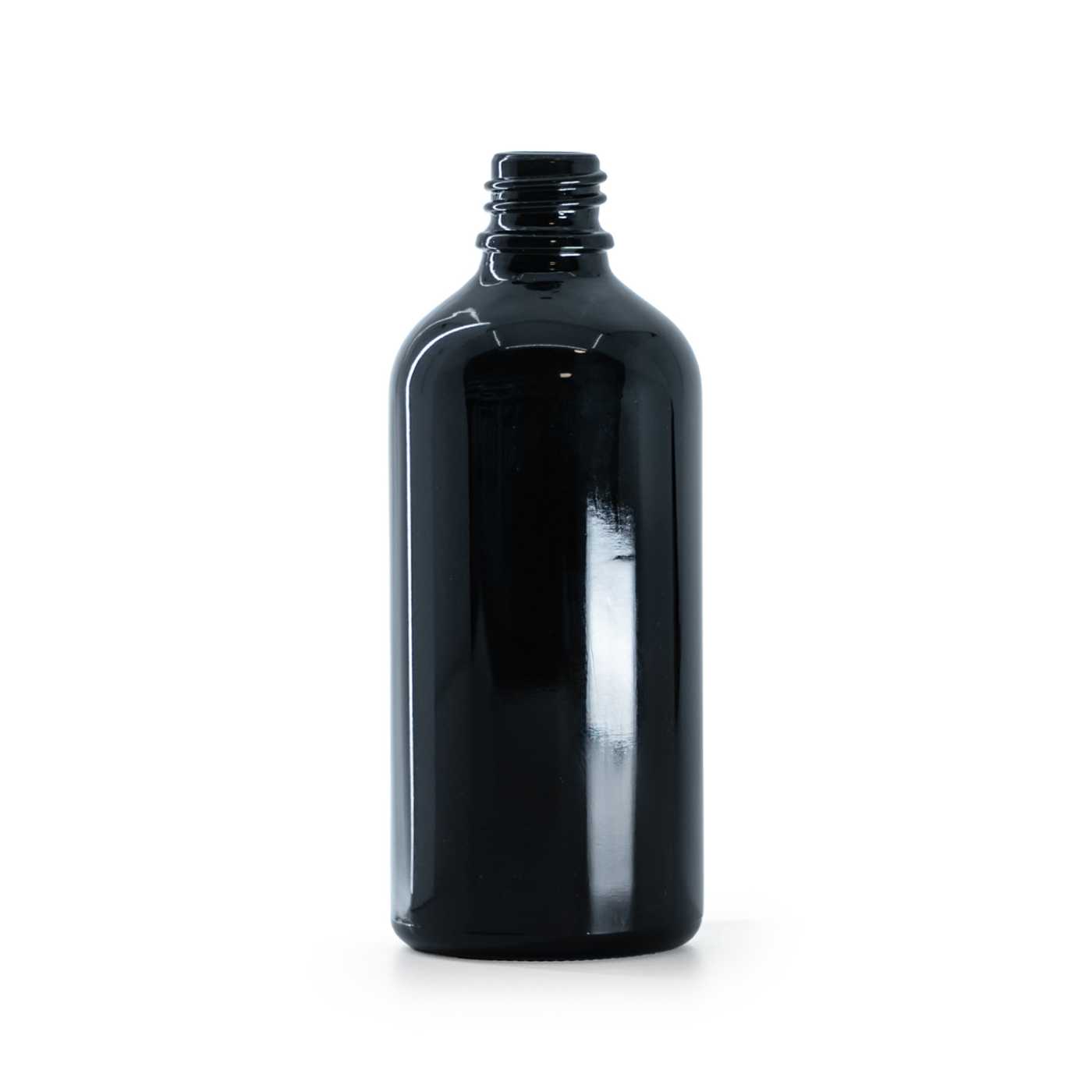
Gloss Black Glass Bottle, 100 ml, 70 pieces
The glossy black 100 ml glass medicine bottle is intended for preparations that are harmed by light. full description
Lowest price in the last 30 days: €61.94
Save €3.16 with this set
Product description
The glossy black 100 ml glass medicine bottle is intended for preparations that are harmed by light. The opaque black glass lets neither daylight nor artificial light reach the contents, so it suits face and body oils, serums with sensitive active ingredients, tinctures and infusions, where you want to delay changes in colour or scent. The glossy surface gives the packaging a uniform look without further decoration, and a label or print is enough.
The pack is a tray of 70 pcs, so it is intended mainly for producers who fill larger runs and need identical bottles for the whole batch. The neck finish is 18/410, which fits droppers, pumps, fine mist sprayers and caps with the same neck type from the Handymade range. The packaging is approved for direct contact with both food and cosmetic products, so it can also be used for homemade herbal oils, syrups or vinegars.
What the bottle is suitable for
- Oils and oil serums – vegetable oils with a higher proportion of unsaturated fatty acids (flaxseed, rosehip, cranberry) oxidise faster when exposed to light. Dark packaging slows this process, but it does not replace an antioxidant in the formulation.
- Serums and toners with sensitive ingredients – vitamin C in aqueous solution, retinol, some plant extracts and essential oils lose potency in light. Black glass lets no light through, so it protects them more thoroughly than amber or blue glass.
- Tinctures and alcohol extracts – glass does not react with ethanol or with essential oils. The contents do not pick up any off-taste and the packaging does not soften.
- Massage and hair oils with a pump or dropper – the 100 ml volume corresponds to a common retail size that is used up within a reasonable time.
- Food use – homemade oils with herbs, syrups, vinegars or extracts. Suitability for food contact applies to the bottle itself; for the closure, check its parameters.
Volume and filling
The nominal volume is the amount the bottle is designed for in normal filling, in this case 100 ml. The brimful capacity is the physical volume up to the neck and can be found in the product parameters. The difference between the two values is a reserve for the dropper, the pump dip tube or the cap seal, and also space for contents that expand when the temperature changes. For this reason, fill to the nominal volume, not to the brim.
With oils and alcohol tinctures, leave more space below the neck than seems necessary. The glass tube of a dropper and a pump both take up volume, and if you fill to the brim, the contents overflow once the closure is fitted.
Black glass also has one practical drawback. You cannot see the liquid level through the wall, so a measuring cup, scale or a mark on the filling container helps with manual filling. At the same time, the customer cannot see the colour of the preparation, which can be an advantage with natural oils whose colour differs from batch to batch.
Closures and neck
The bottle is sold without closure. Closures with the same neck type as stated in the parameters, and ready-made bottle and closure combinations, can be found in the Handymade range. If you combine them yourself, we recommend checking the seal, dispensing and behaviour of the packaging with your specific formulation, especially with thicker oils or gel serums. A pump and a dropper behave differently with them than with an aqueous solution.
Preparation before filling, reuse and recycling
Before the first filling, the bottles are washed with warm water, disinfected with isopropyl alcohol or ethanol and left to dry completely with the opening facing down. Residual water in the neck would dilute an anhydrous preparation and create conditions for the growth of microorganisms.
The glass can be reused as long as it is not cracked and the neck has no chipped edges that would damage the seal. The old contents are washed out, the neck is degreased and the bottle is disinfected again. Oil residues are easier to remove from a narrow neck with hot water, washing-up liquid and a bottle brush.
Glass does not tolerate sudden temperature changes well. Do not pour hot oil or solution into a cold bottle, and do not put a filled bottle straight from the fridge into a water bath. Let the contents cool to at least room temperature before filling.
At the end of its life, the bottle belongs in glass recycling together with other coloured glass packaging.
Frequently asked questions
Parameters
Product documentation
Verified by customers.
No reviews yet.
Only customers with a delivered order can write reviews.