Natural micellar water effectively removes impurities from the skin. Have you also been thinking about making micellar water, but feel discouraged by the use of often aggressive surfactants (cleansing and foaming agents)? We have prepared a version of micellar water with a content of saponins for you – natural substances obtained from camellia seeds, which help remove impurities from the skin and gently degrease it.
About this recipe
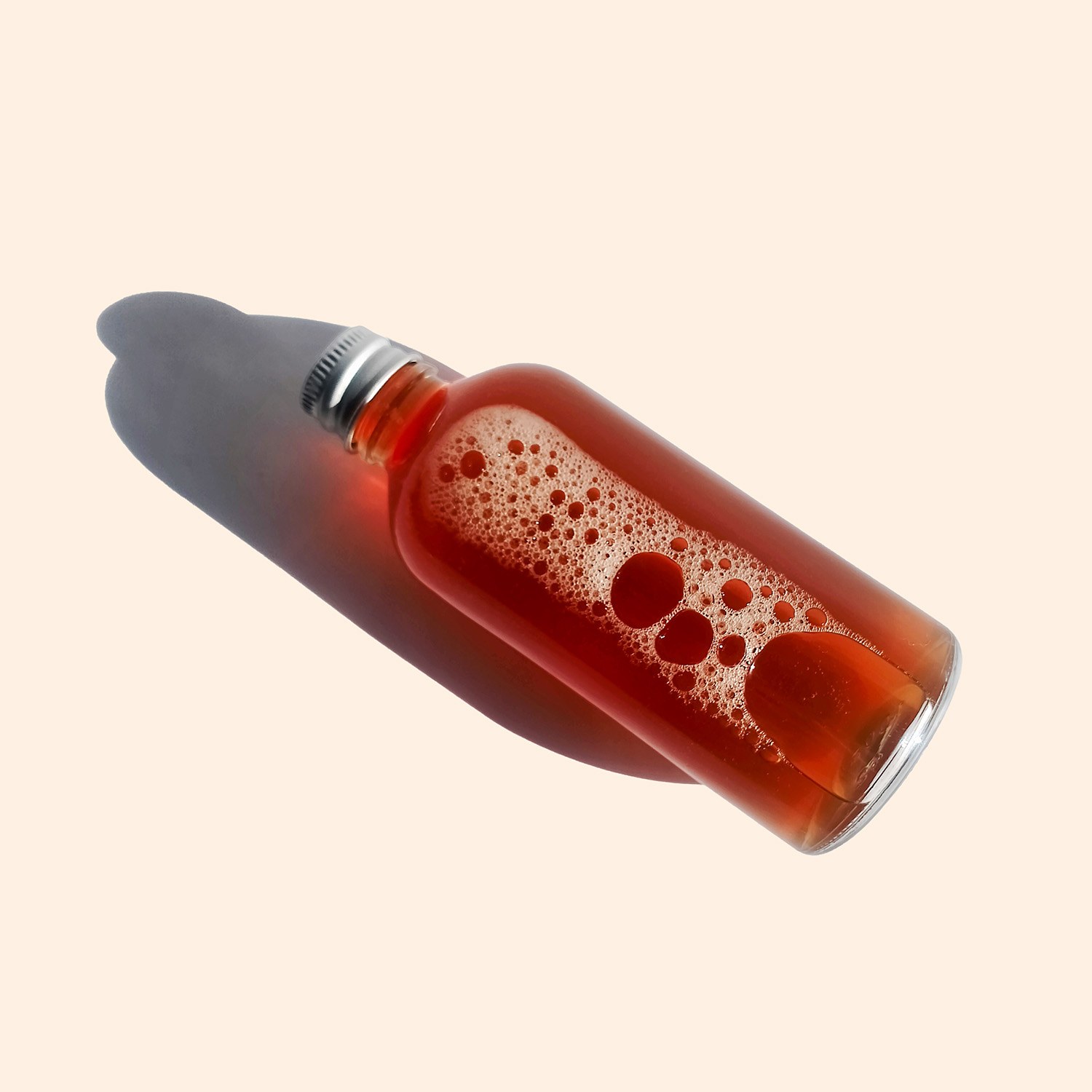
The basis for making micellar water is always demineralised water and/or a hydrolat in combination with a cleansing agent, in our case saponins. Because of them, the micellar water has a brown colour, since the saponins come from camellia seeds. In the final step, we also adjusted the pH of the product to an acidic value so that it approaches the physiological pH of the skin.
In addition, the micellar water contains soothing substances that help to hydrate the skin and reduce redness. It is suitable for removing regular make-up and for degreasing the skin.
Main benefits
- Gentle cleansing without aggressive surfactants
Saponins from camellia seeds help remove impurities from the skin and gently degrease it – they are an alternative to classic surfactants, which can excessively degrease the skin.
- Hydration and moisturisation of the skin
Glycerin, sodium PCA and sodium lactate help supply hydration to the skin and keep it moist.
- Soothing the skin
Lavender hydrolat has soothing effects and panthenol can bring relief to dry skin – the soothing substances help to reduce redness.
- pH close to that of the skin
The pH of the product is adjusted to acidic values in the range 4.5 to 5.5, so that it approaches the physiological pH of the skin.
- Simple making without heating
You just need to mix the prepared ingredients, you do not need to heat the product. The only more demanding part is the pH adjustment.
Product properties
Key ingredients in the recipe
Below you will learn more about the individual ingredients and their importance in the recipe for making micellar facial water. At the same time, you will find out further information about their substitutions or other possibilities of adapting the micellar water exactly for you.
Saponins
The basic active and cleansing ingredient in micellar water is saponins. Without saponins, you will obtain only a regular facial tonic without cleansing and make-up removing effects. Saponins also give micellar water its brown colour. To increase degreasing and cleansing effects, increase the dose of saponins by a few percentage points, and vice versa.
Saponins represent an alternative to classic surfactants, which can often excessively degrease the skin, often do not come from plant sources and can also be contaminated with other chemicals during processing. This is why many people are increasingly reaching for saponins when looking for alternatives to surfactants.
We do not currently stock saponins in powder form — that is why they are not in the shopping list below.
Demineralised water
The basis of most cosmetics is demineralised water and this substance must not be missing in micellar facial water either. Do not replace demineralised water with filtered or boiled water, as complete removal of minerals may not have occurred, which can disrupt the efficacy of the preservative and the stability of the product.
A possible substitute is floral hydrolats. You can also try a blend of different hydrolats or increase the proportion of lavender hydrolat in the formula. However, keep in mind that any change in the recipe will also cause a change in the amount of lactic acid needed for pH adjustment.
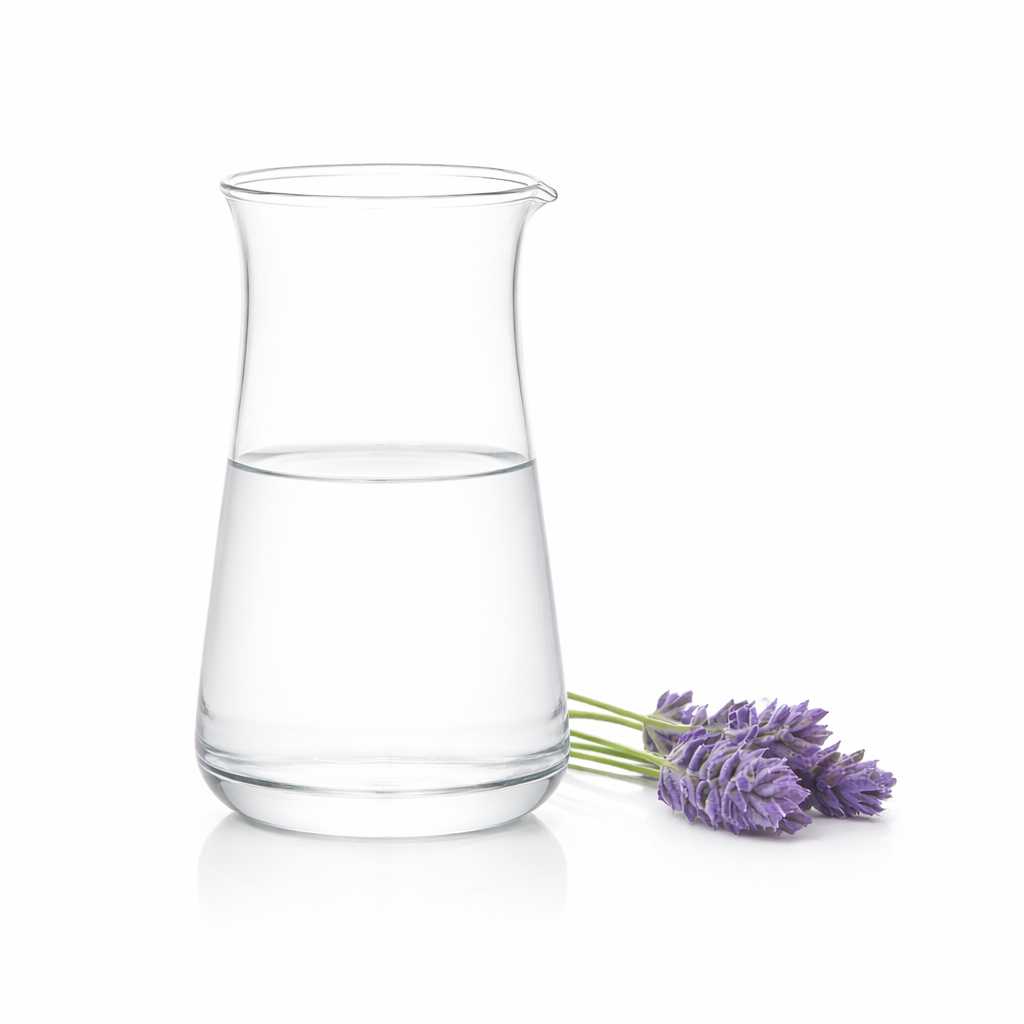
Lavender hydrolat
A floral hydrolat with a pleasant floral scent is lavender water, or in other words hydrolat from lavender. This hydrolat has soothing effects on the skin and at the same time lightly perfumes the product. If you want a more intense lavender scent, you can increase the proportion of hydrolat in the formula or add 0.1 – 0.2 % of lavender essential oil (thanks to the saponins, the essential oil will disperse well in the product even without using an emulsifier or solubiliser).
You can replace lavender water with another hydrolat or with demineralised water.
Glycerin
One of the main humectant and hydrating ingredients in the micellar water recipe is glycerin. Glycerin is not an essential component of micellar water, but it provides hydration to the skin and helps to keep it moist. You can play with the proportion of glycerin and thus customise the product to your needs. Likewise, if you do not like glycerin in products, sodium PCA shows very similar properties to glycerin in terms of hydration and moisturisation of the skin.
Sodium PCA
For moisturising and hydrating the skin, sodium PCA is included in the micellar facial water. You will appreciate this ingredient not only as a substitute for glycerin, but it also helps gently supply sodium to the skin and thus balance the content of mineral substances in the skin. However, if you do not have sodium PCA at hand, you can omit it and replace it with glycerin or demineralised water.
Sodium lactate
The sodium salt of lactic acid is another hydrating ingredient in micellar facial water. Sodium lactate is worth having on hand not only because of its hydrating effects, but it is also needed for dissolving salicylic acid or for increasing the hardness of soaps made by cold process, so you will use this ingredient in other cosmetic projects as well.
However, if you do not have sodium lactate at hand, you can replace it with demineralised water or with other hydrating ingredients in the formula (glycerin, sodium PCA).
Panthenol
Provitamin B5 is a great addition for the skin due to its soothing and also moisturising effects. It can bring relief to dry skin and reduces the formation of dry patches on the skin, which is why you will find it as part of many after-sun products and products for sunburned skin.
Panthenol is an active ingredient, and therefore it is not essential for the cleansing effects of micellar water, so it can be omitted from the product. However, if you want a product with more intensive caring properties, do not omit panthenol. You can, however, reduce or possibly increase its dose as needed (within the recommended dosage).
Lactic acid
The ingredient used for adjusting the pH of the product in micellar facial water is lactic acid. Do not omit pH adjustment, for the reasons mentioned in the Tips and tricks section of the procedure. A substitute for lactic acid is citric acid, which, however, must be dissolved in demineralised water before use (prepare a 1:1 acid:water solution), and adjust the pH with this solution. You will, however, need a different amount than with lactic acid.
Euxyl K903 preservative
As a broad-spectrum preservative, Euxyl K903 was chosen in this product. Do not omit the preservative from the product, because due to the high water content the micellar water will last only a few days in the refrigerator without preservation. An alternative to Euxyl K903 is other broad-spectrum preservatives. Before using a preservative, check at what pH it is active (some preservatives are effective only in acidic pH, so add them only after pH adjustment to the given value).
Formula (100 g)
A recipe for 100 g of micellar water. In phase A the ingredients are mixed, in phase B the pH is adjusted and the product is preserved. Every available ingredient is linked to a product in our range.
Shop the ingredients for this recipe
Untick what you already have Demineralised Water, 1 luses 79.04 gin stock€2.79
- Floral Water, Hydrosol, Lavender, Organic, 100 mluses 10 gin stock€3.69
- Vegetable Glycerol 99,5% USP/BP, 100 mluses 5 gin stock€2.69
- Sodium PCA 50%, 30 mluses 0.5 gin stock€2.61
- Sodium Lactate, 60% Solution, 100mluses 1 gin stock€2.82
- D-Panthenol 75% W, 100 mluses 1.1 gin stock€6.59
 Vegetable Lactic Acid 80%, 100 mluses 0.36 gin stock€2.69
 Euxyl K903, Natural Preservative, 10 mluses 1 gin stock€2.49
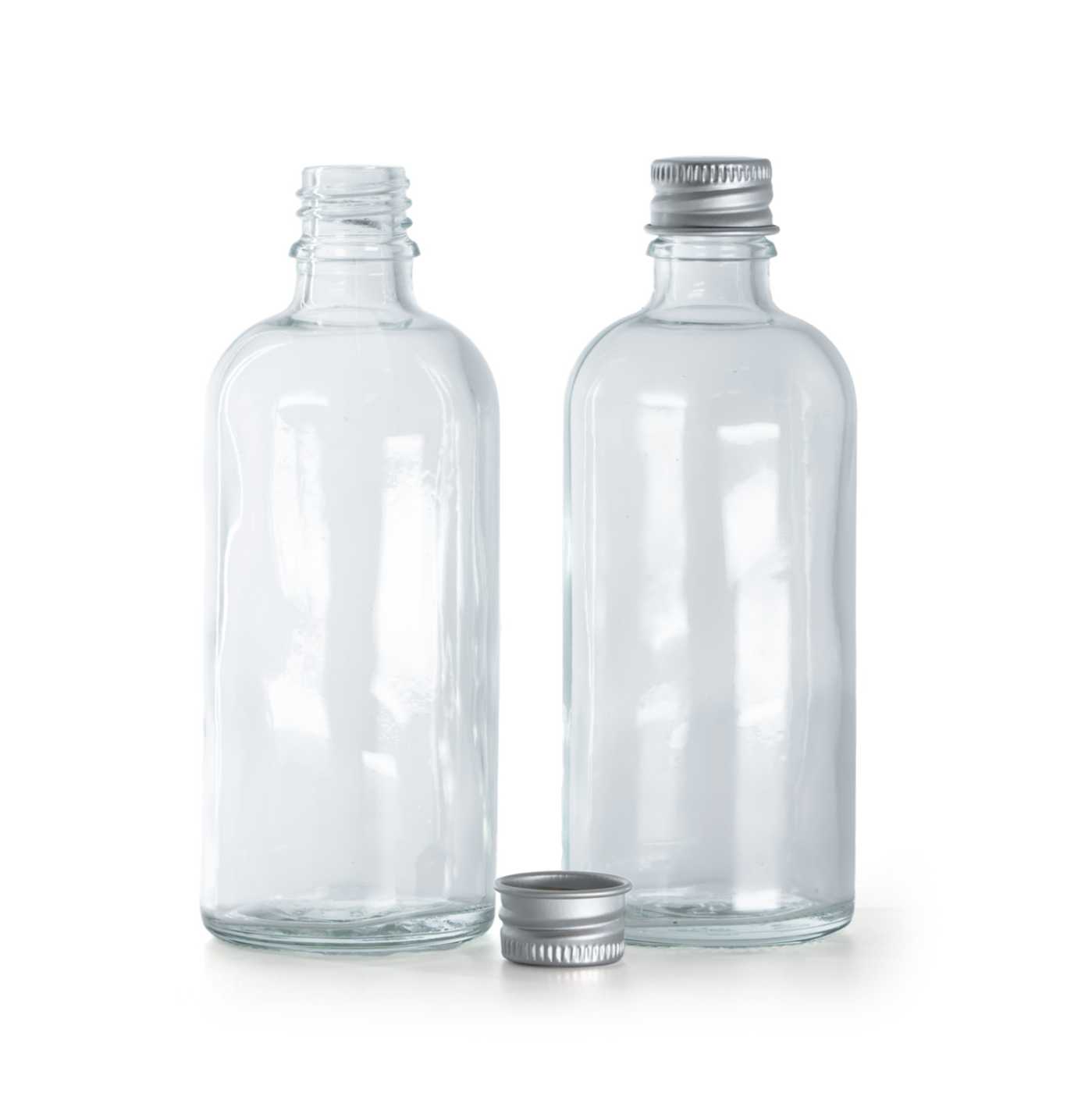 Clear Glass Bottle, Silver Aluminium Cap, 100 mlrecipe uses 1 ksin stock€0.72
| Phase / ingredient | % | Amount |
|---|---|---|
| Phase A – Mixing the ingredients | ||
| Demineralised water | 79.04 % | 79.04 g |
| Lavender hydrolat | 10.00 % | 10.00 g |
| Saponins | 2.00 % | 2.00 g |
| Glycerin | 5.00 % | 5.00 g |
| Sodium PCA | 0.50 % | 0.50 g |
| Sodium Lactate | 1.00 % | 1.00 g |
| Panthenol | 1.10 % | 1.10 g |
| Phase B – pH adjustment and preservation | ||
| Lactic acid | 0.36 % | 0.36 g |
| Euxyl K903 | 1.00 % | 1.00 g |
| Packaging | ||
| Glass bottle, transparent, aluminium cap | – | 1 pc |
We no longer stock saponins in powder form, which is why they appear in the table without a link and are missing from the shopping list above. Without saponins, you will obtain only a regular facial tonic without cleansing and make-up removing effects.
Procedure
Making micellar water is really simple – you just need to mix the prepared ingredients, you do not need to heat the product. The only more demanding part is the pH adjustment.
- Mixing the phase A ingredients
Into a container, weigh the ingredients of phase A. Mix well so that the saponins dissolve (the mixture may foam after adding the saponins).
Phase A - Checking and adjusting the pH
Then check the pH of the mixture, for example with indicator paper strips, and adjust it with lactic acid to values in the range 4.5 to 5.5. Be careful, the indicated amount of lactic acid is only approximate, see Tips and tricks below. Add the acid dropwise and check the pH continuously.
Phase BpH 4.5–5.5 - Preservation and filling
After pH adjustment, thoroughly stir the preservative into the micellar water. Fill into the disinfected bottle.
Phase B
Tips and tricks – pH adjustment is necessary not only for better tolerance of the micellar water by the skin, but also for the proper efficacy of the preservative, so do not skip this step. For pH adjustment, add lactic acid dropwise, mix thoroughly and check the pH continuously until you reach a value in the range 4.5 to 5.5. The indicated amount of lactic acid is only approximate, since the actual quantity depends on the accuracy of dosing, the quality of the ingredients and other factors.
How to use
Apply the micellar water to damp skin; it is suitable for removing regular make-up and for degreasing the skin. When removing waterproof make-up, it is advisable first to remove part of the make-up with an oil-based cleanser and then to finish cleansing the skin with micellar water. Avoid applying micellar water around the eyes.
After applying it to the skin, rinse your face with water for better cleansing – the disadvantage of saponins is that without rinsing they may cause slight irritation on the skin in more sensitive individuals.

Warning
As mentioned, you can experiment with homemade recipes to achieve the desired properties. However, the final result can be influenced by many factors, such as humidity, temperature, the quality of ingredients or their storage.
Before you use any ingredient to make a cosmetic product, familiarise yourself with its properties, recommended dosage, storage conditions and safe handling. Each ingredient may have the potential to cause an allergic reaction in sensitive individuals, therefore we recommend, before using the product, to find out whether you are allergic to any of the ingredients or to the overall product, for example by means of a patch test.
If you have very sensitive or very acne-prone skin, or if you have other skin or health problems, we recommend that you consult a medical professional before applying a new product to your skin, whether it is a homemade cosmetic product, a pure ingredient or a commercially available product.
Frequently asked questions about the recipe
Practical questions about the recipe — the colour of the micellar water and rinsing it off, hydrolat substitutes, pH adjustment and preservation.
Why is the micellar water brown?
Its brown colour comes from the saponins, which are obtained from camellia seeds. They are natural cleansing substances – without them you would obtain only a regular facial tonic without cleansing and make-up removing effects.
Do I have to rinse the micellar water off my skin?
Yes, after applying it to the skin, rinse your face with water for better cleansing. The disadvantage of saponins is that without rinsing they may cause slight irritation on the skin in more sensitive individuals. Also avoid applying it around the eyes.
What can I use instead of lavender hydrolat?
You can replace lavender water with another hydrolat or with demineralised water, or try a blend of different hydrolats. However, keep in mind that any change in the recipe will also cause a change in the amount of lactic acid needed for pH adjustment.
Why is pH adjustment so important?
pH adjustment is necessary not only for better tolerance of the micellar water by the skin, but also for the proper efficacy of the preservative. Add the lactic acid dropwise, mix thoroughly and check the pH continuously until you reach a value in the range 4.5 to 5.5. The indicated amount of acid is only approximate.
Can I use citric acid instead of lactic acid?
Yes, citric acid is a substitute for lactic acid. Before use, however, dissolve it in demineralised water (a 1:1 acid:water solution) and adjust the pH with this solution. You will need a different amount than with lactic acid.
Can I leave out the preservative?
No, do not omit the preservative from the product – due to the high water content the micellar water will last only a few days in the refrigerator without preservation. An alternative to Euxyl K903 is other broad-spectrum preservatives; before use, check at what pH the preservative is active.
Lavender hydrolat, glycerin, sodium PCA and panthenol — you will find the ingredients from this recipe in the hydrolats and active ingredients range at Handymade.sk.