
The water phase forms the largest part of the formulation in many cosmetic products. We find it in facial toners, creams, gels, serums, emulsions, cleansing products and hair care. Despite this, in both home and professional manufacturing it is often perceived only as “the water in the recipe” — that is, as something neutral that just tops up the volume.
In reality, however, the water phase strongly influences the character of the entire product. It determines how the product will feel on the skin, how it will combine with active ingredients, what it will smell like, what pH the final formulation can have and how demanding it will be to preserve.
This is precisely why the difference between distilled water, demineralised water, tap water and hydrosols is more important than it appears at first glance. Water is not just water. Each type of water phase has a different composition, a different level of purity, a different degree of predictability and a different impact on the stability of the cosmetic product.
Distilled water is a pure, neutral and predictable base. Demineralised water produced by reverse osmosis and intended for cosmetic use is a very practical water phase with a low mineral content. A hydrosol is a plant-based water phase with its own scent, a low content of naturally occurring substances and a specific sensory profile. Tap water is suitable for drinking, but it is not an ideal choice for cosmetic products that are intended to be stored.
That does not mean that a hydrosol is automatically better and purified water less valuable. Each of these raw materials has its place. The difference lies in what we expect from the formulation: maximum neutrality, stability and control, or a subtle botanical character, an aromatic profile and a water phase that is more interesting from a marketing perspective.
For hydrosols, it is at the same time important to talk about preservation. An unpreserved hydrosol is an aqueous raw material, and therefore naturally more risky from the point of view of microbiological stability. A preserved hydrosol can be a safer choice for storage and use, but in the final formulation you must take into account that it already contains a preservative system. When adding further preservatives, it is therefore necessary to proceed sensibly so as not to create an unnecessary preservative “overload”.
In this article we will look at what a hydrosol is, how it differs from distilled and demineralised water, why tap water is not recommended for stored cosmetics, when to use a hydrosol instead of water, how a hydrosol affects the fragrance of the product and why the quality of the water phase determines the stability and safety of a cosmetic formulation.
What is the water phase in cosmetics?
The water phase is the part of a cosmetic formulation that contains water or water-miscible components. It can be distilled water, demineralised water, hydrosol, aloe vera juice, aqueous botanical extracts or other aqueous raw materials.
Humectants are often dissolved in the water phase, for example glycerin, panthenol, hyaluronic acid, some active ingredients, gelling agents, chelators, preservatives and other functional raw materials. That is why the water phase is not just “filler”. It is the medium in which a large part of the formulation takes place.
The quality of the water phase affects in particular:
- Product stability.
- The pH of the formulation.
- Fragrance and sensoriality.
- Compatibility of active ingredients.
- The risk of microbiological contamination.
- The efficacy of the preservative system.
- The appearance, clarity or possible haze of the product.
If the water phase is of poor quality, unstable or microbiologically risky, it can affect the entire product, regardless of how high-quality the oils, emulsifiers or active ingredients are.
Water is not just water: distilled, demineralised or tap water?
When formulating cosmetics, it is not enough to say that the formulation contains “water”. From a formulation point of view, there is a major difference between distilled water, demineralised water and ordinary tap water. Each has a different composition, a different degree of purity and a different impact on the stability of the final product.
The water phase in cosmetics should not be random. It should be as pure, predictable and suitable for the given type of formulation as possible. This is why cosmetic formulations do not use ordinary tap water but purified water suitable for making cosmetic products.
Distilled water
Distilled water is obtained by distillation. The water is heated, turned into steam and then condensed back into liquid. This process removes a large part of the minerals, salts and non-volatile impurities that may naturally be present in the water.
In cosmetics, distilled water is popular because it is neutral, predictable and does not influence the fragrance or colour of the product. It is suitable for creams, facial waters, toners, serums, gels, shampoos, shower gels and cleansing products.
Its advantage is that it does not introduce additional variables into the formulation. It does not contain significant amounts of minerals that could affect emulsion stability, the efficacy of some active ingredients or the behaviour of the preservative system.
In short: distilled water is a suitable choice for home and small-batch cosmetics, especially where a clean, neutral base is needed.
Demineralised water
Demineralised water is water from which mineral substances and ions have been removed. It can be produced in various ways, for example by ion exchange or reverse osmosis. The production method, purity, storage and intended use of the product determine whether a given demineralised water is also suitable for cosmetics.
In our range you will find demineralised water produced by reverse osmosis, which is suitable as a water phase for making cosmetic products. Reverse osmosis is a process in which water passes through a semi-permeable membrane that helps remove a large portion of dissolved substances, minerals and undesirable impurities.
Water treated in this way is particularly practical in formulations where you need a clean, neutral and predictable water phase with a low mineral content. It is suitable for facial waters, toners, creams, gels, serums, emulsions, shampoos, shower gels and other cosmetic products containing a water phase.
It is important to distinguish between demineralised water intended for cosmetic use and technical demineralised water sold, for example, for irons, windscreen washers or batteries. Technical water does not necessarily meet the requirements for a cosmetic raw material and may not be suitable for contact with the skin.
In short: demineralised water intended for cosmetic use is an appropriate and practical choice for cosmetic formulations. It is not correct, however, to automatically equate it with technical demineralised water from a drugstore or hobby shop.
Tap water
Tap water is intended for drinking, not for formulating stable cosmetic products. Even if it may be safe for regular consumption, from a cosmetic formulation standpoint it is too variable.
It can contain minerals, chlorine, residues of treatment chemicals, different pH levels and varying hardness. These factors can affect emulsion stability, the appearance of the product, the behaviour of active ingredients, the formation of haze, the fragrance and the efficacy of the preservative system.
In home cosmetic making, the microbiological side is also a problem. Tap water is not sterile, and once mixed with botanical extracts, hydrosols, proteins, sugars or other cosmetic raw materials, it can increase the risk of product contamination.
In short: tap water is not suitable as the water phase in cosmetics that are to be stored. It can only be used in products intended for immediate use, or in simple rinse-off DIY mixtures that are not stored.
Which water is best for cosmetics?
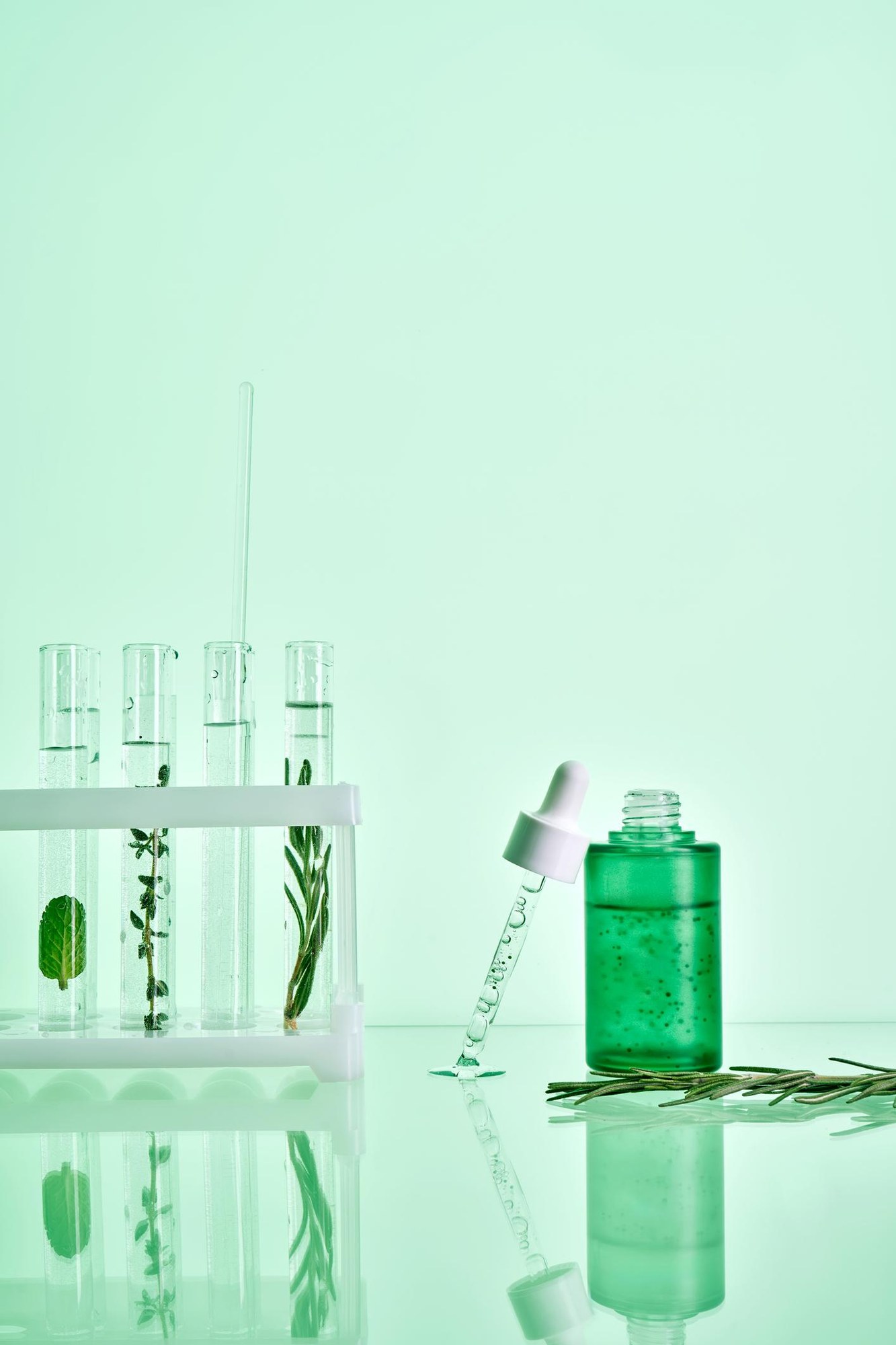
In professional manufacturing, purified water of controlled quality is mainly used, which may be prepared by combining several technologies, such as reverse osmosis, demineralisation, filtration and UV treatment. Important factors are not only the production method but also documentation, microbiological control, storage and hygiene regime.
The least suitable is tap water, because its composition is too variable for cosmetic formulations and can negatively affect the stability, appearance, fragrance and safety of the product.
A brief comparison of water phases
| Type of water phase | Suitability for cosmetics | Advantages | Disadvantages |
|---|---|---|---|
| Distilled water | Very suitable | Neutral, clean, predictable, does not affect fragrance | By itself does not provide a botanical benefit |
| Demineralised water | Very suitable, if intended for cosmetic use | Clean, neutral, practical, low mineral content | You must distinguish cosmetic grade from technical water |
| Tap water | Unsuitable for stored products | Available, inexpensive | Variable composition, minerals, chlorine, microbiological risk |
| Hydrosol | Suitable depending on quality and preservation | Botanical character, fragrance, marketing value | Higher demands on quality, storage and preservation |
What is a hydrosol?
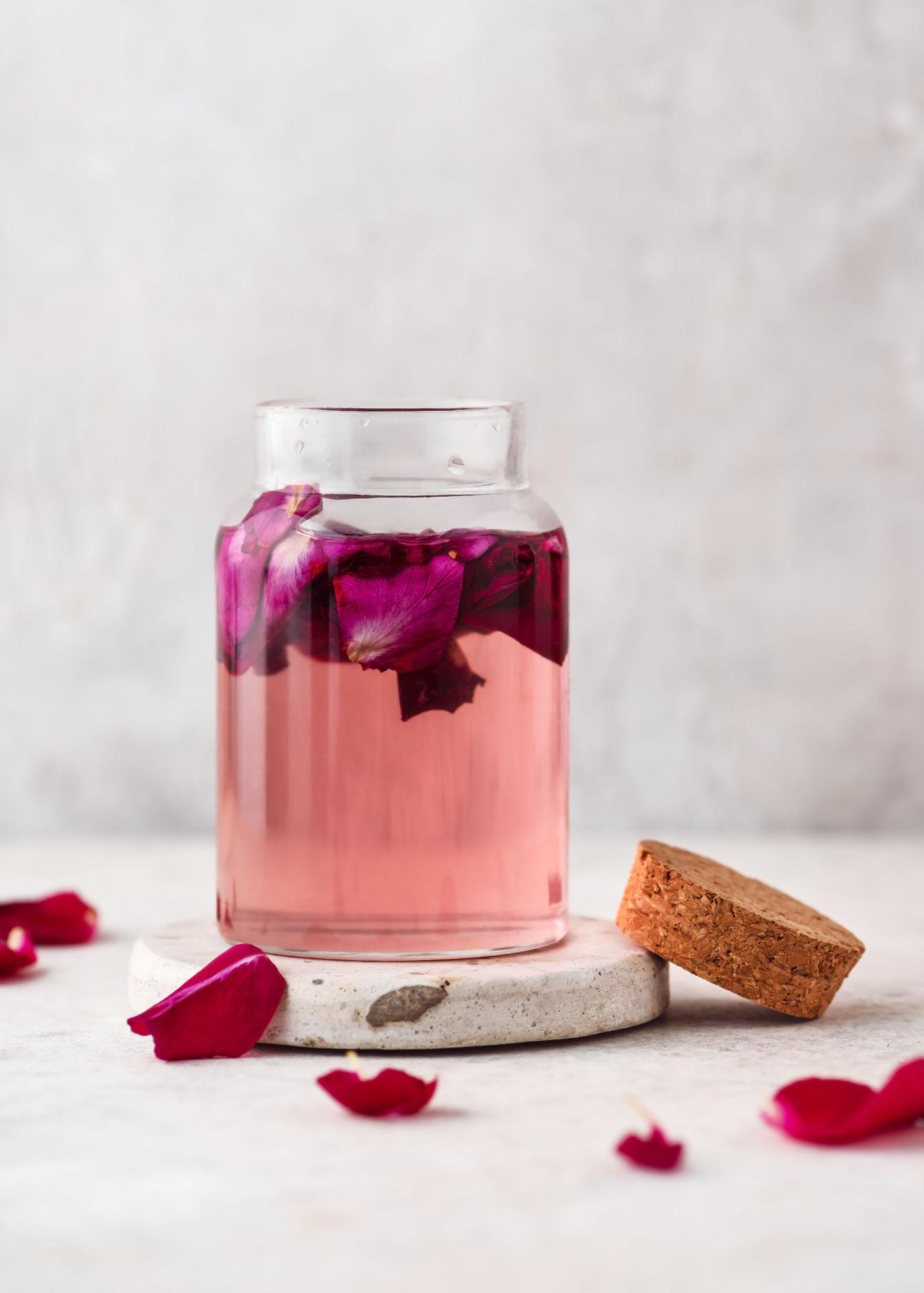
In cosmetics, hydrosols are used mainly in:
- Facial toners.
- Hydrating mists.
- Creams and emulsions.
- Gels and serums.
- Hair tonics.
- Cleansing products.
- Masking and soothing formulations.
A hydrosol can be particularly interesting when you want to base a formulation on a particular plant or add a subtle aromatic and botanical profile to the product.
A hydrosol is not just scented water
A hydrosol is often perceived as a mild botanical water, but in a cosmetic formulation it can be a more active component than it seems. It has its own fragrance, its own pH and its own behaviour in the formulation.
It can influence:
- The fragrance of the final product.
- The feel on the skin.
- The marketing positioning of the product.
- The pH of the formulation.
- Compatibility with certain active ingredients.
- Preservation requirements.
For this reason, it is necessary to work with a hydrosol consciously. It is not just a “better type of water”. It is a plant-based aqueous raw material that can enrich the formulation but at the same time introduces another variable.
What is the difference between a hydrosol and distilled water?
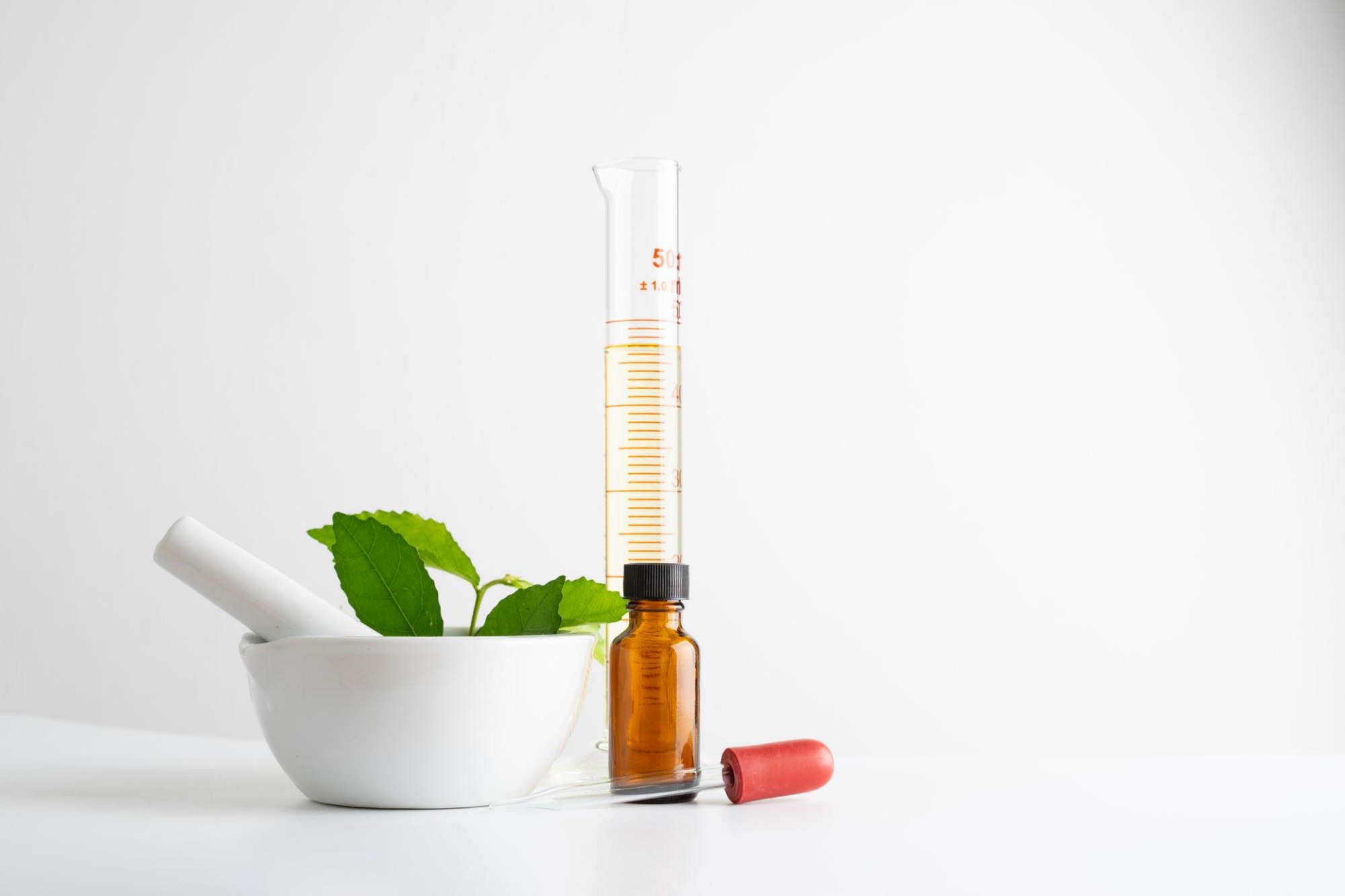
The difference can most simply be explained as follows:
- Distilled water is neutral and predictable.
- Demineralised water produced by reverse osmosis is clean, practical and suitable as a base water phase.
- A hydrosol is botanical, aromatic and more sensory-active.
- Tap water is too variable for stored cosmetics.
If you are formulating a simple cream, serum or gel and want precise control over the formulation, a clean water phase may be the better choice. If you want to give a product a subtle botanical character, a hydrosol can be a very suitable solution.
Can a hydrosol be used instead of distilled water in cosmetics?
Yes, in most aqueous cosmetic formulations a hydrosol can be used instead of distilled or demineralised water. However, it is not always automatically the best choice.
A hydrosol is particularly suitable when you want to give the formulation a subtle botanical character, natural fragrance and a specific focus. It is excellent in facial toners, light serums, hydrating gels, emulsions and hair tonics.
A pure water phase such as distilled water or demineralised water is more appropriate when you need a neutral base, tighter control over fragrance, pH and stability, or when working with active ingredients where you do not want to add another botanical variable.
In short: a hydrosol can replace distilled or demineralised water, but you must always take into account fragrance, pH, preservation, stability and the overall goal of the formulation.
When to use a hydrosol in a cream, toner or serum?
A hydrosol is very suitable where the water phase is intended not only as a technical base but also as part of the story and character of the product.
Hydrosol in a facial toner
In a facial toner, a hydrosol can form the main part of the formulation. Thanks to this, the product feels milder, more plant-like and more interesting sensorially. For toners, however, preservation must be addressed thoroughly, because it is a water-based product that is used repeatedly.
Hydrosol in a cream
In a cream, a hydrosol can replace part or all of the water phase. It gives the formulation a gentle fragrance and botanical character. You must, however, keep in mind that a hydrosol can affect pH, fragrance and the overall stability of the emulsion.
Hydrosol in a serum
In serums, hydrosols are used mainly in light hydrating or soothing formulations. They combine very well with humectants such as glycerin, panthenol or hyaluronic acid. For pH-sensitive actives, compatibility must be checked.
Hydrosol in hair care
In hair products, a hydrosol can support the gentle aromatic profile of the product. It is suitable for hair tonics, sprays, light leave-in products or as part of the water phase in shampoos and conditioners.
How does a hydrosol affect the fragrance of a product?
A hydrosol can significantly influence the fragrance of the final product, even though its aroma is usually milder than that of an essential oil. In some formulations this is an advantage, in others it may be a problem.
For example:
- Rose hydrosol can add a delicate floral note.
- Lavender hydrosol can feel herbal and calming.
- Chamomile hydrosol can have a typical herbal to honey-like scent.
- Mint can feel fresh and cooling.
- Some hydrosols can have an earthy, grassy or slightly fermented tone.
When formulating, you must take into account that the fragrance of a hydrosol can change in combination with emulsifiers, preservatives, active ingredients or fragrances. The subtle smell of the neat hydrosol may not behave the same way in the finished product.
It is therefore advisable to test a hydrosol first in a small sample. This is especially true for products where the fragrance should be clean, subtle or precisely tuned.
Does a hydrosol affect preservation of the cosmetic product?
Yes, a hydrosol can affect preservation of a cosmetic product. Because it is an aqueous raw material, it must be assessed from the point of view of microbiological quality, pH, storage conditions and whether it is preserved or unpreserved.
A hydrosol itself does not replace a preservative system. Even if some hydrosols may have a certain natural antimicrobial potential, you cannot rely on them as full protection for a cosmetic product.
If a product contains a water phase and is to be stored for more than a few days, preservation must always be addressed. This applies to creams, gels, serums, toners, facial waters, shampoos and other products containing water.
What is the risk of unpreserved hydrosols?
An unpreserved hydrosol is more sensitive to microbiological contamination. It is a water-based raw material that, if improperly stored or used for too long, can be more risky than it appears at first glance.
An unpreserved hydrosol may only be suitable if:
- It is fresh.
- It has been manufactured correctly.
- It has been stored cool and in the dark.
- Its shelf life is clearly indicated.
- It is used quickly.
- The final product has a properly designed preservative system.
For products containing a water phase that are to be stored for longer, it is not sufficient to rely on the natural origin of the hydrosol. It is precisely natural and aqueous raw materials that can be more demanding from the point of view of microbiological stability, because they do not contain built-in protection against microbial growth.
With unpreserved hydrosols, it is very important to maintain hygiene, use clean utensils, minimise hand contact and use them up after opening according to the manufacturer’s recommendation.
When not to add another preservative to a preserved hydrosol?
If a hydrosol is already preserved, you must look at its INCI and recommended use. It is not only the hydrosol itself that enters the formulation, but also its preservative system.
An additional preservative may not need to be added when:
- You are making a simple product in which the hydrosol forms practically the entire formulation.
- The hydrosol is used as a ready-made preserved aqueous raw material.
- The hydrosol manufacturer states that it is intended for direct cosmetic use.
- You are not adding other risky aqueous, botanical or microbiologically sensitive components.
- The product is intended for rapid use and hygienic handling.
A typical example might be a simple facial mist or toner based almost entirely on a preserved hydrosol and containing no other risky ingredients. Even then, however, you must follow the raw material manufacturer’s recommendations and hygiene rules during production.
An additional preservative usually needs to be considered when:
- You are making a cream, serum, gel or emulsion from the hydrosol with other ingredients.
- You are adding proteins, botanical extracts, sugars, juices, clays or other sensitive raw materials.
- You are shifting the pH outside the effective range of the original preservative.
- You are diluting the preserved hydrosol with a larger amount of another water phase.
- The product will be used repeatedly, for example from a jar or a bottle exposed to air.
The aim is not to avoid preservatives at any cost, but neither is it to add preservatives unnecessarily in high amounts. The right approach is to know the composition of the hydrosol, the recommended preservative dosage, the pH of the formulation and the overall microbiological risk of the product.
In short: if a hydrosol is already preserved, another preservative is not added automatically. In a more complex formulation, however, you need to assess the preservation of the entire finished product, not just the hydrosol itself.
What does preservative overload mean?
Preservative overload means adding more preservative substances to a formulation than is technologically necessary or appropriate. This can happen, for example, when you use an already preserved hydrosol and then add another preservative at the full dose without recalculating.
Such an approach does not automatically make the product safer. On the contrary, it can worsen skin tolerance and affect the fragrance, sensoriality or overall character of the product.
With preservatives, it is true that more is not always better. What matters is using a suitable preservative system in the right amount, at the right pH and with regard to the whole composition of the formulation.
Advantages and disadvantages of a hydrosol
Advantages of a hydrosol
A hydrosol gives the formulation a botanical character. The product can feel more natural, gentler and more interesting sensorially.
A hydrosol can subtly influence the fragrance of the product. In some formulations it can partly support the aromatic profile without the need for pronounced fragrancing.
A hydrosol is suitable for toners, essences, creams, gels, serums, hair tonics and hydrating sprays.
A hydrosol can increase the perceived value of the product. Customers often relate better to a product containing rose, lavender, chamomile or another botanical hydrosol than to a product that contains only water.
A hydrosol can support a specific focus of the product, for example on sensitive, dry, oily or stressed skin.
Disadvantages of a hydrosol
A hydrosol is not entirely neutral. It can affect the fragrance, colour, pH and overall character of the formulation.
A hydrosol can vary from batch to batch. Because it is a botanical raw material, its fragrance and sensory profile can differ slightly depending on the origin, the quality of the plant and the production method.
An unpreserved hydrosol is more sensitive to microbiological contamination.
A preserved hydrosol must be counted into the overall preservative system of the formulation.
Not every hydrosol suits every product. Sometimes it is better to use a neutral water phase and address fragrance or active focus with other raw materials.
Advantages and disadvantages of a pure water phase
By a pure water phase in this context we mean mainly distilled water or demineralised water intended for cosmetic use.
Advantages of a pure water phase
A pure water phase is neutral. It does not affect the fragrance of the product and does not interfere with fragrancing.
It is predictable when formulating. That is important especially in formulations with active ingredients, where you need good control over pH, stability and compatibility.
It is suitable for testing formulations. If you are developing a new cream, serum or gel, a neutral water phase makes it easier to follow the behaviour of the other components.
It combines well with active ingredients. It does not introduce botanical components that could affect the result or change the fragrance.
It is also suitable for home cosmetics, if used hygienically and in a properly preserved formulation.
Disadvantages of a pure water phase
A pure water phase does not in itself provide a botanical or aromatic profile.
It does not have the marketing appeal of a hydrosol.
By itself it does not add a botanical character to the product.
It is still a water phase, so a finished product containing water needs suitable preservation.
When to choose a hydrosol and when to choose pure water?
The best water phase is not always the one that looks most interesting. The best one is the one that matches the goal of the formulation, the type of product, the stability requirements and the way the product is used.
The most common mistakes when choosing a water phase
Using tap water in a product that will be stored
Tap water may be suitable for drinking, but it is not ideal for cosmetics that are to be stored. It can affect the stability, pH, fragrance and microbiological quality of the product.
Mistaking technical demineralised water for a cosmetic raw material
Not every demineralised water is suitable for cosmetics. Technical water for irons or batteries may not be intended for contact with the skin or for making cosmetic products.
Using an unpreserved hydrosol without addressing preservation
An unpreserved hydrosol is an aqueous raw material and can be microbiologically sensitive. If it is used in a product that is to be stored, a suitable preservative system must be addressed.
Automatically adding a full dose of preservative to a preserved hydrosol
If a hydrosol already contains a preservative system, this must be taken into account when formulating. Preservatives should not be added carelessly or “just to be safe” in higher amounts.
Ignoring the fragrance of the hydrosol
A hydrosol can affect the fragrance of the product more than expected. It is therefore advisable to test it directly in the final formulation, or at least in a small sample.
Not addressing the pH of the water phase
Hydrosols and some purified waters can have different pH values. With active ingredients, preservatives and emulsions, pH is a very important parameter that can affect both the stability and the efficacy of the product.
Summary
Frequently asked questions
Practical questions that Veronika and Filip most often ask when choosing the water phase for cosmetic formulations — from the basic definitions through safety to preservation.
What is a hydrosol?
A hydrosol is an aromatic water phase produced during steam distillation of plants. It contains a small amount of naturally occurring volatile and water-soluble substances that can affect the fragrance, character and sensoriality of a cosmetic product.
What is the difference between a hydrosol and distilled water?
Distilled water is neutral purified water with no pronounced fragrance and no botanical profile. A hydrosol is a plant-based water phase that has its own fragrance and a specific origin, and can bring a subtle botanical character to a cosmetic formulation.
Is demineralised water suitable for cosmetics?
Yes, demineralised water can be suitable for cosmetics if it is intended for cosmetic use and is of appropriate quality. In our range you will find demineralised water produced by reverse osmosis, which is suitable as a neutral water phase for creams, toners, serums, gels, emulsions and rinse-off cosmetics.
Is every demineralised water suitable for cosmetics?
No. Not every demineralised water is automatically suitable for cosmetics. Technical demineralised water intended, for example, for irons, windscreen washers or batteries may not be suitable for cosmetic use. When making cosmetics, it is important to use water intended as a cosmetic raw material.
Is demineralised water from reverse osmosis a good choice?
Yes. Demineralised water produced by reverse osmosis is a very good choice for cosmetic formulations if it is intended for cosmetic use. It has a low mineral content, it is neutral and it helps reduce the number of unknown variables in the water phase of the formulation.
Can I use tap water in home cosmetics?
Tap water is not recommended for cosmetics that are to be stored. It can contain minerals, chlorine, different pH levels and a microbiological load, which can affect the stability and safety of the product. Distilled water or purified water intended for cosmetic use is a better choice.
Is water for irons suitable for cosmetics?
Not automatically. Water sold for irons or for technical purposes may not be suitable for cosmetics. When making cosmetics, it is important to use water that is intended for cosmetic use and is of appropriate quality.
Can a hydrosol be used instead of distilled water in cosmetics?
Yes, a hydrosol is often used instead of distilled water in toners, creams, gels, serums and emulsions. When substituting, however, you need to take into account the fragrance of the hydrosol, the pH, preservation and compatibility with the other components of the formulation.
Does a hydrosol affect the fragrance of a cosmetic product?
Yes. A hydrosol can subtly influence the fragrance of the product, because it contains naturally occurring aromatic substances from the plant. In some products its scent can be an advantage, in others it can disturb the intended fragrance profile.
Is an unpreserved hydrosol risky?
An unpreserved hydrosol can be more risky from the point of view of microbiological stability, because it is an aqueous raw material. It should be stored according to the manufacturer’s recommendation, ideally cool and in the dark, and used up as soon as possible after opening. When used in a finished cosmetic product, a suitable preservative system must be addressed.
Does another preservative need to be added to a preserved hydrosol?
Not always. If a preserved hydrosol is used on its own and the manufacturer intends it for direct use, another preservative may not be necessary. If, however, the hydrosol becomes part of a more complex formulation with other aqueous, botanical or microbiologically sensitive components, the preservation of the finished product must be assessed anew.
Is distilled water suitable for home cosmetics?
Yes, distilled water is suitable for home cosmetics, because it is neutral and predictable. It is used in creams, toners, gels, serums and cleansing products. If the product contains a water phase and is to be stored for longer, however, it must be suitably preserved.
In our range you will find distilled water, demineralised water produced by reverse osmosis and a wide selection of organic hydrosols — from rose through lavender and chamomile to mint.