


Shop
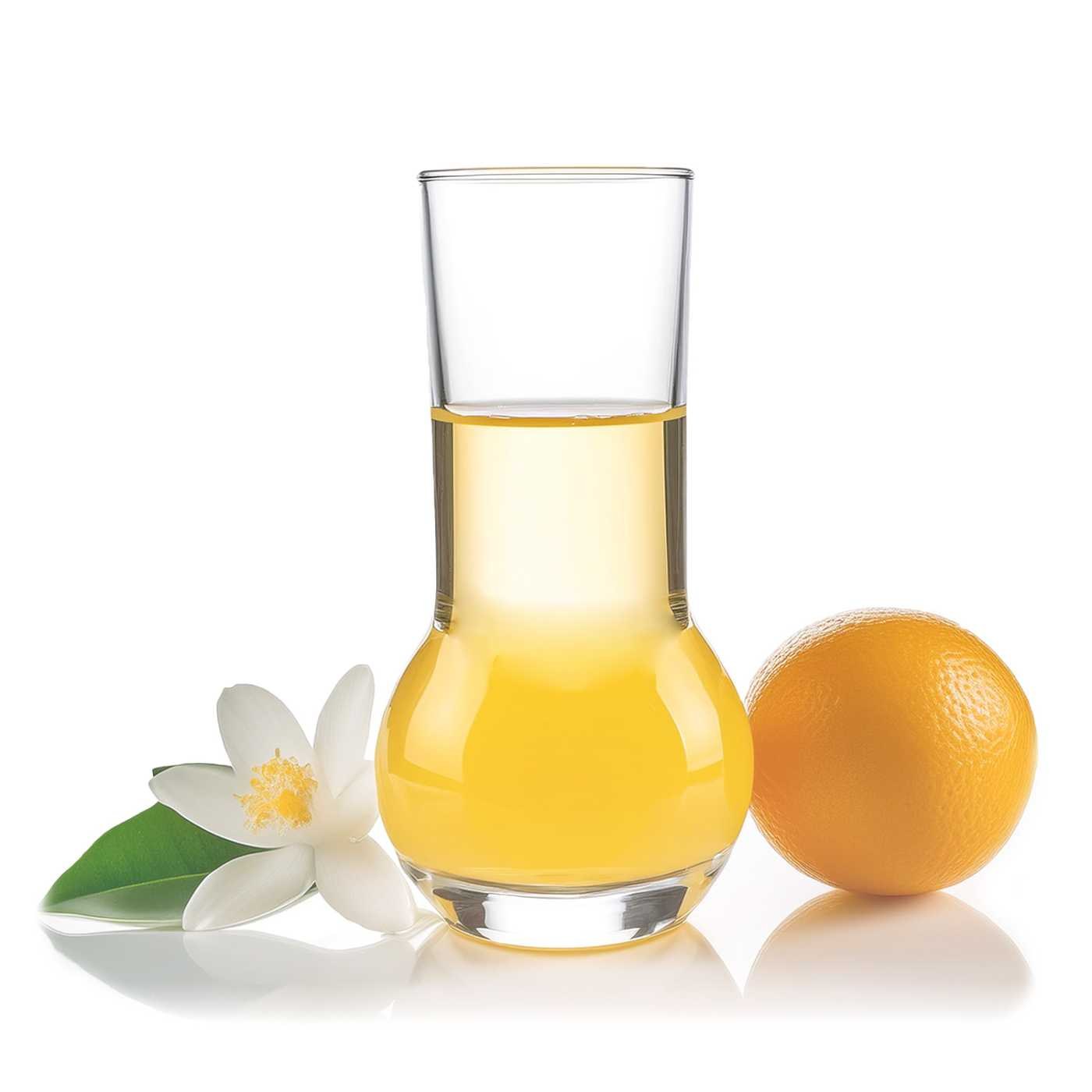
Neroli and Bitter Orange Essential Oil
Neroli essential oil is obtained by steam distillation of bitter orange blossoms (Citrus aurantium var. amara). full description
This product is no longer sold.
We've retired it from our range. Take a look at our current selection — you might like it even more.
Product description
Neroli essential oil is obtained by steam distillation of bitter orange blossoms (Citrus aurantium var. amara). In a formulation it works as a fragrance ingredient, and it is also credited with a soothing and regenerating effect on the skin. It suits face, body and hair cosmetics, perfumery, diffusers, soaps and candles. We supply it as a pure, undiluted essential oil of North African origin.
Fragrance and character
The scent of neroli is strong, sweet and citrusy, with a terpene undertone, and it feels fresh and invigorating. In perfumery terms it is classed as a top note: it shows first in a composition and evaporates fairly quickly. When building your own fragrance, complement it with heart and base notes, which anchor the scent and prolong how long it lasts on the skin or in a room.
Effects on the skin
The effects listed are cosmetic properties attributed to this essential oil. How they show in the finished product depends on the usage rate and the whole recipe.
- Soothing effect – an ingredient for creams and oil serums for skin that needs calming.
- Regeneration – used in nourishing products for dry skin.
- Antioxidant action and care for mature skin – a supporting ingredient in recipes for mature skin, usually combined with other active ingredients.
The oil is suitable for all skin types, especially dry and mature skin.
Use in a formulation
Neroli is soluble in alcohol and vegetable oils and does not dissolve in water. In anhydrous products (body and face oils, balms, massage oils) it is added directly to the oil phase. In emulsions it is incorporated in the cool-down phase or added afterwards to the finished base; the recommended processing temperature is below 40 °C. In water-based products such as toners and facial waters it needs a solubiliser, otherwise it separates and floats on the surface.
Add the essential oil only after the emulsion has cooled below 40 °C and stir briefly. At higher temperatures the volatile components evaporate and the scent loses its freshness.
In alcohol-based perfumes and colognes the oil dissolves directly in ethanol, which corresponds to its traditional use in perfumery.
The usage rate is governed by the IFRA limits for the specific product category (lip products, deodorants, face creams, rinse-off products, candles and others). You will find the exact values for this raw material in the documentation provided with the product. Essential oils are used in low proportions and we recommend starting at the lower end, because the scent of neroli is intense and dominates a composition in larger amounts.
The oil contains fragrance allergens listed in Annex III of Regulation (EC) No 1223/2009, as amended. When making cosmetics for sale, check the safety data sheet to see which allergens it contains and in what amounts, so that you can state them correctly in the ingredients list.
Suitable for products such as
- Face creams and serums – a fragrance ingredient that complements care for dry and mature skin.
- Body oils and lotions – a floral and citrus scent in leave-on products, where the stated soothing effect also applies.
- Perfumes and colognes – a classic top note of citrus and floral compositions.
- Shower and bath products, solid and liquid soaps – a fragrance for rinse-off products within IFRA limits.
- Hair cosmetics – fragrancing of shampoos, conditioners and hair oils.
- Diffusers and candles – scenting of rooms, with usage rates according to the IFRA category for candles and air fresheners.
- Decorative cosmetics – a fragrance ingredient, for example in lip products, within the limit for this category.
Good to know
This raw material is subject to classification under CLP and contains hazardous substances. Detailed information on composition, classification and safe handling is in the safety data sheet provided with the product. Take it into account when labelling your own products as well.
When using it in soap or candles for the first time, we recommend a trial batch to check how the scent holds in your particular recipe.
Neroli, petitgrain and bitter orange essential oil
Three different essential oils are obtained from a single bitter orange tree. Neroli comes from the blossoms and has a sweet floral and citrus scent. Petitgrain is distilled from the leaves and young twigs and smells greener and woodier. Bitter orange essential oil is obtained from the peel of the fruit and is distinctly citrusy. They share the same botanical source but differ in both scent and composition.
Neroli differs fundamentally from orange blossom hydrosol. The hydrosol is the water distillate from the same distillation and is used as a water phase or a toner. The essential oil is a concentrated oily substance, used in low proportions and always diluted.
Frequently asked questions
Parameters
- INCI
- Citrus Aurantium Amara (Bitter Orange) Flower Oil
- CAS No.
- 72968-50-4
- EC number
- 277-143-2
- Product colour
- Yellow
- Country of origin
- MoroccoItaly
- Grade
- Cosmetic grade
- Processing method
- Steam distillation
- Odour
- Citrus
- Appearance
- Clear amber liquid
- Formulation phase
- Oil phaseCool-down phasePost-addition
- Function in formulation
- Fragrance component
- Application area
- FaceBody
- Recommended processing temperature
- < 40 °C
- Application type
- Leave-onRinse-off
- Solubility
- Oil-solubleAlcohol-solubleWater-insoluble
- Effects
- Anti-ageingAntioxidant protectionRegenerationSkin-soothing effect
- Suitable for
- Dry skinMature skinAll skin types
- Biodegradability
- Readily biodegradable (OECD 301)
- Natural Index (NI ISO 16128)
- 1,00
- Natural Origin Index (NOI ISO 16128)
- 1,00
Product documentation
Learn how to work with it
From our blog
Verified by customers.
No reviews yet.
Only customers with a delivered order can write reviews.