


PLASTIC BOTTLES
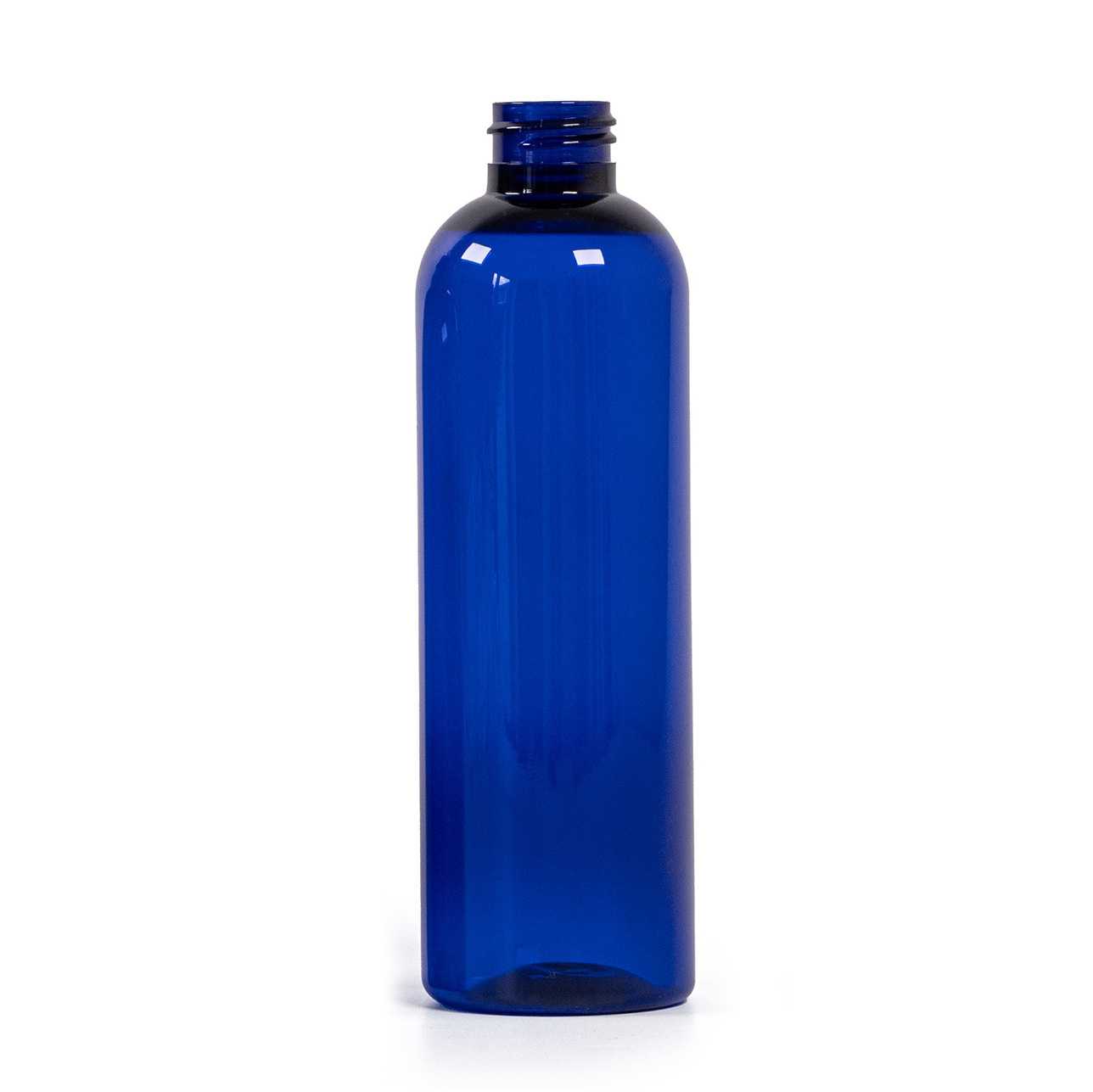
Plastic bottle, blue, 24/410, without cap, 250 ml
Pack size200 ml250 ml
This is a 250 ml blue PET plastic bottle with a 24/410 neck thread and no closure. It is a practical base for filling liquid and semi-liquid products – tonics, body lotions, shampoos, shower gels, micellar waters,… full description
Lowest price in the last 30 days: €0.56
Total for 1 pcs: €0.56
Product description
This is a 250 ml blue PET plastic bottle with a 24/410 neck thread and no closure. It is a practical base for filling liquid and semi-liquid products – tonics, body lotions, shampoos, shower gels, micellar waters, hydrosols, and household cleaners. The bottle is lightweight and shatterproof, making it suitable for products used in the shower, carried in a bag, or shipped to customers.
The packaging is suitable for cosmetic products and carries a certification for direct food contact. It is therefore also suitable for homemade syrups, herbal infusions, and oil macerations intended for kitchen use.
What the bottle is suitable for
- Tonics, hydrosols and micellar waters – thin water-based products dispense well from the bottle using a spray pump or a disc-top cap.
- Body lotions and light emulsions – thinner emulsions are dispensed with a pump, thicker ones with a flip-top cap by squeezing the bottle.
- Shampoos, shower gels and liquid soaps – rinse-off products for the shower where shatterproofness and low pack weight are valued.
- Hair and facial rinses – thin formulations containing vinegar or citric acid.
- Household cleaners – liquid formulations for surfaces and everyday cleaning.
- Food products – homemade syrups, infusions and oils for kitchen use, thanks to the food-contact certification.
The 250 ml volume is suitable for everyday-use products that will be consumed within a few weeks. For serums and concentrated oil blends, it is more practical to use smaller packaging so the contents can be used up after opening.
Nominal and total volume
When filling, it is useful to distinguish between two figures. Nominal volume is the volume for which the bottle is designed under normal filling conditions and which is stated on the label. Total brim-full volume is the physical capacity of the bottle up to the neck. The difference between them serves as clearance for the dip tube and valve of the pump or sprayer, and also as expansion space for the contents during temperature changes. The bottle should therefore be filled to the nominal volume, not to the brim.
Choosing a closure
The bottle is supplied without a closure. It is compatible with closures of the same neck type as listed in the specifications, and ready-made bottle + closure combinations are available in the Handymade range. For a custom combination, we recommend verifying leak-tightness and dispensing performance with the specific formulation beforehand. A thick emulsion behaves differently from a thin tonic, and a pump with a short dip tube may not draw the contents all the way to the bottom.
Before committing to a closure, prepare a test sample of the formulation at its target viscosity and try dispensing directly from the bottle. Thin water-based products require a spray pump or disc-top cap; thicker emulsions require a lotion pump or a flip-top cap through which the contents are squeezed out by pressing the bottle.
What to know before filling
Bottle preparation. Before first use, rinse the bottle with clean water, disinfect it with isopropyl alcohol or ethanol, and leave it to dry completely with the neck facing down. Residual moisture inside the packaging may dilute the preservative system and increase the risk of microbial growth in the finished product.
Content temperature. PET is not suitable for hot filling. Allow emulsions and gels to cool to room temperature before filling; otherwise the bottle may deform, or the walls may collapse inward as the contents cool.
Essential oils and solvents. PET behaves stably at typical cosmetic-use levels of essential oils and fragrance compounds. However, concentrated essential oils, neat solvents, or aggressive chemicals may stress the material over time. Glass is more suitable for such contents. For unusual formulations, compatibility should be verified on the finished product.
Light. Blue PET filters part of the light spectrum but does not replace the protection of dark glass. Products with light-sensitive ingredients, such as vitamin C or unstable oils, should be stored away from direct sunlight or enclosed in an outer packaging.
Reuse. The bottle can be reused after thorough washing and disinfection, but is recommended for the same type of contents only. If visible cloudiness, scratching, or a persistent odour is present, the packaging should be replaced.
Labelling and recycling. The cylindrical shape of the bottle makes it easy to apply labels without wrinkling. Label dimensions are listed in the specifications. PET material should be placed in plastic recycling after use.
A PET bottle is not suitable for neat essential oils, concentrated fragrance compounds, or solvents. For such contents, opt for glass packaging instead.
Frequently asked questions
Parameters
- Product color
- Blue
- Country of origin
- European Union
- Nominal capacity
- 250
- Diameter
- 50 mm
- Thread type
- GL24
- Height
- 164 mm
Product documentation
Verified by customers.
No reviews yet.
Only customers with a delivered order can write reviews.