


Closures DIN20
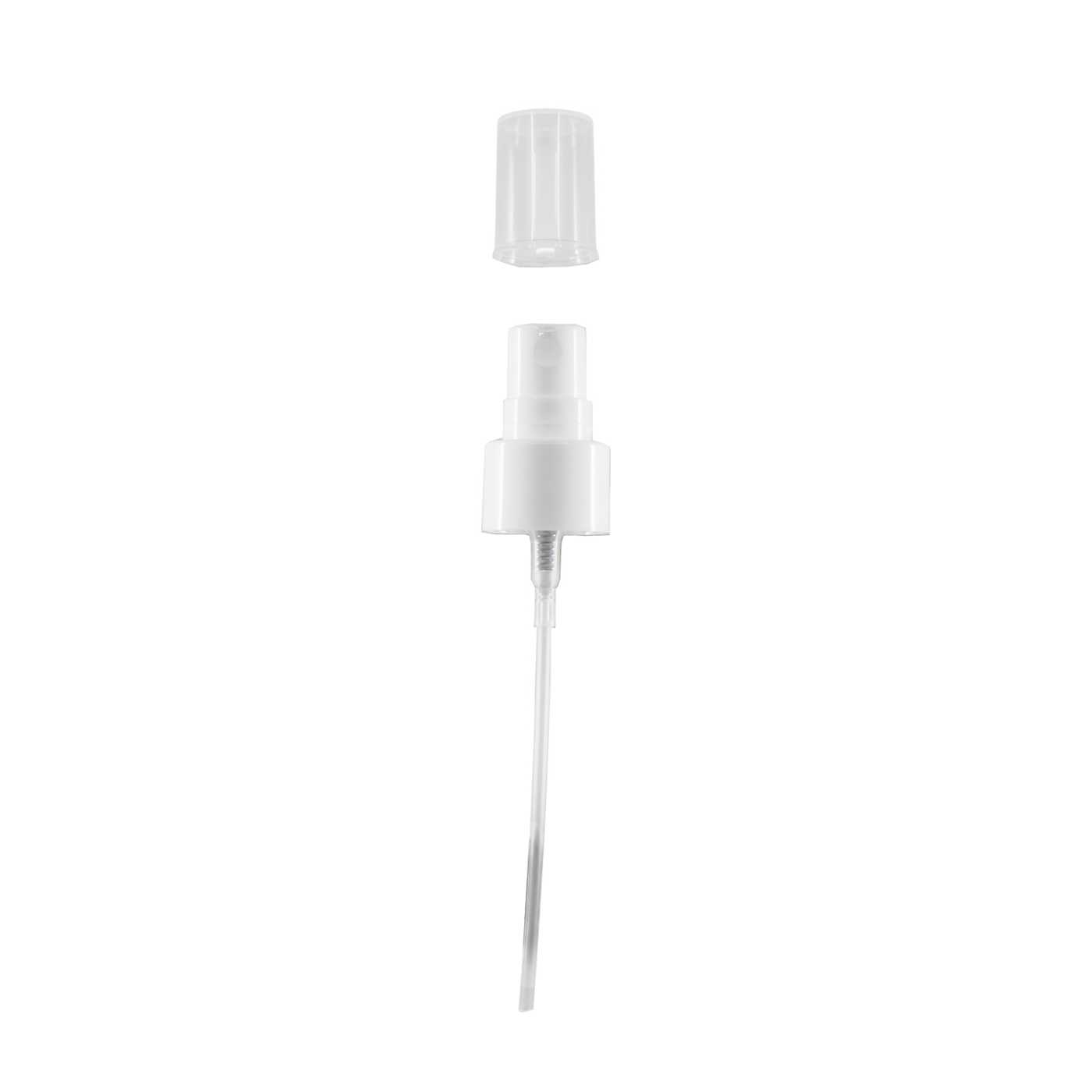
Plastic fine mist sprayer, 20/410
Plastic spray pump, sprayer, 20/410 Mechanical spray pump with a 20/410 neck finish turns any bottle with the same neck into a sprayer for fine distribution of liquid contents. full description
Lowest price in the last 30 days: €0.41
Product description
Plastic spray pump, sprayer, 20/410
Mechanical spray pump with a 20/410 neck finish turns any bottle with the same neck into a sprayer for fine distribution of liquid contents. It is suitable wherever a product needs to be applied evenly, in small doses and without hand contact: on facial tonics and hydrolats, refreshing mists, light hair sprays, hand sanitising solutions, or room and fabric fragrances.
The pump is suitable for use with cosmetic products; the declaration of suitability can be found in the product parameters. In addition to cosmetic grade, it also meets technical quality standards, so it can be used for cleaning solutions, air fresheners, or auxiliary preparations in a workshop that are not intended for skin contact.
Key benefits
- Fine and even dose – one press releases approximately 0.25 ml. This amount spreads into a fine mist on the face or in hair without running, and one to two presses is sufficient for a tonic.
- Hygienic dispensing – the contents do not come into contact with fingers and the bottle remains closed during use, helping to protect the product from contamination.
- Standard 20/410 neck finish – one of the most common neck types for small bottles, so the pump can be combined with a wide range of glass and plastic bottles with the same neck.
- Lightweight and durable – the plastic construction does not add weight to travel packaging and is more resistant to drops than glass.
- Neutral white – looks good on both clear and coloured bottles and does not compete with the label.
Use in formulation
The pump works correctly only with liquid, low-viscosity contents. Aqueous solutions, hydrolats, tonics, alcoholic and hydroalcoholic sprays, light hair waters, or microemulsions with low viscosity pass through the nozzle without problems. Thick emulsions, gels, more viscous oils, or preparations with undissolved particles (exfoliating beads, sedimenting powders) will clog the nozzle or produce a stream instead of a mist. If you want to spray a thickened preparation, reduce the concentration of the thickener and verify its behaviour in the pump.
For preparations containing essential oils, fragrance compositions, or a higher proportion of alcohol, we recommend carrying out a test with a single unit before filling a larger batch. Leave the preparation in the assembled pump for several weeks and check whether the plastic becomes cloudy or soft, whether the seal holds, and whether the fragrance changes. Plastics are more sensitive to concentrated essential oils and certain solvents than glass, and this applies to the dip tube and the internal parts of the pump as well.
The dip tube should reach almost to the bottom of the bottle but should not rest against it. If it is too long for the chosen bottle, trim it with a sharp knife using a straight cut — an angled cut reduces suction performance. With a short tube, an unused amount of product will remain at the bottom.
Bottles with a 20/410 neck finish and ready-made bottle and pump sets are available in the Handymade range. When combining packaging yourself, we recommend verifying the seal and the behaviour of the packaging with your specific formulation.
Suitable for products such as
- Facial tonics and hydrolats – a fine mist applied directly to the face, without a cotton pad and without waste.
- Refreshing and setting mists – aqueous or water-glycerin sprays with low viscosity.
- Hair sprays – light leave-in conditioners, herbal infusions, detangling waters.
- Hand sanitising sprays – alcoholic solutions, for which it is advisable to verify plastic resistance through a longer compatibility test.
- Room and fabric fragrances – hydroalcoholic bases with a fragrance composition and solubiliser.
- Auxiliary solutions in production – alcohol for removing bubbles from the surface of soap, water for moistening when working with pigments, cleaning solutions for tools.
Good to know
Before first use, rinse the pump with clean water or alcohol, allow it to dry, and spray it empty several times. A new mechanism typically requires a few presses before the dip tube fills and begins dispensing a full dose. The same applies after each refill.
Fill the bottle only to nominal volume, not to the brim. The pump occupies part of the space in the neck when screwed on, and the contents need room to expand. An overfilled bottle will overflow when the pump is screwed on and the pump will seal less effectively.
For reuse, disassemble the pump into its accessible parts, rinse with warm water — and for oily residues also with a dilute solution of dish soap — then with clean water, and allow to dry completely. Dried residue in the nozzle is the most common cause of uneven spraying. If you change the type of contents, for example from fragranced to unfragranced, be aware that the scent cannot be fully removed from the plastic.
Do not store filled bottles with the pump on their side or upside down, especially with alcoholic preparations. The mechanism is not designed for permanent exposure to liquid pressure and may leak if stored lying down for longer periods. For travel, wrap the bottle in a bag or use a protective cap if one is included in the set.
Frequently asked questions
Parameters
Product documentation
- PDSProduct Data Sheet
- PDF ↓
Verified by customers.
No reviews yet.
Only customers with a delivered order can write reviews.