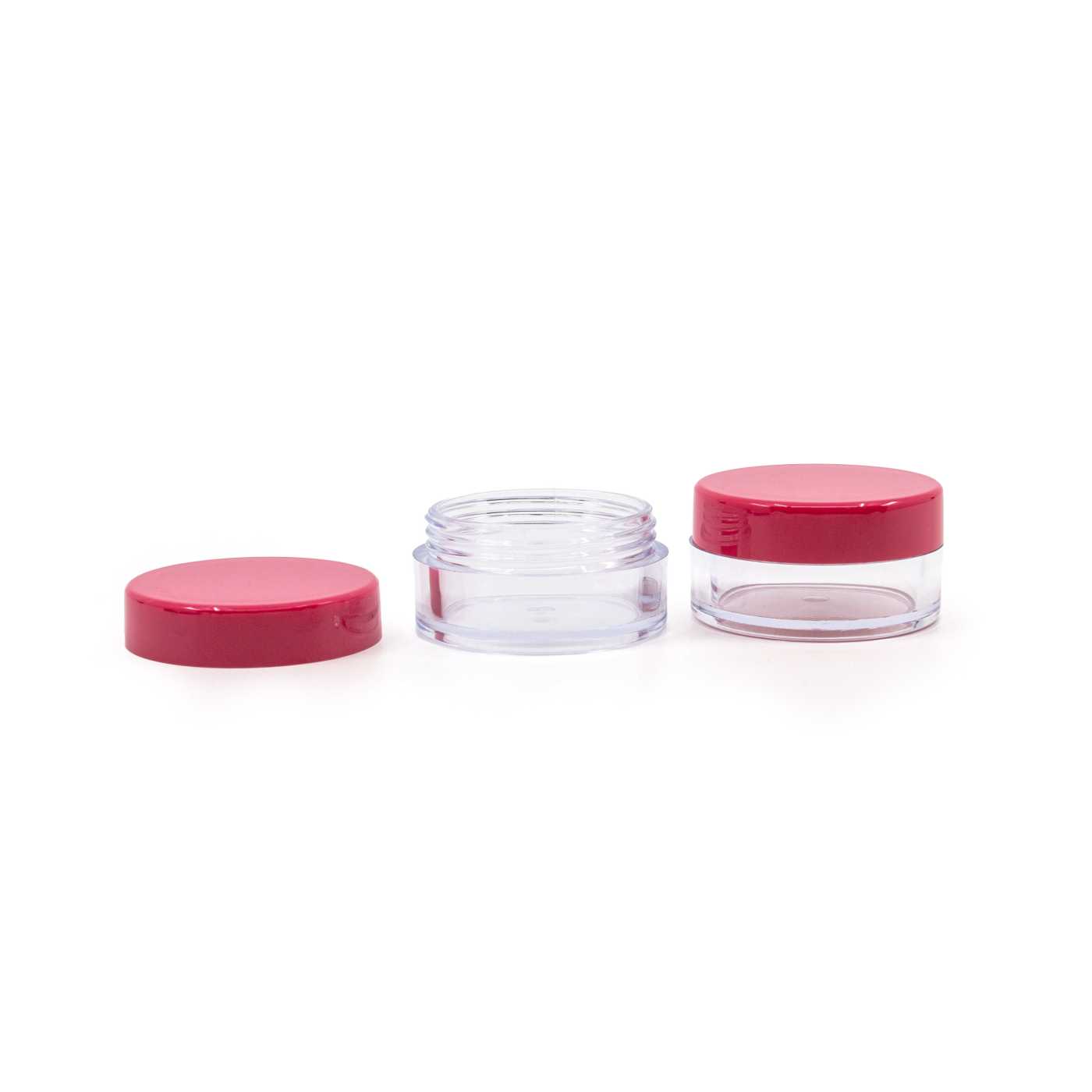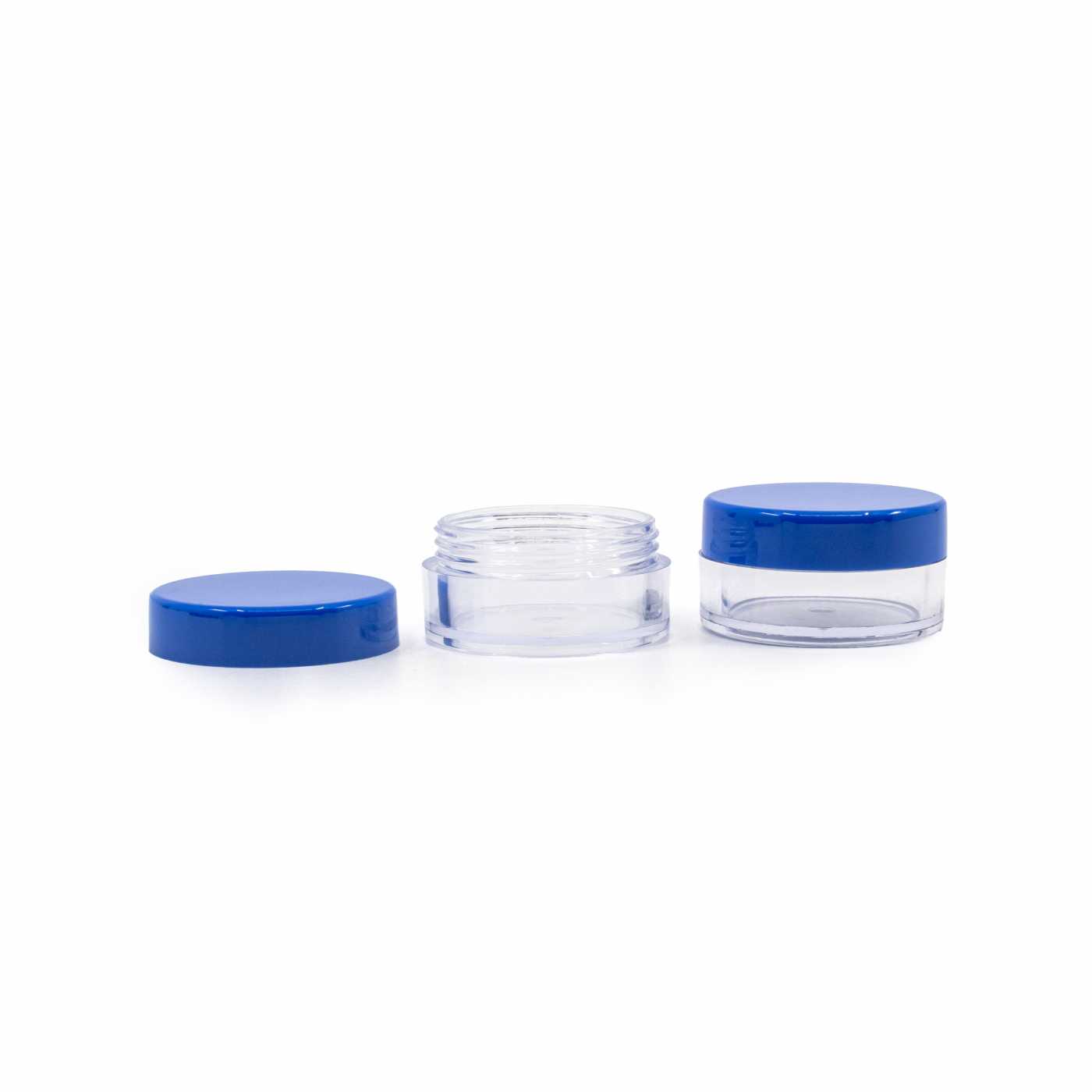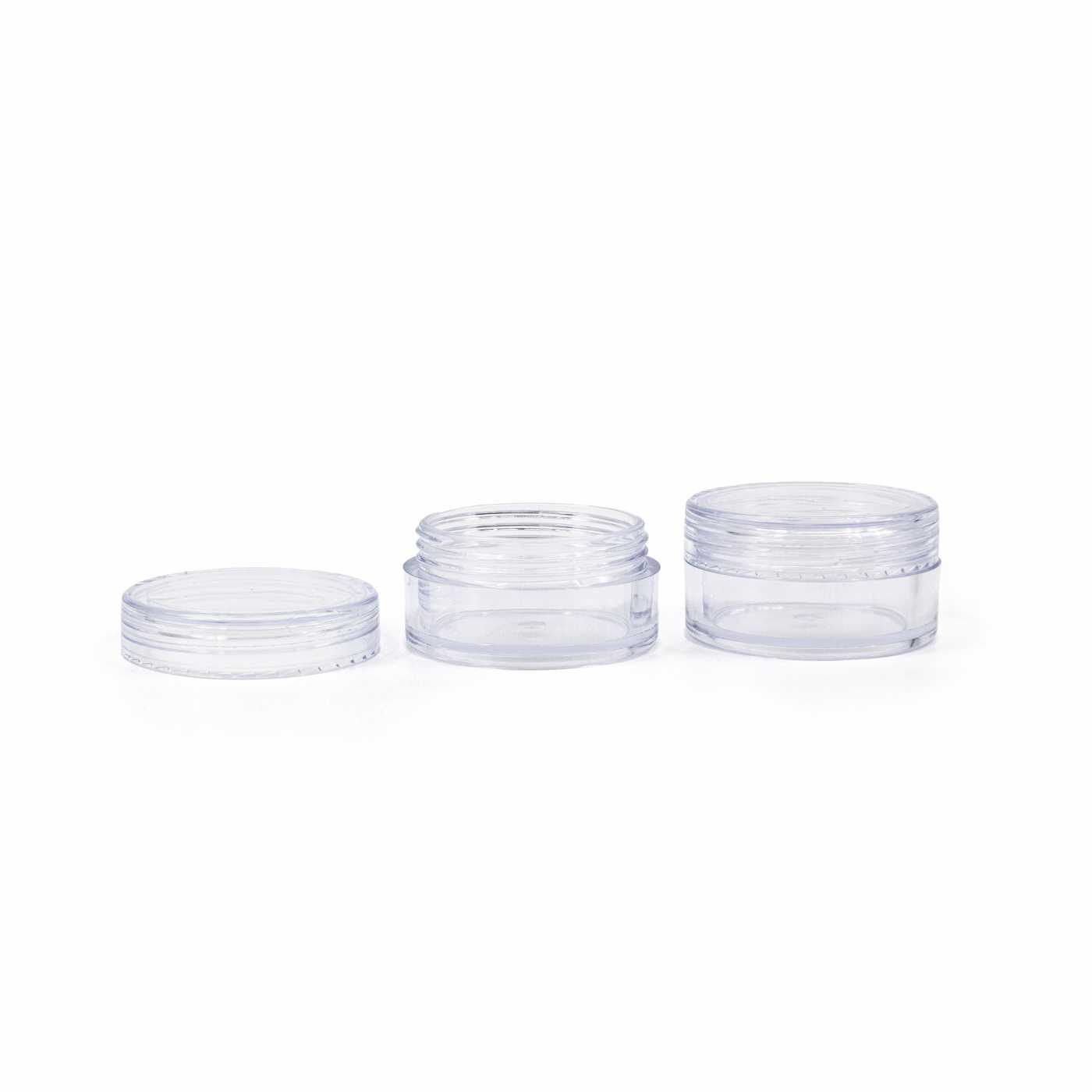
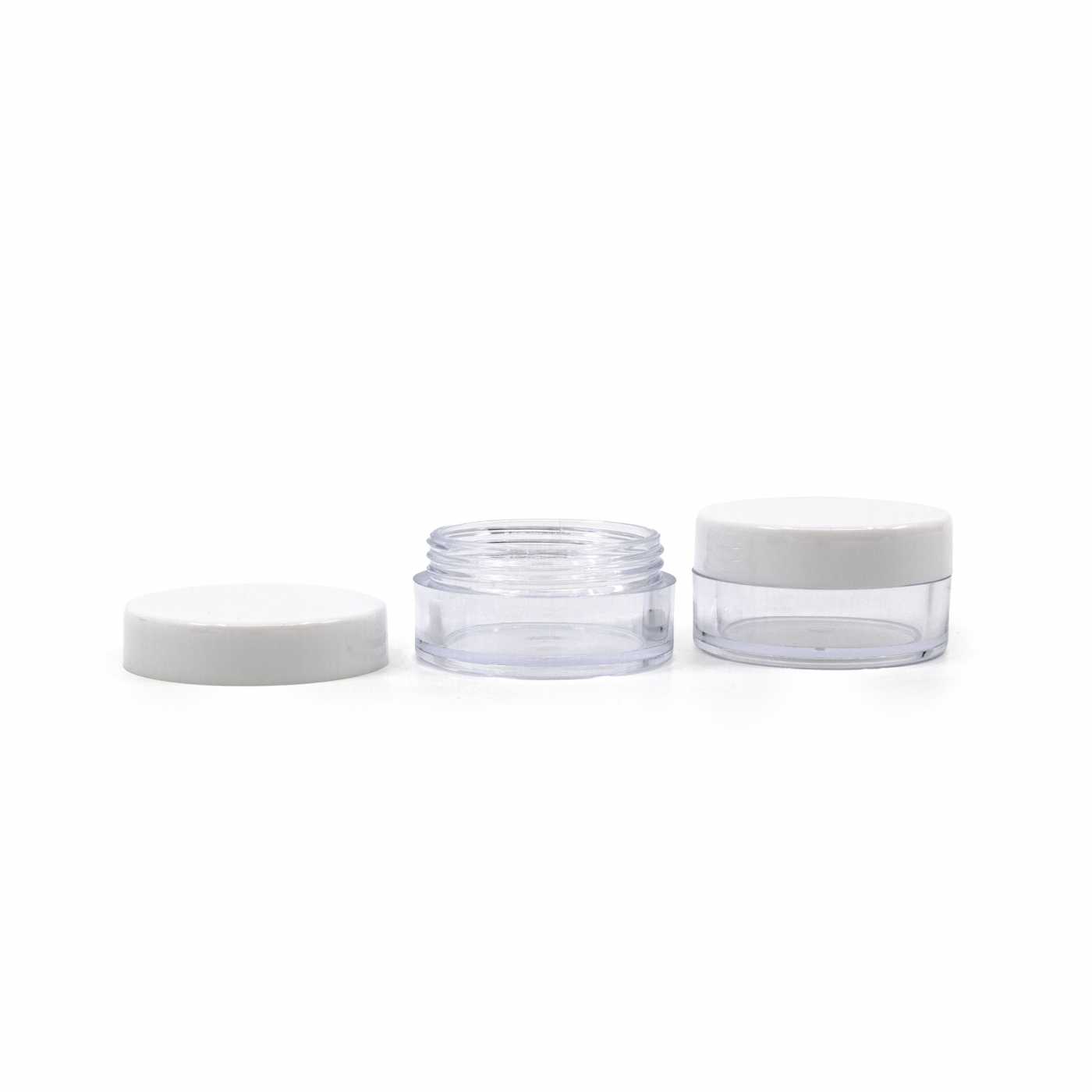
Clear Plastic Jar, White Lid, 10 ml
Pre-order€0.47

PLASTIC JARS
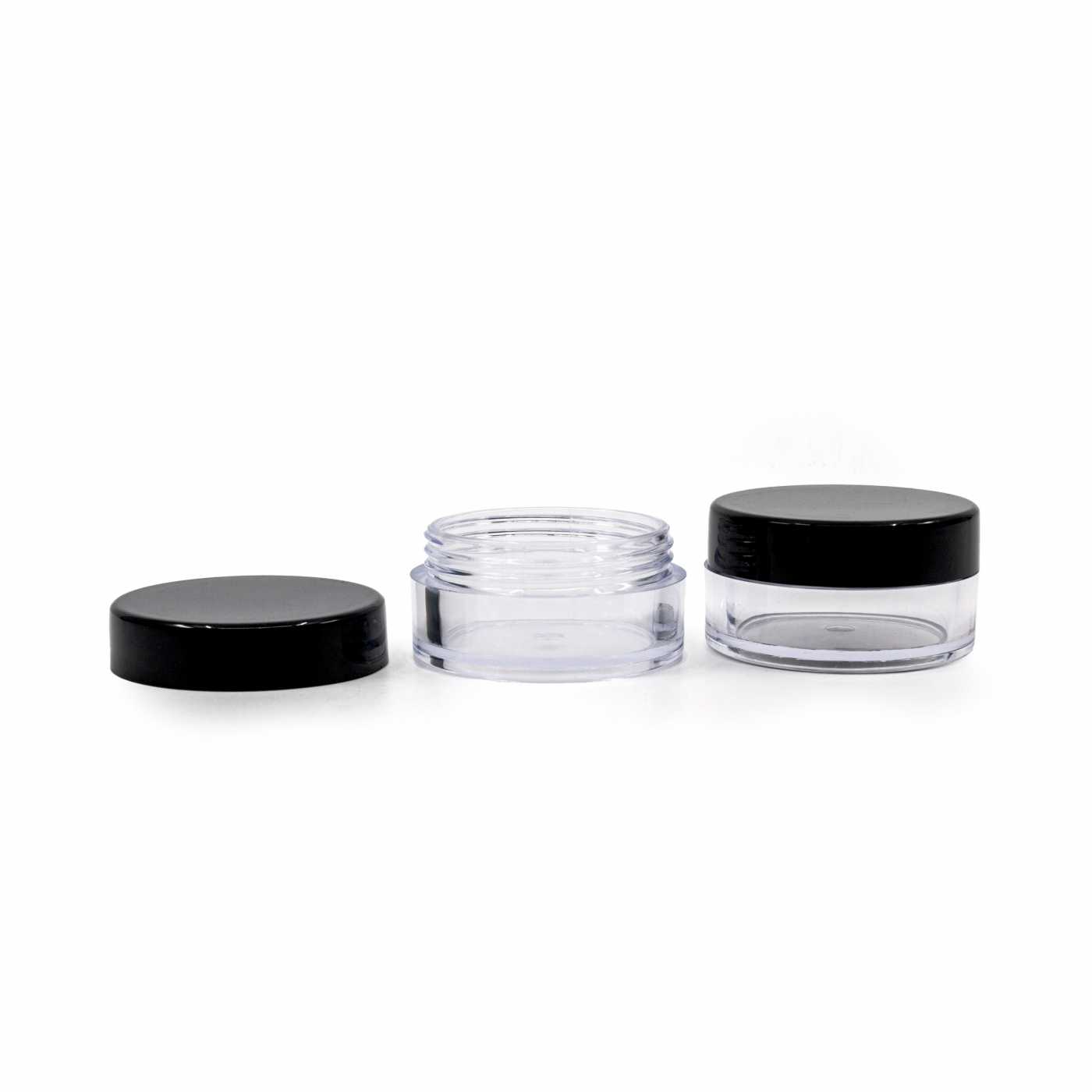
This 10 ml plastic jar with a black screw lid is designed for small quantities of cosmetics: samples of creams and balms, testers, solid perfumes, lip balms, eye creams and concentrated products that are used in small… full description
Lowest price in the last 30 days: €0.47
Save €0.51 with this set
Total for 1 pcs: €0.47
Quantities add up across all combinations of this bottle.
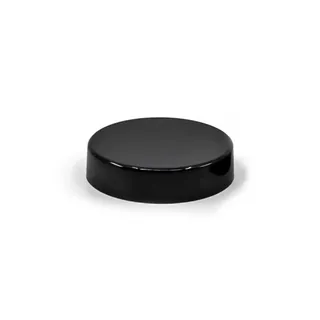
This 10 ml plastic jar with a black screw lid is designed for small quantities of cosmetics: samples of creams and balms, testers, solid perfumes, lip balms, eye creams and concentrated products that are used in small doses. The clear jar shows the colour and texture of the contents, while the black lid closes it and helps to distinguish, for example, a range of samples or shades.
The set is declared suitable for contact with cosmetic products, and the declaration of conformity is available with the product. The set is not intended for food.
Both the jar and the lid are made of polystyrene. It is a rigid, clear plastic with an appearance close to glass, but it may crack or chip on impact or when dropped on a hard floor. Treat it as fragile packaging when filling and handling it. Compared with glass it is considerably lighter, which is useful when sending out samples.
Undiluted essential oils, fragrance compositions with a high proportion of terpenes, and solvents such as acetone or limonene can attack polystyrene. The surface turns white, becomes rough or develops tiny cracks. Balms and solid perfumes in which the fragrance component is diluted in oil and wax are usually trouble-free. We recommend testing the behaviour of the packaging with your specific formulation on one piece and leaving it to stand for several days.
Polystyrene does not tolerate high temperatures. Let the melted oil and wax blend cool slightly before pouring, and never pour it into the jar directly from a boiling water bath. The packaging could become deformed or lose its clear appearance.
The nominal volume is the volume the jar is designed for under normal filling. The total brimful volume, that is the physical volume up to the neck, is slightly larger and you will find it in the parameters. The difference is a reserve for the lid and for the expansion of the contents when the temperature changes. Fill up to the nominal volume so that the contents do not touch the lid when it is screwed on and so that the balm does not become deformed after solidifying.
Soft and creamy products are filled with a spatula or a small scraper and the surface is levelled. Pour oil and wax balms in a thin stream so that no dip forms on the surface after solidifying. Leave the jar to set with the top open and screw on the lid only after it has cooled completely, otherwise moisture will condense on its inner side.
Fill creams and gels with a water phase only after the emulsion has cooled, and always with a preservative. The small volume and repeated scooping with a finger increase the risk of contamination, so a cream in a jar needs stricter preservation than a product in packaging with a pump.
Before the first filling, wash the jar and the lid, disinfect them with ethanol or isopropyl alcohol and leave them to dry completely. Do not leave the disinfectant standing in the jar; it is enough to wipe it out or spray it briefly.
The lid screws onto the thread of the jar and holds the contents during normal handling. Before sending out filled samples, check that the lid is tightened and, with more liquid products, turn the packaging upside down as a test. You will find further lids for the same neck type and ready-made sets of a jar with a lid in the Handymade range. If you combine parts yourself, check the tightness and the behaviour of the packaging with your specific formulation.
After washing, the jar can be reused as long as it is not scratched, cloudy or cracked. Store it in a dry and clean environment.