


GLASS JARS
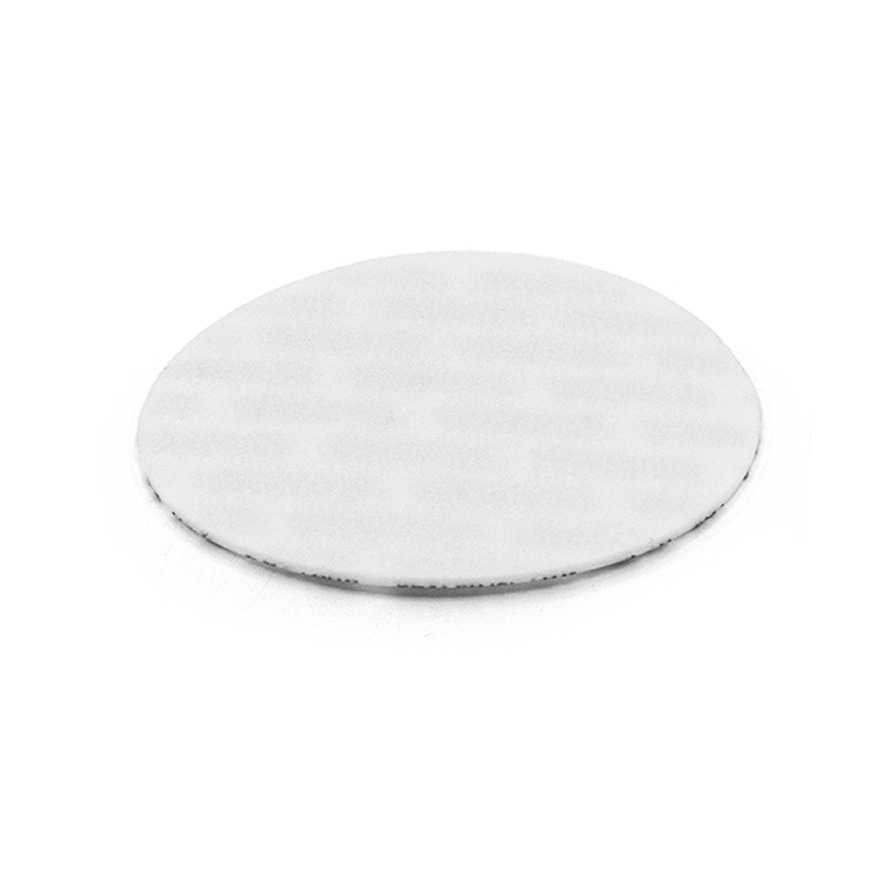
Pressure Sensitive Seals Cap Liners, 48 mm
Pressure-sensitive sealing liners for jars are single-use sealing discs that are placed inside the jar lid and, when screwed on, bond to the rim of the neck . full description
Lowest price in the last 30 days: €0.09
Total for 1 pcs: €0.09
Product description
Pressure-sensitive sealing liners for jars are single-use sealing discs that are placed inside the jar lid and, when screwed on, bond to the rim of the neck. After the first opening, the liner remains on the jar and the customer peels it off, making it immediately clear that the product has not been opened before. This gives creams, balms and body butters tamper-evident protection without any equipment, whether you pack at home or in a small production facility.
The liners are designed for cosmetic packaging and are compatible with jars and lids with necks of the same diameter.
How the sealing liner works
One side of the liner has a pressure-sensitive adhesive layer. The liner is placed inside the lid with the adhesive side facing the neck. When the lid is screwed onto the filled jar, the adhesive is pressed against the rim of the neck and gradually bonds to it. When the lid is unscrewed, the lid comes off, but the liner remains adhered to the jar as a thin membrane that needs to be peeled off.
The seal requires no heat, induction device or foil with an aluminium layer. It works purely mechanically, by pressure when closing. It is therefore suitable for small production facilities and home production where packing is done by hand in batches of a few dozen units.
What the liner brings to your packaging
- Visible tamper evidence – the customer peels the membrane on first opening, which clearly signals that the product has not been opened.
- More hygienic packaging – the cream surface is not in contact with the inside of the lid during storage and transport, and the contents cannot reach the thread.
- Cleaner product appearance – on opening, the surface of the contents is smooth and untouched, which is an important first impression for creams and butters.
- Easy to use – no equipment needed; simply place in the lid and screw on; the process can be handled by anyone on the packing line.
- One piece per jar – liners are sold individually, so you buy exactly as many as the number of jars you are filling.
Packing procedure
Turn the jar lid upside down and place the liner in the centre with the adhesive side facing up, i.e. towards the neck when screwed on. Fill the jar so that the contents do not reach the very rim of the neck and the rim remains clean and dry. Then screw on the lid with normal force. There is no need to overtighten; what matters is even pressure of the entire liner surface against the neck.
The pressure-sensitive adhesive bonds to the rim of the neck gradually. Leave closed jars undisturbed and unopened for several hours before dispatch. Shortly after closing, the liner may not yet hold at full strength.
For larger batches, it works well to prepare the liners in the lids in advance and fill afterwards. This avoids handling the adhesive side on already-filled jars.
Suitable for products such as
The liner holds best with contents that do not soil the rim of the neck and are not liquid:
- creams and emulsions filled into jars,
- body and facial butters, balms, ointments,
- solid deodorants and solid perfumes,
- salt and sugar scrubs,
- powder products – bath salts, clay masks in dry state, powders.
With oil-based products and anhydrous balms, make sure no oil film remains on the rim of the neck during filling. A greasy rim significantly reduces adhesion and the liner may lift with the lid on opening instead of staying on the jar.
The pressure-sensitive sealing liner is not intended for thin liquids or for hermetic sealing. It serves as proof of integrity and protection of the content surface, not as a seal against spillage when tipped over or when transporting liquid products.
Good to know
The diameter must match. The liner fits lids and jars with a neck of the same diameter as stated in the specifications. When choosing, compare it with the neck diameter of the jar you use. Lids and jars with the same neck type are available in the Handymade range. For your own combination, we recommend testing one piece and checking whether the liner remains on the jar after opening.
The rim of the neck must be smooth and even. The adhesive needs a continuous surface. On jars with an uneven, very narrow or damaged rim it will not hold evenly. It works on both glass and plastic jars, provided the rim is clean.
The liner is single-use. Once peeled off, it cannot be reused and when the jar is closed again only the lid itself provides a seal. If you refill the jars, insert a new liner.
Sanitise before filling. We recommend washing jars and lids before first use, or wiping them with ethanol or isopropyl alcohol and allowing them to dry completely. Insert the liner only into a dry lid; moisture on the adhesive reduces adhesion.
Recycling. The liner is made from polyethylene and after peeling off belongs in plastic waste.
Pressure-sensitive liner or induction seal?
Both methods provide the customer with a membrane to remove on first opening, but they differ in technology. Induction sealing uses a liner with an aluminium foil that is welded to the neck by electromagnetic heating in an induction device. The result is a firm, hermetic seal suitable also for liquids, but it requires equipment and setup according to the jar material.
The pressure-sensitive liner adheres simply by pressing when screwing on the lid. It requires no equipment, can be applied by hand and provides adequate tamper-evident protection for creams, butters and powders. It is not hermetic, however. For hand-made cosmetics in jars, the pressure liner is therefore the more practical choice; induction sealing makes sense for larger production runs and liquid products.
Frequently asked questions
Parameters
Product documentation
- PDSProduct Data Sheet
- PDF ↓
Verified by customers.
No reviews yet.
Only customers with a delivered order can write reviews.