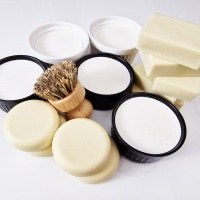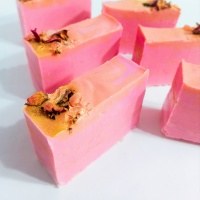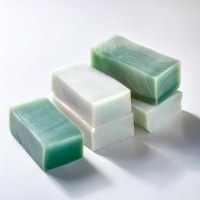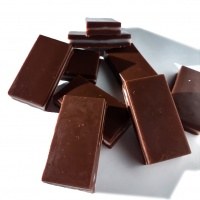
Give soap chocolates as a sweet gift — soap bases are an excellent material for preparing beautiful gifts. If you are a chocolate lover, you should not miss this tutorial for making soapy chocolate pralines with a strawberry “filling”. The production is not complicated; it is only about layering soap in combination with fragrance oils with chocolate and strawberry scents.
About this recipe
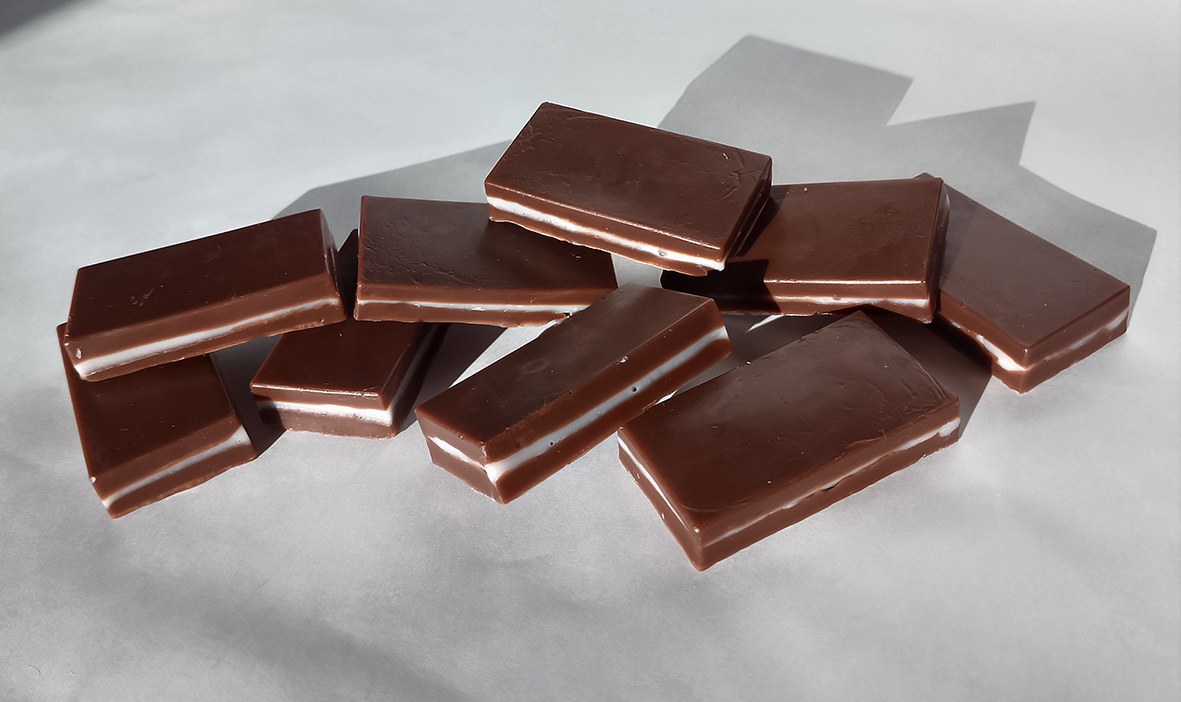
The tutorial for soap chocolates was prepared by Ivana Jačalová. It is a layered soap made from soap base — two brown chocolate layers with a light pink strawberry “filling” between them. The basis for making soap chocolates is soap bases; specifically, the soap base ZENISOAPBASE Pro-W was chosen, which is white and fast setting, so you do not have to wait long for the individual layers to harden.
The stated weights are sufficient for making 20 pieces of soap, i.e. for filling the entire specified mould. Thanks to working with soap base, the recipe is also suitable for beginners.
Main benefits
- A sweet gift
A sweet-smelling soap that looks like chocolate will delight as a small token.
- Simple to make
The production is not complicated — it is only about layering soap in combination with fragrance oils with chocolate and strawberry scents.
- Fast-setting base
ZENISOAPBASE Pro-W is white and fast setting, so you do not have to wait long for the individual layers to harden.
- Non-sweating base
The base is non-sweating, so you do not have to fear that dew drops will appear on your soap over time.
- Scent and colour up to you
You can choose the scent and colour yourself — replace the strawberry scent with peppermint, for example, and the pink mica powder with green.
Product properties
Key ingredients in the recipe
Below we will present to you in more detail the individual ingredients for making soap chocolates. You will also learn more about their possible substitutions so that you can prepare the soap exactly according to your ideas.
ZENISOAPBASE Pro-W soap base
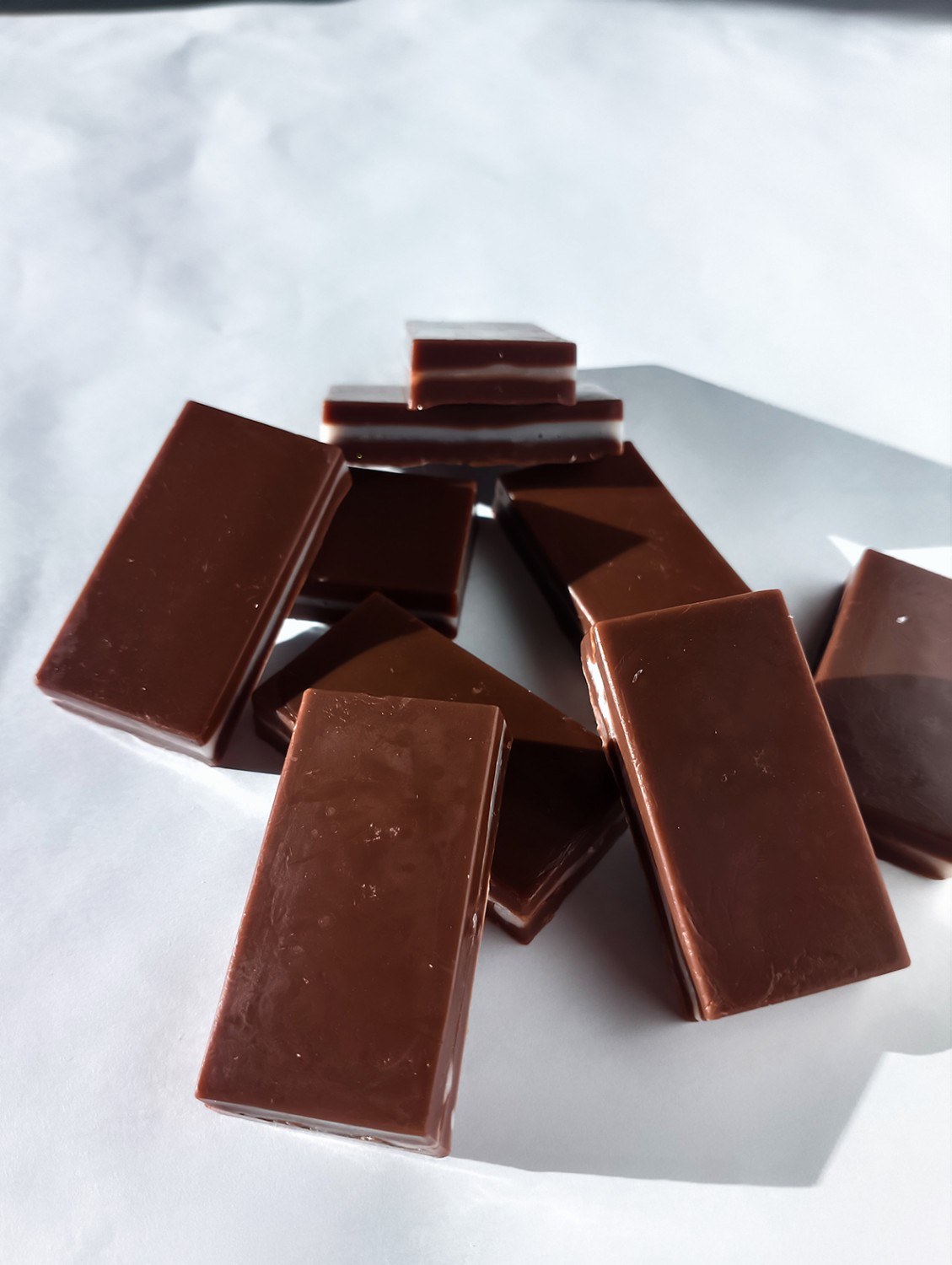
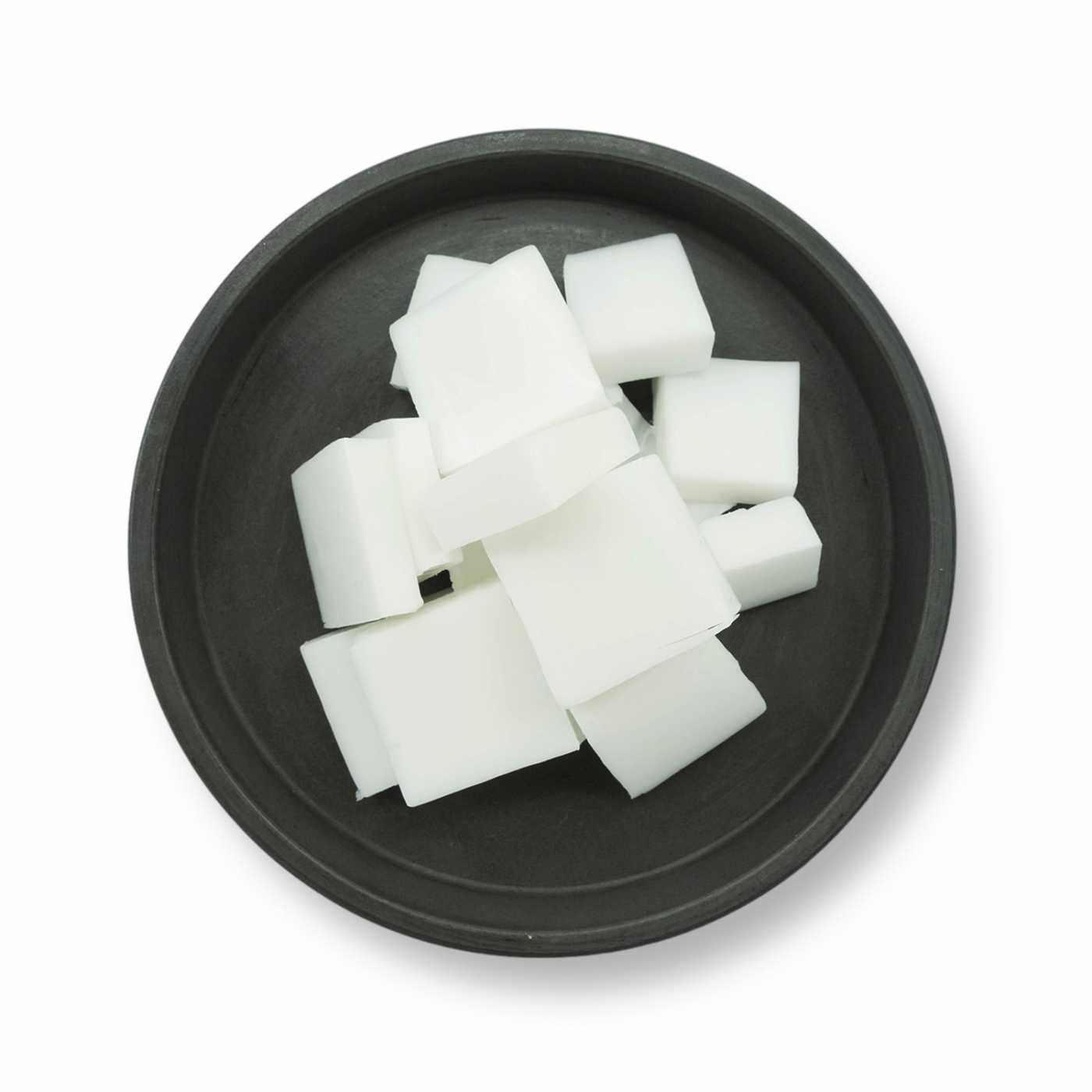
ZENISOAPBASE Pro-W is a great base suitable also for beginners, with which you will easily create soaps thanks to its faster setting. In addition, it is non-sweating, so you do not have to fear that dew drops will appear on your soap over time.
Of course, you can replace this base with any other white soap base, or combine it with a transparent base, as mentioned in the tips and tricks for reducing the amount of colourant needed. However, the chosen ZENICOLOR colourant is intended for ZENISOAPBASE soap bases and in other bases you may obtain a slightly different colour shade.
ZENICOLOR SOLO Chocolate colourant
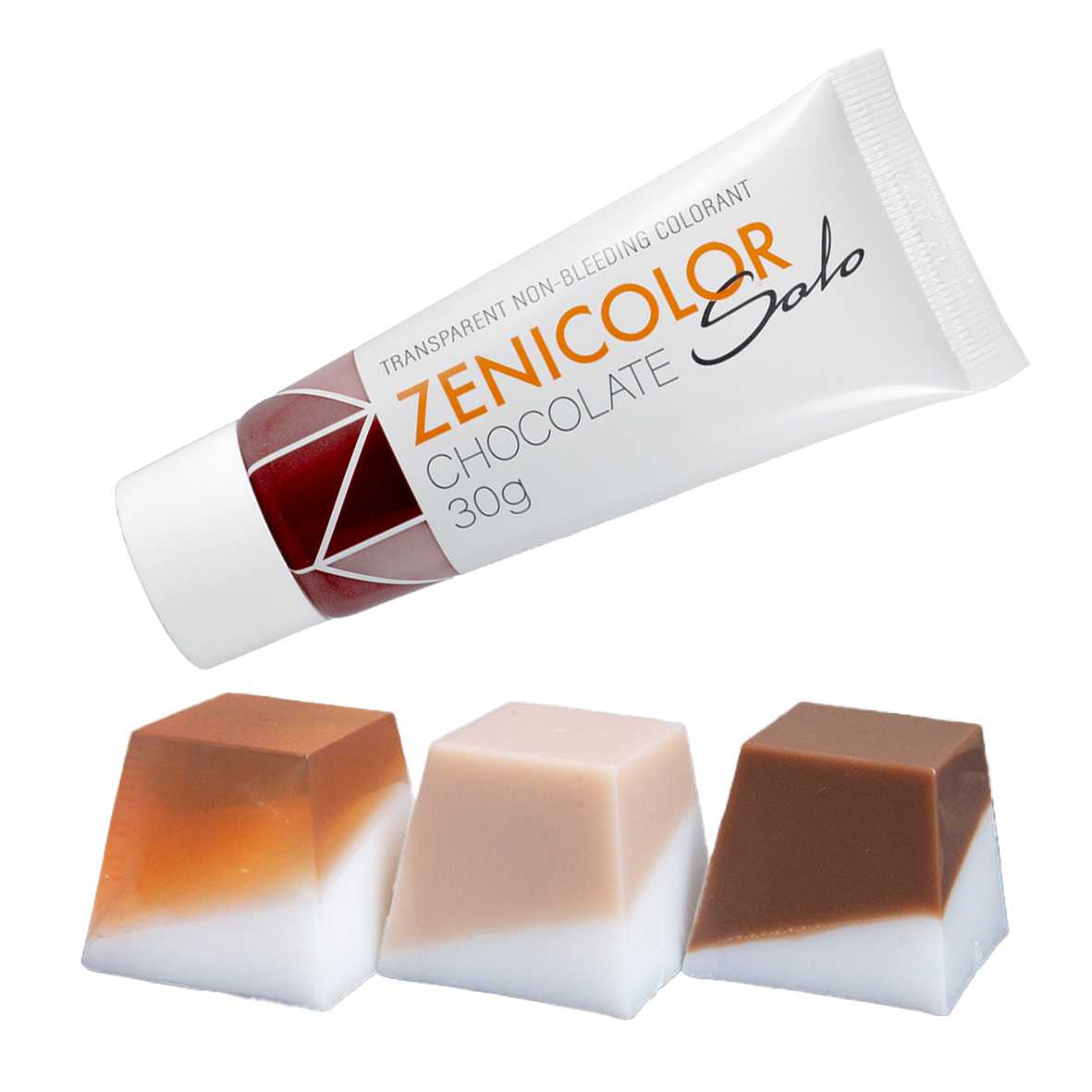
A beautiful chocolate colour is given to the soap chocolates by the ZENICOLOR SOLO colourant, which is intended to be combined with the soap base we have selected. If you want a lighter shade of soap, reduce the dose of colourant. It is not necessary to dose the colourant with gram precision — you can add it in small amounts until you achieve the desired colouring.
It is also possible to use mica powders in brown, but with a larger amount of mica powder used, the soap will shimmer slightly (mica powders are shiny and gently shimmering). You will find further shades among the ZENICOLOR colourants.
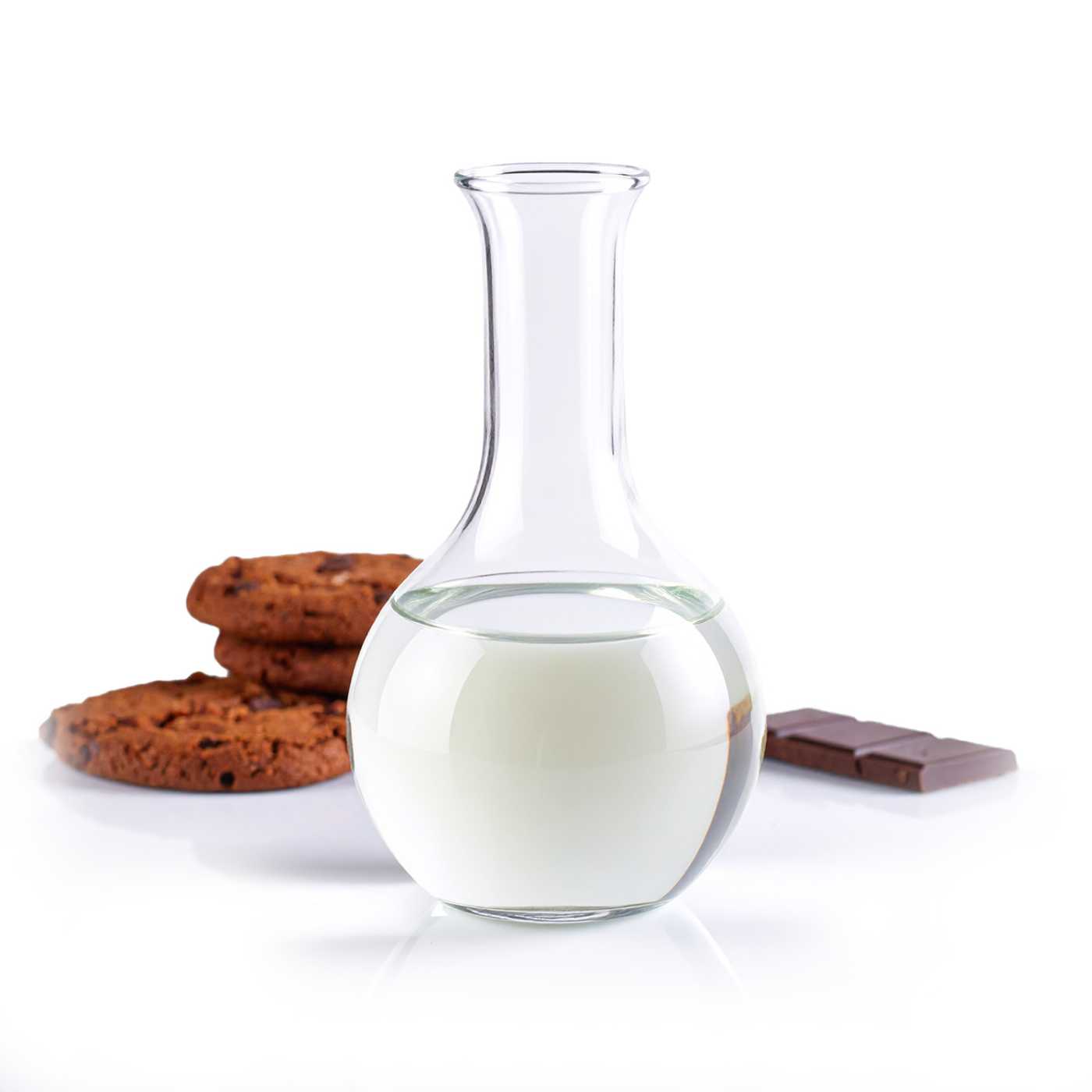
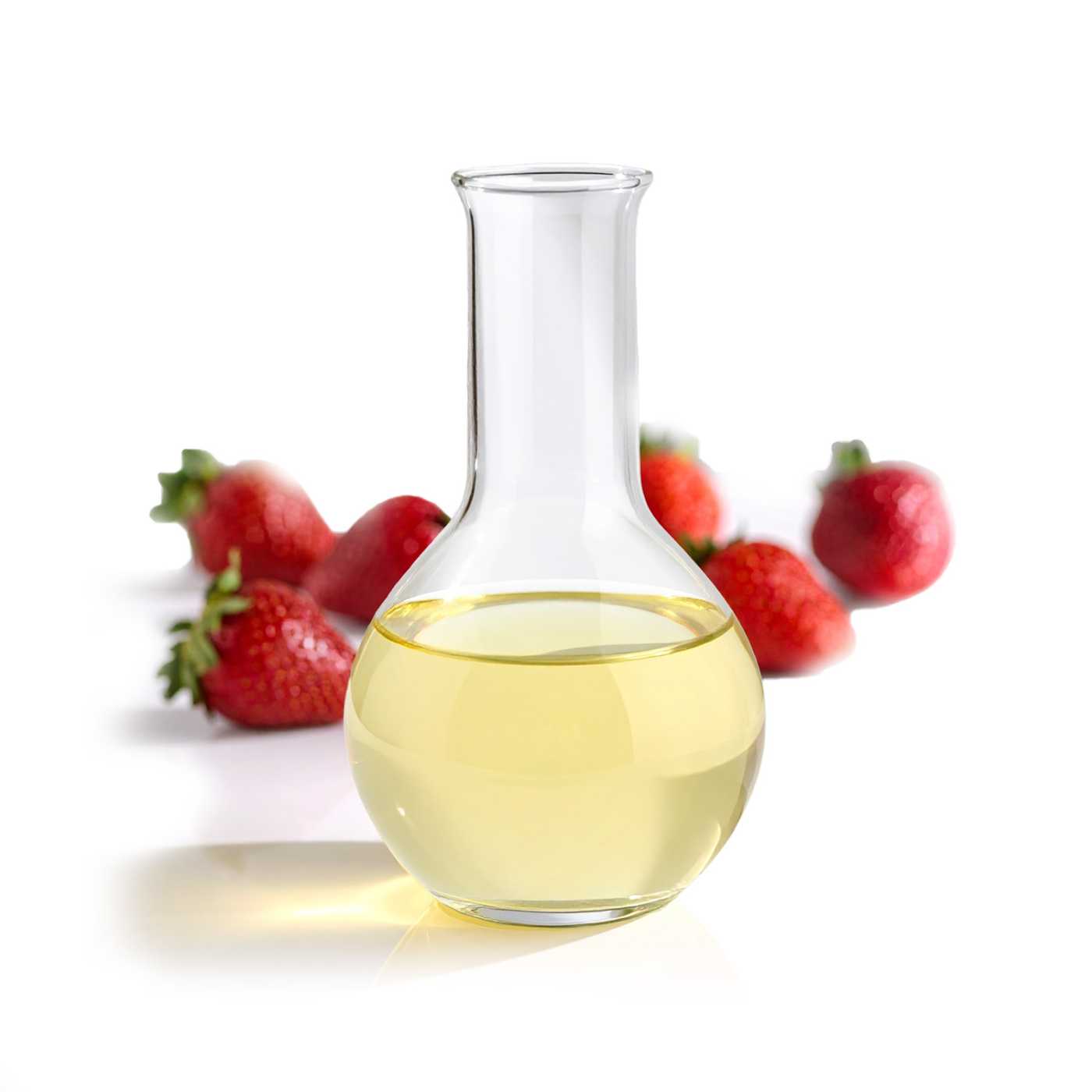
Fragrance oils — chocolate and strawberry
To achieve a chocolate and strawberry scent, fragrance oils were chosen, since essential oils with these scents cannot be obtained. For this very reason, fragrance oils are a great choice if you want a product with the scent of a certain food or fruit.
If you do not like the smell of strawberries, try peppermint essential oil as a substitute for the strawberry scent and prepare chocolate-mint soaps. In this case, replace the pink mica powder with a small amount of green mica powder. Or try another combination of scents, for example with orange essential oil.
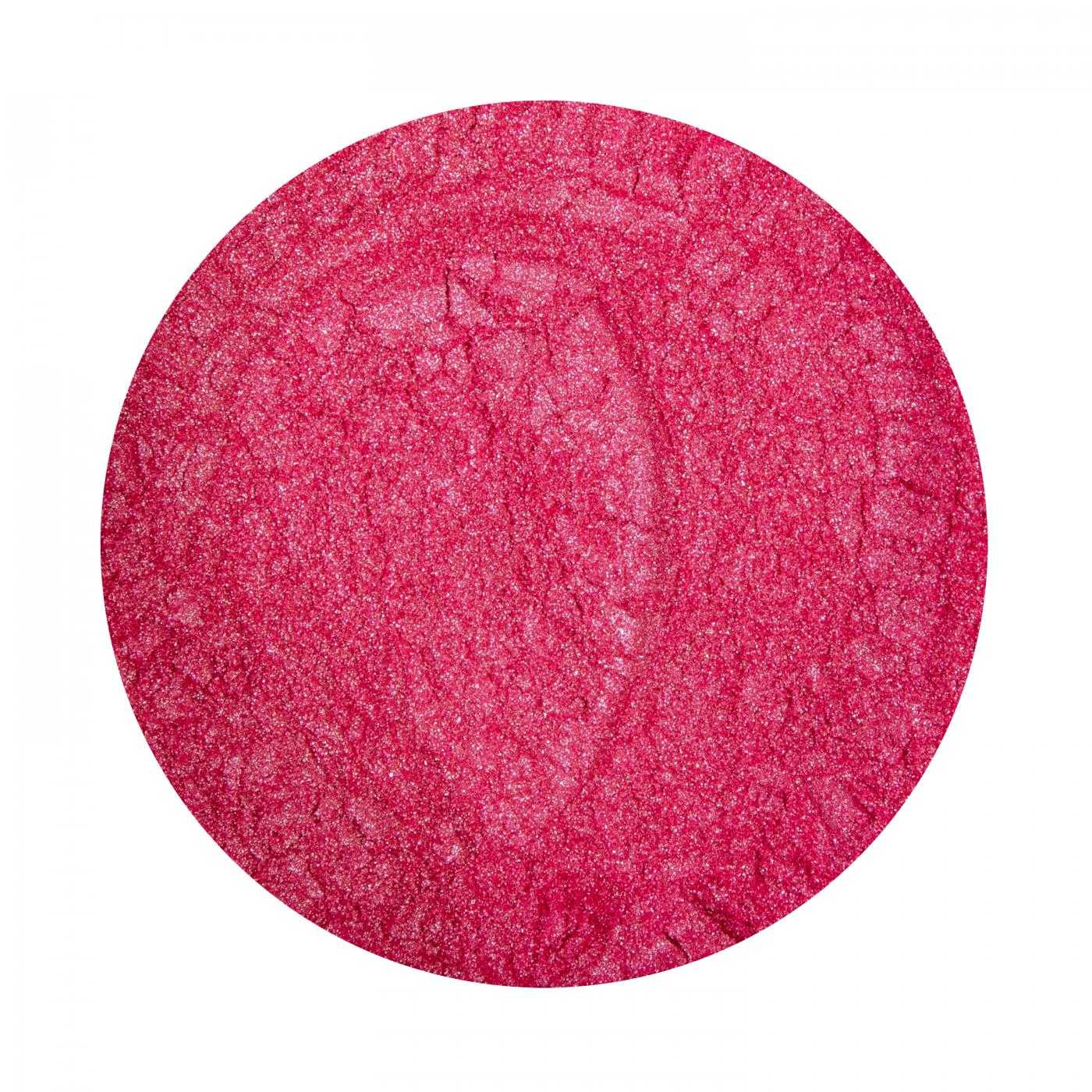
Frosty Rose Petal mica powder
The pink mica powder in the shade Frosty Rose Petal was chosen to give a light pink colour to the strawberry middle layer of the soap. However, you can also use other pink and red shades of mica powders or ZENICOLOR colourants. In any case, a very small amount is enough to achieve a light pink shade.
As we mentioned above, you can replace the strawberry fragrance oil with another scent, and at the same time you can adjust the colour of the middle layer so that it corresponds to the fragrance or essential oil you use.
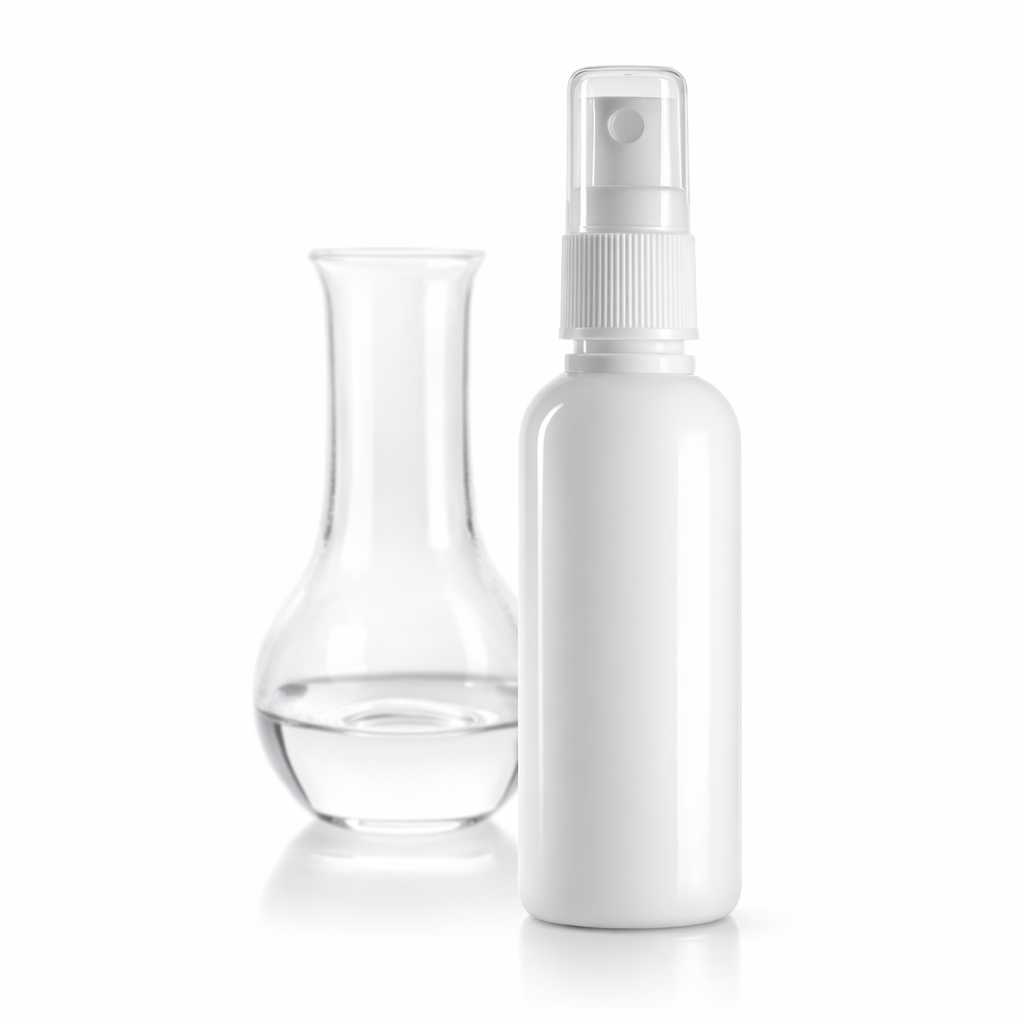
IPA — isopropyl alcohol
IPA is a bubble remover which, on still unset soap immediately after pouring into the mould, helps remove bubbles and foam, creating a smooth, uniform appearance and surface of the soap after setting.
At the same time, IPA helps bond the individual layers of soap together, so always spray the original set layer with it before pouring the next one.
Silicone mould
For making soaps from soap bases, silicone moulds are the most suitable, as they are easy to handle, resistant even to higher temperatures, available in many designs, and it is very easy to remove the finished soaps from them.
If you want a different shape of soap, choose from the wide range of silicone moulds. However, do not forget to change the amount of soap base needed in relation to the size of the cavity in the mould.
Recipe (20 pieces of soap)
The stated amounts of required soap base, colourants and fragrance are in grams and not in percentages precisely so that you maintain the correct proportion of ingredients to create the desired appearance of the soap. The weights are related to the mould we used — if you change the mould you will need different amounts of soap base, but you can keep the ratios if you do not want to change the thickness of the individual layers.
Shop the ingredients for this recipe
Untick what you already have- Soap base, ZENISOAPBASE Pro-W, white, 1 kgrecipe uses 240 gin stock€7.90
- ZENICOLOR SOLO, Melt & Pour Colourant, 30 g Chocolateuses 10 gin stock€2.59
- Chocolate Chips Fragrance Oil, 10 mlrecipe uses 1,5 gin stock€1.88
- Strawberry Fragrance Oil, 10 mlrecipe uses 0,5 gin stock€1.67
- MICA Pigment Powder, Frosty Rose Petal, 10 guses 0.1 gin stock€2.99
- IPA 99%, Bubble Remover, Spray 100 mlin stock€2.59
| Ingredient | Amount |
|---|---|
| ZENISOAPBASE Pro-W | 240 g |
| ZENICOLOR SOLO Chocolate colourant | 10 g |
| Chocolate fragrance oil | 1.5 g |
| Strawberry fragrance oil | 0.5 g |
| Frosty Rose Petal mica powder | 0.1 g |
| IPA isopropyl alcohol | as needed |
| Equipment | |
| Silicone mould, rectangles | — |
Method
- First brown layer Brown layer30 s
Into a heat-resistant container weigh 90 g of soap base. Add 5 g of brown ZENICOLOR SOLO Chocolate colourant. Heat the mixture for approx. 30 seconds in the microwave (the soap must not start to boil).
- Fragrance and pouring into the mould Brown layer
After melting, stir thoroughly so that the colourant is dispersed, add 0.75 g of chocolate fragrance oil and pour into the prepared mould. This amount should be enough for approximately the whole mould, with a layer about 2 mm thick being poured.
- Spraying with IPA Brown layer
After pouring, immediately spray with IPA (to remove bubbles) and let set.
- Pink strawberry layer Pink layer
Into a second heat-resistant container weigh 60 g of soap base and add pink mica powder (0.1 g, or as needed to achieve your desired shade). Again, heat in the microwave.
- Pouring the pink layer Pink layer
After melting, add the strawberry fragrance oil (0.5 g), stir well and pour into the mould onto the brown layer, which was sprayed with IPA just before (for better bonding of the layers). Try to achieve the thinnest possible layer while at the same time covering the entire previous layer. Immediately after pouring, spray again with IPA and let set.
- Second brown layer Brown layer
Into a heat-resistant container weigh the soap base (90 g) and the brown colourant (5 g) — these are the same amounts as in the first layer. Heat in the microwave and then add the chocolate fragrance oil (0.75 g) and stir well.
- Pouring the last layer Brown layer
Spray the set soap with IPA before pouring the brown layer, then pour the layer into each cavity in the same amounts as with the first brown layer. After pouring, spray with IPA and let set.
- Finished soaps
The set soaps are finished and ready for use.
Tips and tricks
Working with soap bases is simple and fun, but we still bring you a few pieces of advice and tips that can make soap making easier for you.
To melt the soap base, choose containers that can withstand heating in the microwave, ideally heat-resistant glass. Plastic can absorb the scents from fragrance oils. You can also melt the soap base in a water bath — it takes longer, but there is a lower risk of the soap boiling and foaming over.
If your soap has set before you poured it, you can melt the mass again in the microwave or in a water bath. Do not wash the containers from the first brown layer right away — you can weigh the soap base for the second brown layer into them and thus save yourself washing another container.
Try to spray the layers as quickly as possible after pouring the mass so that bubbles or foam do not remain on them.
If you want to save on colourants and you have a transparent base at hand, prepare a mixture of 70 % white base and 30 % transparent base. Thanks to this, you will need a slightly smaller amount of colourant, but for simplification of the procedure we used only white base in this case.
Warning
As mentioned, with home recipes you can experiment to achieve the desired properties. However, the final result can be influenced by many factors, such as humidity, temperature, quality of ingredients or their storage.
Before you use any ingredient to make a cosmetic product, get to know its properties, recommended dosage, storage conditions and safe handling. Each ingredient can have the potential to trigger an allergic reaction in sensitive individuals, so before using the product we recommend finding out whether you suffer from an allergy to any of the ingredients or to the overall product, for example by a skin test.
If you have very sensitive or very acne-prone skin, or you have other skin and health problems, we recommend consulting a medical professional before applying a new product to the skin, whether it is a homemade cosmetic product, a pure ingredient or a commercially available product.
Frequently asked questions about the recipe
Practical questions about soap chocolates — substituting the base and the scents, saving on colourant, and working with IPA.
Can the ZENISOAPBASE Pro-W soap base be replaced with another one?
Yes, you can replace it with any other white soap base, or combine it with a transparent base. However, the chosen ZENICOLOR colourant is intended for ZENISOAPBASE soap bases and in other bases you may obtain a slightly different colour shade.
How can I save on colourant?
If you have a transparent base at hand, prepare a mixture of 70 % white base and 30 % transparent base — then you will need a slightly smaller amount of colourant. For simplification of the procedure we used only white base in this case.
What should I do if the soap sets before I manage to pour it?
Simply melt the mass again in the microwave or in a water bath. For melting, choose containers that can withstand heating in the microwave, ideally heat-resistant glass — plastic can absorb the scents from fragrance oils.
What is IPA for and when should I spray it?
IPA is a bubble remover: on still unset soap immediately after pouring into the mould, it helps remove bubbles and foam, so that the surface of the soap is smooth and uniform after setting. At the same time it helps bond the individual layers, so always spray the original set layer with it as well before pouring the next one.
Can the strawberry scent be replaced with another one?
Yes. If you do not like the smell of strawberries, try peppermint essential oil and prepare chocolate-mint soaps; in that case replace the pink mica powder with a small amount of green mica powder. You can also try another combination of scents, for example with orange essential oil.
Why are the amounts given in grams and not in percentages?
So that you maintain the correct proportion of ingredients to create the desired appearance of the soap. The weights are related to the mould we used — if you change the mould you will need different amounts of soap base, but you can keep the ratios if you do not want to change the thickness of the individual layers.
Conclusion
A sweet-smelling soap that looks like chocolate will delight as a small token. And the best part is that you can choose the scent and colour yourself. We thank Ivana Jačalová for the great contribution.
You can send us your questions, experiences and tips to [email protected] and we will try to answer you as best as possible and add your tips to the articles and thus expand the necessary information. We will see you in the next blog post.
Until saponification, friends.
You will find the soap bases, ZENICOLOR colourants, mica powders and fragrance oils from this recipe in the Handymade range.