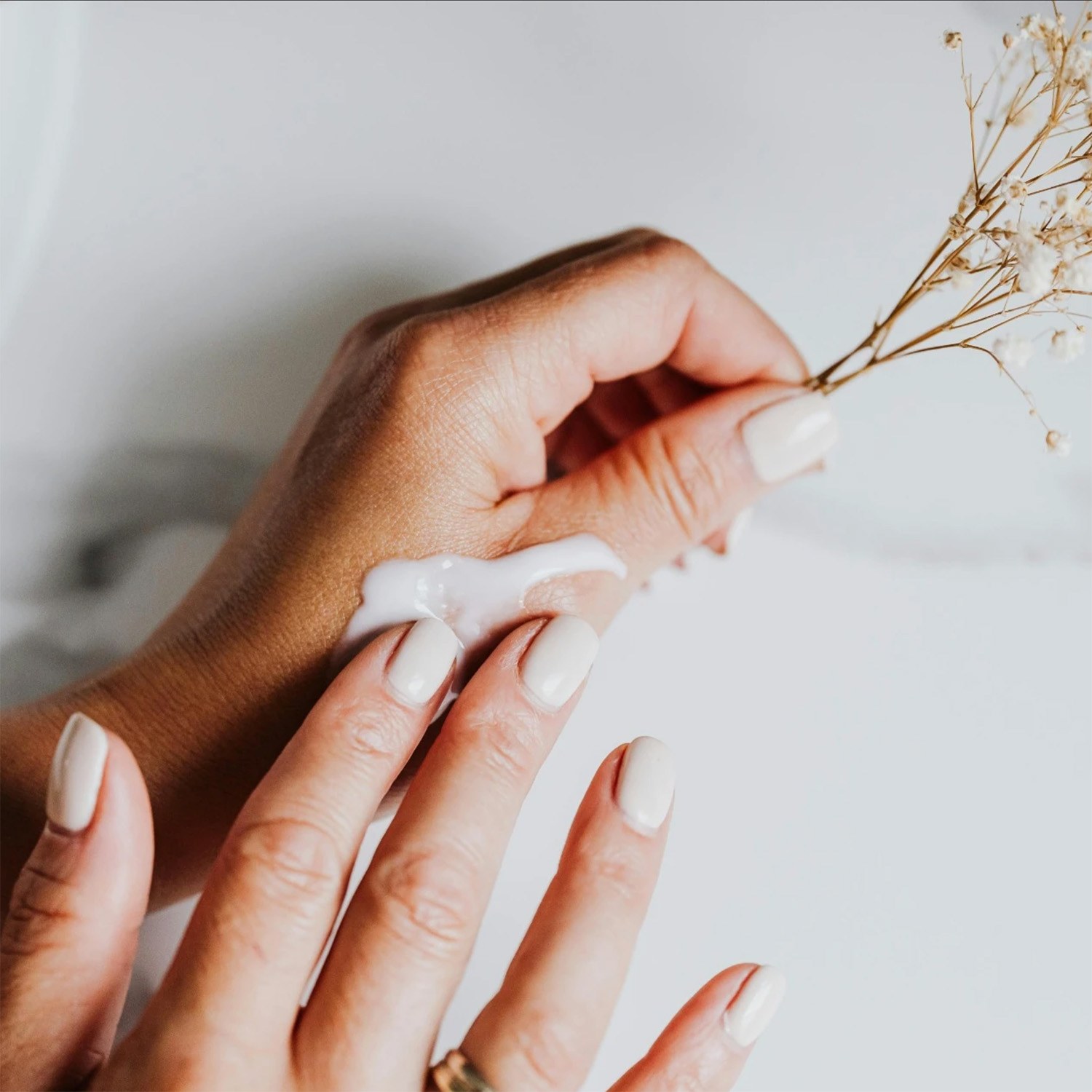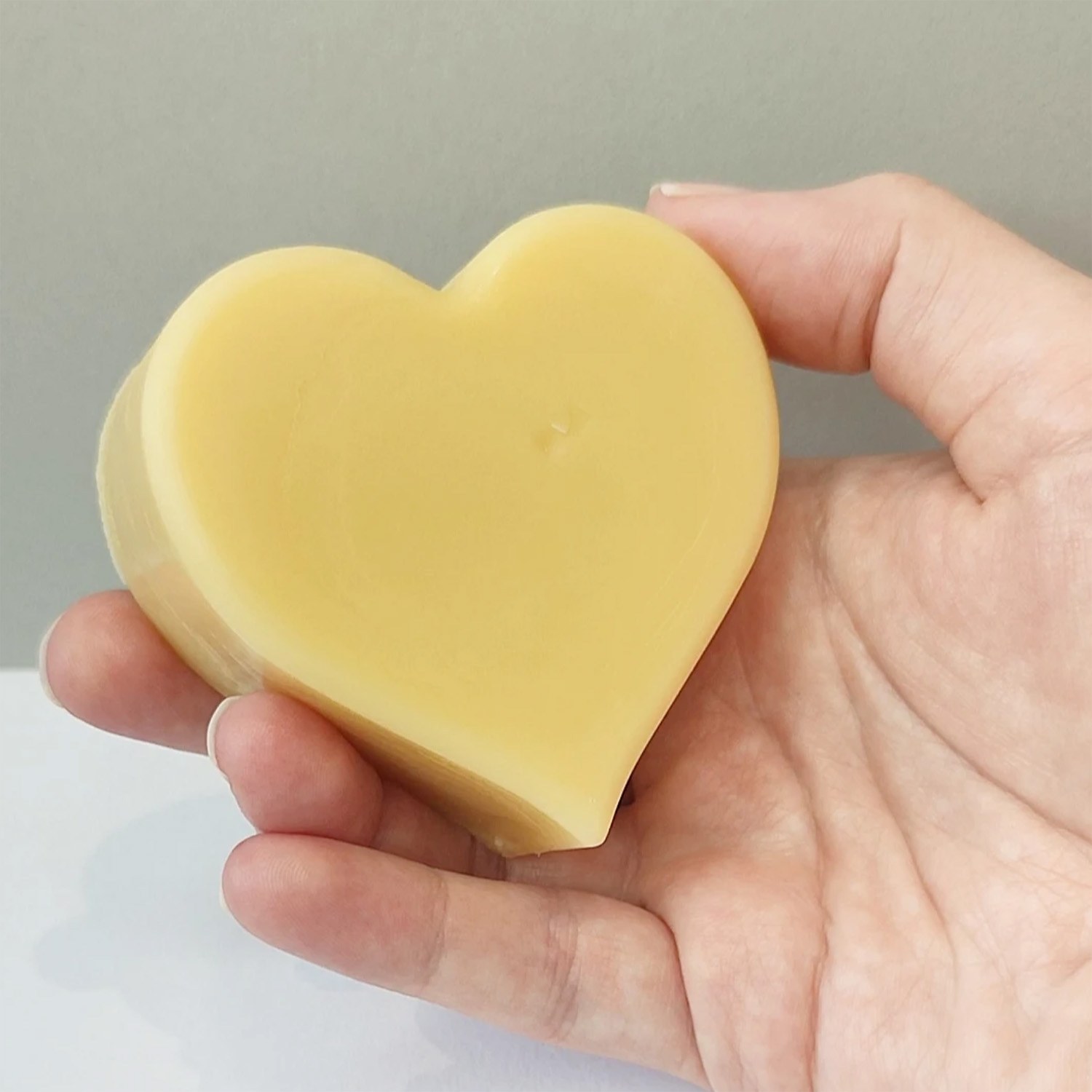
You will certainly make use of body lotion during autumn. If body lotion is also part of your beauty routine, pay close attention — we bring you a recipe for a light body lotion with a pleasant floral scent. The production is not too complicated, and preparing body lotions is an excellent way to improve your skills in creating emulsions.
About this recipe
The body lotion tutorial was prepared by Ivana Jačalová. The body lotion consists of water and oils, which means an emulsion is formed. For successful combining of these raw materials and thickening of the product, it is necessary to use an emulsifier, in our case Olivem 1000. To obtain a delicate light green colour, mica powder was used, and the fragrance was provided by a fragrance oil.

Main benefits
- Light consistency
The recipe gives a light body lotion with a pleasant floral scent, provided by the Blooming peony fragrance oil.
- Practice in making emulsions
Preparing body lotions is an excellent way to improve your skills in creating emulsions — and the production is not too complicated.
- Hydration with glycerin
Glycerin helps to keep moisture in the skin for longer and thus hydrates it intensively.
- Nutrient-rich hemp oil
Hemp oil is rich in various unsaturated fatty acids and vitamins, and so it is very suitable for various skin types.
- The colour you want
Mica powders are available in a wide palette of colours — with the amount of powder you can achieve different colour shades, or you can leave it out completely.
Product properties
Key ingredients in the recipe
Below you will learn more about the individual raw materials used to make the body lotion. You will also find out more about possible substitutions or changes in the recipe that you can make.
Demineralised water
To achieve a stable emulsion, high-quality raw materials are necessary. This is why it is important, when making cosmetics, to use demineralised water. This water is free of mineral substances that could disrupt the stability of the emulsion and so on.
The demineralised water in the recipe can be replaced with floral hydrosols, which are also obtained by distillation but contain various valuable components from the flowers and plants from which they were distilled. Many hydrosols also have pleasant scents, so they can be a replacement for perfuming.
Glycerin
An excellent moisturising raw material for your skin is glycerin. This alcohol is well soluble in water, so it is suitable to add it to the water phase of products. It helps to keep moisture in the skin for longer and thus hydrates it intensively. At the same time, thanks to glycerin, powder colourants and substances disperse more easily, which is why it is useful to mix mica powder with glycerin and only then add the water and hydrosols.
Glycerin can be omitted from the recipe and replaced with water, or you can play with its level — it is used up to 10 % of the content.
Jasmine hydrosol
We have already spoken above about floral hydrosols and the possibility of replacing demineralised water with these substances. Floral hydrosols bring your products many benefits from the plants from which they are obtained, and at the same time give the product a gentle fragrance. Of course, you can replace the hydrosol with demineralised water, or play with the ratio of water to hydrosol.
In any case, any change of hydrosol in the recipe, whether of its type or its proportion, will result in a change in the required amount of lactic acid to adjust the pH. Lactic acid must therefore always be added gradually, since even individual batches of hydrosol can differ from each other and thus affect the final pH of the product.
Mica powder
The colourant used to obtain a gentle greenish colour was mica powder. Mica powders are available in a wide palette of colours, so there are no limits to your imagination. You can play with the amount of mica powder used and thus achieve different colour shades. Alternatively, you can omit the mica powder completely and replace it with water.
Hemp oil
The base of the oil phase is hemp oil. This oil is rich in various unsaturated fatty acids and vitamins, and so it is very suitable for various skin types. Of course, you can substitute hemp oil with another vegetable oil of your choice. However, hemp oil has the advantage of being relatively rich in nutrients and reasonably priced.
You can also try a blend of different oils, or change the proportion of oil in the recipe. If you suffer from dry skin, you can increase the share of oil in the body lotion.
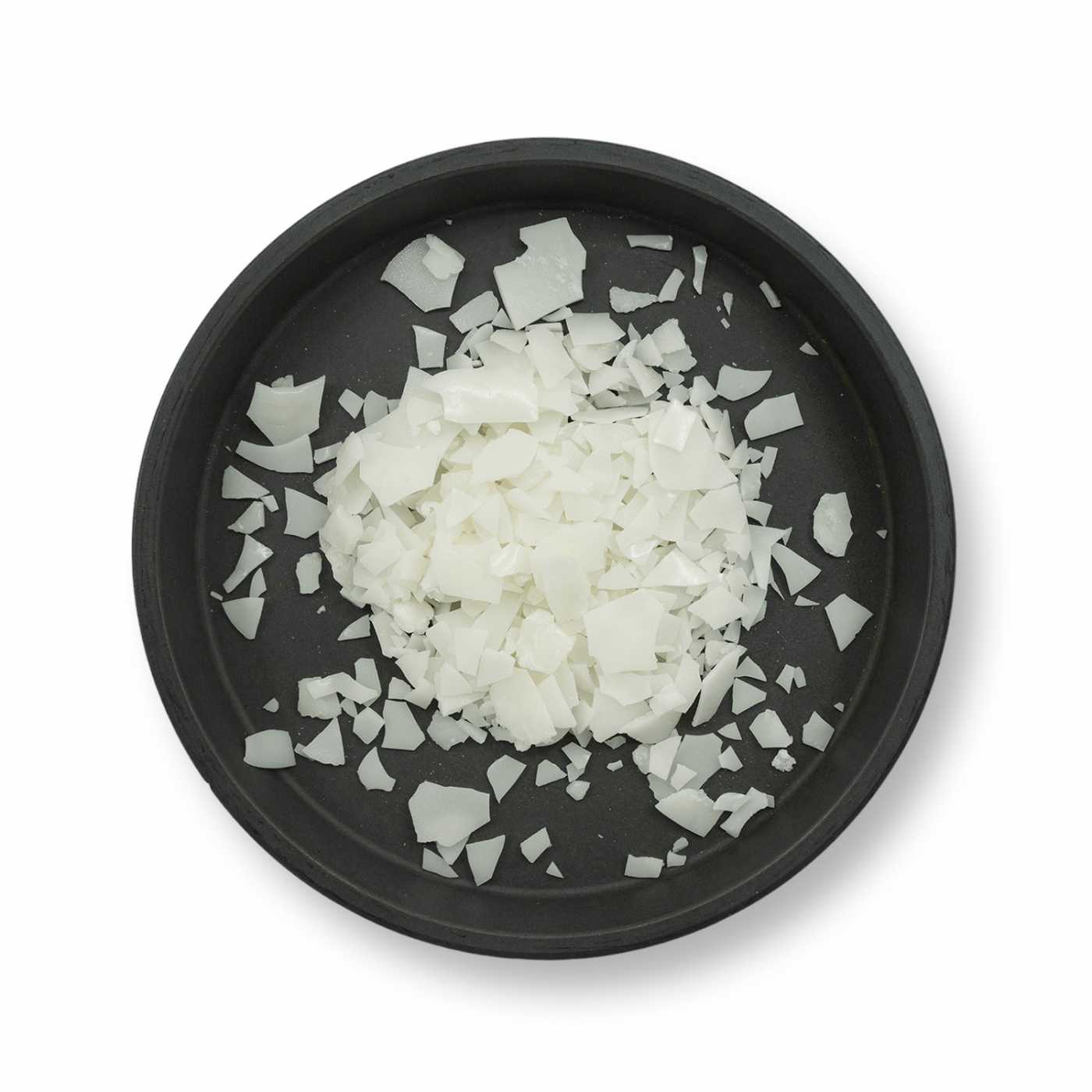
Olivem 1000 emulsifier
Another component of the body lotion recipe is the emulsifier. Emulsifiers are components that help combine water-based and oil-based raw materials and form an emulsion from them. Thanks to this, you obtain a beautiful creamy consistency of the body lotion. Emulsifiers also contribute to increasing the viscosity of the product, so if you want a more fluid body lotion, reduce the proportion of emulsifier and vice versa.
Of course, individual emulsifiers differ from each other, and so do their emulsifying and thickening abilities. Therefore, if you substitute Olivem 1000 with another emulsifier, it will probably be necessary to adjust the dosage to achieve the desired consistency.
Fragrance oil
To obtain a pleasant, flower-rich fragrance, the Blooming peony fragrance oil was used. Although this is a synthetically prepared fragrance oil, thanks to this method of preparation you can enjoy fragrances that could not be obtained in the form of essential oils. However, essential oils represent an alternative to fragrance oils, and therefore you can also use them as a substitute.
Remember that both essential and fragrance oils are heat-sensitive, so add them only to the cooled product. Also observe the dosage — an appropriate dose for your product can be found, for example, in the IFRA standards indicated with the product.
Lactic acid
The main role of lactic acid in this product is pH adjustment. The advantage of lactic acid compared to citric acid is that lactic acid is liquid, so you do not have to prepare a solution in advance, as in the case of citric acid granules.
Of course, you can also adjust the pH using a solution of citric acid. Again, the amount of citric acid needed compared with lactic acid will differ, so add it gradually and check the pH.
Cosgard preservative
Last but not least, products containing water require a preservative. This is no different in this case. In the body lotion, the preservative Cosgard was used, which is effective in an acidic pH, so it is necessary to adjust the pH to a value of 4.5 – 5.5. If you want to use another preservative, choose broad-spectrum preservatives (i.e. effective against yeasts, moulds and bacteria) and check the pH of the product to see whether it corresponds to the effective range of the preservative substance. If not, adjust the pH to the required value (most likely it will be necessary to lower the pH by adding an acid solution) and only then add the preservative.
Formulation (100 g)
The content of the raw materials is given in percentages by weight, so it corresponds to a batch of 100 g of finished body lotion. The raw materials are divided into three phases — A aqueous, B oil and C raw materials that are added only once the mixture has cooled down.
Shop the ingredients for this recipe
Untick what you already have- Olivem 1000, 50 guses 3.3 gin stock€7.34
| Phase / ingredient | Content |
|---|---|
| Phase A | |
| Demineralised water | 58.12 % |
| Glycerin | 5.00 % |
| Jasmine hydrosol | 20.00 % |
| Mica powder Enchanted Forest | 0.06 % |
| Phase B | |
| Hemp oil | 11.97 % |
| Olivem 1000 | 3.30 % |
| Phase C | |
| Fragrance oil, Blooming peony | 0.50 % |
| Lactic acid | 0.05 % |
| Cosgard – preservative | 1.00 % |
| Packaging | |
| Transparent plastic bottle, dispenser | — |
Method
- Disinfection
All tools, containers and packaging that will come into contact with the product or the raw materials must be disinfected, for example with ethanol.
- Water phase Phase A
Into a heat-resistant container weigh the glycerin and mica powder, and mix thoroughly so that no lumps remain. Then add the water and the hydrosol, and mix again.
- Oil phase Phase B
Into a second heat-resistant container weigh the raw materials of phase B, that is the oil and the emulsifier.
- Heating in a water bath Phase A + Baround 70 °C
Cover both containers with the raw materials with aluminium foil and place them in a water bath. Heat until the emulsifier has dissolved and both mixtures have reached approximately the same temperature (around 70 °C).
- Combining the phases Phase A + B
While still in the water bath, pour the aqueous raw materials (phase A) into the oil ones (phase B) and start mixing immediately with a milk frother or stick blender. While stirring continuously, remove the containers from the water bath and continue mixing.
- Mixing until cool 5 min
Mix for approximately five minutes (the phases must not separate after you stop mixing), then periodically every few minutes mix the blend again with the blender or milk frother until it has completely cooled down.
- Fragrance and pH adjustment Phase CpH 4.5 – 5.5
After cooling, stir the fragrance oil into the body lotion and check the pH. The goal is to obtain a pH in the range of 4.5 to 5.5. If necessary, lower the pH by adding lactic acid. Add the lactic acid drop by drop, mix thoroughly and check the pH after each addition. The indicated amount of lactic acid is only approximate (see Tips and tricks).
- Preservative Phase C
After adjusting the pH, add the preservative and mix it thoroughly into the blend.
- Filling
Fill the lotion into the selected disinfected container.
Tips and tricks
Make the production of body lotion easier with our tips and tricks, which will help you simplify the entire manufacturing process.
When heating the water and oil phases, use a water bath. Make sure that the containers are covered with aluminium foil — this will prevent excessive evaporation of water and at the same time prevent water from the bath entering the oil phase.
If you have a kitchen or infrared thermometer at hand, definitely use it. It is best to combine the water and oil phase when they have reached approximately the same temperature, about 70 °C. Always pour the water phase into the oil phase while still in the water bath.
After combining the phases, start to mix intensively with a milk frother or stick blender. While mixing, remove the containers from the water bath and continue mixing for at least 5 minutes. Then periodically mix the blend every few minutes while it is cooling. As the temperature drops, the product will thicken, so do not forget to stir it regularly.
Only after cooling adjust the pH of the product and add heat-sensitive substances. When adjusting the pH, add lactic acid only drop by drop, mix thoroughly and check the pH. The indicated amount of lactic acid is only approximate and depends on many factors, such as the batch of hydrosol, temperature, weighing accuracy, substitutions in the recipe and so on.
Adjusting the pH to a value of 4.5 – 5.5 is essential not only for better tolerance of the lotion by the skin (pH 4.5 – 5.5 represents the physiological pH of the skin), but also for the functionality of the preservative. Cosgard is most effective in an acidic pH, ideally below pH 5.5. Therefore, do not neglect the pH adjustment and add the preservative only after the pH has been adjusted.
If it happens that the blend has not combined and the water and oil phases separate, make sure that both phases had the same temperature before combining. Likewise, you will see the final viscosity of the product only after cooling — so if the blend is still hot and too fluid, continue mixing with the blender; the blend will thicken as it cools.
If the lotion is too fluid even after the blend has cooled, check whether your emulsifier is not past its expiry date, and whether you have used Olivem 1000 (emulsifiers are not identical in terms of thickening ability, so if you substitute the emulsifier it will probably be necessary to change the dosage). You can also replace the milk frother with a stick blender — some milk frothers do not have enough power to form an emulsion.
Warning
As mentioned, you can experiment with homemade recipes to achieve the desired properties. However, the final result can be influenced by many factors, such as humidity, temperature, the quality of the raw materials or their storage.
Before you use any raw material to make a cosmetic product, familiarise yourself with its properties, recommended dosage, storage conditions and safe handling. Every raw material can have the potential to trigger an allergic reaction in sensitive individuals, so before using the product we recommend finding out whether you are allergic to any of the raw materials or to the product as a whole, for example by means of a skin test.
If you have very sensitive or very acne-prone skin, or you have other skin and health problems, we recommend that you consult a medical professional before applying a new product to the skin, whether it is a homemade cosmetic product, a pure raw material or a commercially available product.
Frequently asked questions about the recipe
Practical questions about body lotion — pH adjustment, emulsion stability, consistency and possible substitutions of raw materials.
Why is it necessary to adjust the pH of the body lotion to 4.5 – 5.5?
Adjusting the pH is essential not only for better tolerance of the lotion by the skin (pH 4.5 – 5.5 represents the physiological pH of the skin), but also for the functionality of the preservative. Cosgard is most effective in an acidic pH, ideally below pH 5.5 — therefore add the preservative only after the pH has been adjusted.
How much lactic acid should I add?
The stated amount of 0.05 % is only approximate — it depends on many factors, such as the batch of hydrosol, temperature, weighing accuracy or substitutions in the recipe. Add it drop by drop, mix thoroughly and check the pH after each addition.
The blend has not combined and the phases are separating — what did I do wrong?
Make sure that both phases had the same temperature before combining (about 70 °C) and that you poured the water phase into the oil phase while still in the water bath. After combining, you need to mix intensively with a milk frother or stick blender for at least five minutes — the phases must not separate after you stop mixing.
The lotion is too fluid. How do I thicken it?
You will see the final viscosity only after cooling — if the blend is still hot and too fluid, continue mixing with the blender, as it will thicken as it cools. If it is still fluid after cooling, check whether your emulsifier is not past its expiry date and whether you have used Olivem 1000; if you substitute the emulsifier, it is usually necessary to change the dosage. Replacing the milk frother with a stick blender can help too — some frothers do not have enough power.
Can I replace the hemp oil or the hydrosol with something else?
Yes. You can substitute hemp oil with another vegetable oil of your choice, or use a blend of oils or change their proportion — with dry skin, feel free to increase the share of oil. The hydrosol can be replaced with demineralised water or another hydrosol, but any change of hydrosol will result in a change in the required amount of lactic acid for adjusting the pH.
Can the glycerin or the mica powder be left out of the recipe?
Glycerin can be omitted and replaced with water, or you can play with its level — it is used up to 10 % of the content. The mica powder can also be omitted completely and replaced with water; with the amount of powder you can achieve different colour shades.
Conclusion
We believe that if you have managed to make a body lotion according to our procedure and have created it exactly as you imagined it, you will not want to replace it with anything else. Nothing can compare to natural raw materials and a composition that you know.
If you have any questions regarding the making of the body lotion or these instructions, do write to us at [email protected]. We will be happy to answer you.
We would like to thank Ivana Jačalová very much for the excellent tutorial and the entire article.
You will find the Olivem 1000 emulsifier, hemp oil, jasmine hydrosol, glycerin and Cosgard preservative from this recipe in the Handymade range of raw materials.