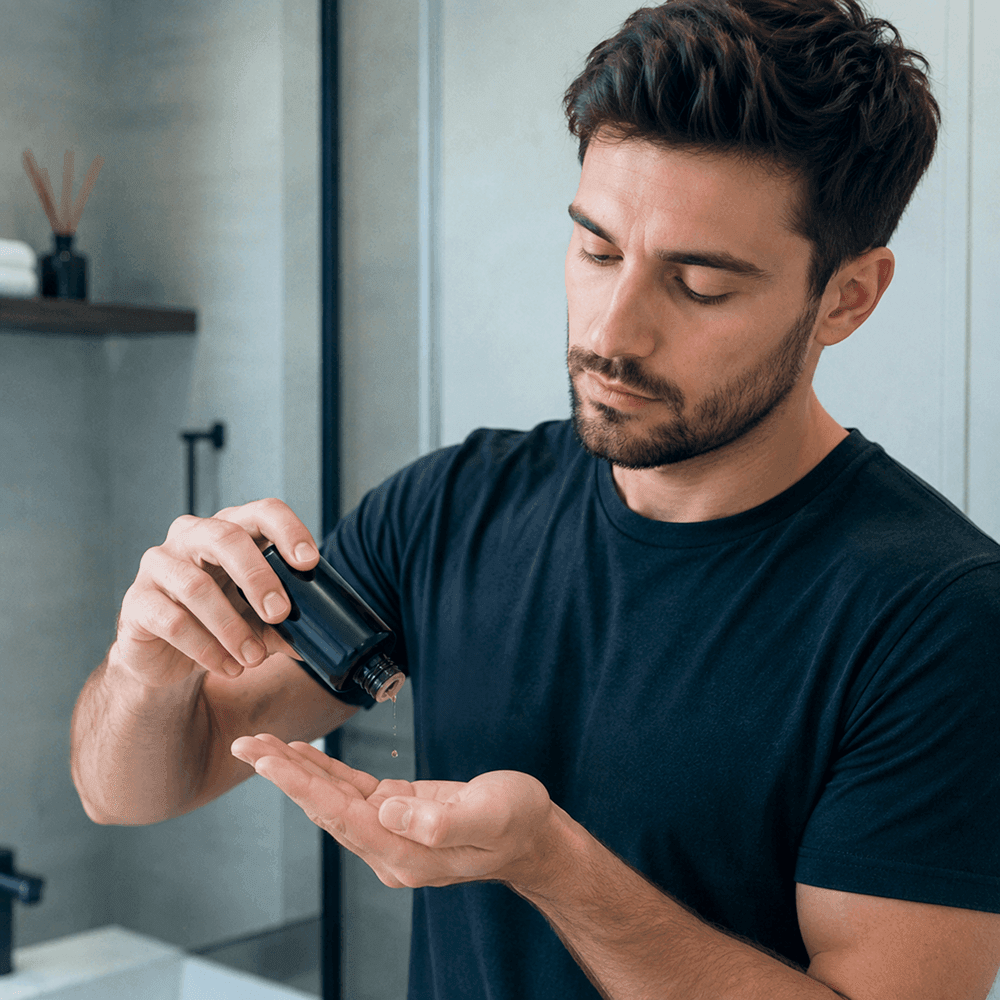
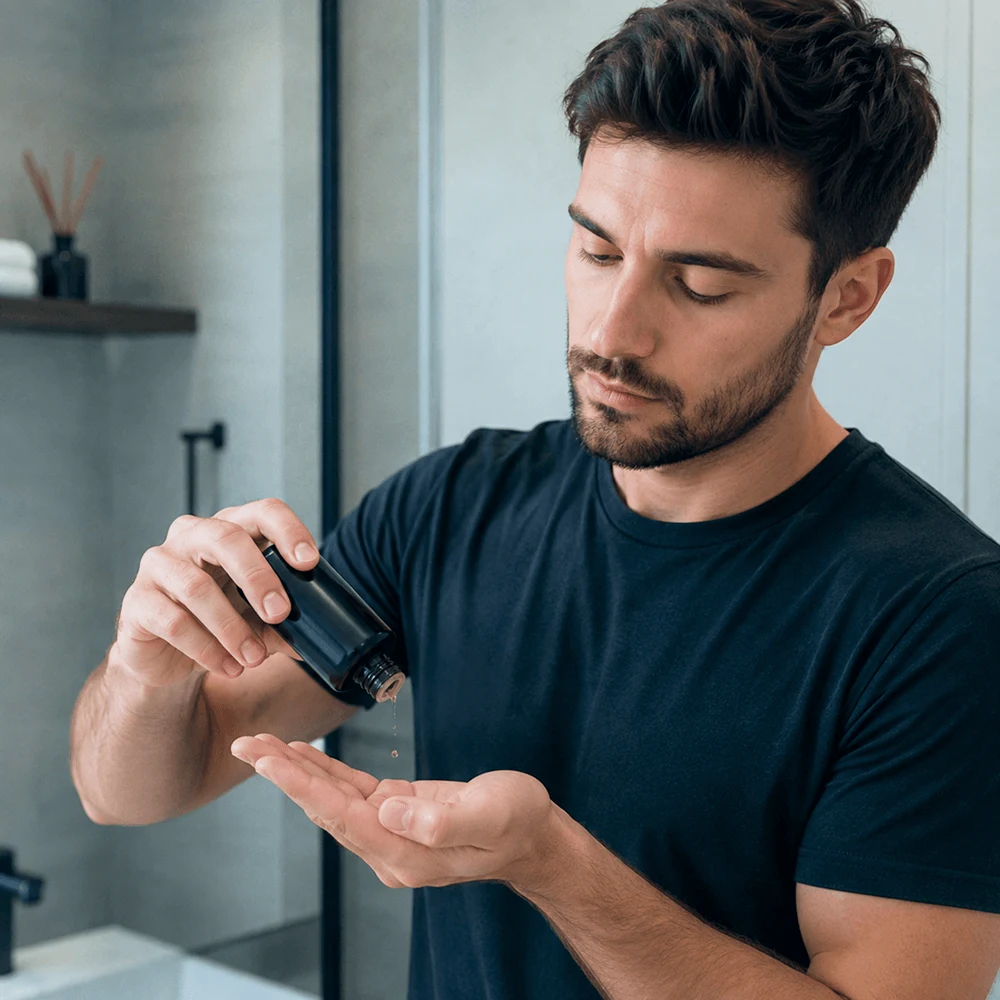
Aftershave is an irreplaceable product in men’s skincare and it is another typically male product that can also be made at home. The production is not complicated at all, moreover it does not require heating, and therefore even complete beginners can manage it.
About this recipe
This great tutorial for making aftershave was provided to us by Ivana Jačalová. Thank you. To make aftershave we will need essential oils in combination with water — since this is a water-based product, it will be necessary to use a solubiliser, which allows the combination of aqueous and oily ingredients. Thanks to the fact that the aftershave does not contain alcohol, it will irritate the skin less, and it can also potentially be used as a perfume.

Main benefits
- Alcohol-free
The aftershave does not contain alcohol, so it will irritate the skin less — and you can also use it as a perfume if you like.
- No heating
The production is not complicated and does not require heating, so even complete beginners can manage it.
- A woody men’s scent
A blend of cedarwood and sandalwood in combination with coriander and lavender will enchant especially men with its intense woody and earthy notes.
- Extra hydration
Glycerin helps increase skin hydration by improving water retention in it.
- Soothing hydrosol
Rosemary hydrosol brings a herbal and fresh scent into the product, and at the same time this plant helps to soothe irritated skin.
Product properties
Key ingredients in the recipe
Below we bring you an overview of the individual ingredients and their possible substitutes, thanks to which you can adapt the aftershave exactly according to your ideas and thus prepare a great product either for yourself or as a gift.

Demineralised water
Demineralised water serves as a base for the production of many cosmetic products, including aftershave. Do not use ordinary water from the tap or boiled water — such water will still contain minerals that can disrupt the stability of the product or preservative.
A substitute for demineralised water is however represented by floral hydrosols, which you can combine freely in order to create an interesting product. At the same time, thanks to the high proportion of water, unlike some commercially available products where alcohol dominates, the aftershave will be less irritating to the skin.
Rosemary hydrosol
A pleasant herbal and at the same time fresh scent is brought into the product by rosemary hydrosol, and at the same time this plant helps to soothe irritated skin. In addition, as mentioned above, you can use floral hydrosol to replace also the entire share of demineralised water in the recipe.
If you do not like the scent of rosemary, reach for your favourite hydrosol or combine several of them at once. For irritated skin, flower water from witch hazel or aloe vera juice is great. If you do not have hydrosol at hand, use demineralised water.
Glycerin
An excellent moisturising ingredient that is soluble in water is glycerin. This alcohol is an ingredient that is well compatible with aqueous and many active ingredients. In products it helps increase skin hydration by improving water retention in it.
Glycerin is an easily available ingredient that is tolerated by a wide range of skin types. Alternatively, however, you can replace it with sodium PCA with similar properties or omit it completely and use the same proportion of demineralised water.
Solubiliser Symbio solv clear plus
Solubilisers are substances that behave similarly to emulsifiers, that is they allow the combination of aqueous and oily ingredients. However, the difference is that solubilisers are intended for the even dispersion of a small amount of oils in a significantly larger share of water. Thanks to this substance you can comfortably prepare at home aftershaves or perfumes on a water basis.
It is not possible to omit this substance from the product, as otherwise the aqueous and oily ingredients will not combine. If you have a problem with combining oil and water, however, try increasing the ratio of the solubiliser to the oils according to the advice below.
Preservative Euxyl PE 9010
For long-term use of any product on a water basis or with water content, it is necessary to use a preservative. In this case Euxyl PE 9010 was chosen, as it is well compatible with a wide range of pH values, and thus suitable also for beginners.
You can replace it with another broad-spectrum preservative, but do not forget to check whether it is active at the pH of your product. Otherwise it will be necessary to adjust the pH (some preservatives work only at acidic pH, and so you must add e.g. lactic acid to reduce the pH).
You should definitely add the preservative, as the product will spoil after a few days without it.
Essential oils
This is the part of the recipe where there are no limits to your imagination. Try blends of essential oils or use only one favourite essential oil. It is up to you. We have prepared for you a woody blend of cedarwood and sandalwood in combination with coriander and lavender. This scent will enchant especially men with its intense woody and earthy notes.
If you want to further expand the palette of available scents, try fragrance oils. However, as with essential oils, follow the recommended maximum dosage for the individual oils (e.g. according to IFRA standards).
Recipe (100 g)
The ingredient content is given in percentages by weight, so it corresponds to a batch of 100 g of finished aftershave. The ingredients are weighed in two phases — aqueous phase A and oily phase B with the solubiliser and preservative.
Shop the ingredients for this recipe
Untick what you already have- Demineralised Water, 1 lrecipe uses 60,80 gin stock€2.79
- Floral Water, Hydrosol, Rosemary, Organic, 100 mlrecipe uses 30,00 gin stock€4.29
- Vegetable Glycerol 99,5% USP/BP, 100 mlrecipe uses 5,00 gin stock€2.69
- Symbio Solv Clear Plus, Solubilizer, 50 mlrecipe uses 2,40 gin stock€7.35
 Sandalwood Amyris Essential Oil, 10 mlrecipe uses 0,30 gsold outWatch availability€4.82
 Coriander Essential Oil, 10 mlrecipe uses 0,10 gin stock€3.66
 Lavender Spike Essential Oil, 10 mlrecipe uses 0,10 gin stock€2.49
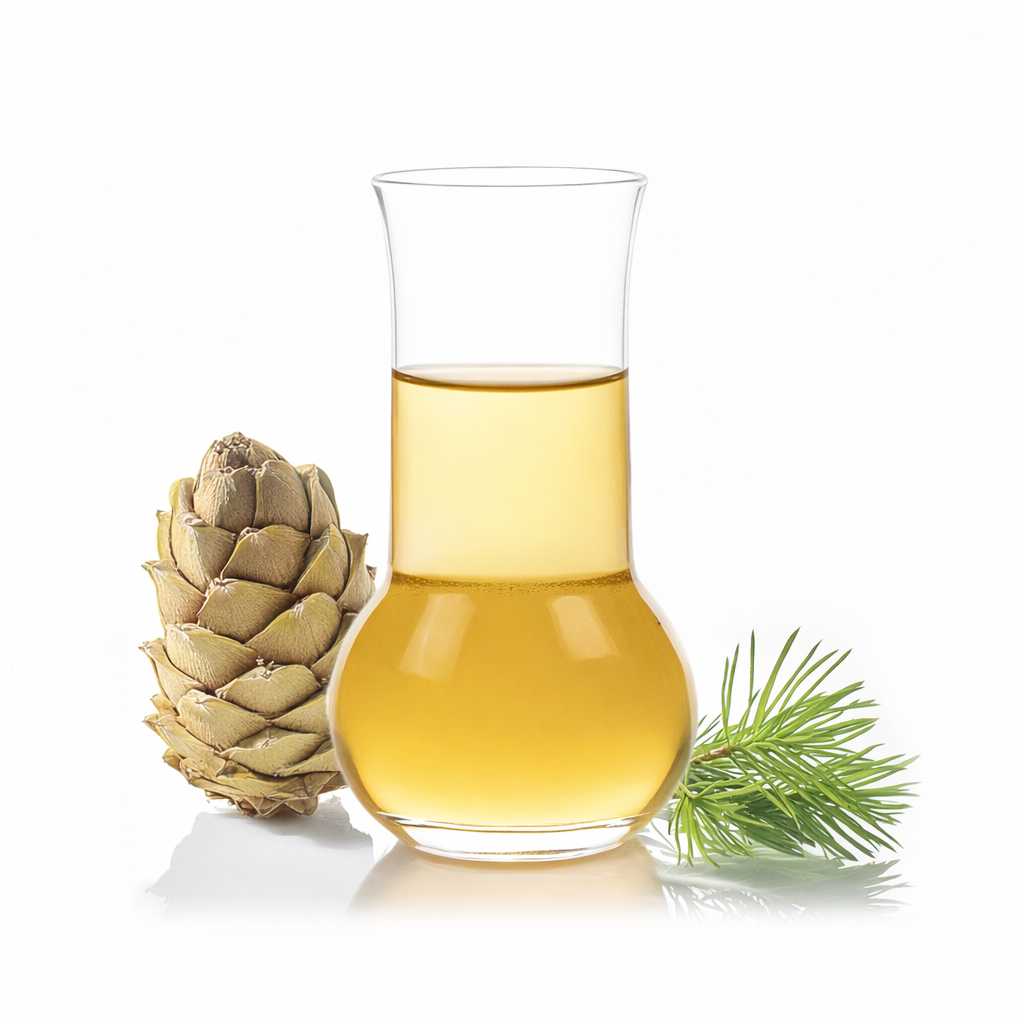 Cedarwood Atlas Essential Oil, 10 mlrecipe uses 0,30 gsold outWatch availability€1.77
- Euxyl PE 9010, Preservative, 10 mlrecipe uses 1,00 gin stock€2.49
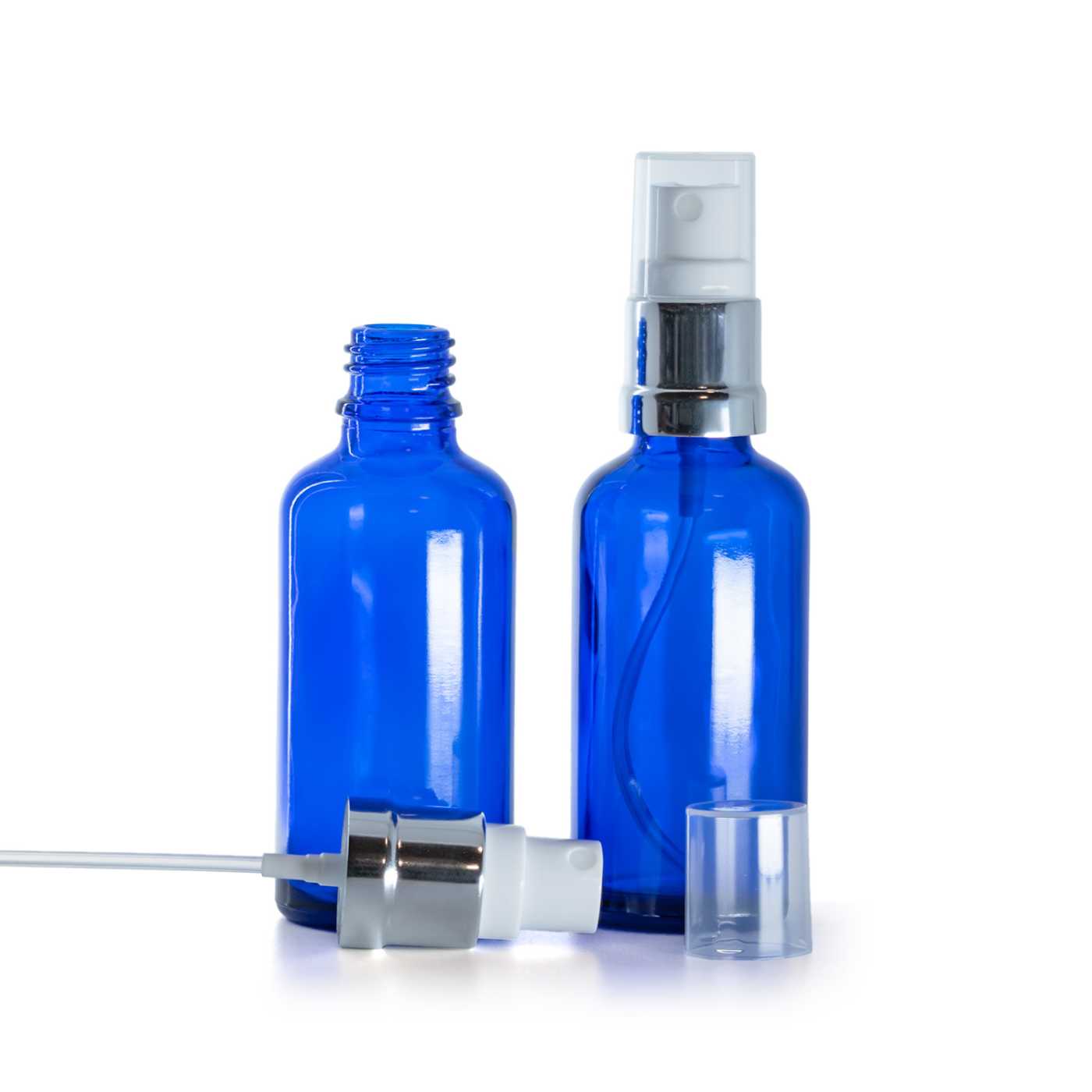 Blue Glass Bottle, Glossy Silver White Spray, 50 mlin stock€1.43
| Phase / ingredient | Content in % |
|---|---|
| Phase A | |
| Demineralised water | 60.80 % |
| Rosemary hydrosol | 30.00 % |
| Vegetable glycerin | 5.00 % |
| Phase B | |
| Solubiliser Symbio solv clear plus | 2.40 % |
| Sandalwood essential oil | 0.30 % |
| Coriander essential oil | 0.10 % |
| Lavender essential oil | 0.10 % |
| Cedarwood essential oil | 0.30 % |
| Preservative Euxyl PE 9010 | 1.00 % |
| Packaging | |
| Bottle with spray | — |
Method
- Disinfection
All utensils, containers or packaging that you use, disinfect thoroughly, for example with ethanol.
- Aqueous phasePhase A
Into one container weigh the ingredients of phase A — demineralised water, hydrosol and glycerin, mix well.
- Oily phase and combiningPhase BPhase A + B
Into the second container weigh the ingredients of phase B, that is the solubiliser, essential oils and preservative. Again mix well and immediately add the ingredients of phase A (the aqueous mixture).
- Mixing
Mix the aftershave thoroughly so that the solubiliser is completely dissolved and the individual ingredients are well combined.
- Filling into the bottle
Fill the product into the selected disinfected bottle with spray.
Tips and tricks
Since the production of aftershave is really simple, you do not have to be afraid of it at all. Even so, we bring you a few tips and tricks that can help you.
If you have a problem dissolving oils in water even when using a solubiliser, try increasing the ratio from 3:1 to 4:1 (essential oils : solubiliser). The final product may have a milky or cloudy colour after shaking — after standing it usually clears. It may possibly remain slightly cloudy mainly with larger doses of oils. However, this is not a defect that would impair the functionality of the product, so increase the content of solubiliser only if the oils are visibly separating from the water.
Warning
As mentioned, you can experiment with homemade recipes to achieve the desired properties. However, the final result can be influenced by many factors, such as humidity, temperature, quality of the ingredients or their storage.
Before you use any ingredient for the production of a cosmetic product, familiarise yourself with its properties, recommended dosage, storage conditions or safe handling. Each ingredient may have the potential to trigger an allergic reaction in sensitive individuals, therefore before using the product we recommend determining whether you are not allergic to any of the ingredients or the overall product, e.g. with a skin test.
If you have very sensitive or very acne-prone skin, or if you have other skin and health problems, we recommend that you consult a medical professional before applying a new product to the skin, whether it is a homemade cosmetic product, a pure ingredient or a commercially available product.
Frequently asked questions about the recipe
Practical questions about aftershave — irritation, the solubiliser, cloudiness of the product, preservation and ingredient substitutes.
Why does homemade aftershave irritate the skin less?
Thanks to the fact that it does not contain alcohol and has a high proportion of water — unlike some commercially available products where alcohol dominates. A less irritating aftershave can also potentially be used as a perfume.
Can the solubiliser be omitted from the recipe?
No. It is not possible to omit this substance from the product, as otherwise the aqueous and oily ingredients will not combine. Solubilisers behave similarly to emulsifiers, but they are intended for the even dispersion of a small amount of oils in a significantly larger share of water.
What should I do if the oils will not combine with the water?
Try increasing the ratio from 3:1 to 4:1 (essential oils : solubiliser). Increase the content of solubiliser only if the oils are visibly separating from the water.
Why is the product milky or cloudy after shaking?
The final product may have a milky or cloudy colour after shaking — after standing it usually clears. It may possibly remain slightly cloudy mainly with larger doses of oils. However, this is not a defect that would impair the functionality of the product.
Do I have to put a preservative in the aftershave?
Yes. For long-term use of any product on a water basis or with water content, it is necessary to use a preservative — without it the product will spoil after a few days. Euxyl PE 9010 is compatible with a wide range of pH values, and thus suitable also for beginners.
What can I replace demineralised water with?
A substitute is represented by floral hydrosols, which you can combine freely. Do not use ordinary water from the tap or boiled water — such water will still contain minerals that can disrupt the stability of the product or preservative.
Conclusion
After the tutorial and creation of beard balm, we are also coming with a tutorial for creating aftershave for men who prefer the feeling of freshly shaved facial hair. We believe that aftershave with a natural composition will not irritate the skin and will ensure a pleasant scent.
If you make your own aftershaves or other natural cosmetic products, definitely write to us how you are doing and add a few useful tips as well. We are waiting for your messages at [email protected].
This great tutorial for making aftershave was provided to us by Ivana Jačalová. Thank you.
You will find demineralised water, floral hydrosols, essential oils and preservatives from this recipe in the Handymade range of ingredients.