


ACTIVE INGREDIENTS
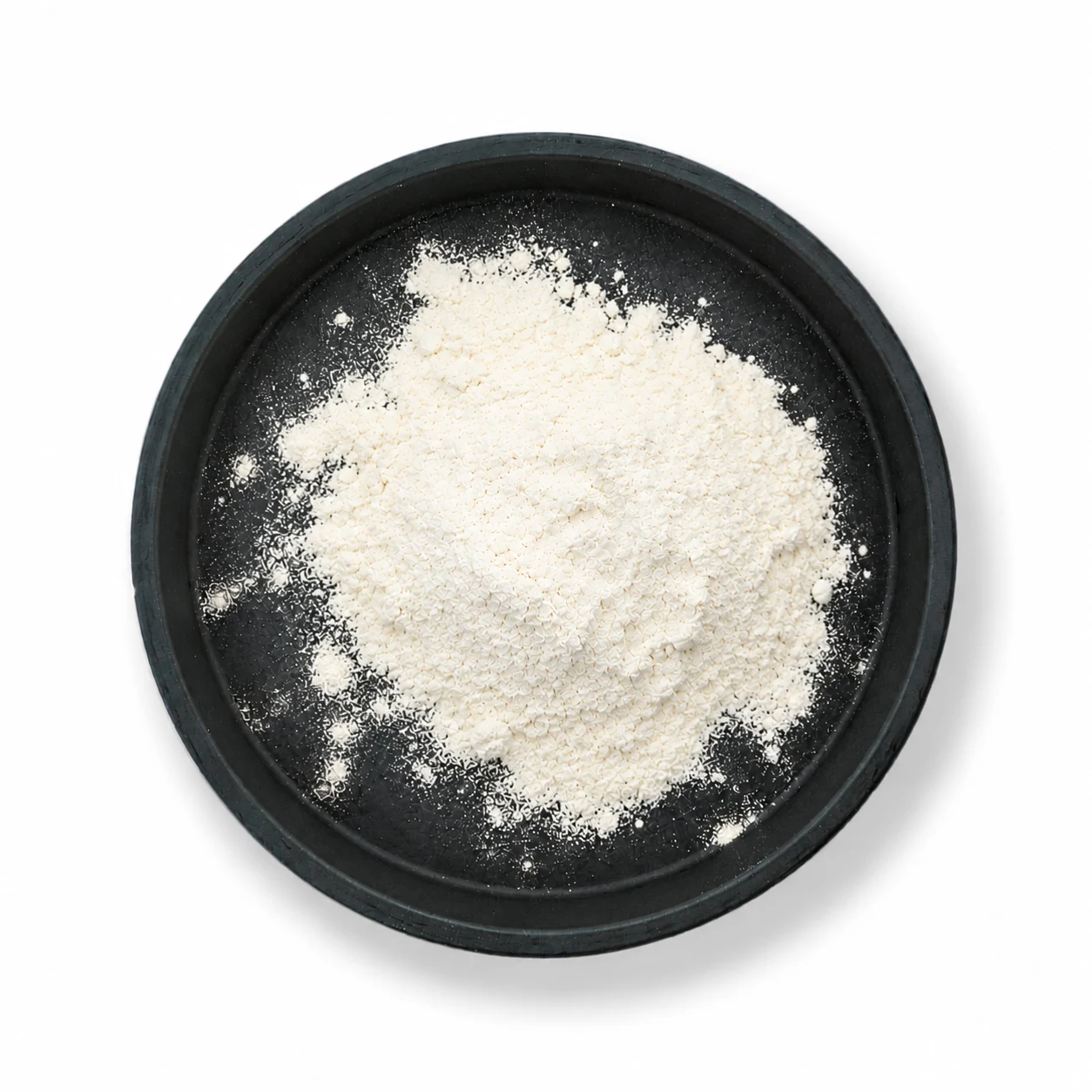
Tremella fuciformis, powder, 50 g
Tremella fuciformis , also known as snow mushroom, is a source of a polysaccharide that acts as a hydrating agent in cosmetics. full description
Lowest price in the last 30 days: €55.49
Product description
Tremella fuciformis, also known as snow mushroom, is a source of a polysaccharide that acts as a hydrating agent in cosmetics. It is a water-soluble powder intended for the water phase of serums, toners, gels, masks and emulsions. On the skin it helps to bind water, leaves a smooth, non-sticky feel and combines well with hyaluronic acid.
The raw material is based on a polysaccharide obtained from a mushroom, with a high share of total carbohydrates and a significant proportion of glucuronic acid. This is what gives the molecule its ability to bind water and keep it on the surface of the skin.
Key benefits
- Hydration support – the polysaccharide binds water on the surface of the skin and slows its evaporation, which shows as a longer-lasting feeling of suppleness after application.
- Smooth feel – it leaves a thin, breathable layer on the skin that softens the surface and reduces the feeling of tightness; it is neither sticky nor shiny.
- Pleasant texture – in gel and water-based products it improves glide during application and gives them softness without heaviness.
- Clear solutions – at low concentrations it gives a practically clear solution, so it is also suitable for clear serums and gels.
- Mushroom origin – suitable for formulations in which the hydrating ingredient should be of non-animal origin.
How tremella polysaccharide works
The effect depends on the molecular weight of the polysaccharide. Larger molecules stay on the surface of the skin, where they form a hydrating layer and improve smoothness. Smaller molecules penetrate into the upper layers of the skin and support hydration of the stratum corneum. The manufacturer does not state the molecular weight as a fixed value, only as a value measured for a specific batch, so we recommend checking how the raw material behaves in the finished product in a test sample.
This is a cosmetic raw material. Its benefits are hydration support, better texture and a better feel on the skin.
Use in a formulation
The powder is soluble in water and is added to the water phase. It dissolves best under constant stirring, when it is slowly sprinkled onto the surface of the water or pre-mixed with glycerine so that it does not form lumps. Dissolving takes longer than with common humectants, so allow the solution time.
First mix the powder in a small amount of glycerine or propanediol into a smooth paste and only then add it to the water. This prevents lumps, which dissolve very slowly later.
A solution with a content of 0.5% has a pH in the range of 5.5–8.0, which is close to the pH of common cosmetic products, and usually does not require adjustment. The raw material can be added to the water phase before emulsification, but it is gentler to incorporate it cold or while the emulsion is cooling. In gels and serums it is added directly, cold.
The manufacturer does not state a recommended usage rate. The technical data sheet works with solutions of 0.1–0.5%; the exact value should be set according to the desired feel and viscosity in a test sample. The viscosity of the solution depends on the concentration and the molecular weight of the given batch.
Suitable for products such as
- Hydrating serums and essences – as the main or supplementary hydrating ingredient, on its own or in combination with hyaluronic acid.
- Toners and facial mists – at low concentrations it does not raise the viscosity enough to prevent spraying.
- Gels and gel creams – it improves glide and a smooth feel during application.
- Creams and lotions – as part of the water phase it complements the hydrating effect of humectants.
- Face masks – especially hydrating water-based masks.
- Cleansing products, shampoos and conditioners – as a conditioning ingredient that softens the feel after rinsing.
Good to know
- The raw material is water-soluble and is not suitable for anhydrous products (oils, balms, butters), because it does not dissolve or disperse in oils.
- Every product containing water and this polysaccharide must be preserved. Polysaccharides are a nutrient medium for microorganisms, so do not underestimate the choice of preservative and its efficacy.
- Check compatibility with a higher content of electrolytes, alcohol or with acidic active ingredients in your specific formulation.
- The powder naturally contains residual moisture. After opening, close the packaging tightly straight away so that the powder does not absorb moisture and harden.
- The effect on the colour and fragrance of the finished product is negligible at common concentrations.
In sprays and mists, dose carefully and always test the function of the sprayer. Even a slight increase in viscosity can cause the product to spray unevenly.
Frequently asked questions
Parameters
- INCI
- Tremella Fuciformis Polysaccharide
- CAS No.
- 9075-53-0
- EC number
- 616-532-7
- Country of origin
- China
- Grade
- Cosmetic grade
Product documentation
- TDSTechnical Data Sheet
- PDF ↓
- SDSSafety Data Sheet
Verified by customers.
No reviews yet.
Only customers with a delivered order can write reviews.