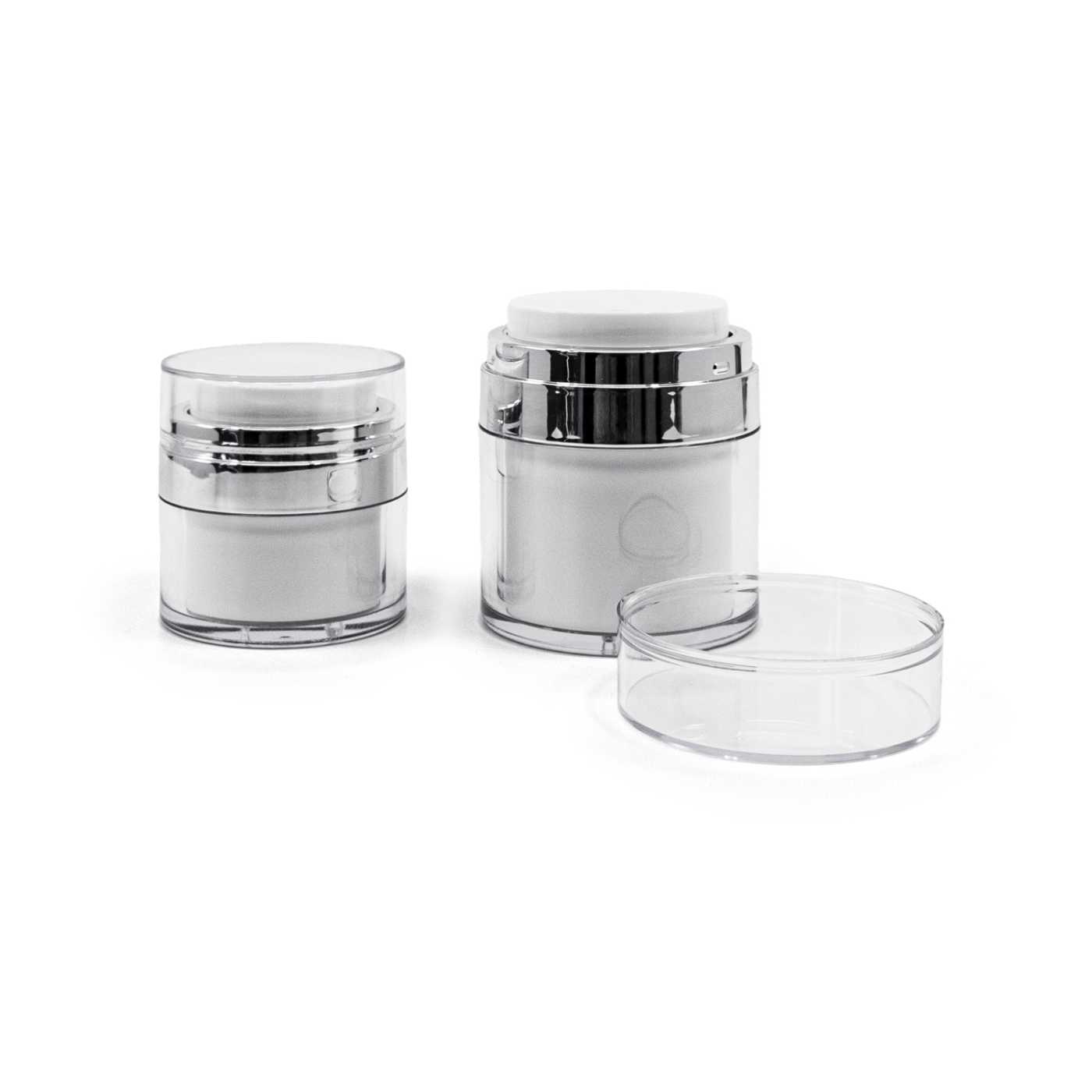
Airless jar 50 ml with a pump dispenses cream without drawing air into the container with each use. The contents are pushed upward by a piston at the bottom; each press of the pump delivers the same small dose, and the remainder stays sealed. It is suitable for face and eye creams, thicker serums and emulsions with sensitive active ingredients, where it matters that the product does not come into contact with fingers during use and oxidises as little as possible.
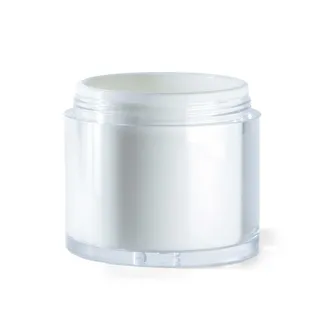
The body of the jar is white, the cap with the pump is complemented by a silver trim. The combination of PP and PMMA gives the container a glass-like shine while remaining lightweight and shatterproof, so it can withstand shipping in a parcel. The complete set is declared as suitable for contact with cosmetics.
How an airless jar works
A regular jar fills with air every time it is opened and the cream is scooped out with fingers. Inside an airless jar there is a movable piston beneath the contents; when the pump is pressed, it moves slightly upward and pushes a dose to the top of the cap. No air returns inside, the contents remain sealed and protected at all times. The oil phase and active ingredients oxidise more slowly, the risk of microbial contamination is lower, and the container empties almost completely — the piston travels all the way to the top wall.
When the cap is attached, the pump is empty. A few dry presses will fill it, after which it will start dispensing evenly.
What it is suitable for
- Creams with sensitive active ingredients – vitamin C, retinol, peptides and unstable plant extracts will retain their efficacy longer in a closed system without air than in an open jar.
- Eye and face creams – a dose of 0.4 ml per press corresponds to typical use on the face or eye area; the customer does not over-apply.
- Emulsions with an oil phase prone to yellowing – without air exposure, the scent and colour of unrefined oils and butters change more slowly.
- Natural cosmetics with a milder preservation system – a container that is not touched by fingers reduces the introduction of microorganisms. It does not replace the preservative, however; a water-based formulation needs one even in an airless container.
- Samples and trial batches – the 50 ml volume is suitable for testing a new formulation with customers or in a salon.
The pump handles creams and thicker emulsions that hold their shape but can be spread. Very thin liquids do not belong in an airless jar — the piston does not reliably separate them and they may leak. Solid balms and butters cannot be pumped out either. We recommend testing the behaviour of a specific formulation on a single unit before filling an entire batch.
Filling and volume
Nominal volume is the amount the jar is designed for under standard filling. Total volume to the rim is the physical capacity right up to the neck and is slightly larger. The difference provides a margin for the cap with the pump and for the movement of the contents. The jar is therefore filled to the nominal volume, not to the rim; both values are listed in the parameters.
Before filling, unscrew the cap and make sure the piston is in the bottom position. Add the cream slowly, preferably with a spatula or filling bag from the centre, to prevent air bubbles from becoming trapped underneath. Let a hot emulsion cool down first. Warm contents shrink as they cool and leave air in the container, which the pump then pushes out instead of the cream.
After filling, tap the jar against the table a few times to release any bubbles, and only then attach the cap. This makes it easier to prime the pump for the first time and ensures the contents are dispensed evenly.
Good to know
- Preparation before first filling – wash the jar and cap, disinfect with isopropyl alcohol or ethanol and allow to dry completely. Moisture beneath the piston would get into the cream.
- Material and resistance – polypropylene tolerates standard cosmetic emulsions, oils and water phases. For formulations with a high proportion of alcohol, essential oils or solvents, we recommend checking the container's behaviour over time.
- Labelling – a band label is applied to the body and a round label to the cap. The dimensions of both the jar and the cap are listed in the parameters.
- Reuse – after emptying, the piston is in the upper position. We recommend a new jar for a new batch. If you wish to reuse it, clean it thoroughly, push the piston back down and verify that it moves without sticking and the cap seals properly.
- Recycling – dispose of the container as plastic.
The set includes both the jar and the cap with the pump; nothing extra is needed for filling. Both parts are also available separately from Handymade, so if the pump is damaged, replacing just the cap is sufficient.
Frequently asked questions
What cream is suitable for the airless jar 50 ml?
Airless jars are suitable for creams and emulsions of medium to higher viscosity that can be spread but also hold their shape. The pump dispenses them evenly and the piston reliably separates the contents from air. Thin serums and tonics may leak, and solid butters and balms cannot be pumped out. For borderline consistencies, we recommend testing on a single unit.
Why does the airless pump not dispense at the start?
When the cap is first attached, the pump is empty and must be primed first, so the first few presses produce no cream. Press slowly and fully until a dose appears at the top of the cap. If it still does not dispense, air was left beneath the cream or the piston was not in the bottom position before filling.
How is an airless jar filled?
An airless jar is filled from above after unscrewing the cap, with the piston in the bottom position and up to the nominal volume, not to the rim. The cream is added slowly from the centre to prevent air bubbles from being trapped underneath, and the jar is tapped against the table before the cap is attached. Let a hot emulsion cool down first; otherwise air will settle in the container after the contents shrink.
Does cream in an airless jar need a preservative?
Yes, a water-based formulation needs a preservation system even in an airless jar. The container reduces air intake and contamination by fingers, which slows down oxidation and microbial growth, but it cannot stop the growth of microorganisms that enter the cream during manufacturing or filling. Anhydrous oils and balms do not need a preservative, but only those that can be dispensed by the pump are suitable for an airless jar.
Can an airless jar be reused?
Reuse is possible, but after emptying the piston is in the upper position and must be returned to the bottom before refilling. The jar and cap then need to be washed, disinfected and allowed to dry, and after filling it should be verified that the pump dispenses correctly and the container seals. For products sold to customers, we always recommend a new jar.




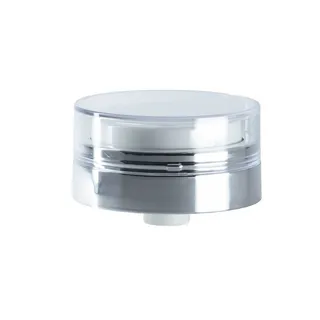 Pump cap for airless jar, 50 ml, white-silverVrchnák s pumpičkou na airless kelímok, 50 ml, bielo-strieborný