
Bottles only
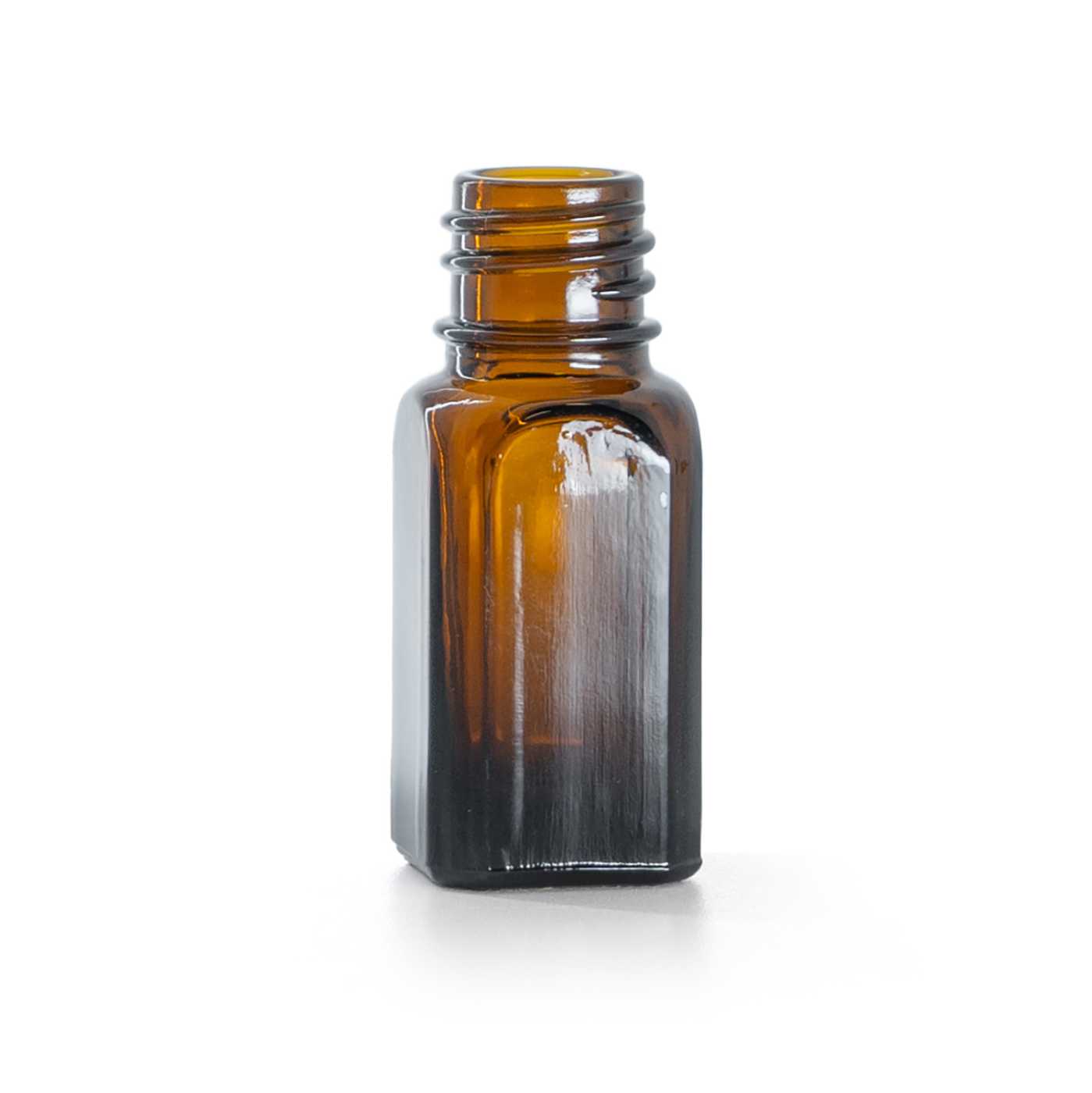
Amber Glass Angular Vial, 10 ml, 221 pcs
The 10 ml amber glass pharmaceutical bottle is small retail packaging for concentrated contents that are harmed by light. full description
Lowest price in the last 30 days: €89.24
Save €14.63 with this set
Product description
The 10 ml amber glass pharmaceutical bottle is small retail packaging for concentrated contents that are harmed by light. Amber glass reduces the transmission of light and thus slows the oxidation of oils, fragrance compositions and plant extracts. It is mainly filled with essential oil blends, fragrance oils, facial serums, tinctures and samples of larger packs. The square, straight shape gives the bottle a stable base and saves space when several pieces are packed in a box or a gift set. The packaging is certified for direct food contact and for use with cosmetic products, so it is also suitable for small amounts of homemade oils, herbal infusions or syrups.
Suitable uses
- Essential oil blends and fragrance oils – the 10 ml volume corresponds to the usual pack size of concentrated fragrance blends. They are dispensed in drops and used up slowly, so protection from light makes sense.
- Facial and hair serums – both oil-based and water-based serums with light-sensitive active ingredients, for example vitamin C or retinol, where dark glass extends the time before the contents begin to change.
- Tinctures and alcohol extracts – glass does not react with ethanol and does not absorb odours. After use, the bottle can be washed and used again.
- Samples – a smaller pack of cream, oil or toner for customers who want to try a product first.
- Food use – small amounts of flavouring oils, extracts or syrups for the home kitchen.
Volume and filling
The nominal volume of 10 ml is the amount the bottle is designed for in normal filling. The actual volume up to the rim of the neck is larger. The difference is a reserve for the part of the closure or dropper that extends into the neck, and for the expansion of the contents when the temperature changes. For this reason, fill up to the nominal volume, not up to the rim. An overfilled bottle overflows when the dropper is fitted and, when warmed, may push the contents out through the thread.
In serial production, set your dispensing to 10 ml and weigh one bottle with and without the contents. The difference in weight serves as a quick check that all pieces are filled equally.
Closures and combinations
The bottle has an 18/410 neck finish. Closures with the same neck type, that is caps, droppers and sprayers, as well as ready-made combinations of the bottle with a closure, can be found in the Handymade range. If you are making your own combination, we recommend checking the tightness and dispensing with your specific formulation, for example whether the dropper draws up a thicker oil quickly enough and whether the sprayer leaves a residue on the walls that cannot be sprayed out.
Good to know
Before the first filling, wash the bottle, disinfect it with isopropyl alcohol or ethanol and let it dry completely with the neck facing down. Residual water cannot be seen in amber glass. In anhydrous products, such as oil blends or fragrance oils, it could cause cloudiness or promote the growth of microorganisms.
Glass withstands hot washing and disinfection, but it does not tolerate a sudden change in temperature well. Do not pour a hot infusion or syrup into a cold bottle, and do not put a cold bottle directly into a hot bath. First let the contents cool at least to a temperature at which they can be safely held in the hand.
Dark glass reduces light, but it does not replace a preservative or an antioxidant. Water-based serums and toners must be preserved regardless of the colour of the packaging, and light-sensitive ingredients also require a suitable antioxidant in the formulation.
The bottle can be used repeatedly. After use, simply pour out the remainder, wash with warm water and washing-up liquid, rinse and disinfect. Residual fragrance from essential oils is easier to remove from glass than from plastic, but with strong fragrance compositions a second wash with alcohol may be needed. Packaging you no longer need belongs in glass recycling.
Frequently asked questions
Parameters
Product documentation
Verified by customers.
No reviews yet.
Only customers with a delivered order can write reviews.