
A single cosmetic raw material can have up to seven different names and identifiers at once. The supplier’s trade name, a common Slovak name, an English name, the botanical name of the plant, the INCI name, a CAS number and an EC number. At first glance this seems complicated — in practice each piece of data has its precise function. Let’s look at what INCI, CAS, EC and EINECS mean, where to find them and when to rely on which one.
When working with cosmetic raw materials you will very quickly encounter the fact that one substance can have several names and identifiers. One helps the customer understand the product, another is used to label the cosmetic, and another helps precisely identify the substance in technical, scientific or regulatory documentation.
What the names and identifiers of cosmetic ingredients mean
A cosmetic raw material can be described in various ways depending on who is working with it. The customer needs an understandable name. The manufacturer needs the correct name for the label. The supplier uses the trade name. The health and safety specialist or safety assessor needs a precise chemical identification. That is why we can encounter several data points at the same time for a single raw material.
None of these data points is “better” in all situations. Each has a different function. Understanding the differences between them helps to prevent mistakes on labels, in formulations and in documentation.
What the INCI name is
INCI is the abbreviation for International Nomenclature of Cosmetic Ingredients, i.e. the international nomenclature of cosmetic ingredients. It is a standardised system of naming ingredients used in cosmetic products.
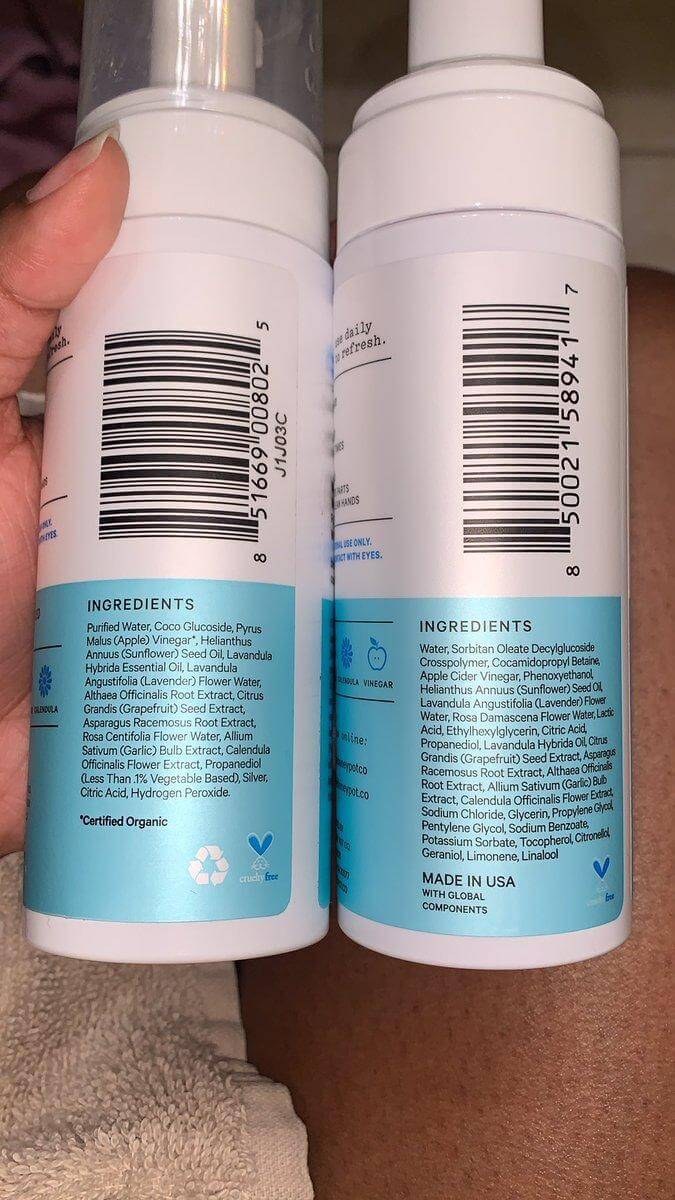
In practice, the INCI name is the name that is stated in the list of ingredients on the cosmetic product label. In the European Union, cosmetic ingredients in the ingredients list are given according to the INCI nomenclature. The official European source used to verify cosmetic ingredients is the CosIng database of the European Commission.
| Common name | INCI name |
|---|---|
| Water | Aqua |
| Glycerin | Glycerin |
| Shea butter | Butyrospermum Parkii Butter |
| Almond oil | Prunus Amygdalus Dulcis Oil |
| Vitamin E | Tocopherol |
| Citric acid | Citric Acid |
The INCI name is therefore not the marketing name of the raw material. It is a name intended for labelling cosmetic ingredients in a way that is understandable in an international environment.
| Substance | CAS number |
|---|---|
| Glycerin | 56-81-5 |
| Citric Acid | 77-92-9 |
| Tocopherol | 59-02-9 |
| Sodium Hydroxide | 1310-73-2 |
The CAS number is extremely useful in technical documentation, safety data sheets, analytical documents, regulatory databases and in communication with suppliers.
Why knowing only the name of the substance is not enough
A single substance can have several names. For example, glycerin can appear in documentation as glycerin, glycerol, 1,2,3-propanetriol or as Glycerin according to INCI. The CAS number helps to confirm that it is the same substance.
For some substances this is even more important. Similar-sounding names may designate different chemical forms, salts, hydrates, isomers or mixtures. Therefore, when checking technical documents, it is not advisable to rely solely on the name.
What the CAS number does not mean
The CAS number does not automatically mean that the substance is allowed in cosmetics. Nor does it mean that it is safe at any concentration or suitable for every application.
Remember: the CAS number is an identifier. It is not a safety assessment, recommended dosage or cosmetic approval.
Why some raw materials do not have a CAS number
Not every cosmetic raw material has a single clear CAS number. This can be surprising, especially for beginners, because we often perceive the CAS number as something that every substance should have. In practice, this is not the case.
The CAS number is assigned to a specific chemical substance or precisely defined entity. For simple substances such as glycerin, citric acid or sodium hydroxide, identification is relatively unambiguous. That is why they have a clear CAS number.
For natural raw materials, mixtures and complex materials the situation is more complicated. A plant extract, hydrosol, fragrance oil, emulsifier blend or active complex is not necessarily a single pure chemical substance. It may be a mixture of dozens to hundreds of naturally occurring compounds, or a mixture of several technological components. Therefore it may happen that the raw material does not have one CAS number as a whole.
- Individual components of the mixture may have their own CAS numbers.
- The supplier may provide a CAS number only for the main component.
- The supplier may provide several CAS numbers because the product is a mixture.
- A plant raw material may have a CAS number according to the botanical source, but the specific extract may differ depending on the plant part, processing method and extraction medium.
So if you do not find a single CAS number for a mixture, it does not automatically mean an error. It means that the raw material is not necessarily a simple single-component substance. In such a case it is even more important to work with the technical data sheet, specification and full INCI composition.
Why one substance can have several CAS numbers
The opposite situation is also possible. One substance or raw material can be associated with several CAS numbers in the documentation. There may be several reasons for this.
Sometimes it is not a single pure substance, but a mixture. Each component of the mixture can have its own CAS number.
Sometimes there are different forms of the same substance, for example an anhydrous form, hydrate, salt, ester or isomer. These forms may have different CAS numbers, even though the trade or common name may sound very similar. For some substances, for example, anhydrous and hydrated forms are distinguished.
Sometimes, in the case of natural substances, the source, method of obtaining or type of extract is distinguished. This is particularly important for plant extracts, essential oils, oil macerates or natural complexes.
Sometimes the documentation lists the CAS number of the main substance as well as the CAS numbers of other components, carriers or preservatives. Therefore you should not automatically assume that multiple CAS numbers mean an error. It is more a signal that you need to look at the full composition and understand exactly what the supplier is describing.
For more advanced work, check whether the CAS number belongs to the main active substance, to the whole substance as such, to one of the components of the mixture, to the carrier, solvent, preservative or to a different chemical form than the one you actually use.
What the EC number is
The EC number is a European identifier of a chemical substance. It is used in the context of European chemicals legislation, especially for identifying substances in systems such as REACH and CLP. The EC number has the format Xxx-xxx-x.
| Substance | EC number |
|---|---|
| Glycerin | 200-289-5 |
| Citric Acid | 201-069-1 |
| Sodium Hydroxide | 215-185-5 |
You will find the EC number mainly in safety data sheets, technical data sheets, regulatory databases, CLP classification and documentation for chemical substances. In cosmetic practice the EC number is particularly important when you need to verify that the documentation from the supplier actually relates to the correct substance.
What is the difference between EC and EINECS numbers
When working with technical documentation, in addition to the CAS number you will often encounter the terms EC number or EINECS number. These concepts are closely related, but they do not mean exactly the same thing.
EC number
General European substance identification number. It is used in European chemicals legislation and can be found, for example, in safety data sheets, technical data sheets, ECHA databases or documentation related to REACH and CLP.
EINECS number
Older European list of existing commercial chemical substances. The abbreviation stands for European Inventory of Existing Commercial Chemical Substances. EINECS is an inventory of substances that were already on the European market before newer regulatory systems were introduced.
The relationship is that an EINECS number is one type of EC number. However, not every EC number has to be an EINECS number. An EC number can also originate from other European lists, such as ELINCS or NLP.
The average cosmetic manufacturer does not need to remember all the historical lists. In practice it is important to know that the EC number is a European identifier of a substance and the EINECS number is a specific type of EC number for substances from an older European list of existing substances. In documentation you may encounter both terms, and in practice they are often used in a very similar way.
If a substance has an EC number, this helps with its regulatory identification in the European context. It still remains true that the EC number alone does not tell you whether the substance is suitable for use in cosmetics, at what concentration it may be used or whether it is subject to restrictions.
What is the difference between INCI, CAS and EC numbers
The simplest way is to think of these data points as three different layers of identification. INCI names the cosmetic ingredient, CAS precisely identifies the substance internationally and EC identifies it in the European regulatory context.
| Data point | What it is for | Where it is used | Example |
|---|---|---|---|
| INCI | Naming the cosmetic ingredient. | Cosmetic product label, cosmetic documentation. | Glycerin |
| CAS number | Precise international identification of the substance. | Safety data sheets, technical data sheets, scientific databases. | 56-81-5 |
| EC number | European identification of the substance. | REACH, CLP, European regulatory documentation. | 200-289-5 |
| EINECS number | Type of EC number for older existing substances in the European inventory. | European chemical documentation. | 200-289-5 (glycerin) |
For the label of a cosmetic product, the INCI name is the most important. For verifying the technical identity of a substance, the CAS and EC numbers are important. For safe and correct use of a raw material, you need to read all the data in context.
Practical examples from cosmetics
Theory becomes meaningful only on concrete raw materials. Let’s look at four typical examples — from a simple substance to a fragrance blend.
Example 1: Glycerin
Glycerin is a good example of a simple substance where the various names often overlap.
Common name: Glycerin
English name: Glycerin or Glycerol
INCI: Glycerin
CAS: 56-81-5
EC: 200-289-5
On the label, Glycerin is used. In the safety data sheet, however, you may also see the name glycerol and the CAS and EC identifiers.
Example 2: Shea butter
For plant-based raw materials we more frequently encounter the botanical name.
Common name: Shea butter
English name: Shea Butter
INCI: Butyrospermum Parkii Butter
The INCI name derives from the botanical name of the plant and the type of raw material. Therefore, we do not write “shea butter” on the label but Butyrospermum Parkii Butter.
Example 3: Almond oil
Almond oil is referred to simply in everyday communication, but in INCI the botanical name is used.
Common name: Almond oil
English name: Sweet Almond Oil
INCI: Prunus Amygdalus Dulcis Oil
For the customer, the term almond oil is understandable. For the cosmetic product label, however, the INCI name is decisive.
Example 4: Fragrance oil
Fragrance oils are blends of several aromatic components. They often have a trade name, such as Vanilla Dream or Fresh Cotton, but this name is not an INCI name.
For fragrance oils it is important to work with the supplier’s documentation — in particular the IFRA document, safety data sheet and allergen list. On the label, the designation Parfum or Aroma is usually used, depending on the type of composition and the purpose of the product. Mandatory fragrance allergens are indicated in accordance with current legal requirements and according to their concentration in the finished product.
Why the INCI can change even for the same plant
For plant-based raw materials it is not enough to know only the name of the plant. The INCI name also depends on which part of the plant was used, what type of raw material was produced and how it was processed.
From a single plant, a flower water, seed oil, flower extract, flower oil, powder from dried plant material or a hydrolysed extract can be produced. Each of these raw materials may have its own INCI name, a different function in cosmetics, a different composition and a different suitability in a formulation.
Therefore, it is not correct to guess the INCI based only on the common plant name. If a recipe mentions, for example, calendula, you need to know whether it is a calendula extract, calendula hydrosol, calendula oil, macerate or another form of raw material. The example of marigold, i.e. Calendula officinalis, illustrates this well in practice.
| Type of raw material | Example of INCI name | CAS | EC | What it means in practice |
|---|---|---|---|---|
| Flower extract | Calendula Officinalis Flower Extract | 84776-23-8 | 283-949-5 | Extract obtained from calendula flowers. The final composition may depend on the extraction medium and the specific supplier. |
| Flower water / hydrosol | Calendula Officinalis Flower Water | 84776-23-8 | 283-949-5 | Aqueous phase obtained from the flowers. It may be unpreserved or preserved, so it is necessary to check the supplier’s documentation. |
| Flower oil | Calendula Officinalis Flower Oil | 84776-23-8 / 70892-20-5 | 283-949-5 / depending on source | Oil or aromatic fraction from the flowers. It may have multiple identifiers because it is not always a single simple substance. |
| Seed oil | Calendula Officinalis Seed Oil | depending on source | depending on source | Oil obtained from calendula seeds. It is not the same as a flower extract or flower water. |
| Plant material from flowers | Calendula Officinalis Flower | 84776-23-8 | 283-949-5 | Dried or otherwise processed plant material from the flowers. It behaves differently in a formulation than an extract or hydrosol. |
| Hydrolysed flower extract | Hydrolyzed Calendula Officinalis Flower Extract | depending on source | depending on source | Modified extract obtained by hydrolysis. The name indicates that this is not a standard extract but a technologically processed form. |
This example illustrates three important points.
Firstly, the same plant does not mean the same INCI. Calendula hydrosol, calendula extract and calendula oil are not the same from the point of view of labelling or formulation.
Secondly, the same or a similar CAS number does not necessarily mean that the raw materials are interchangeable. CAS and EC numbers help with identifying the substance or plant source, but they do not describe the full practical behaviour of the specific raw material in a formulation.
Thirdly, for natural raw materials the identifiers can be more complex than for simple chemical substances. Plant extracts, hydrosols and oils are inherently complex materials, so they may sometimes share the same identifier, have multiple identifiers, or a particular data point may not be given.
For this reason, for plant-based raw materials it is always important to read the documentation for the specific product. Pay particular attention to the INCI name, botanical name, part of the plant used, type of raw material, carrier, preservation, processing method and recommended use.
Why the extraction medium also matters for extracts
For extracts it is not enough to look only at the plant name. It is very important to know in which medium the plant was extracted. Different extraction media draw out different groups of compounds from the plant, so the resulting extracts can differ in composition, effect, sensory character and use in a formulation.
- Aqueous extract
Delivers mainly water-soluble components and usually belongs to the water phase.
- Glycerin extract
Delivers water-soluble and partially polar components, with glycerin acting as a humectant. It can, however, affect tackiness and skin feel.
- Alcohol extract
Extracts a different spectrum of compounds than water or glycerin. It can have a more intense character, but the alcohol can affect the sensory profile and suitability for sensitive skin.
- Oil macerate
Delivers mainly lipophilic, i.e. oil-soluble, components. It behaves as an oil-phase component of the formulation.
- CO₂ extract
Can be very concentrated and can differ markedly in composition from aqueous, glycerin or oil extracts.
That is why two extracts from the same plant are not necessarily interchangeable. An aqueous extract of a plant, an oil macerate and a CO₂ extract may share the same botanical origin, but they will behave differently in a cosmetic formulation. You can find more on this topic in the macerates and extracts category.
Taking INCI names from the internet
Online databases can be very useful, but they should not replace the documentation for the specific raw material. For mixtures, extracts, preserved hydrosols, emulsifiers or functional blended raw materials, the INCI composition can be specific to a particular supplier.
A good reference source is the CosIng database, the European database of cosmetic ingredients. It helps you verify whether a given INCI name is used in cosmetic nomenclature, what its function in cosmetics is and whether certain regulatory information is attached to it.
However, CosIng is not a substitute for the technical data sheet of a specific raw material. It will not always tell you the exact composition of a specific extract from a specific supplier, whether a hydrosol is preserved, in what carrier an active substance is supplied or what auxiliary substances a commercial product contains.
The safest approach is to combine both sources:
If the data from the internet and the supplier’s documentation do not match, be careful. When making cosmetics, we do not rely on a name found at random on the internet, but on verified documentation for the specific batch or specific commercial product.
If you change supplier for the same raw material, you always need to check the documentation afresh. The same trade or common name does not necessarily mean that it is exactly the same product. The difference may lie in the carrier, preservation, concentration of the active substance, origin, processing method, refining, standardisation or auxiliary ingredients.
This applies especially to plant extracts, hydrosols, emulsifier blends, preservative systems, active complexes and fragrance oils. Two raw materials may have a similar name and similar use, but their INCI composition, dosage, sensory profile, stability or regulatory restrictions may differ.
When changing supplier, it is therefore not enough to rewrite the name of the raw material in the formulation. You need to check the new technical data sheet, specification, safety data sheet and INCI composition and, depending on the type of raw material, other documents as well, such as the IFRA certificate or allergen list. Only then can you assess whether the raw material can be used as a fully fledged substitute in an existing formulation.
The most common mistakes in identifying ingredients
Most labelling problems arise from a handful of recurring errors. Here are the six most common.
1. Confusing the trade name with the INCI name
The trade name is the name of the product from the supplier. It may be attractive, marketing-driven and easy to remember, but it usually does not belong in the list of ingredients on the label. If a raw material is called, for example, Silky Touch Emollient, that does not mean you use this name as the INCI. You need to find out its actual INCI composition.
2. Using the Slovak name instead of the INCI name
In the list of ingredients on a cosmetic product label, you do not use “almond oil”, “shea butter” or “vitamin E”, but the corresponding INCI names. You can use the Slovak name in marketing copy, the product description or on the front of the label, but the list of ingredients must be prepared according to the rules for cosmetic ingredients.
3. Taking INCI names from the internet without checking the documentation
Online databases are a good helper, but they should not replace the documentation for the specific raw material. This applies especially to mixtures, extracts, preserved hydrosols, emulsifiers, active complexes and fragrance oils. For a specific raw material, the supplier’s documentation is always decisive.
4. Ignoring preservatives and carriers
Some raw materials are not pure single-component substances. They may contain water, glycerin, preservatives, stabilisers, antioxidants or solvents. A typical example is a hydrosol, which may be unpreserved or preserved. If it is preserved, the preservative is part of the supplied raw material and must be taken into account when compiling the INCI list of the finished product.
5. Assuming that the same name always means the same substance
For some substances, different forms may exist. The difference may lie in hydration, salt form, isomerism, origin or purity. That is exactly why CAS and EC numbers are important for technical identification. For more advanced formulation work it is worth checking not only the name but also the CAS number, EC number, specification and composition of the raw material.
6. Confusing similar plant raw materials
A plant extract, hydrosol, oil macerate and essential oil from the same plant are not the same raw materials. They can have different INCI names, different compositions, different solubility and different uses in a formulation.
How to verify a cosmetic ingredient in practice
When working with a raw material, it is best to proceed systematically. You do not have to be a chemist, but you should know where to find the basic data and how to compare it.
Step 1: Start with the supplier’s documentation
For every raw material, request or check the available documentation. Most often this means the technical data sheet, product specification, safety data sheet, INCI composition, certificates where relevant, the IFRA document for fragrance oils and the allergen list for aromatic compositions. For simple raw materials the documentation may be brief. For complex mixtures, active substances, preservative systems and perfume compositions, however, the documentation is essential.
Step 2: Check the INCI name
Use the INCI name when creating the label and the list of ingredients. If the raw material contains several components, it is not enough to state only the name of the main substance. You need to know the full INCI composition of the supplied raw material. For example, an active substance may be supplied in a carrier, a plant extract may contain glycerin and water, a preserved hydrosol may contain a preservative and an emulsifier may be a mixture of several components.
Step 3: Compare the CAS and EC numbers
CAS and EC numbers help you verify that the technical data sheet, safety data sheet and specification are all describing the same substance. If the name of the substance differs slightly between documents, the CAS number can help confirm its identity. If the CAS numbers do not match, be careful and check whether it is a different form of the substance, a different mixture or an error in the documentation.
Step 4: Verify the regulatory context
Not every substance that has a CAS number is automatically suitable for cosmetics. For cosmetic products you need to check whether the ingredient is suitable for the intended purpose, whether it has restrictions on use, whether it is a regulated ingredient and whether its concentration meets safety requirements. For preservatives, colourants, UV filters and certain active substances, the restrictions are particularly important.
Step 5: Do not forget the finished product
Identifying the raw material is only the first step. For the finished cosmetic product, you need to compile the complete list of ingredients correctly, according to the formulation, concentrations and labelling rules. Ingredients in the INCI list are usually given in descending order of weight at the time they were added to the product. Ingredients at concentrations below 1% may be listed in any order after those above 1%. Colourants may be listed according to special rules.
Tips for intermediate and advanced manufacturers
Keep track of the difference between a substance and a mixture
Some raw materials are single-component substances, others are mixtures. This is very important when reading documentation. A single-component substance can have a clear CAS and EC number. A mixture, however, can contain several substances, each of which may have its own identifier. That is why, for mixtures, it is often not enough to look for a single CAS number for the whole product. Typical mixtures in cosmetics are emulsifiers, preservative systems, perfume compositions, active complexes, plant extracts in a carrier and functional blends.
Watch out for botanical names
For plant oils, butters, extracts and hydrosols, the botanical name is very important. Similar common names can refer to different plants or different parts of a plant. For plant raw materials, check the Latin name of the plant, the part of the plant used, the processing method, the extraction medium, refined or unrefined status, the preservation and the country of origin where relevant.
For extracts, also check the carrier
Extracts are often supplied in water, glycerin, propanediol, oil, alcohol or another solvent. This affects not only the INCI list but also compatibility with the formulation. An aqueous extract will behave differently from an oil macerate. A glycerin extract can affect the tackiness of the product. An alcohol extract can affect the sensory profile as well as suitability for sensitive skin.
For fragrances, follow the IFRA document
For fragrance oils it is not enough to know the trade name of the fragrance. What matters is the IFRA document, which sets the recommended or maximum usage of the fragrance by product category. Different limits may apply to a rinse-off product, a leave-on product, a lip balm, a body cream, a perfume, a candle or a household product. That is why, with fragrances, you always work with the specific category of use.
Check allergens in the finished product and remember to add them up
For fragrances, essential oils and aromatic ingredients, you need to track allergens in the finished product. It is not enough to look only at whether an allergen is present in a single raw material. What matters is its total concentration in the whole formulation. If you use several mixtures that contain the same allergen, its amounts add up in the finished product. This applies especially to combinations of several fragrance oils, essential oils, plant extracts with a natural content of aromatic compounds or perfume compositions.
A practical example of adding up an allergen: One fragrance oil may contain Linalool. Another essential oil may also contain Linalool. A plant extract or aromatic ingredient may add a further small amount of Linalool. When assessing the label, we do not look at each raw material in isolation, but at the total amount of Linalool in the finished product.
This means that the same allergen may be below the limit in one individual raw material, but once all the sources in the formulation are added together, it may exceed the threshold above which it must be declared in the list of ingredients. For more advanced formulation work it is therefore advisable to keep an overview of allergens across the whole formulation, not just by individual fragrance ingredients.
Use raw materials intended for cosmetic use
When making cosmetics, technical-grade or vaguely specified alternatives should not be used just because they have a similar name or the same main substance. You should use raw materials suitable for cosmetic use, with the appropriate documentation and a clear specification. The reason is not just legislation, but also the safety and quality of the finished product. A technical-grade raw material can have a different purity, different impurity limits, different microbiological quality, different stabilisers or insufficient documentation for cosmetic use.
For cosmetic raw materials it is important to consider not only the name of the substance but also its quality, intended use, purity, specification, safety documentation, microbiological parameters and suitability for contact with skin. It is therefore not enough that a substance “looks the same chemically”. When making cosmetics, what matters is that it is suitable for cosmetic use and that the documentation needed for a correct formulation, labelling and safety assessment is available for it.
Practical guide: Which data point do I need?
A quick reference depending on what you are working on right now.
Frequently asked questions
Practical questions that come up most often around labelling and identifying cosmetic ingredients.
Is the INCI name the same as the chemical name?
Not always. The INCI name is the name used in cosmetics for labelling ingredients. For some substances it can be very similar to the chemical name; for others it derives from the botanical name or from established cosmetic nomenclature.
Do I need to know INCI for homemade cosmetics?
If you make cosmetics only for yourself, you do not need to apply INCI as strictly as for a product placed on the market. It is, however, very useful to understand it, because it will help you read formulations, technical data sheets and the composition of raw materials. If you sell cosmetics or otherwise place them on the market, correct labelling of ingredients according to INCI is an important part of the legal requirements.
Can I use Slovak ingredient names on the label?
The list of ingredients of a cosmetic product uses INCI names. You can use Slovak names in the product description, in marketing copy or as an explanation for the customer, but not as a replacement for the INCI list.
Is the CAS number mandatory on a cosmetic label?
No. The CAS number is not normally stated on the label of a cosmetic product for the consumer. It is used mainly in technical documentation, safety data sheets and regulatory databases.
Is the EC number the same as the CAS number?
No. The CAS number is an international identifier of a chemical substance, whereas the EC number is a European identifier used in European Union chemicals legislation. Both can help identify a substance, but they are not the same thing.
Is the EINECS number the same as the EC number?
Not quite. The EINECS number is one type of EC number. It belongs to substances from the older European list of existing commercial chemical substances. The EC number is a broader term and can also come from other lists, such as ELINCS or NLP.
Why do some raw materials have no CAS number?
Because it is not necessarily a single, precisely defined chemical substance. It may be a natural complex, a mixture, an extract, a hydrosol, a fragrance oil or a blend of several components. In such cases the individual components may have CAS numbers, but not always the whole product as a single entity.
Why does one raw material have several CAS numbers?
Most often because it is a mixture, because different forms of the substance exist, or because it is a complex natural raw material. Several CAS numbers may refer to individual components, a different chemical form, a carrier, a preservative or various identifiers used in documentation.
Why does a plant oil have a Latin name in INCI?
For plant-derived ingredients, the INCI name is often based on the botanical name of the plant. This is more precise than the common name, which can differ between languages and can sometimes be ambiguous.
Can two raw materials have the same INCI but different quality?
Yes. The same INCI does not necessarily mean the same quality, origin, scent, colour, processing method or content of minor compounds. When comparing raw materials, it is therefore important to also look at the specification, technical data sheet, origin, purity and other parameters.
Can the INCI differ for a raw material from the same plant?
Yes. The INCI depends on the part of the plant used, the type of raw material and the processing method. A flower extract, seed oil, hydrosol and oil macerate from the same plant do not necessarily have the same INCI name.
Do I need to check the INCI when changing supplier?
Yes. When changing supplier, always check the documentation afresh. The same trade name or a similar description of the raw material does not necessarily mean that the product has the same INCI composition, the same carrier, preservation, concentration or recommended use.
Where can I verify an INCI name?
It is best to start from the supplier’s documentation. As a supplementary source you can use cosmetic databases, in particular the CosIng database of the European Commission. For a specific raw material, however, the documentation for the product you actually use is always decisive.
Summary
INCI, CAS, EC and EINECS are not pointless technical details. They are tools that help you correctly name, identify and safely use cosmetic ingredients. You need the INCI name above all when labelling cosmetic products. The CAS number helps precisely identify a chemical substance in an international context. The EC number is used mainly in European regulatory documentation. The EINECS number is one type of EC number and relates to the older European list of existing commercial substances.
For a beginner, the most important thing to understand is that the trade name of a raw material is not automatically its INCI name. For more advanced work it is important to learn to read technical data sheets, safety data sheets, IFRA documents, allergen lists and specifications.
For plant raw materials it is not enough to know only the name of the plant. The INCI can change depending on the part of the plant used, the type of raw material and the processing method. With mixtures and complex raw materials, it can happen that a product has no single CAS number or has several CAS numbers.
If you are not sure about a raw material, do not rely only on a name from the internet. Check the documentation for the specific raw material from the supplier and use the CosIng database as a supplementary source. It is precisely the combination of the correct INCI, technical documentation and an understanding of the specific raw material that forms the basis for a correct formulation, label and safety assessment of a cosmetic product.
With raw materials from Handymade.sk, you have access to the documentation needed to use them correctly, including technical data sheets, safety data and other available materials depending on the type of raw material. We prepare and publish these documents so that they are understandable and usable even for manufacturers who do not want to waste time hunting for information in various foreign sources.
Our goal is for you to work with verified data, not guesswork, when creating your formulations. That way you can focus better on the formulation itself, correct product labelling and the safe use of cosmetic raw materials.