Chelating agents belong among the less conspicuous but extremely important components of cosmetic formulations. In natural cosmetics, they help maintain the stability, clarity, colour and effectiveness of sensitive active ingredients by binding metal ions from water, plant extracts or raw materials. For this reason, they often determine whether a serum, tonic, shampoo or emulsion will look and perform well even over time.
About this article
In this article, we will look at what chelants are, how they work, which ones are most commonly used in natural cosmetics and how to choose a suitable chelant for a specific formulation. You will also find a classification of chelating agents, a comparison of the best-known chelants and answers to frequently asked questions.
Key benefits
- Less reactive metal ions
Ions of iron, copper, calcium or magnesium become less reactive in the formulation, thereby reducing the risk of oxidation, colour changes, loss of clarity and degradation of sensitive components.
- Colour stability and scent
The result can be better colour stability, a lower risk of off-odours and quality that is maintained for longer.
- Support for the preservative system
A chelant can indirectly support the microbiological stability of the product, because by reducing the disruptive influence of metals it helps keep the formulation in better condition. The result is often more reliable performance of the preservative system as well.
- More predictable performance of wash-off products
Calcium and magnesium ions from hard water can affect surfactant behaviour, reduce foaming and impair clarity — in shampoos, shower gels or liquid soaps, a suitable chelant therefore helps to achieve more predictable performance and a better user experience.
- Visual quality of clear products
If you work with clear gels, transparent serums or crystal-clear cleansing products, the chelant can also determine the visual quality of the product.
Properties of chelating agents
What chelating agents are in cosmetics and why they are important
In a cosmetic formula, a lot of attention is usually paid to active ingredients, emulsifiers, preservatives, surfactants or fragrances. Chelating agents receive somewhat less attention, even though they can significantly influence the stability of the finished product.
If a formulation darkens for no apparent reason, changes its scent, becomes slightly hazy or behaves differently with varying water quality, the problem often does not lie only in preservation or antioxidants. Very often, it is due to trace amounts of metal ions and the fact that the system is lacking a suitable chelant.
Chelating agents, also called chelators or complexing agents, are compounds capable of binding metal ions into stable complexes. In practice, this means that ions of iron, copper, calcium or magnesium become less reactive in the formulation, thereby reducing the risk of oxidation, colour changes, loss of clarity and degradation of sensitive components.
How chelants work in a formulation
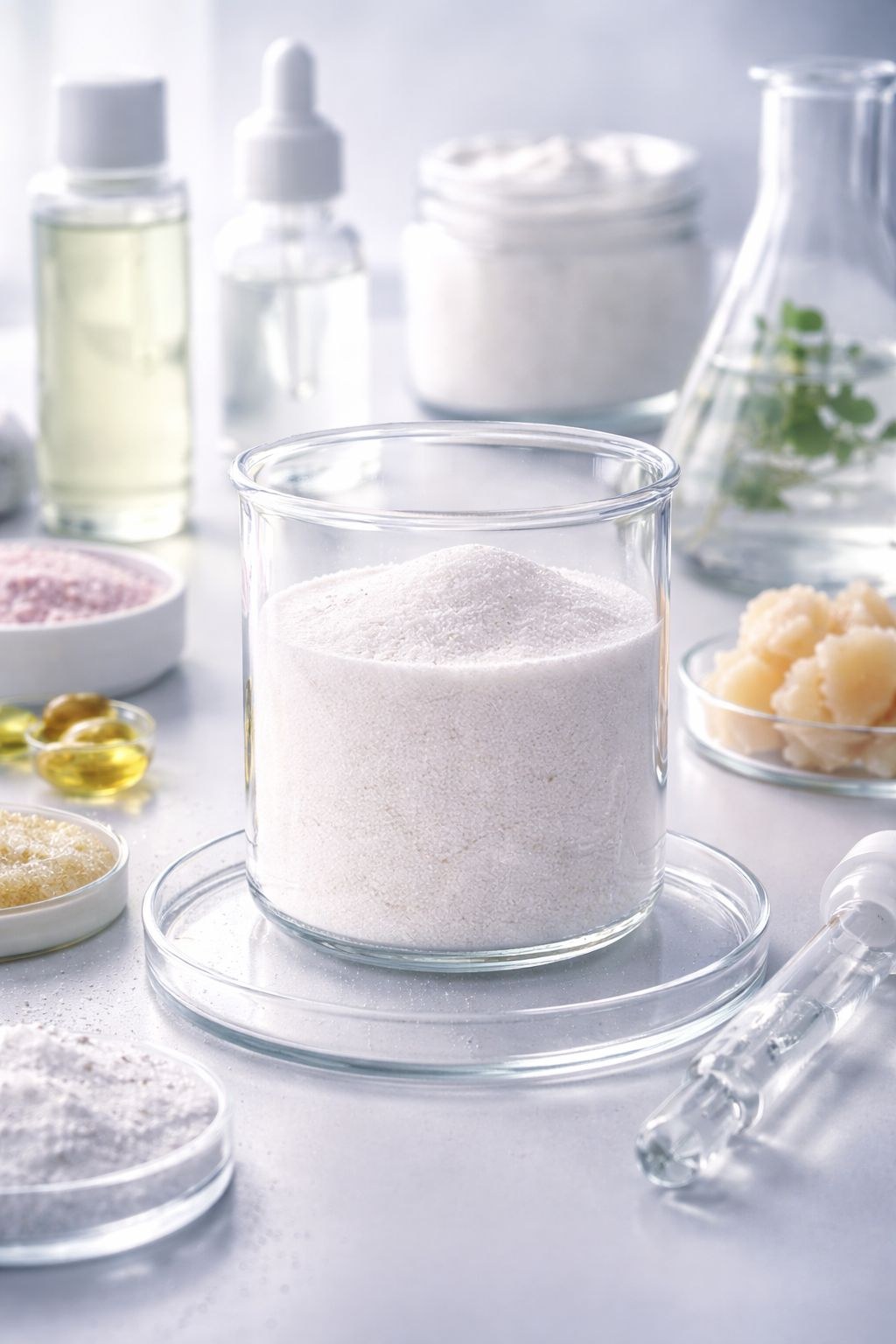
Metal ions can enter cosmetics from water, botanical raw materials, mineral components, manufacturing equipment and also from packaging materials. They do not need to be present in large quantities. Even trace concentrations can accelerate oxidation reactions, change the product’s colour, reduce clarity or negatively affect the scent and overall sensorial profile.
This is particularly important for products containing unsaturated oils, plant extracts, fragrance components, vitamins or other sensitive active ingredients. The chelant binds these ions and helps stabilise the formulation.
The result can be better colour stability, a lower risk of off-odours, prolonged maintenance of quality and often more reliable performance of the preservative system.
Are chelating agents the same as preservatives?
No. A chelating agent is not primarily a preservative and does not replace the preservative system. Its main role is to bind metal ions. In practice, however, it can indirectly support the microbiological stability of the product, because by reducing the disruptive influence of metals it helps keep the formulation in better condition.
Where chelating agents are used
Chelants are used in a wide range of cosmetic products. They are important in serums, toners, gels, emulsions, shampoos, shower gels, micellar waters and facial cleansing products.
They are relevant wherever a formulation works with an aqueous phase, plant-based components or raw materials that are sensitive to oxidation.
They are also very practical in wash-off products. Calcium and magnesium ions from hard water can affect surfactant behaviour, reduce foaming, impair clarity and contribute to deposits. In shampoos, shower gels or liquid soaps, a suitable chelant therefore helps to achieve more predictable performance and a better user experience.
If you work with clear gels, transparent serums or crystal-clear cleansing products, the chelant can also determine the visual quality of the product.
Classification of chelating agents
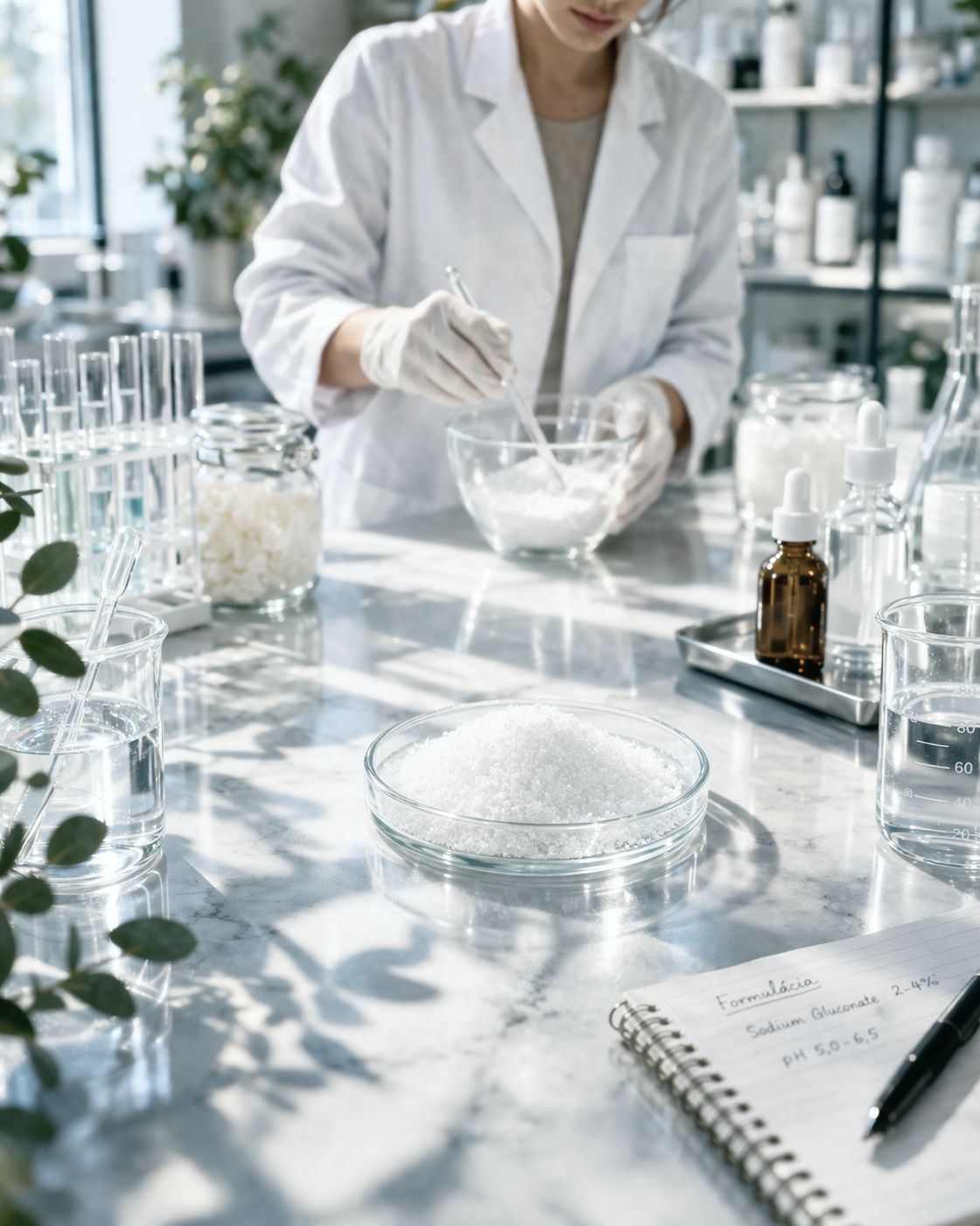
- Aminopolycarboxylate chelators include mainly EDTA and its salts, but also more modern substances such as GLDA, MGDA, IDS or Tetrasodium Glutamate Diacetate. From a technological point of view, these are very effective chelators that reliably bind metal ions and significantly support formulation stability.
- Hydroxycarboxylate chelators include mainly Sodium Gluconate, but also citric acid, sodium citrate and, from a broader multifunctional perspective, gluconolactone. This group is very interesting for natural cosmetics, because it acts more gently and naturally than classic synthetic chelators.
- Phytate chelators include phytic acid and its salts, especially Sodium Phytate. This group is very often associated with a more natural, plant-based and clean beauty positioning.
- Newer biodegradable chelators such as GLDA, MGDA, IDS or Tetrasodium Glutamate Diacetate represent a compromise between high efficacy and a more favourable environmental profile.
The best-known chelants in natural cosmetics
Below we go through the chelants you will come across most often in natural cosmetics, and what sets them apart from one another.
Sodium Phytate
Sodium Phytate is among the most popular choices in natural cosmetics, because it offers a very good compromise between functionality and a natural raw material profile.
Sodium Gluconate
Sodium Gluconate is suitable for formulators who want to support product stability without an overly synthetic feel and at the same time maintain a naturally perceived composition.
Phytic acid and its salts
Phytic acid and its salts are particularly interesting for formulations that aim to stay as close as possible to a plant-based and more natural concept.
Citric acid and sodium citrate
Citric acid and Sodium citrate are often used as supportive stabilising agents that also help with pH adjustment.
Gluconolactone
Gluconolactone is particularly interesting as a multifunctional raw material which, in addition to other benefits, can contribute to formulation stability and gently support the chelating effect.
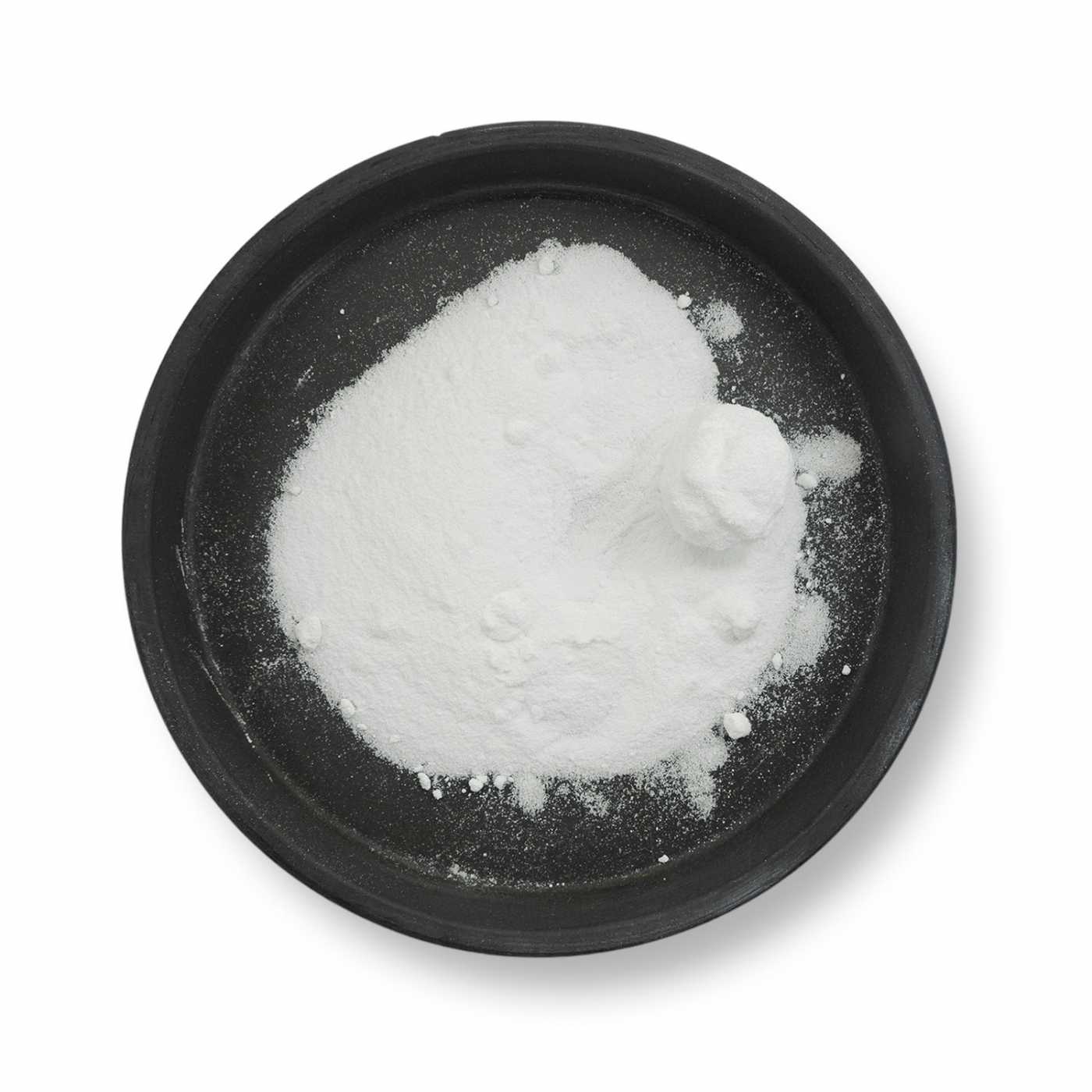
How to choose a suitable chelant for a formulation
When choosing a chelant for natural cosmetics, it is not enough to look only at whether the substance binds metal ions. It is also important to consider how well it fits into the overall product concept, what its environmental profile is and whether its performance matches the demands of the formulation.
If the goal is the most natural profile of the formula possible, sodium phytate, phytic acid or sodium gluconate very often make the most sense. If stronger technological performance is needed and the brand is willing to work with a more modern synthetic compromise, GLDA, MGDA or Tetrasodium Glutamate Diacetate can be an interesting route.
It is also very important to take into account the type of product. A clear water-based serum will have different requirements than a shampoo, an emulsion with a higher content of botanical extracts, or a product with vitamin C, acids or unstable active ingredients.
Why it is worth talking more about chelating agents
In natural cosmetics, chelating agents are often even more important than in conventional formulations. Plant extracts, hydrolates, clays, mineral components and more sensitive active ingredients are often more susceptible to the influence of metal ions, which can manifest as changes in colour, scent, clarity or overall product stability.
Although the customer often pays attention on the label mainly to well-known active ingredients, formulation stability is just as important for quality and user experience. A chelant may not be as striking in marketing terms as vitamin C or hyaluronic acid, but it often determines whether the product will continue to look and perform as it should over time.
If you want to explore practical options for formulation work, you will find a dedicated category of chelating agents on Handymade, where it is possible to compare more natural and more technically powerful solutions according to formulation type.
Conclusion
When we look at chelating agents from the perspective of natural cosmetics, the most important thing is not only whether they work, but also how they fit into the overall formulation concept. It is important that the choice of chelant is not only driven by marketing, but is also functional from a formulation standpoint.
A good natural formula does not rely only on attractive raw materials, but on the fact that the entire system continues to function stably, cleanly and reliably over time.
Frequently asked questions about chelating agents
Practical questions about chelants — what they actually do, whether they replace a preservative, which chelant to choose and which products they are added to most often.
What is a chelating agent in cosmetics?
A chelating agent is a substance that binds metal ions, such as iron, copper, calcium or magnesium, thereby reducing their disruptive influence on the cosmetic formulation. It helps improve the stability, clarity, colour and overall reliability of the product.
Why are chelants important in natural cosmetics?
Natural cosmetics often contain plant extracts, hydrolates, clays and sensitive oils that may be more prone to oxidation or colour changes. Chelating agents help limit the influence of metal ions and thereby protect formulation stability.
Is a chelant the same as a preservative?
No. A chelant is not primarily a preservative. Its role is to bind metal ions. However, it can support the effectiveness of the preservative system and indirectly contribute to better product stability.
Which chelant is most suitable for natural cosmetics?
Very often, sodium phytate, phytic acid and sodium gluconate are considered the most suitable options. The specific choice, however, depends on the type of formulation, pH, the sensitivity of the raw materials used and the desired level of stability.
What is the difference between sodium phytate and sodium gluconate?
Sodium Phytate is often perceived as one of the most natural and best-accepted options for natural cosmetics. Sodium Gluconate, on the other hand, is a very practical, mild and easy-to-use chelant with a clean profile. Both substances are interesting, but their performance and suitability can differ depending on the specific formula.
Can chelants improve the effect of a preservative?
Yes, in many cases they can. They are not a replacement for a preservative, but a support for the overall stability of the formulation and, in some systems, for better performance of the preservative system.
Are citric acid and sodium citrate chelators?
Yes, they have a chelating effect, but in practice they are used more as auxiliary stabilising and pH-regulating substances. When higher levels of chelation are required, they are not always the strongest choice.
When is a gentle natural chelant not sufficient?
Especially in technologically more demanding formulations with a higher content of botanical extracts, unstable active ingredients, mineral components or in sensitive transparent systems. In such cases, it is necessary to verify the effectiveness of the specific chelant by stability testing.
In which products are chelants added most frequently?
Most often in serums, toners, gels, emulsions, shampoos, shower gels, micellar waters, cleansing products and other formulations where water, plant-based raw materials or sensitive active ingredients are present.
You will find sodium phytate, sodium gluconate, citric acid, sodium citrate and gluconolactone in the Handymade raw material range — so you can compare more natural and more technically powerful solutions according to formulation type.