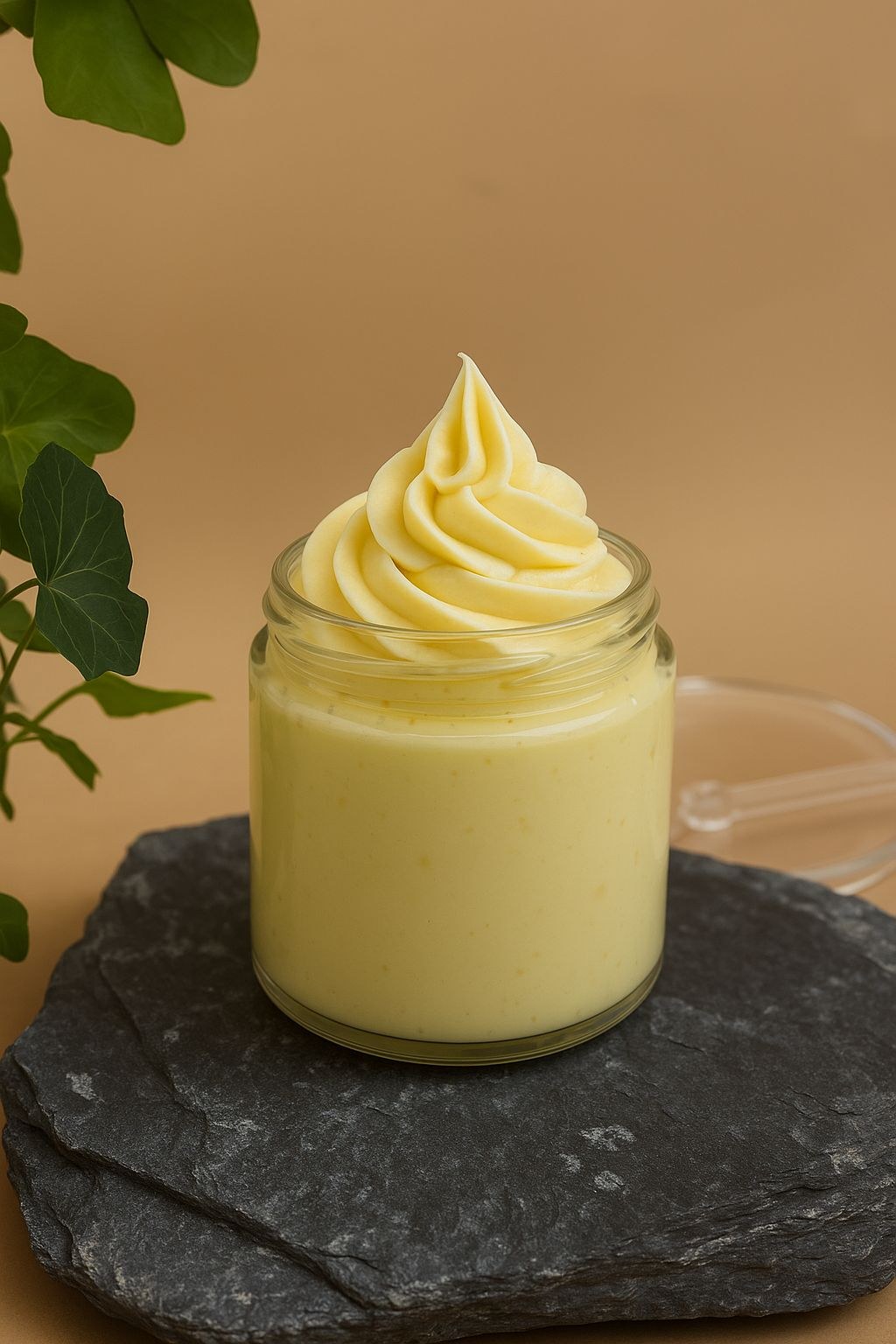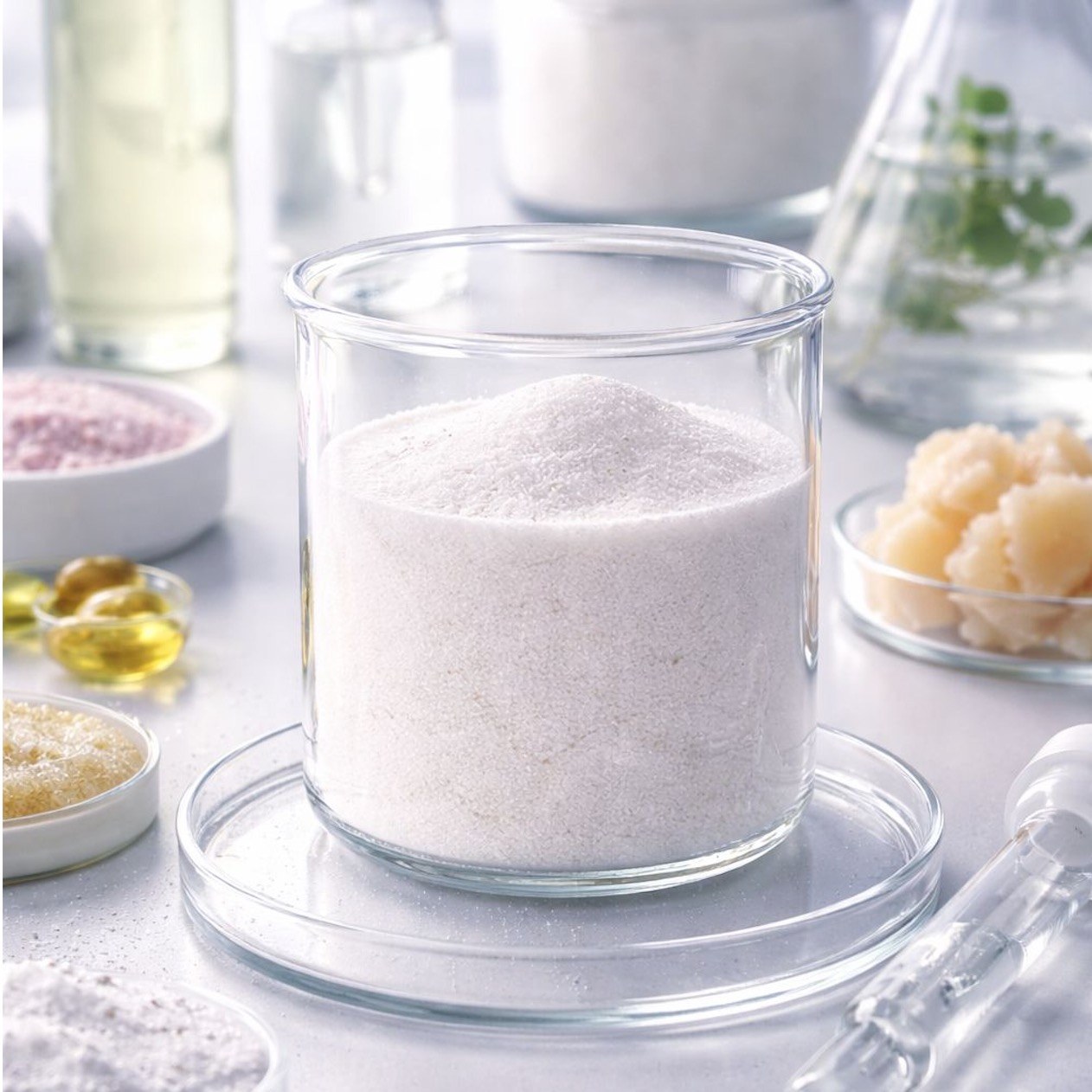
Water-free cosmetics — that is, cosmetics without any water content — are among the growing trends in skincare today. Summer is quite a challenge for our skin: increased exposure to UV radiation, high temperatures, frequent travelling or air-conditioned spaces can dry it out and irritate it. Let’s take a closer look at the benefits water-free cosmetics offer — and let’s make a regenerating whipped body butter together.
About this recipe
The recipe for a whipped butter to support skin regeneration was created by our customer and maker Erika Samoľová, whom we thank for the great contribution. It is a water-free (anhydrous) product — a combination of beeswax, plant butters and oils, complemented by active ingredients. It is easy to make for both beginners and advanced makers and is well suited to evening summer skincare after sun exposure.
Benefits of anhydrous natural cosmetics
- Higher concentration of active ingredients
In conventional face creams, water often makes up as much as 90 % of the formulation. Water-free products — balms, oils, sticks or powders — do not contain water, and so they can consist of more active and nourishing ingredients in the same volume as water-based products.
- Lower need for preservatives
The breeding ground for bacteria is precisely water. That is why it is essential to use preservatives in conventional cosmetics, and we cannot avoid them even in natural cosmetics. Water-free cosmetics often almost completely bypass the use of preservatives, and so they can be gentler on the skin in summer, when it is more sensitive.
- Longer shelf life and stability in the heat
High temperatures are not good for classic creams — emulsions can deteriorate or separate. Anhydrous products contain no emulsions and no water that could spoil, and they tolerate heat as well as longer transport well.
- Eco-friendliness and sustainability
Producing cosmetics without water saves huge amounts of this precious resource. Such products tend to be more compact, use less packaging and leave a smaller ecological footprint. In times of climate crisis, this is a simple step in the right direction.
- Practicality when travelling in summer
A solid balm, stick or powder serum will not spill, does not take up much space and passes through airport security without any problems. Water-free products are lightweight, practical and withstand demanding conditions, whether you are travelling to a festival, on holiday or just for a weekend by the water. What is more, the composition of natural water-free products does not disrupt the ecosystem, which makes them a great choice when hiking or camping in nature.
Product details
Why skin loses water in summer
A classic moisturising cream can indeed supply water to the skin, but in summer it quickly evaporates as a result of high temperatures and the lower relative humidity of the environment. The skin also loses water due to the effect of UV radiation, sweating, more frequent washing, bathing in chlorinated pools, as well as mechanical friction (towels, clothing…). Water-free products create a protective barrier on the skin that helps to reduce transepidermal water loss (TEWL).
A common component in natural water-free cosmetic products are plant butters, which you can read about on the Handymade blog.


Key ingredients in the recipe
Below we go through the ingredients that form the base of this whipped butter and explain why each of them belongs in the recipe. There are already many recipes for whipped butter nowadays — you can prepare different variations by replacing the oils or butters with another type, depending on the purpose for which you want to use the butter.
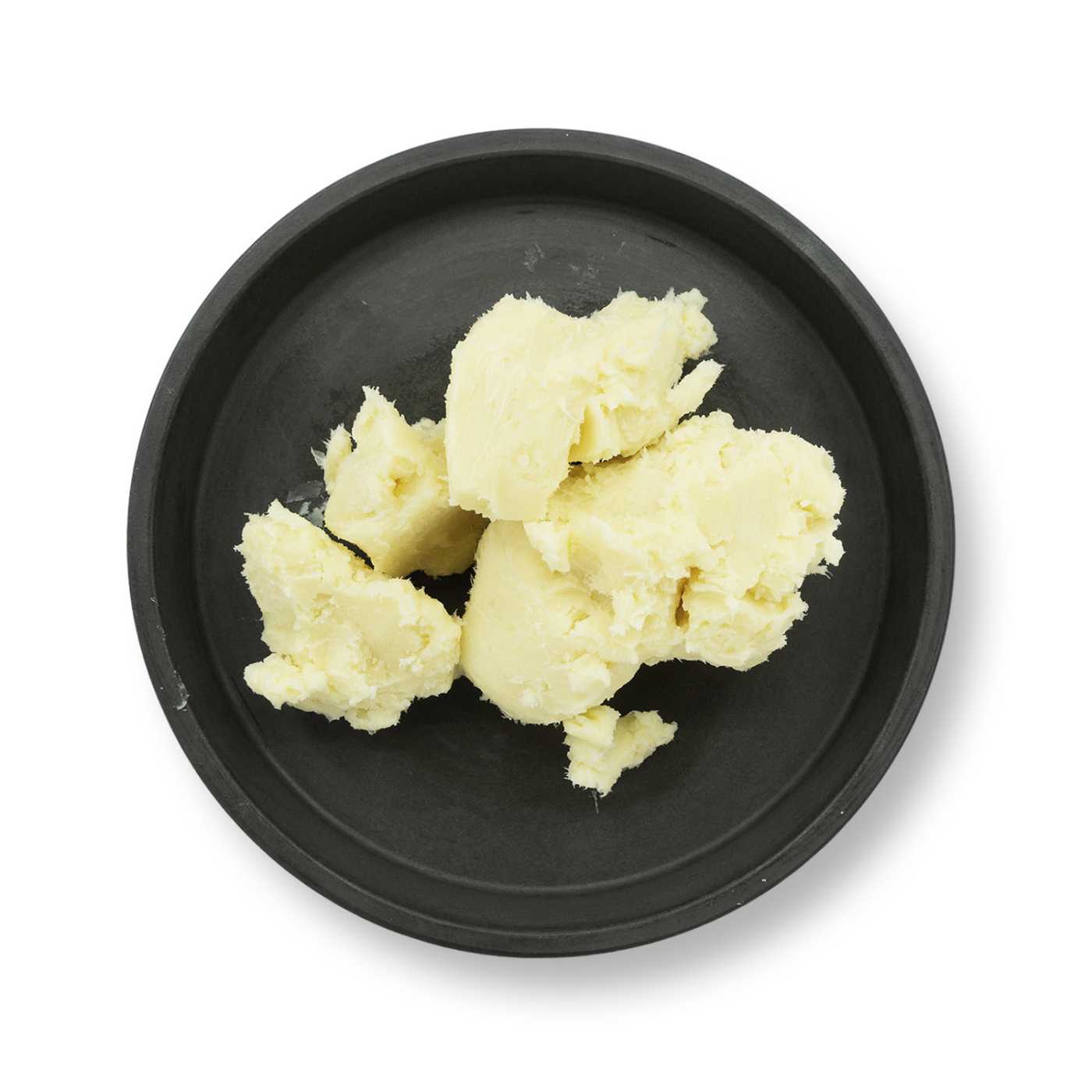
Shea butter
One of the most valuable butters, originating from Africa, is shea butter. It has been proven that it helps retain water in the skin, has anti-inflammatory and antioxidant effects and also slows down skin ageing1 thanks to its high content of vitamins A and E. It is very suitable for formulations intended to prevent the formation of stretch marks and is also able to partially absorb UV radiation thanks to its content of cinnamic acid esters and triterpene alcohols, which is why it is suitable for sunscreens. Unrefined shea butter has a specific scent, which needs to be taken into account when incorporating it into recipes. If you are looking for a simple way to give your skin the benefits of shea butter, try a whipped butter — it is soft, nourishing and at the same time brings a luxurious feeling of pampering the skin.
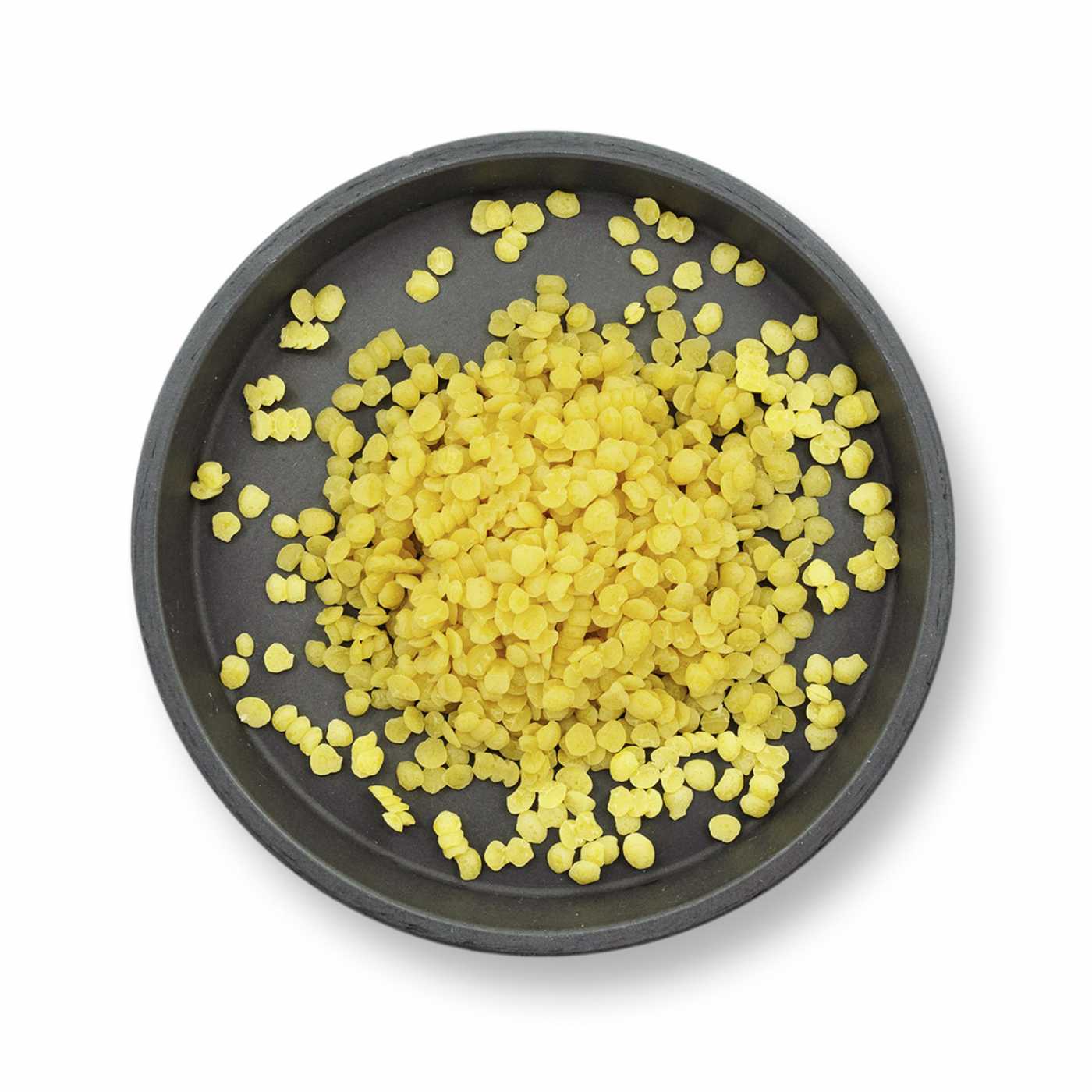
Beeswax
Together with the butters, beeswax is one of the richer components of the recipe. Thanks to it, the butter stays on the skin longer and keeps it supple and hydrated. It is added to the mixture right at the start and melted together with the butters and oils in a water bath.
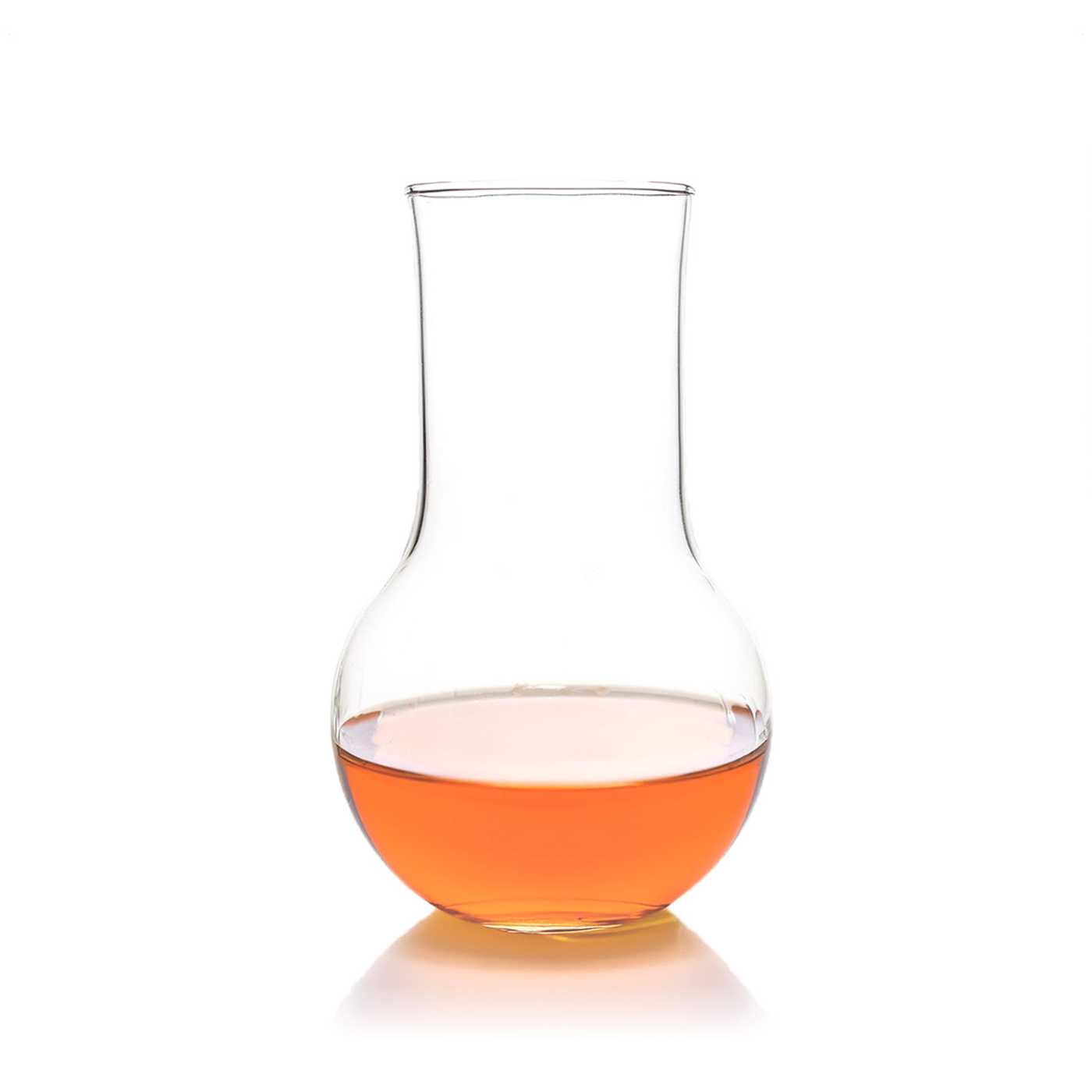
Liquid coenzyme Q10
Coenzyme Q10, together with pomegranate extract, is one of the active ingredients of this butter. They enhance the regenerative effect of the product, help prevent premature skin ageing and improve the condition of the skin. They are added only once the mixture has slightly solidified, during whipping.
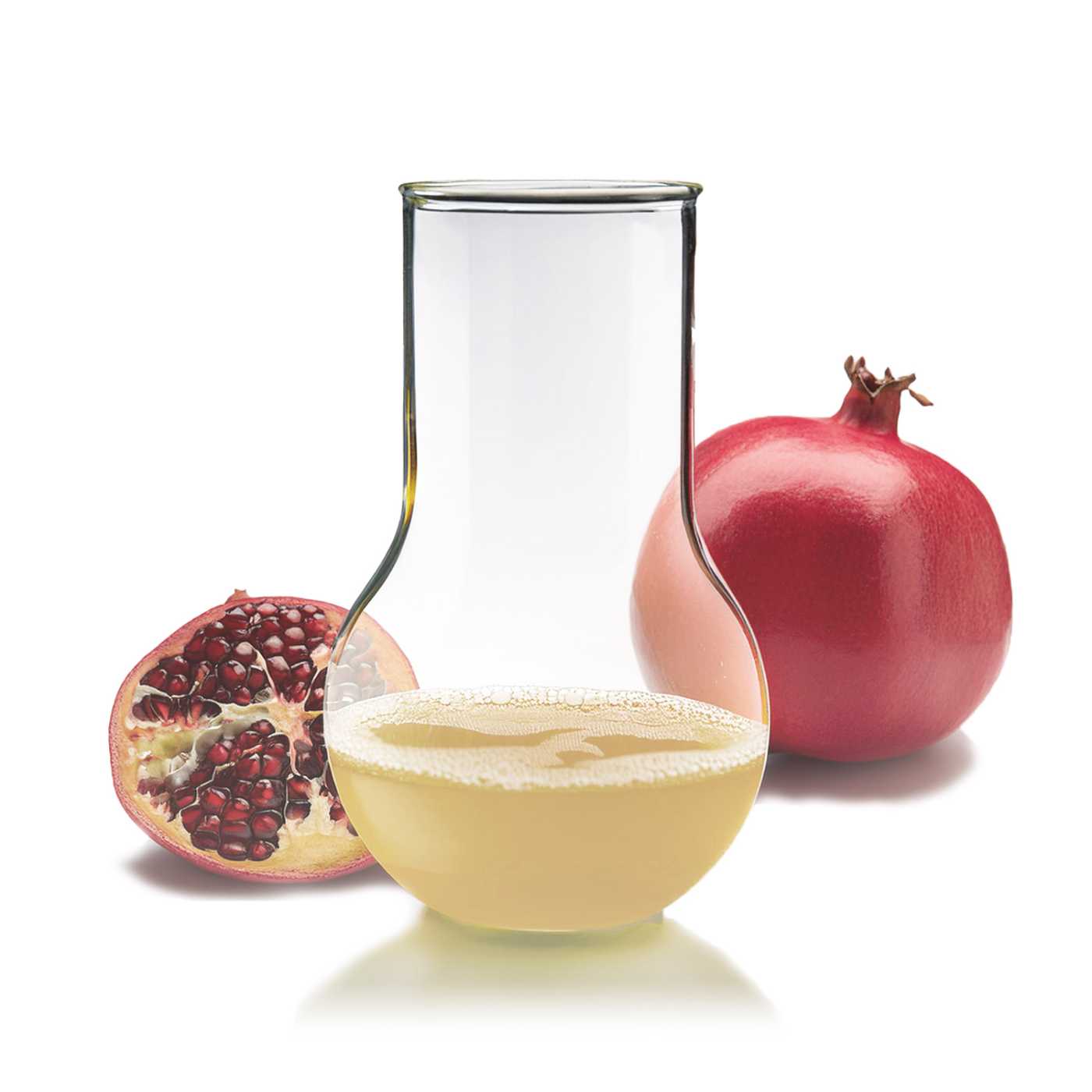
Pomegranate extract
Pomegranate CO2 extract is the second active ingredient in the recipe. Together with coenzyme Q10 it enhances the regenerative effect of the butter and helps prevent premature skin ageing. Just 1 g is enough for the whole batch.
Liquid vitamin E
An ingredient that is not worth omitting from the recipe is vitamin E, also known as tocopherol — it is among the most important antioxidants for the skin. Its main role is to protect cells from damage caused by free radicals and solar radiation2. In addition, it slows down the oxidation of oils, so your butter will stay fresh longer.
Other ingredients
The oil part of the recipe consists of jojoba oil, argan oil and avocado oil; mango butter is added alongside the shea butter. The butters and oils are rich in vitamins of groups A, B, D and E.
You choose the scent according to your own preference — an essential or a fragrance oil. In this recipe, Mango fragrance oil and Indian rosewood essential oil were used.
Formulation (180 g)
The ingredient quantities are given in grams exactly as the author prepared the recipe — the whole batch makes 180 g. Vitamin E is dosed in drops and you choose the scent according to your own preference.
Shop the ingredients for this recipe
Untick what you already have- Yellow Beeswax, yellow pellets 100 guses 10 gin stock€3.35
 Jojoba Oil, Cold Pressed, Organic, 100 mlrecipe uses 50,00 gin stock€7.34
- Shea butter, unrefined, 100 guses 50 gsold outWatch availability€3.99
 Mango Butter, Refined, 100 guses 40 gin stock€3.29
 Argan Oil, Cold Pressed, Deodorized, Organic, 100 mlrecipe uses 15,00 gsold outWatch availability€9.96
 Avocado Oil, Refined, 100 mlrecipe uses 10,00 gin stock€2.32
- Coenzyme Q 10, Liquid, 10 mlrecipe uses 4,00 gin stock€3.14
- Pomegranate CO2-to Extract, Organic, 10 mlrecipe uses 1,00 gin stock€2.49
- Vitamin E, DL-Alpha Tocopherol, Liquid 96%, 10 mlin stock€3.14
 Honey Mango Fragrance Oil, 10 mlsold outWatch availability€1.77
| Ingredient | Amount |
|---|---|
| Beeswax | 10 g |
| Jojoba oil | 50 g |
| Shea butter | 50 g |
| Mango butter | 40 g |
| Argan oil | 15 g |
| Avocado oil | 10 g |
| Liquid coenzyme Q10 | 4 g |
| Pomegranate extract | 1 g |
| Liquid vitamin E | 15 drops |
| Essential or fragrance oil (in this recipe Mango fragrance oil and Indian rosewood essential oil) | according to preference |
Method
- Disinfection
Disinfect all the tools and containers you are going to use, for example with high-percentage alcohol.
- Melting in a water bath
In a water bath, melt the beeswax, butters and oils in a bowl suitable for whipping.
- Slight solidifying
Let the mixture solidify slightly in the fridge or freezer. You can recognise the correct consistency when the ‘crust’ that has formed breaks through as you gently press the surface.
- First whipping and active ingredients
Then whip the mixture with an electric mixer and add the active ingredients — vitamin E, pomegranate extract, Q10 and the fragrances.
- Whipping to an airy consistency
Whip with breaks until you achieve an airy and firm consistency.
- Storage
With proper storage, the whipped butter will last for several months.
Use and tips
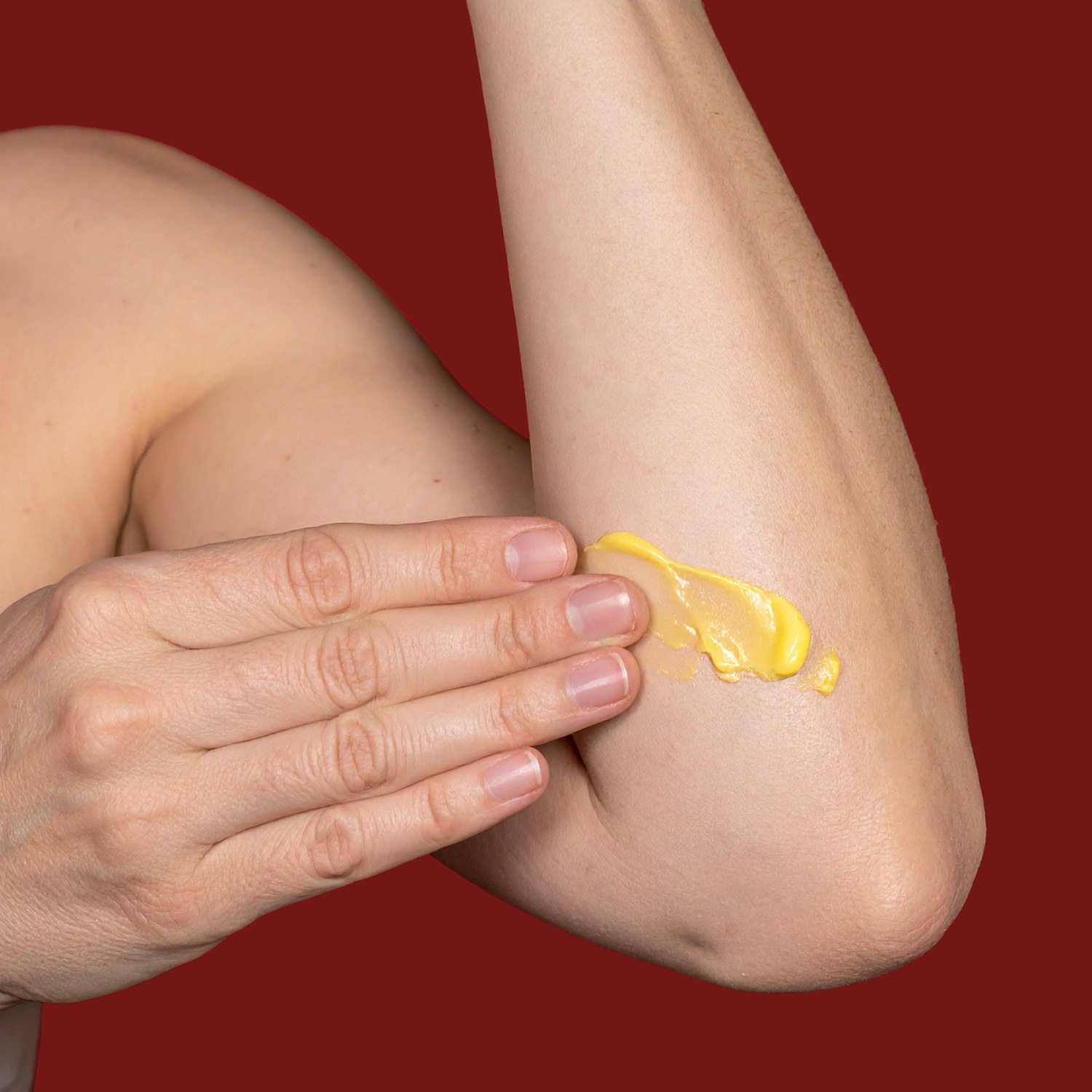
This whipped butter is suitable for evening skin care in summer after sun exposure, ideally for example after a bath — since it also contains beeswax and richer components, it stays on the skin longer and keeps it supple and hydrated. In addition to the butters and oils, which are rich in vitamins of groups A, B, D and E, this butter also contains other active ingredients — coenzyme Q10 and pomegranate extract, which enhance the regenerative effect of the product, help prevent premature skin ageing and improve its condition.
There are already many recipes for whipped butter nowadays; you can prepare different variations by replacing the oils or butters with another type, depending on the purpose for which you want to use the butter. In general, if you are not able to whip the mixture and it is too hard, add a liquid oil and repeat the process. If, on the contrary, it does not whip and is thin, add melted butter and whip again.
Frequently asked questions about the recipe
Practical questions about anhydrous cosmetics and the whipped regenerating butter — preservation, consistency, vitamin E and variations on the recipe.
What makes anhydrous cosmetics different from an ordinary cream?
In conventional face creams, water often makes up as much as 90 % of the formulation. Water-free products contain no water, and so they can consist of more active and nourishing ingredients in the same volume as water-based products.
Does whipped butter need a preservative?
The breeding ground for bacteria is precisely water — that is why it is essential to use preservatives in conventional cosmetics. Anhydrous cosmetics often almost completely bypass their use. With proper storage, the whipped butter will last for several months.
What should I do if the mixture will not whip?
If the mixture is too hard, add a liquid oil and repeat the process. If, on the contrary, it does not whip and is thin, add melted butter and whip again.
Why should vitamin E not be left out of the recipe?
Vitamin E (tocopherol) is among the most important antioxidants for the skin — it protects cells from damage caused by free radicals and solar radiation. In addition, it slows down the oxidation of oils, so the butter stays fresh longer.
When is the butter best used?
It is suitable for evening skin care in summer after sun exposure, ideally for example after a bath. Thanks to the beeswax and the richer components, it stays on the skin longer and keeps it supple and hydrated.
Can the recipe be varied?
Yes — you can prepare different variations by replacing the oils or butters with another type, depending on the purpose for which you want to use the butter. Bear in mind, though, that unrefined shea butter has a specific scent when you are putting the recipe together.
Conclusion
An article explaining the benefits of anhydrous, water-free cosmetics will certainly convince you that it really pays off to make your own natural cosmetics at home. That is why it also contains instructions for creating a regenerating whipped body butter, which is easy to make for both beginners and advanced makers. We believe that thanks to this article with instructions you will discover a love for creating natural cosmetics.
We thank our customer and maker Erika Samoľová for the great contribution and the recipe for the whipped butter.
Sources
1) Ayanlowo O. et al. African oils in dermatology. Dermatologic Therapy. 2022; 35. DOI: 10.1111/dth.14968
2) Nachbar, F., Korting, H. C. The role of vitamin E in normal and damaged skin. J. Mol. Med. 1995, 73, p. 7-17
The plant butters, oils and active ingredients from this recipe — shea and mango butter, jojoba, argan and avocado oil, coenzyme Q10 and vitamin E — are all part of the Handymade ingredient range.