


AMBER GLASS BOTTLES DIN28
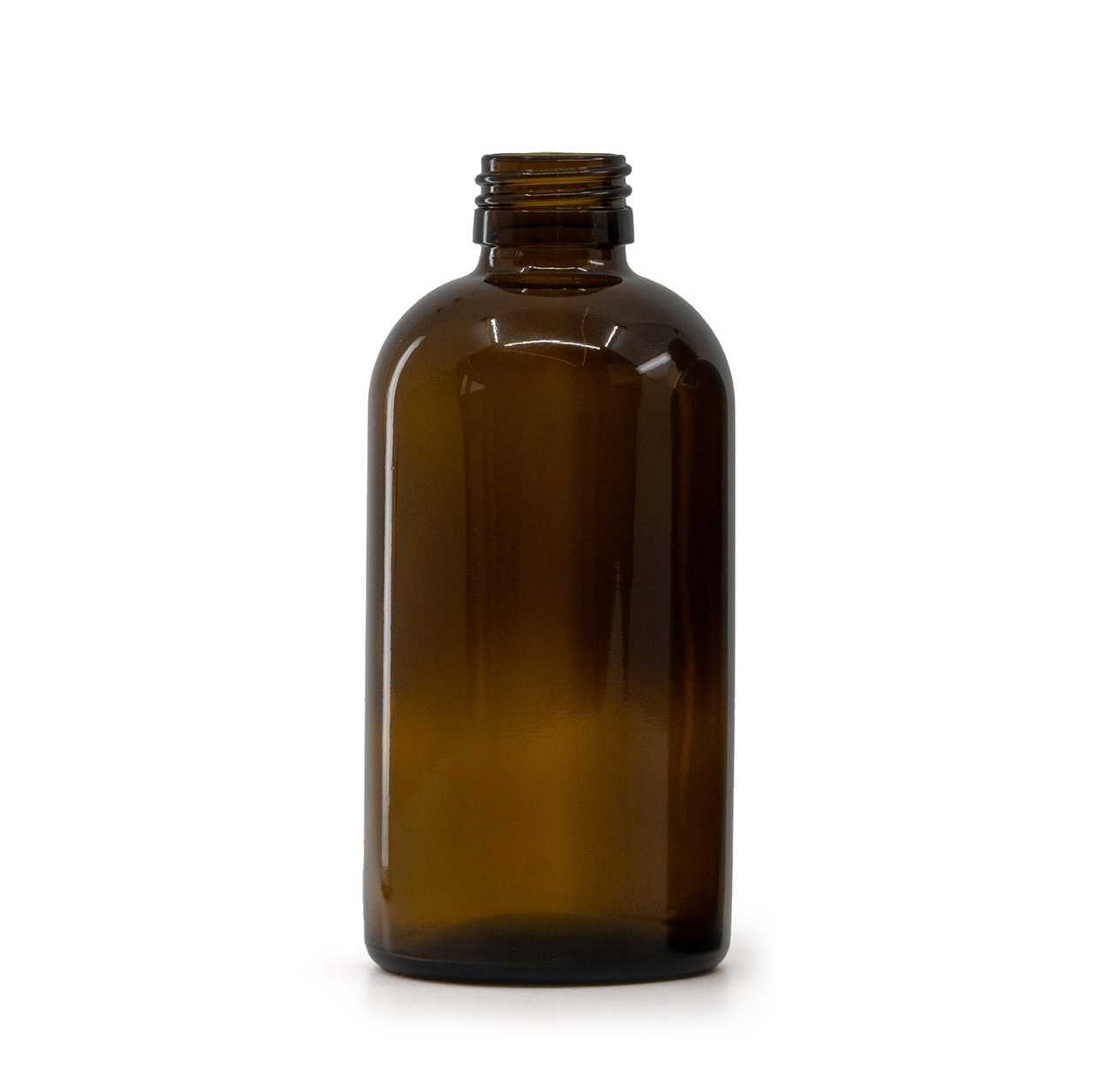
Glass bottle, Boston round PP28S, 100 ml
Pack size100 ml250 ml
The Boston glass bottle with a volume of 100 ml is a container for liquid and mildly viscous contents, from tonics and hydrolats to oils and tinctures. full description
Lowest price in the last 30 days: €0.68
Product description
The Boston glass bottle with a volume of 100 ml is a container for liquid and mildly viscous contents, from tonics and hydrolats to oils and tinctures. Glass is chemically inert: it does not react with plant oils, alcohol, or essential oils and does not allow fragrances to permeate. It is therefore also suitable for contents that might not be compatible with a plastic container.
The container is suitable for contact with cosmetic products and also for direct contact with food. It can therefore be used not only for home cosmetics, but also for syrups, herbal extracts, or flavoured oils.
What the bottle is suitable for
- Aqueous and alcohol-based contents – tonics, hydrolats, tinctures, and herbal extracts; glass does not affect their fragrance or composition.
- Oil blends – body, massage, hair, and cleansing oils, including blends with essential oils that may attack certain plastics.
- Fluid emulsions – light body milks and liquid serums that flow freely through the narrow neck.
- Home food products – syrups, flavoured oils, and vinegars in smaller packaging.
Thick creams, butters, and balms are difficult to fill and remove through the narrow neck. A jar is more practical for those.
Nominal and total volume
Nominal volume is the volume the bottle is intended for during normal filling. Total brim volume is the physical volume of the bottle up to the neck and is slightly larger. The difference between them is not extra space for the product. It is a reserve for the cap, dropper, or pump tube, and for the expansion of the contents at higher temperatures. Exact values are listed in the specifications.
Fill the bottle to the nominal volume, not to the brim. An overfilled bottle may overflow when the cap is applied, and the contents can more easily reach the thread.
Choosing a cap
The bottle has a PP28S neck. Caps with the same neck type and ready-made bottle-and-cap combinations are available in the Handymade range. With a custom combination, we recommend verifying seal integrity and dosing with the specific formulation, particularly with thin oils and alcohol-based contents.
What to know before filling
- Preparation before first fill – wash the bottle with warm soapy water, rinse, disinfect with 70% ethanol or isopropyl alcohol, and allow to dry completely. Residual water in the container increases the risk of microbial contamination and, with oil-based products, cloudiness.
- Reuse – glass withstands repeated washing and disinfection without any change in properties. A bottle brush will help remove oil residue. Before each fill, check that the neck and base are not chipped or cracked; do not fill a damaged bottle.
- Labelling – the cylindrical body provides a smooth surface for a label around the full circumference. The dimensions needed for label design are in the specifications. The label adheres to a dry, degreased surface.
- Recycling – glass can be recycled repeatedly without loss of quality.
Glass handles sudden temperature changes poorly. Do not pour hot contents into a cold bottle and do not rinse a hot bottle with cold water. It is safer to fill the contents only after they have cooled down.
Frequently asked questions
Parameters
- Brimful capacity
- 118 ml
- Diameter
- 48 mm
- Height
- 108,5 mm
Product documentation
- PDSProduct Data Sheet
- PDF ↓
Verified by customers.
No reviews yet.
Only customers with a delivered order can write reviews.