


Bottles only
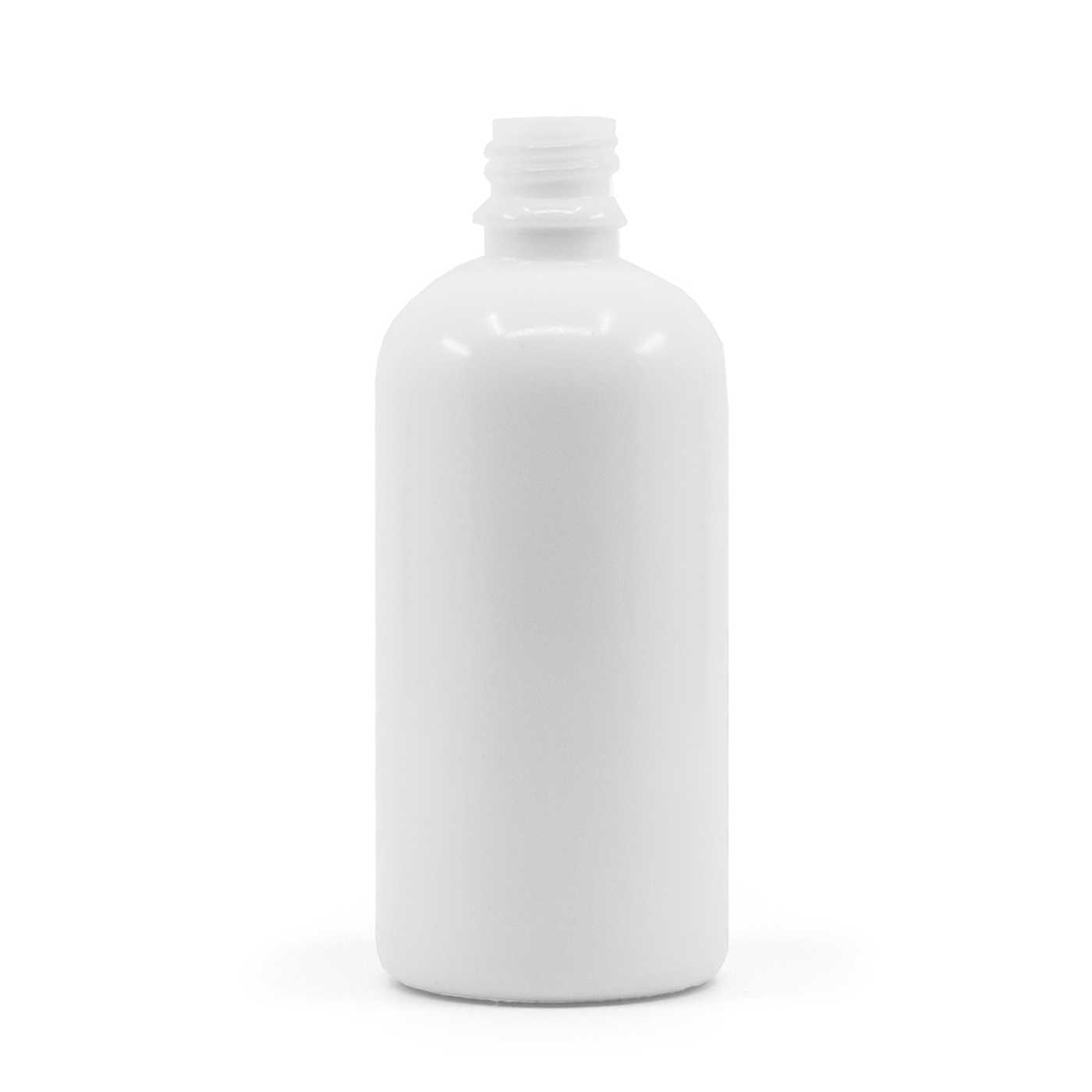
Glass bottle, pharmaceutical bottle, white 100 ml
Pack size10 ml15 ml30 ml100 ml
Glass bottle, vial, white 100 ml The glass bottle, vial, white 100 ml is designed for filling liquid cosmetic preparations that are sensitive to light. full description
Lowest price in the last 30 days: €1.87
Total for 1 pcs: €1.87
Product description
Glass bottle, vial, white 100 ml
The glass bottle, vial, white 100 ml is designed for filling liquid cosmetic preparations that are sensitive to light. White glass completely conceals the contents and significantly limits light exposure, making it particularly suitable for facial and hair oils, serums, tinctures, essential oil blends, or preparations with sensitive active ingredients. It also has a clean, uniform appearance, making it well suited to product lines that require consistent packaging regardless of the contents' colour.
The 100 ml volume is a standard size for body or massage oil, facial toner, or a larger serum. Glass is chemically inert, does not absorb scents, and does not leach plasticisers into the contents — a key advantage for oil-based and alcohol-based formulations. The packaging is suitable for use with cosmetic products and meets all applicable regulatory requirements; the declaration can be found in the product parameters.
Why white glass
- Light protection – the opaque wall slows the oxidation of oils and the degradation of light-sensitive ingredients. Unlike amber or blue glass, the contents are completely invisible.
- Inert material – glass does not react with essential oils, alcohol, or mildly acidic aqueous solutions, and does not absorb their scent. After washing, it can be filled with an entirely different preparation.
- Uniform product line appearance – the white surface unifies products of different colours and provides a neutral base for labels, printing, or screen printing.
- Narrow neck – facilitates drop-by-drop or thin-stream dispensing and limits the contents' contact with air when opened.
Which products is it suitable for
The vial has a narrow neck and is therefore intended for liquid and low-viscosity contents dispensed via a dropper, a cap with an orifice, or a pump. It is most commonly used for facial and hair oils, oil serums, serums with active ingredients, tinctures and alcohol extracts, hydrolats and tonics, fragrance oils, or essential oil blends in a carrier oil. It is also suitable for thin emulsions such as facial milk when dispensed with a pump. It is not suitable for thick creams, body butters, or gels — these belong in a jar or a bottle with a wider neck.
Nominal and total volume
Packaging distinguishes between two volume measurements. Nominal volume is the amount for which the container is designed under normal filling conditions, and this is why the bottle is labelled as 100 ml. Total volume to the brim is the physical capacity up to the neck and is slightly larger. The difference between the two provides a reserve for the dropper or pump, which occupies part of the space once fitted, and for minor expansion of the contents with temperature changes. The bottle should therefore be filled to the nominal volume, not to the brim. Exact values for both volumes can be found in the product parameters.
Closures and combinations
Closures with the same neck type as stated in the parameters, and ready-made combinations of the bottle with a dropper, cap, or pump, are available in the Handymade range. For a custom combination, we recommend verifying the seal, dispensing performance, and packaging behaviour with your specific formulation, particularly for alcohol-based and oil-based contents, which behave differently from water.
Preparation before filling and reuse
A new bottle is clean but not sterile. Before filling with cosmetics for the first time, wash it with warm water and a mild detergent, rinse thoroughly, and disinfect with isopropyl alcohol or ethanol. Then leave it to dry completely with the neck facing down, so that no water droplets remain inside that could introduce moisture into an anhydrous preparation.
For oil serums and anhydrous blends, thorough drying is more critical than for water-based preparations. Even a small amount of water in an anhydrous product creates an environment for microorganisms, even if the formulation would not otherwise require a preservative.
Glass withstands repeated washing and disinfection without any change in its properties, so the bottle is well suited to repeated use. When filling with a different product, simply wash, degrease, and disinfect again. It is the closure or dropper that will need replacing sooner, as their seal and rubber bulb wear out faster than the glass itself.
Glass does not tolerate sudden temperature changes. Do not pour hot phases directly from heat into the bottle, and do not rinse it with cold water immediately after hot water. Allow the preparation to cool to at least a lukewarm temperature first, then fill.
Good to know
- Labelling – the cylindrical shape with a straight wall allows a label to be applied around the full circumference or on the front panel only. Label dimensions can be found in the product parameters. The white background enhances both coloured and transparent labels.
- Fill level inspection – because the wall is opaque, the fill level is not visible from outside. For retail purposes, it is advisable to state the volume on the label; during production, fill by measured quantity rather than by eye.
- Weight and shipping – glass is heavier and more fragile than plastic. When shipping to customers, secure the bottles so they do not knock against each other, and factor in the higher package weight for larger quantities.
- Recycling – once emptied and rinsed, the bottle belongs in glass recycling; the closure is sorted separately according to its material.
Frequently asked questions
Parameters
Product documentation
- PDSProduct Data Sheet
- PDF ↓
Verified by customers.
No reviews yet.
Only customers with a delivered order can write reviews.