


Bottles only
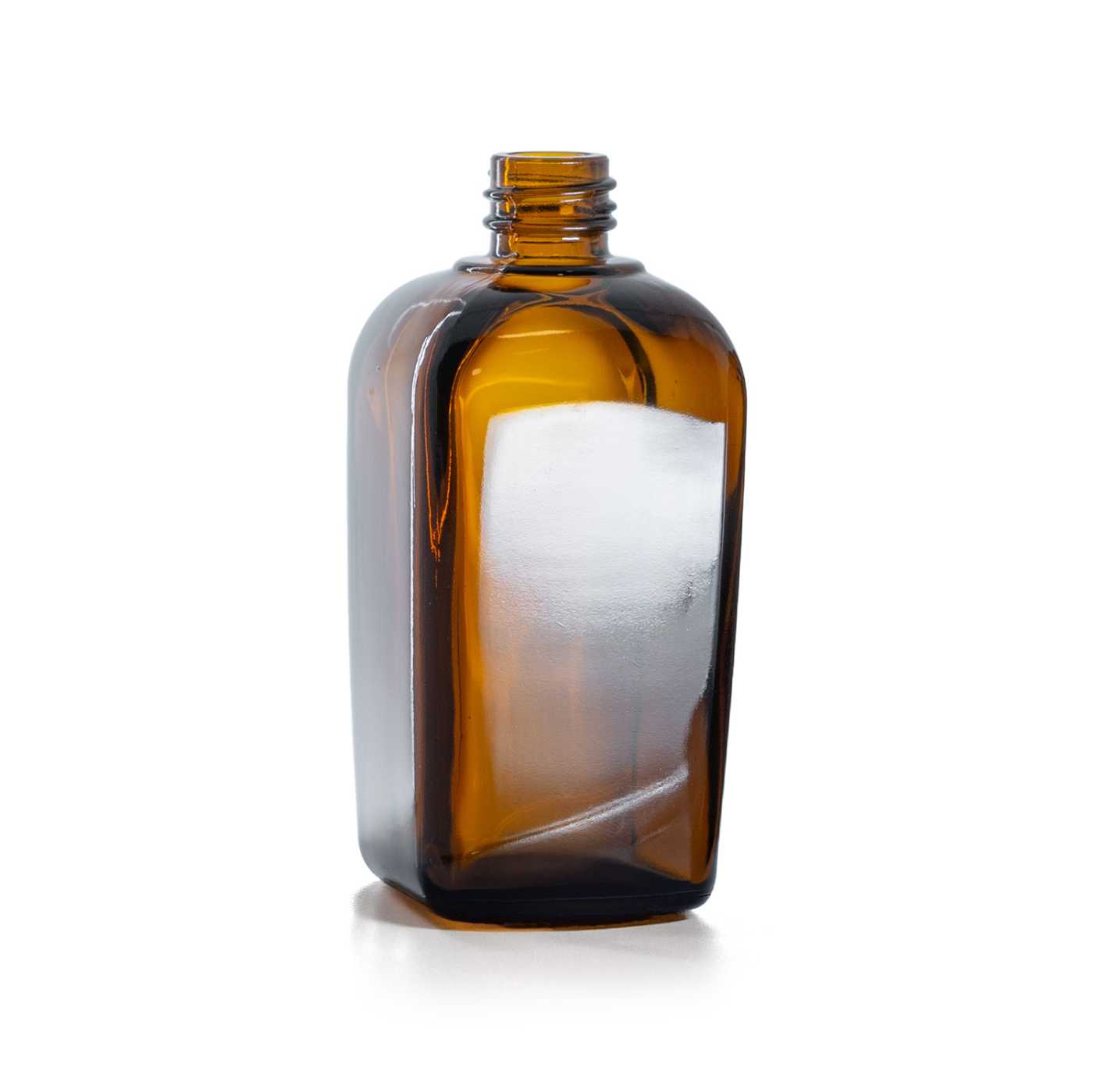
Glass bottle, vial, square, 90 ml
The glass bottle, vial, square, 90 ml is a brown glass bottle for filling and storing liquid cosmetic preparations . full description
Lowest price in the last 30 days: €0.63
Total for 1 pcs: €0.63
Add 79 more pcs and the price drops to €0.58/pc.
Product description
The glass bottle, vial, square, 90 ml is a brown glass bottle for filling and storing liquid cosmetic preparations. Brown glass reduces light exposure, making it particularly suitable for light-sensitive contents: facial and hair oils, serums, tinctures, herbal extracts, tonics and essential oil blends. The square shape with straight sides gives the bottle stability on the shelf and makes label application easier.
The size is practical for small-volume products and for home-made extracts when the bottle should not take up much space. The packaging is suitable for use with cosmetic products and meets the relevant regulatory requirements.
Why choose the brown square vial
- Light protection – brown glass limits light exposure to the contents, helping to protect vegetable oils, fragrances and sensitive active ingredients.
- Inert material – glass does not react with essential oils or alcohol, does not absorb fragrance and does not impart any off-odour to the contents. It is therefore also suitable for alcohol-based tinctures and concentrated fragrance blends.
- Square shape – straight sides stack neatly side by side in a box and on a shelf, the bottle does not roll and labels adhere smoothly to the flat surface without creasing.
- 18 mm threaded neck – a widely used neck type that allows you to choose a closure to suit your dispensing method: cap, dropper, pump or spray.
- Reusable – after washing and disinfecting, the bottle can be refilled.
Nominal and total volume
For each container we list two volumes. Nominal volume is the volume the bottle is designed for under normal filling conditions. Total brimful volume is the physical volume up to the neck and is always greater. The difference between them is the allowance for the closure, dropper or pump tube and for expansion of the contents with temperature change. The bottle should therefore be filled to the nominal volume, not to the brim. Both values are listed in the product specifications.
Practical use
The bottle is intended for liquid and mildly viscous contents: facial and body oils, oil serums, herbal oil macerations, essential oil blends in a carrier oil, alcohol-based tinctures, facial tonics and hydrolats. For water-containing formulations, bear in mind that brown glass is not a substitute for preservation. The aqueous phase must be preserved regardless of the packaging.
The closure determines the dispensing method: dropper for serums and concentrates, pump for oils and lotions, spray for tonics and spritzers, cap for stock blends. Closures with the same neck type and ready-made bottle + closure combinations are available in the Handymade range. With a custom combination, we recommend verifying the seal and dosing with your specific formulation.
Thicker serums and gel-based contents draw into the dropper slowly. If you want to dispense drop by drop, keep the formulation at a lower viscosity; otherwise choose a pump.
The bottle meets both cosmetic and technical quality standards, so it can also be used outside cosmetics, for example for working solutions or stock blends of fragrance oils for diffusers. Food-contact suitability is not declared for this packaging, so we do not recommend it for food-related purposes.
What is good to know
Before first use, wash the bottle with warm soapy water, rinse thoroughly, disinfect and allow to dry completely neck down. Residual moisture in an oil-based content reduces product stability. When switching to a different content type, for example oil after a tincture, pay particular attention to removing any residual fragrance.
Glass and temperature. Glass does not tolerate sudden temperature changes. Do not pour a hot blend into a cold bottle; allow it to cool first, or pre-warm the bottle.
Labelling. The dimensions needed for label design are listed in the specifications. For oil-based products, choose a label with a strong adhesive and laminated surface so that oil drips do not damage it.
Closing. Tighten the thread with moderate force; overtightening deforms the closure's sealing insert and the seal will deteriorate. After filling, place the bottle on absorbent paper and check for leaks after a few hours.
The edges of the square bottle are vulnerable to impact. When transporting finished products, use dividers or a grid so that the bottles do not touch each other.
The empty bottle goes into glass recycling; sort the closure separately according to its material.
Frequently asked questions
Parameters
Product documentation
- PDSProduct Data Sheet
- PDF ↓
Verified by customers.
No reviews yet.
Only customers with a delivered order can write reviews.