


Bottles only
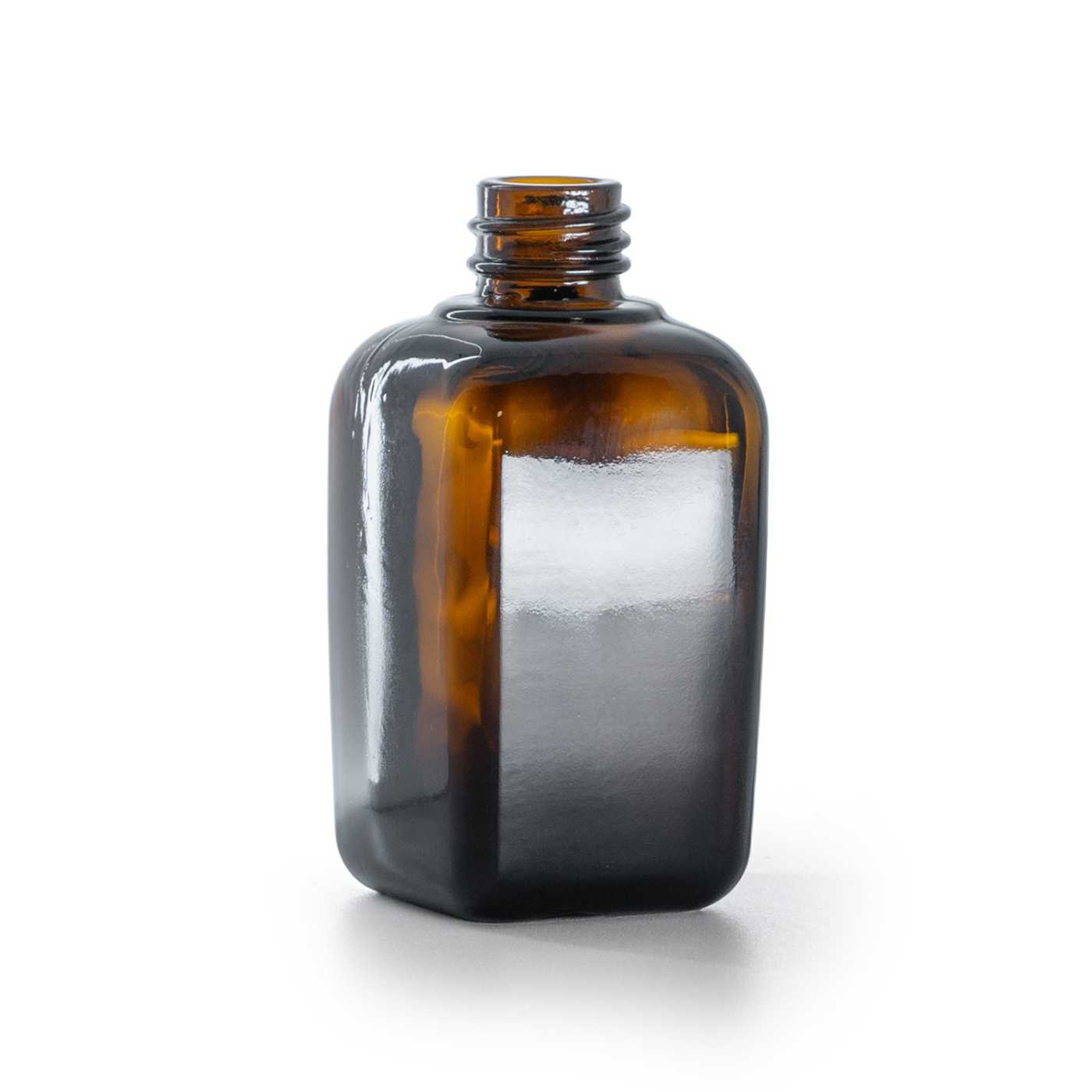
Glass bottle, vial, square, 45 ml
A brown glass square-shaped vial with a nominal volume of 45 ml is a container for smaller batches of liquid cosmetic preparations. full description
Lowest price in the last 30 days: €0.47
Total for 1 pcs: €0.47
Add 79 more pcs and the price drops to €0.43/pc.
Product description
A brown glass square-shaped vial with a nominal volume of 45 ml is a container for smaller batches of liquid cosmetic preparations. Brown glass reduces light penetration, making it particularly suitable for contents that are sensitive to light: facial and hair serums, oil blends with active ingredients, alcohol-based tinctures and extracts, and delicate tonics. The square profile keeps the bottle stable on a shelf, and the flat walls make label application straightforward.
Glass is chemically resistant and does not react with the contents, making it equally suitable for aqueous, alcohol-based, and oil-based formulations, including preparations with a higher proportion of essential oils. The container is intended for use with cosmetic products and meets the relevant legislative requirements. The term 'vial' refers to the shape, not the intended use of the container.
What brown glass and a square shape offer
- Light protection – brown glass filters part of the visible and UV radiation, slowing the oxidation of oils, fading of colour, and degradation of sensitive active ingredients such as vitamins and plant extracts.
- Chemical stability – glass does not leach substances into the contents and does not absorb fragrances, so it can be safely filled with alcohol-based tinctures, essential oils, and more acidic tonics.
- Stability and labelling – a square bottle does not tip over as easily as a round one, and labels adhere to the flat surface without creases or air bubbles.
- Reusability – after thorough washing and disinfection, the container can be used again, which is appreciated for smaller home batches.
- Practical volume – 45 ml corresponds to a standard packaging size for a serum, facial oil, or concentrated tincture; the contents are used up before they have a chance to deteriorate.
Nominal and total volume
With containers, you will encounter two volume values. The nominal volume is the quantity the bottle is designed for during standard filling and the figure stated on the label. The total brim-full volume is the physical capacity up to the neck. The difference between them is an intentional allowance: space for a dropper or pump, for the closure, and for expansion of the contents when the temperature changes. The bottle should therefore be filled to the nominal volume, not to the brim. An overfilled vial will overflow when a dropper is inserted, and during warmer storage it may exert pressure on the closure.
If you are closing the bottle with a dropper, measure how much contents remain after it is inserted during your first batch. The glass tube of the dropper displaces some of the internal volume, and filling exactly to the nominal value may cause the contents to overflow slightly.
Choosing a closure
The bottle has an 18 mm neck thread. Closures with the same neck type as well as ready-made container and closure combinations are available in the Handymade range. For a custom combination, we recommend verifying seal integrity and dosing with the specific formulation, particularly for alcohol-based contents and thicker oils, which behave differently in a dropper than aqueous solutions.
What to know before filling
Before first use, it is recommended to wash the container with warm soapy water, rinse, disinfect with izopropylalkohol or etanol and leave to dry completely with the neck facing down. Residual moisture in an anhydrous product could promote microbial growth or cloud the oil.
Glass handles sudden temperature changes poorly. Allow the hot phase of an emulsion or a heated oil extract to cool to at least room temperature before filling. Pouring hot contents into a cold bottle may damage the glass. When filling thicker preparations, a small funnel or a needleless syringe will help keep the neck and thread clean so the closure seats properly.
When reusing, check the thread and the rim of the neck for chips. Minor damage is not always visible, but the closure will no longer seal properly. When the container reaches the end of its life, it should be placed in sorted waste collection as coloured glass; a closure made of a different material is sorted separately.
Brown glass reduces light exposure, but does not block it completely. Store a finished product containing sensitive active ingredients — even in a brown bottle — away from direct sunlight and at a consistent temperature.
Frequently asked questions
Parameters
Product documentation
- PDSProduct Data Sheet
- PDF ↓
Verified by customers.
No reviews yet.
Only customers with a delivered order can write reviews.