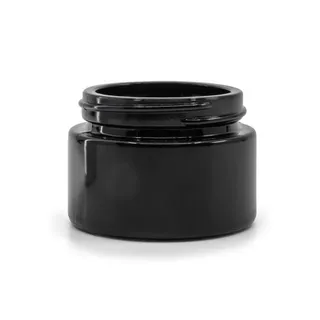
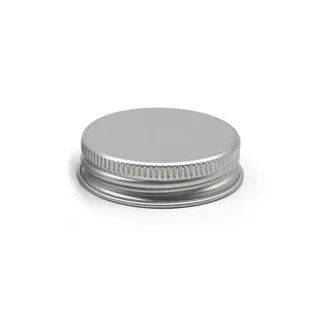
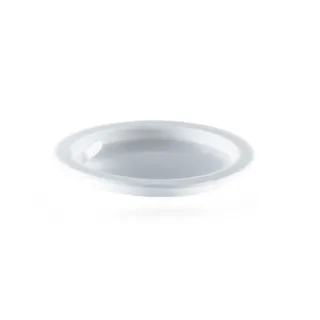
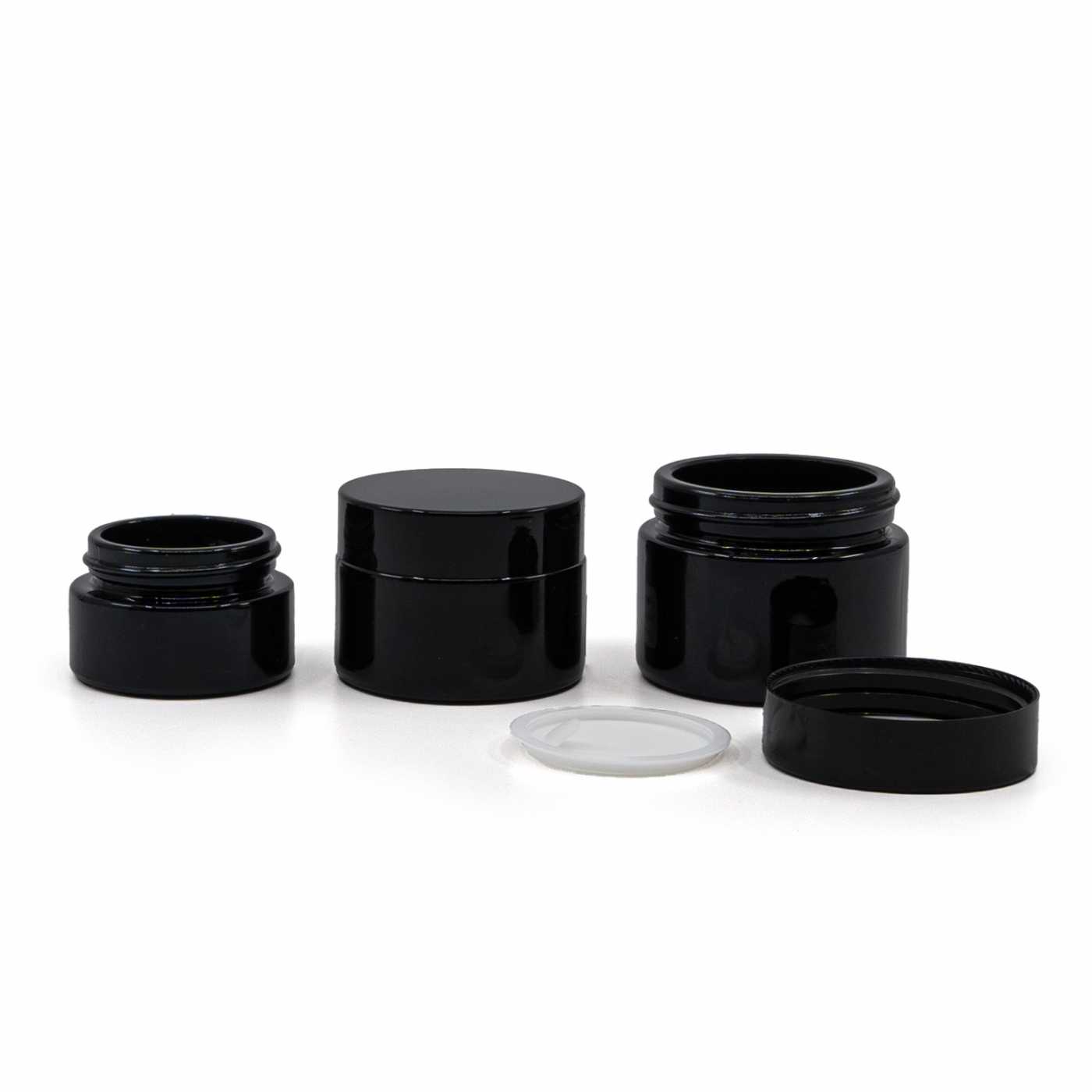
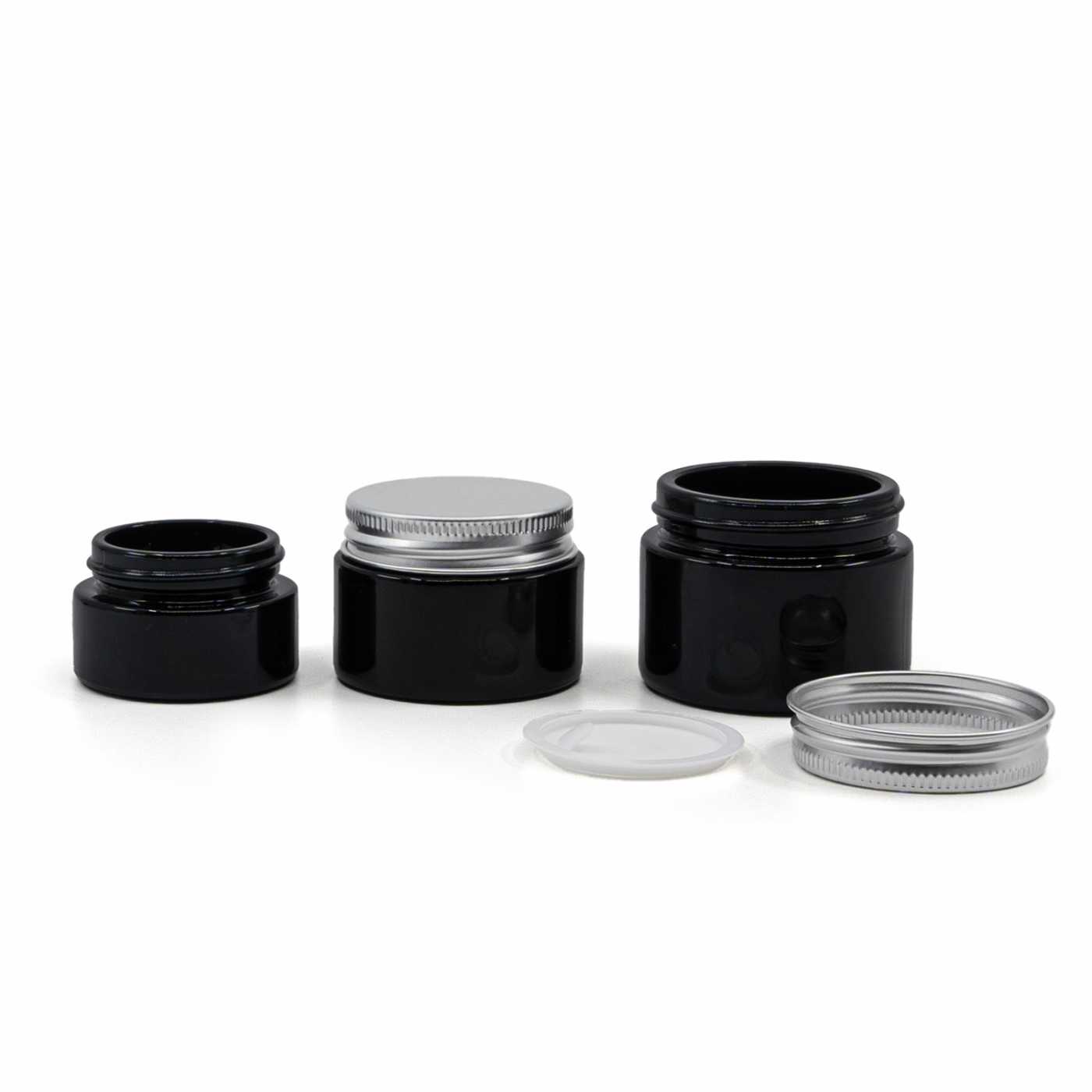
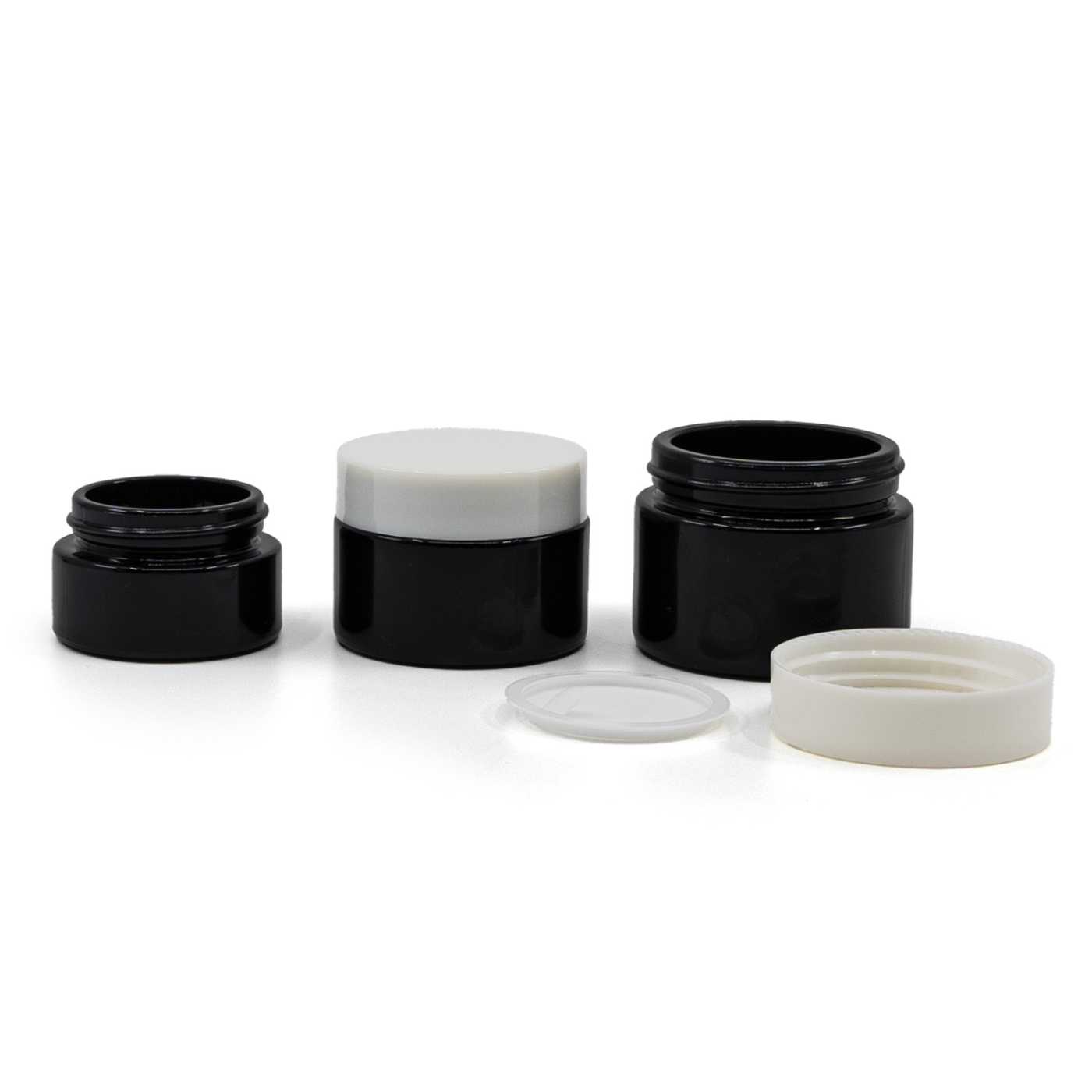
Glass jar, glossy black, 30 ml with an aluminium lid and inner liner is a complete kit for filling smaller cosmetic products. The opaque black glass protects the contents from light, making it particularly suitable for formulations with sensitive ingredients – face and eye creams, balms, ointments, thick serums or concentrated masks. The 30 ml capacity corresponds to the standard size of a facial care product, a premium treatment or a trial-size packaging. The kit is declared as suitable for contact with cosmetics; it is not approved for food contact and is therefore intended for cosmetic products only.
What the kit contains
- Glass jar – the wide threaded neck allows easy filling and scooping of thick textures with a spatula. The glossy black finish conceals the contents and gives the packaging a uniform appearance regardless of the product colour.
- Aluminium lid – a silver screw cap that contrasts with the black glass. It tightens by hand, without tools, and keeps the jar sealed during regular use and transport.
- Inner liner – a white polypropylene disc placed directly on the surface of the filled product under the lid. It protects the surface of the cream or balm during transport, limits contact between the contents and the inside of the lid, and signals to the customer that nobody has tampered with the product.
Why glass, and why black
Glass is chemically inert: it does not react with vegetable or essential oils, with ingredients at lower or higher pH, or with common solvents, does not absorb fragrance, and nothing leaches from it into the product. This makes it suitable even for anhydrous balms with a high proportion of essential oils, which can degrade certain plastics over time.
The opaque black version blocks light from reaching the contents, unlike amber or blue glass, which only filters it. This is valuable for products containing antioxidants, vitamins, botanical extracts or less stable oils, which lose efficacy and change colour or scent more quickly when exposed to light. The glossy surface pairs well with a simple light-coloured label. The weight of the glass gives the jar stability on the shelf and the packaging feels more premium.
There are two limitations to bear in mind: the contents and fill level are not visible through the wall, and glass, unlike plastic, can break if dropped.
Nominal and total volume
Nominal volume is the volume for which the jar is intended under normal filling conditions. Total brim volume is the physical capacity up to the neck; its value can be found in the specifications. The difference between them provides clearance for the inner liner and lid and allows for any expansion of the contents with temperature changes. The jar should therefore be filled to the nominal volume, not to the brim; filling right to the neck would cause the liner to push the product out and the lid to become contaminated.
Filling and working with the kit
Creams and emulsions should be filled after cooling to room temperature, preferably using a spatula or a piping bag, to avoid air bubbles in the product and to keep the neck clean. For thicker textures, we recommend gently tapping the bottom of the jar on a surface after filling to allow the product to settle.
Balms and ointments are poured in a molten state. Glass can withstand warm product, but not a sudden temperature shock: do not pour the product into a cold jar immediately after melting – allow it to cool slightly or pre-warm the jars first. Leave the filled balm to set with the neck open.
Fit the liner and lid only once the product is fully set and cooled. If you close the jar while it is still warm, moisture will condense under the lid, which has no place in an anhydrous balm and may encourage microbial growth.
The liner is placed flat on the surface of the product and the lid is tightened by hand. Over-tightening will not improve the seal and may damage the thread.
Suitable for products such as
- Face and eye creams – 30 ml is the standard size for daily care, and the wide neck makes dispensing with a spatula easy.
- Balms, ointments and solid serums – anhydrous products with oils and butters, for which glass guarantees packaging stability even at higher concentrations of essential oils.
- Concentrated masks and scrubs – thick textures that are difficult to dispense from a pump bottle.
- Toothpastes and tooth powders, cream deodorants – products applied with a finger or spatula, where lid hygiene and seal integrity matter.
- Samples and gift packaging – a smaller volume suitable for testing a new formulation with customers.
The jar is not suitable for thin, water-based preparations such as tonics or hydrolates – they would spill on opening and cannot be dispensed properly.
Good to know
- Preparation before first filling – wash the jar, rinse it, disinfect with isopropyl alcohol or ethanol and allow to dry completely. Wipe the liner and lid in the same way; do not fill into a damp container.
- Preservation – an open jar and scooping with fingers are the greatest challenge for microbiological stability. Creams containing water require a reliable preservation system; anhydrous balms are less sensitive, but we still recommend using a spatula for scooping.
- Reuse – glass withstands repeated washing and disinfection, so the jar can be used multiple times. We recommend replacing the liner with a new one each time the jar is refilled.
- On glossy black glass, a light or transparent label with light-coloured print will stand out best; a second, smaller label can be applied to the lid.
- Sorting – the jar belongs in glass recycling; separate the lid and liner from the glass before disposal.
Glass is sensitive to sudden temperature changes. Do not pour hot product into a cold jar, and do not place a filled jar directly into the refrigerator – cracks are caused by thermal shock, not by normal handling.
Frequently asked questions
Does the black glass jar protect the contents from light?
Yes, the opaque black glass blocks light from reaching the contents, whereas amber or blue glass only filters it. It is therefore suitable for creams and balms containing antioxidants, vitamins, extracts or more sensitive oils that degrade in light. The drawback is that the fill level is not visible through the wall.
How much cream fits into the 30 ml jar?
The jar is intended to be filled to 30 ml, which is its nominal volume. The total brim volume is larger; the difference provides clearance for the inner liner and lid and allows for the expansion of the contents with temperature changes. It should therefore be filled to the nominal volume so that the liner does not push the product out and the neck stays clean.
Is the glass jar suitable for balms with essential oils?
Yes, glass does not react with essential oils and does not absorb their scent, making it more suitable for anhydrous balms and ointments than many plastics. Pour the melted product when slightly cooled or into pre-warmed jars to prevent the glass from cracking due to thermal shock, and close only once the product is fully set.
What is the inner liner in the jar for?
The liner is a flat polypropylene disc placed on the surface of the filled product under the lid. It protects the surface of the cream during transport, prevents the contents from sticking to the lid, and signals to the customer that nobody has tampered with the product. It is fitted only once the contents have cooled and set completely.
Can the glass jar be washed and reused?
Yes, glass withstands repeated washing and disinfection with alcohol, so the jar can be refilled. Before each filling, wash it, disinfect with isopropyl alcohol or ethanol, and allow to dry completely; wipe the lid in the same way. We recommend replacing the inner liner with a new one each time the jar is refilled.
Which lid fits this glass jar?
This kit already includes a lid and liner, so no additional closure is needed. If you wish to use the jar with a different closure, it must match the neck type of this jar; additional closures and complete combinations are available in the Handymade range. When creating your own combination, we recommend testing the seal with your specific formulation.