


EMULGATORS
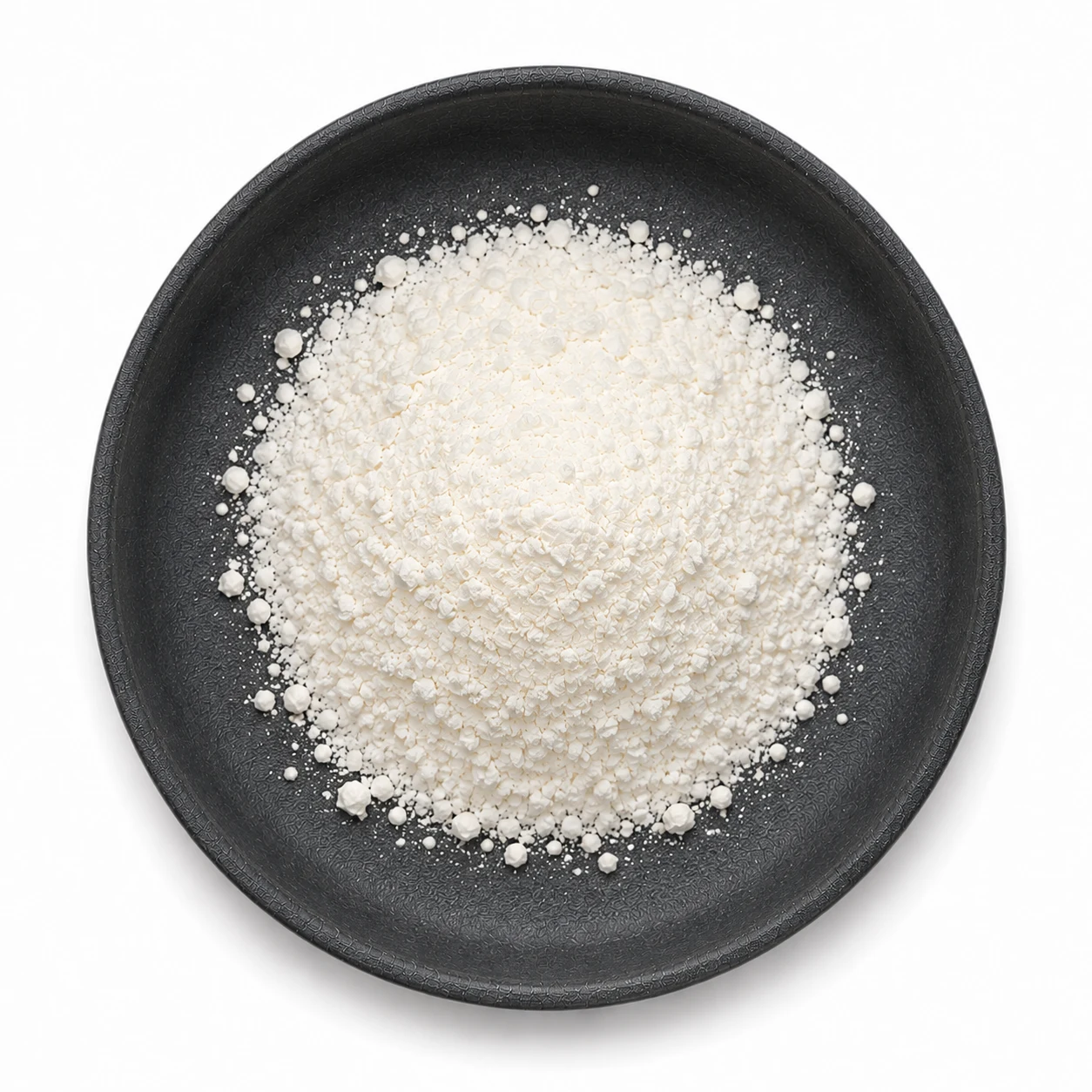
Glyceryl Behenate, 1000 g
Pack size50 g100 g500 g1000 g5 kg
Glyceryl Behenate is a plant-derived co-emulsifier, texturizing agent and conditioning lipid raw material intended mainly for oil-in-water emulsions. full description
Lowest price in the last 30 days: €92.99
Product description
Glyceryl Behenate is a plant-derived co-emulsifier, texturizing agent and conditioning lipid raw material intended mainly for oil-in-water emulsions. It is a monoester of docosanoic acid, also known as behenic acid, with glycerol.
The raw material is produced by esterification of plant-derived glycerin and plant-derived behenic acid. According to supplier data, both starting raw materials come from rapeseed oil; the raw material itself is manufactured from rapeseed Brassica napus cultivated in the EU. The manufacturing process includes esterification, neutralization and filling. The product does not contain added synthetic preservatives, antioxidants, fragrance substances, colorants, solvents or other declared auxiliary chemicals; according to the designation for compositional purposes it is 100 % Glyceryl Behenate.
In cosmetic formulations, Glyceryl Behenate is used primarily as a co-emulsifier, texturizer, thickening lipid component, emulsion stabilizer and a component improving the feel on skin and hair. Compared to shorter glyceryl monoesters, it has a longer lipophilic chain, which allows it to build structure in the emulsion more effectively, increase the body of the cream and support a richer, more protective skin film without an excessively tacky, heavy or waxy feel.
It is particularly suitable for formulations where the goal is to achieve a richer texture, higher stability, silky feel, better consistency and a pleasant protective film. It is not used as a stand‑alone primary emulsifier for classic creams, but it supports the emulsifying system very well and in some formulations can reduce the need for additional thickeners such as xanthan gum.
Key benefits
- Excellent co-emulsifier for O/W emulsions – supports the primary emulsifier and helps create more stable oil-in-water emulsions.
- Richer and fuller texture – increases the body of the emulsion, creaminess and the denser character of the formulation.
- Strong texturizing effect – creates a structural network in the continuous phase of the emulsion, thereby supporting viscosity and stability.
- Silky feel without stickiness – imparts a richer and more protective character to creams, yet does not leave a typically heavy, greasy or waxy feel.
- Film-forming effect – helps create a fine protective film on the skin and improves comfort after application.
- Conditioning effect – acts as a component improving the feel on skin and hair, also suitable for products for damaged hair.
- More effective than shorter glyceryl monoesters – thanks to its longer lipophilic chain, it contributes better to a rich texture and a firmer cream structure.
- Plant-based and vegan origin – contains no ingredients of animal origin and is suitable for vegan formulations.
- GMO-free and gluten-free – according to supplier data, it is not produced from GMO raw materials and does not contain gluten sources.
Suitable for products such as
- nourishing face creams with a richer, more protective texture,
- day and night creams for dry, normal and mature skin,
- body creams and emulsion-type body butters,
- hand creams, foot creams and creams for stressed skin,
- protective emulsions with a more pronounced lipid film,
- face and body milks where it is necessary to increase creaminess and stability,
- hair creams, leave-in conditioners and smoothing emulsions,
- hair masks and nourishing hair products targeted at damaged hair,
- sunscreens and after-sun emulsions, provided it is compatible with the entire system of filters and active ingredients,
- naturally oriented O/W emulsions with plant oils, butters and non-ethoxylated emulsifiers.
Use in formulation
- The recommended dosage according to the technical documentation is approximately 1.0 % when used as a co-emulsifier and approximately 2.0 % when used for co-emulsifying and thickening effect.
- It is intended mainly for O/W, i.e. oil-in-water emulsions, where it supports the emulsifier and improves the structure of the finished emulsion.
- It is soluble in the oil phase after heating and complete melting.
- It is miscible with plant oils, plant butters, waxy lipids, fatty alcohols, esters and other lipophilic emollient components.
- It is compatible with common emulsifying systems for O/W emulsions, where it acts as a co-emulsifier and stabilizing structure-forming component.
- It is compatible with aqueous humectants, plant extracts and active substances, if they are incorporated according to the recommendations for the specific formulation.
- It is added to the hot oil phase and must be completely melted before combining with the water phase.
- After combining the oil and water phases, thorough homogenization together with the other components of the formulation is recommended.
- When used in creams, it can increase viscosity and fullness to such an extent that in some formulations it may reduce the need for an additional thickener.
- For formulations with a high content of solid butters, waxes or film-forming lipids, it is advisable to optimize the dosage so that the resulting emulsion does not feel excessively dense.
- In hair formulations it is used mainly in emulsion products, where it helps improve slip, smoothing and the conditioning feel.
- It is recommended to add only temperature-sensitive active substances, preservative systems, fragrance compositions and essential oils during cooling (at a temperature below 40 °C); Glyceryl Behenate itself is incorporated into the heated oil phase.
Safety and storage
- The raw material is not classified as hazardous according to the CLP regulation.
- When working with the raw material, it is recommended to use clean utensils and observe normal hygiene practices in cosmetic manufacturing.
- Avoid contact with eyes and skin during processing of the concentrated raw material; in case of eye contact, rinse carefully with water.
- When handling the powdery or crumbly form, avoid inhalation of dust and excessive dispersion of particles.
- The finished formulation containing water must be properly preserved according to the overall composition of the recipe.
- Store in a dry place, well closed, away from direct sunlight, heat and sources of UV radiation.
- Keep in a cool, well-ventilated place, away from strong oxidizing agents, strong acids and strong bases.
- According to supplier data, the product is not treated with irradiation and does not contain used or generated nanoparticles.
FAQ
In some formulations it can perform a similar co-emulsifying function, but it is not a direct 1 : 1 replacement. Glyceryl Behenate has a longer lipophilic chain, so it usually creates a richer structure, stronger film and denser feel than Glyceryl Stearate.
No, its main role is to support the emulsifier, adjust texture and stabilize the emulsion. For a reliable emulsion, it is necessary to use a suitable primary emulsifier and add Glyceryl Behenate as a co-emulsifier.
Glyceryl Behenate helps create an internal lipid structure in the emulsion. This structure increases viscosity, improves shape retention and gives the cream a fuller character, especially in combination with fatty alcohols, butters or richer oils.
Yes, but in light milks it is used rather at lower dosage. A higher amount can markedly increase density and change the light character of the product into a creamier and more nourishing one.
Yes, according to supplier data it does not contain any ingredients of animal origin and during production or packaging it does not come into contact with animal materials. However, the suitability of the final product for vegan labelling depends on the overall composition of the formulation.
From a technological point of view it can be incorporated into the fat phase of anhydrous balms, but its most pronounced benefit appears in emulsions. In an anhydrous product it will act rather as a waxy-lipid texturizing component, not as a co-emulsifier.
See also other emulsifiers and co-emulsifiers offered by Handymade.sk.
Parameters
- INCI
- Glyceryl Behenate
- CAS No.
- 30233-64-8
- EC number
- 250-097-0
- Product colour
- White
- Country of origin
- Germany
- Grade
- Cosmetic grade
- Processing method
- Esterification
- Odour
- Odourless
- Appearance
- Powder
- Formulation phase
- Oil phase
- Free from
- allergenic fragrance substancesEDTAethylene oxide (EO)formaldehyde and formaldehyde donorsphthalatesparabensPEGsiliconessulfates
- Function in formulation
- Conditioning agentCo-emulsifierThickener
- HLB value
- 2
- Ionic character
- Non-ionic
- Recommended processing temperature
- > 75 °C
- Recommended usage rate
- 1 – 2 % %
- Solubility
- Water-insolubleOil-soluble
- Suitable for
- Sensitive skinDry skinDamaged hair
- Biodegradability
- Readily biodegradable (OECD 301)
- Natural Index (NI ISO 16128)
- 0,00
- Natural Origin Index (NOI ISO 16128)
- 1,00
Product documentation
Verified by customers.
No reviews yet.
Only customers with a delivered order can write reviews.