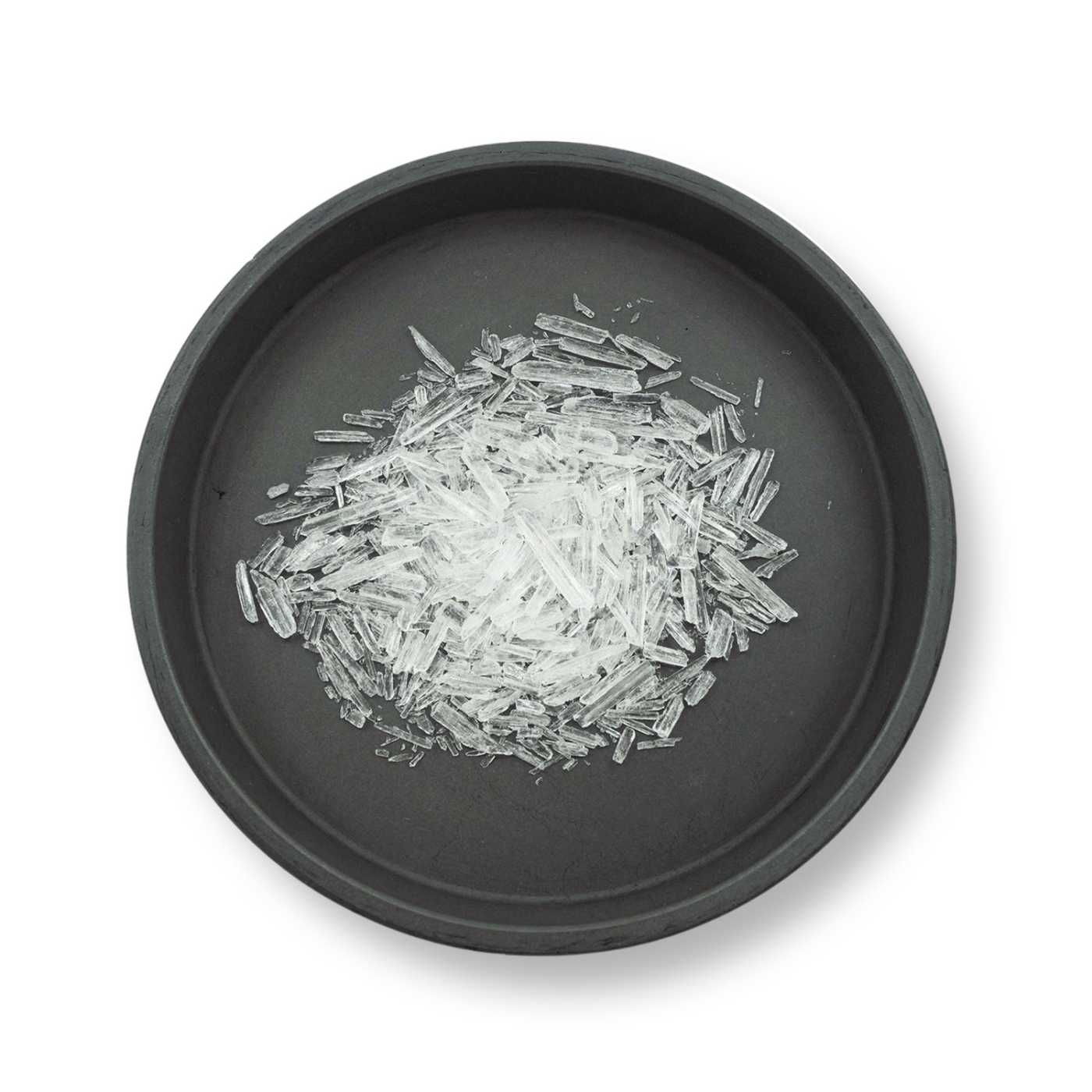
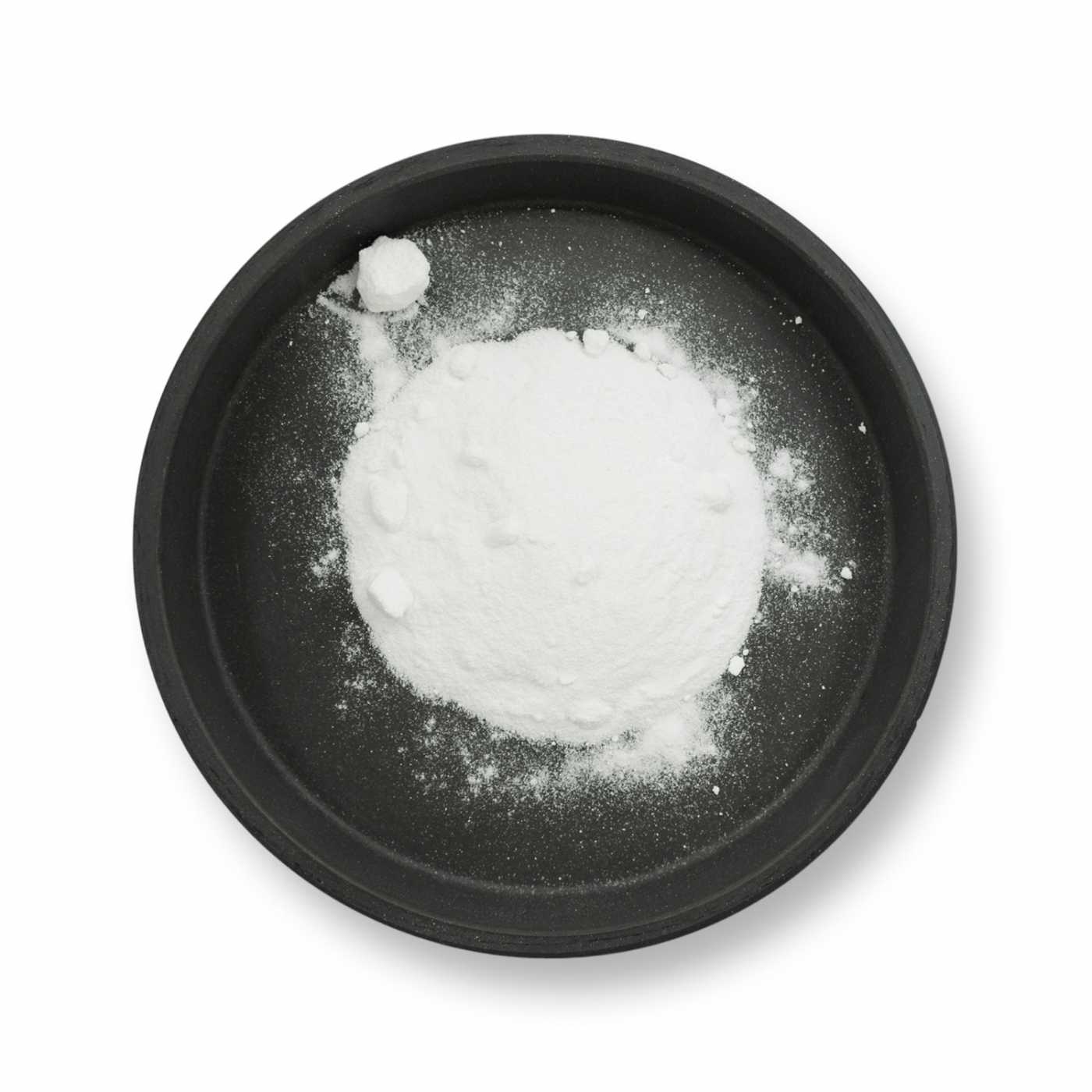
Natural menthol in crystals gives cosmetics a pronounced cooling effect and a clean mint scent. It is obtained from field mint oil (Mentha arvensis) by crystallisation and distillation and is supplied in USP/BP quality, meaning a purity that meets pharmaceutical pharmacopoeia standards.
The cooling sensation after application does not arise from a reduction in skin temperature. Menthol acts on receptors in the skin that respond to cold, and the brain perceives the treated area as cooler. This is why it is added to refreshing foot gels, shower preparations, scalp products, lip balms or deodorants, where the customer is meant to feel the cold immediately after application.
Key properties
- Cooling effect – sets in within a few seconds of application and its intensity increases with the dose. At low dosage it acts as a mild refreshment, at the upper limit of the range as a pronounced chill.
- Mint scent – even a small amount will influence the fragrance of the finished product and mask more delicate notes. Therefore, adjust the fragrance composition only after adding the menthol; the mint tone pairs well with eucalyptus, citrus or rosemary.
- Unrestricted compatibility – it is compatible with common cosmetic bases as well as with alcohol; it is used in emulsions, gels and alcoholic tonics.
- Wide pH range – suitable for formulations with a pH of 4 to 8, covering most facial, body and hair cosmetics.
- For rinse-off and leave-on products alike – in rinse-off preparations it tolerates higher doses; in leave-on products it is dosed more cautiously, as it remains on the skin longer.
Use in formulation
The recommended dosage is 0.1 – 2 % of the finished product by weight. For lip balms, facial preparations and products used around the face, stay in the lower half of the range; for foot gels, shower gels or scalp products you can go higher. Always verify the final dose on your own skin, as the perception of cold varies between individuals.
The crystals dissolve very poorly in water, but readily in alcohol, vegetable oils and essential oils. For emulsions and creams, dissolve them first in the oil phase or in a small amount of ethanol and then add to the finished base. For gels and tonics, they are added pre-dissolved in alcohol or in a solubiliser; otherwise undissolved particles will remain in the product.
It is worked in at a temperature below 40 °C, i.e. in the cooling phase or by subsequent incorporation into the finished product. Menthol is volatile and evaporates from the mass at higher temperatures, causing a loss of both effect and scent. For the same reason, it does not belong in the oil phase that is still to be heated.
When menthol is mixed with other crystalline substances, such as camphor or thymol, the mixture liquefies at room temperature. This phenomenon can be used for solvent-free incorporation, but it must be accounted for in the formulation design so that the consistency of the finished product is not altered.
Suitable for products such as
- Cooling foot gels and creams – in a water-alcohol gel, menthol dissolves well and the cooling sets in quickly, making it ideal after long periods of standing or sport.
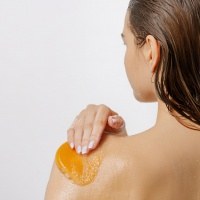
- Shower gels and bath preparations – a rinse-off product tolerates a higher dose; the refreshing effect is brief and the skin is subsequently rinsed.
- Shampoos and scalp products – menthol gives a feeling of cleanliness and freshness, particularly in products for oily scalp.
- Deodorants and antiperspirants – the cooling sensation in the underarm area is perceived as freshness, while the mint scent also complements the perfumery.
- Lip balms and lip glosses – at a low dose it gives a cooling tingle and a feeling of fuller lips. Perception of cold on the lips is considerably more sensitive than on the body.
- Facial tonics and gels for oily skin – a small dose in an alcoholic tonic refreshes without any feeling of greasiness.
- Toothpastes and mouthwashes – menthol is a traditional fragrance and flavour component in dental cosmetics. When dosing, bear in mind that it is applied to mucous membranes.
Good to know
The raw material is subject to classification under CLP and is labelled with the GHS07 pictogram as irritant. In the finished cosmetic product at the recommended dosage it is a commonly used ingredient, but handle the pure crystals with care.
When weighing and dissolving the crystals, wear gloves and avoid touching your eyes. Menthol irritates mucous membranes and at higher dosage may irritate the skin, so it does not belong in preparations for the eye area.
When used in an emulsion, verify the stability of the finished product. The solvent used to incorporate the menthol may, at higher concentrations, dilute the oil phase or reduce the gel viscosity. Carbomer-based thickeners are sensitive to alcohol; in gels with a higher ethanol content, allow for an adjustment in the amount of the gelling agent.
Frequently asked questions
Is natural menthol soluble in water?
Menthol dissolves very poorly in water; it dissolves readily in alcohol, vegetable oils and essential oils. For water-based products such as tonics, gels or sprays, the crystals are first dissolved in ethanol or in a solubiliser and only then incorporated into the aqueous phase. Without pre-dissolving, visible particles will remain in the product.
How much menthol is added to a cream or gel?
The recommended range is 0.1 to 2 % of the product weight. For facial and lip preparations and leave-on products, use the lower end of the range; for foot gels, shower gels and scalp products a higher dose is possible. The intensity of the cooling effect increases with the dose and its perception varies between individuals, so verify the dose on your own skin before manufacturing a larger batch.
At what temperature is menthol added to the formulation?
Menthol is added at a temperature below 40 °C, i.e. in the cooling phase of the emulsion or subsequently into the finished product. It is volatile and evaporates on heating, causing the cooling effect and scent to be lost. The crystals are dissolved in a small amount of oil or alcohol before adding, so that they disperse evenly throughout the mass.
Is natural menthol suitable for lip balm?
Yes, menthol is commonly added to lip balms and lip glosses for a cooling tingle and a feeling of fuller lips. The lips are far more sensitive to cold than body skin, so it is dosed at the lower end of the recommended range. The crystals are dissolved in the wax-oil part of the balm only after it has cooled below 40 °C.
Can menthol irritate the skin?
At higher dosage it can; the pure raw material is classified as irritant. In the finished product at the recommended range of 0.1 to 2 % it is a commonly used cosmetic ingredient. It does not belong in preparations for the eye area or for damaged skin; for sensitive skin, a lower dose and a patch test on a small area are recommended.